If there’s one disappointment that few within the opulent fabrics and apparels can appreciate more, it is shelling out a few extra bucks and forming the belief that you have purchased an authentic Kashmiri pashmina shawl that was personally handcrafted only to find out later Fake Pashmina Online.
The popularity of pashmina in the last few years has increased becoming a global market for the expensive material which has also led to an influx of counterfeits which have zero quality; working with original pashmina or the original material it is made from.
E-commerce and online shopping websites have made it dreadfully simple for these fake pashmina online hawkers to sell these products to whole innocent populations spread across the globe, passing off these acrylic machine made ones as genuine Kashmiri handspun life pashmina. The ability to recognize fake Pashmina clothing available on the internet even before making an order is the biggest benefit or perhaps the skill of any buyer especially those fascinated with collecting or rather gifting these items.
This is not just a problem with a few fly-by-night businesses selling fake pashmina online; it has, in fact, become one of the problems in the pashmina industry all over the world, to the great disadvantage of not just the buyer, who ends up losing their money, but also the hundreds of artisans and weavers from Kashmir, who make it possible for the real pashminas to be produced.
This insight guide is elaborate in order to provide you with Fiber content of offensive materials and in doing there alleviate the problem of fake Pashmina online marketing so that you are able to make every single purchase an adequate one. In this article therefore we will review in all possible details the phenomenon of Fake Pashmina Online, discussing organized criminals including the genuine pashmina that is made from the shawls to come and also some pictorials and tricks images employed by sellers of low-end woolen pashmina and online accounts Alcatraz pashmina.
So, we will be looking at costs, features description, who is selling the products credentials, the images presented, the examination of the fibers and more. This instruction is an invaluable resource to help any pashmina consumer; whether you are buying for the first time or you have bought several pashmina appendages over time, it will help you understand and appreciate the pashmina available in the online platforms better.
What Is Real Pashmina and Why Is It So Often Faked Online
There is a clear need to appreciate the nature of real pashmina prior to being able to differentiate between a fake one and a reliable one and this is because without proper information on the truth of pashmina material, there will be no way to make any conclusive judgments on the supposed fact of the product.
Naturally, a pashmina refers to a type of cashmere that is obtained from the Changthangi or pashmina goat, a species inhabiting extreme environments, especially the Changthang or high altitudes of the Ladakh region located in the midst of the Himalayan mountains, under special conditions.
Not only does the cold in this region which is sometimes below forty degrees Celsius produce such a beautiful rare and special undercoat but for the changthang goats’ other undercoat creates a very fine growing under this freezing climate and changing weather which is then hand combed during the moiling time in spring by the Changpa people who are nomads.
Such fiber is twelve to sixteen microns and is regarded as far more superior to many of the natural fibers that exist, including cashmere and more coarse than even wool. Authentic pashmina wraps and shawls have the reputation of excellent products because they are made of real pashmina fiber that is extraordinarily fine; they have the texture of a cloud, however, they insulate many times better than wool without even feeling heavy; moreover, they have a natural shine that ages and matures beautifully.
When the raw fiber is obtained, cleaned and combed it is usually sorted and hand-twisted with a wooden spinning device known as yinder and this highly specialized and time consuming activity is impossible through the use of machine conversion industrial spinning machines without compromising the delicate fibrous structure. The spinning wheel is then used to wind yarn into skeins that are woven by experienced weavers in Kashmir on traditional wooden handlooms in a manner that incorporates hundreds of hours from expert hands and a tradition as old as five hundred years.
Since the real pashmina requires much effort and is a extractable material that is very limited in availability, coupled with its high price historical background, it is exactly for this reason it costs a fortune and pashminas can cost hundreds if not thousands of dollars a piece. For these very reasons and high value attached to the product, the challenge of fake pashmina online is no longer opted for but very attractive for many sellers.
Any seller who can create counterfeit pashmina for 3 dollars and sell it in 50, 80 or even 100 as if it was a genuine pashmina is getting a very high return on the product which actually costs a few cents. IThe market is ready for pashmina class goods, and wherever there’s a demand, and money, there will be those with intentions of lying, flooding the market with their tales and fake pashmina online posts, hoping to capture those that hasn’t yet tried and feels original pashmina, not to talk of its behavior.
The Scale of the Fake Pashmina Online Problem in Today's Market
Fake Pashmina Online represents an alarming problem the proportions of which are hard to comprehend, and any prospective buyer should know how serious the problem is, before they try to enter the world of buying pashminas on the internet. It has been clear from multiple sources and investigative research studies conducted by concerned agencies in the textile, consumer, and Kashmiri craft industries that most online pashminas on sale are not pashmina at all.
In fact, it is believed that not less than 90% of the ‘pashminas’ sold on the major market sites consisting of every shawl and wrap under this name are fakes i.e., none or nearly none of the items are made of cashmere but acrylic, polyester or viscose and even worse if some items contain wool, even that is not predominantly fare and instead is blended with other synthetic fibres.
Many characteristics of this modern e-commerce structure allow the growth of fake pashmina online because it provides a space for unscrupulous businessmen to cause a lot of damage without availing for much accountability. On most great, web platforms, there are formidable independent sellers which can even post products purring certain details of the materials and where they are from as proof thereof.
As a result, it is very much possible for a retailer to present an acrylic shawl as if it is all pashmina from Kashmira yet, this does not happen in a vacuum. Besides, there are many scenarios when such a post will be accepted and displayed on the webpage. Many customers rely solely on the description of a product and the items’ photo while ordering a pashmina, hence it is to a very high degree possible, like in many cases, the purchase, of fake pashmina online, because the latter practice and structure of marketing does not give them any sort of immunity against such claims.
Social media has too turned out to be a big parameter in the spread of fake pashmina online, there being blogshops, instagram boutiques, and facebook shops produced image advertising and marketing synthetic pashmina and machine made imitation under the topic made up stories of Kashmiri.
| creativity, Marketing Marketing makes use of the visual platform of social media where it is efficacious to marketing any publication of fake pashmina online since an artistically photographed model with a beautifully hung synthetic shawl can – on a digital image – look indistinguishably real. | In the context of product photographs – no matter how detailed and careful the photos are – those who are not aware of certain visual, material and behavioural characteristics will not be able to detect such fake pashminas practicing online.
Understanding the Difference Between Real Pashmina and Synthetic Pashmina
A buyer attempting to spot fake pashmina online must appreciate some fundamental differences that would help — say, what real pashmina is versus what synthetic pashmina is, as there are two categories/ items of goods that are like hello and good bye for regular clothes — yet are marketed almost without any discrimination. Pashmina is a term inscribed in myriad meanings – synthetic pashmina means any item branded as pashmina but made out polyester, acrylic, viscose, rayon or sheep’s wool or some worse wool substituted for pashmina’s famous Changthangi goat fiber.
This refers to the fact that fake pashmina products is usually mass produced in factories and is made by utilizing spinning and weaving machines, which enables production of massive volumes of such products at an extremely low cost. That is why, such items flood the fake pashmina online shops as they do not have anything to do with pashmina except pretending otherwise in terms of materials, work, or standards of similar. Authentic fabric much better than synthetic Pashmina in almost all aspects. Original pashmina is known to be extremely soft and smooth as it is made up of super thin fibers, while fake pashmina is normally rough, itchy or silky enough to be soft without appearing so.
For example, while the original pashmina is very air permeable and retains body heat only as much as the fibre allows, synthetic fabrics are hot or not warm enough to keep a person cozy. On the one hand, the original Pashmina is designed to be warm and light, but the fake Pashmina clothing is either without warmth due to its thinness or if thick, it will hang badly.
Or whereas the genuine pashmina scrapes even worse after a long period of wearing it, the pashmina made of artificial fibers is able to disintegrate, appear discolored and pilled with minimum use. Another common search term is, “buy Fake Pashmina Online.” In between the gloriously genuine pashmina and pure synthetic “pashmina” fabric, one can find another type of fake pashmina online, a wide range of blended products.
These products may have some amount of genuine cashmere or wool fiber mixed with synthetic fibers, which is common with models completely made of pashmina or “Kashmiri” pashmina which is neither pure nor from Kashmir in most cases.
A fiσber that includes five percent cashmere and ninety-five percent acrylic is conserved and acceptable as a synthetic product but marketed as a cashmere-pashmina blend – which is a trickery technique – as in fact, an overwhelming majority of the products are simple synthetic pashmina. To penetrate through such online advertising and rationalizing poisoned and fake blend pashmina, however, one must be good and proficient with fiber constituents, knowledge of labeling rules, and most importantly knowledge of how pashmina fiber feels, looks, and composes.
How to Read Online Product Descriptions to Detect Fake Pashmina Online
Not correct and helpful assumptions can undoubtedly be drawn from the product description owing to the reason that less credible sellers tend to (often involuntarily) brag a lot through words – making them eventually just useful for lightweight thinkers – which is useful when they want to make fake product or more precisely when one wants to understand where Buy Fake Pashmina Online contains red flags.
This is because some pashmina scam links can even be in the product description itself; still however useless it might sound, they are the most effective claims that assure you off your money and them off their profits. This is the reason why a product description for pashmina shawl, for instance, on the web should have factual claims specifically about the composition of the fibers used, where they are said to have been made, how were they made, and all this should disturb you with concern rather than making you relaxed with flowery words that mean nothing in the end.
Genuine pashmina sellers will always indicate these elements such as the micron measurements of the fibers, the amount of pashmina percentage weight the product contains, the exact location in Kashmir where the shawl has been made, the type of fabrics and designs employed since these are aspects of the product buyers are seeking for.
The best indicator of fake pashmina online which can be identified from a product description is the use of ambiguous lexicon such as pashmina-feel, pashmina-style, pashmina-like or pashmina-blend without directly stating the fibres present in the product. You see, these terms are thrown about quite a bit by the sellers of artificial pashmina so that the buyers will think of the more qualitative and luxurious authentic pashmina without accusing the sellers of making a legally binding assertion of content which the sellers cannot prove.
Likewise, those commonplace descriptions stating that the product is hundred percent pashmina but with no mention of the micron count of the fiber or any other certification information may well be taken as questionable because genuine pashmina products have very definite features that reliable sellers will exhibit and say well about them.
In addition, if a description of any shawl claiming high pashmina quality can be supplied without mentioning the Changthangi breed goat, the Changthang plateau region or the Kashmir Valley in relation to the fiber and crafts talent then it is wise to overcome one’s qualifying tendencies. Also, another sign of an unreasonable description for fake pashmina online is somehow overly praising the product due to its characteristic of being machine-woven instead of a restriction.
Original pashmima from Kashmir on the other hand is all hand-woven on a wooden loom, and although, in some pashmina varieties, certain processes can be done by such modern machines, the main treatment of real pashmina will always involve weaving by hands.
When a description of a shawl said to be authentic pashmina carelessly mentioned that it is machine-manufactured or openly declared it as mass production, this tells a great deal that the pashmina in question is synthetic or a fake at best. Similarly, if a person’s description avoids talking about the weaving part, or describes the product purely in terms of ‘visual appeal’ without stating anything about how it was made, these are normally the descriptions covering the shame that the product manufactured in an industrial setting has nothing to do with Kashmiri pashmina and is not real.
Trusted Platforms and Marketplaces for Buying Real Pashmina Online
Clearly, every giant platform in the world today markets its product and brags about its service of preventing deception of fake pashmina online transactions. However, there exist proven methods and platforms which offer the highest protection for the buyers of pashmina products which are not synthetic or fake but the real pashmina products.
Artisan/fair trade marketplaces that build close links between the buyers and sellers with the sellers being real artisans from the developing world have stronger verification than the usual e-commerce websites because a very big chunk of the value that such platforms provide is dependent upon the genuineness of the products made by artisans that they sell. A good example is those platforms which are dedicated to craftworks from Kashmir and which require the seller to certify her geographical and production methods.
These include websites with a poshmin section purposely shielding fake pashmina online. Many certified pashmina weavers and Pashmina brands are also affiliated with some of the best vendors who offer genuine pashmina online as a comfort Pure Silk option as opposed to less genuine options white sale washi since they transport with ease and it is really difficult to argue about their honesty in relation to such products. Many genuine Kashmir pashmina manufacturers have e-commerce websites and sell directly to customers abroad. And this business tactic, employing selling products directly to consumers, frequently contains the surest of all such combinations, with product purchase authenticity, openness, and GI certification included.
Most of those many e-commerce websites usually contain descriptive information on the specific artisans that participle within the production of the goods—this additional aspect cannot be found in fake pashmina online pairs. Another type of online retailer worth mentioning is the Kashmiri craft emporium and portal supported by authorities, which offers very good protection against Fake Pashmina Online. There are government agencies such as Jammu & Kashmir Handicrafts Corporation (JKHC) that aim at promoting availability of certified pure Kashmiri pashmina and not fake or imitation pashmina after taking government support.
These official channels of purchase sometimes may not offer an extremely wide range or the most attractive offers but the guarantee of authenticity proves to be vital for some customers who need to know beyond the shadow of the doubt that they are buying original pashmina and not one of the many fake pashmina available in the general market. Apart from making purchases from such sources it is safe to assume that following along the lines of knowledge and verification techniques as laid out in the pages of the guide provides more protection as far as the purchase of pashmina quality products online is concerned.
The Role of Weaving Patterns and Designs in Identifying Fake Pashmina Online
The weaving patterns and designs used in genuine Kashmiri pashmina are another important area of knowledge that can help you identify fake pashmina online, because authentic traditional pashmina designs reflect centuries of cultural heritage and artistic tradition that is very difficult to convincingly replicate in synthetic pashmina or machine-made imitations.
The most celebrated traditional Kashmiri pashmina designs include the Kani weave, in which intricate multicolored patterns are woven directly into the fabric using hundreds of small wooden bobbins called kanis, a technique that can take months or years to complete for a single shawl and that produces a reversible fabric with the same pattern on both sides.
The Shahtoosh-type fine weaves, the intricate border patterns known as hashia, and the famous Sozni embroidery technique in which patterns are needle-embroidered onto the woven fabric using fine silk thread are all additional hallmarks of genuine real pashmina craftsmanship.
When examining photographs of allegedly real pashmina products online, look carefully at the pattern and design elements for signs of authenticity versus synthetic pashmina production shortcuts. Genuine hand-woven pashmina quality patterns, particularly in Kani weave pieces, will show a richness of detail, a depth of color variation, and a certain organic quality that machine-printing or machine-weaving of synthetic pashmina simply cannot match.
The patterns in authentic real pashmina are an integral part of the fabric structure, not printed onto the surface, which means they are visible from both sides of the fabric and have a three-dimensional texture that is subtly but distinctly different from surface-printed patterns.
Fake pashmina online products that feature printed patterns rather than woven or embroidered ones are easily distinguishable by this characteristic, as printed designs have a flat, surface-level quality that is fundamentally different from the integrated, structural quality of genuine Kashmiri pashmina designs.
The embroidery work found on genuinely authentic pashmina quality shawls, known as Kashida or Sozni embroidery, is another area where fake pashmina online products typically reveal themselves. Genuine Kashida embroidery is done entirely by hand using fine silk thread and a small needle, with skilled embroiderers spending weeks or months completing a single heavily embroidered piece.
The resulting embroidery has a characteristic richness, density, and precision that machine embroidery, which is what most synthetic pashmina products feature, cannot replicate. Machine embroidery tends to look more uniform, with stitches of perfectly equal size and spacing, while hand embroidery shows the subtle irregularities and variations that are the natural result of skilled human handiwork.
When examining embroidered fake pashmina online versus genuine real pashmina, this distinction between machine uniformity and hand-crafted organic variation can be an important clue.
The Environmental and Ethical Dimensions of Buying Real Pashmina Versus Fake Pashmina Online
Other than Fake Pashmina Online For Sale Support Of Few Sellers Or Few People Scandalizing A Country, There Are Environmental Concerns As Well When It Comes To Synthetic Or Real Pashmina Which Wider Audience Meets.
It is because producing acrylic, polyester and other synthetic fibers are, indeed, among the most roughest activities in the textile industry mainly focusing on petrochemicals in order to synthesize materials like pashmina, thus contributing to the contamination of ecosystems (with boundless number of micro plastics) since these fabrics which are not biodegradable and instead are woven within these type of textiles are washed in water.
Every purchase of synthetic pashmina that replaces the original one increases the industrial demand for textiles made from petrochemicals and exacerbates the global crisis of micro plastics thus stifling any improvement of the entire pashmina cupola or proactive destruction against real vitrau*n*(pashmina) quality manufacture.
Another way to look at it is from the moral side of things, where fake pashmina online trade adversely affects the economic well-being of the kashmiri artisan communities who have a market for genuine pashmina, which is also part of their heritage which requires protection. The weavers, spinners, dyers and embroiderers of Kashmir have a precious inherited tradition of work skills that is on the verge of extinction, each fake pashmina online purchase means avoiding purchasing the real one hence an income foregone.
As less and less people in Kashmir engage in the craft because of the diminishing opportunities caused by cheap synthetic pashmina and fake pashmina online products, the market for good quality pashmina range also shrinks resulting in fewer artisans mastering the craft and thus lessening the slowdown of that ancient technology which is gone forever once unlearned.
By educating ourselves on recognizing and avoiding fake pashminas from various websites, and by agreeing to pay the real deal which obviously comes at a premium from accredited sellers, you enable the continued existence of a textile culture as grand as any in history and improve the lives of artisans in Kashmir who are responsible for making such fine cloths.
The extra cost in purchasing original items paying premium over synthetic pashmina content is more than having a good shawl or scarf. It is about cultural value which has been around for hundreds of years, sustainable production of natural fibers as opposed to the synthetic ones, and asserting dignity against the trade that sells fake pashminas online and feeds off both of ignorance of buyers and skilled labor.
The importance of understanding how to look at fake pashmina does not therefore lie in consumer training, but instead it is attached with cultural meaning, because these and similar items have a friend.
After You Buy: How to Confirm You Received Real Pashmina and Not Fake Pashmina Online
Despite the substantial amount of investigation undertaken and the steps taken towards a well-calculated purchase from a verified seller, upon receipt, it is wise to exercise due diligence and check whether indeed, what you have received is authentic pashmina or whether the case presented is an example of a fake pashmina online product. Do not replace the item when you need to return it to the included company until you check for a label as well as plastic covering.
All such things aside, upon the receipt of a pashmina-sold item, the best thing to do would be to lay the shawl on the table and rub hands over the shawl to end up loosening the fibers of the shawl. Everybody needs to know that wearing and good shawl is soft and smooth on the skin instead of being scratchy or artificially smooth. Nevertheless, there’s proper heaviness and drape of silk shawls that fakes cannot beat.
Scrutinize the quality and the design of the embroidered or patterned fabric under a magnifier, for the telltale signs are outlined above in the mancraft guide. Consider whether the pattern or the dye penetrates the fabric on both sides or it is pure surface printing, in which case it would not be a real pashmina. In such a case, the surface printing is easy to tell while on the synthetic or the fake versions.
Take a sniff of the fabric, as real animal fiber of the pashmina has a slightly humid, and coy wool like fragrance as opposed to the fake pashmina’s plastic, or clean and neutral scent. And if there are any worries about your received product being real, take a small part of the shawl in the form of threads from the unseen edge and conduct a burn test using them to ascertain whether the fiber acts like pashmina or Fake Pashmina Online would.
Should you make a determination upon the physical inspection that what you received is most likely Fake Pashmina Online and not the real pashmina that you ordered, feel free to contact the seller right away and apply for the reversal of the payment and the return of that item. When you purchase a product upon which there has been misrepresentation of what it contains mostly in terms of material, in most countries it is considered consumer fraud.
Thus, there is no shame in demanding your money back if the seller substituted real pashmina with crummy or synthetic pashmina instead of the advertised genuine quality pashmini. In case of dissatisfaction with the product, take pictures and where applicable take the fiber to a nearby laboratory for testing so that misrepresentation in such cases could be proven.
Make a complaint against the seller on the online platform from which you purchased the item because, Fake Pashmina Online complaints are abusive of specific sellers and reporting them many times using this mechanism is sufficient enough to have them banned thus preventing other excitement’s from consuming their products.
Final Checklist for Avoiding Fake Pashmina Online Every Time You Shop
Now that the while guide has looked into all the pertinent elements of establishing if one is purchasing or facing an ordeal of fake pashmina online and how to avoid the same, it is therefore ideal to this point come up with a definite summary of all the helpful points in the guide in the form of a checklist that one can always refer to every time they consider doing a pashmina quality online shopping.
In short, this is the summarization of the entire guide in terms of incite absorption and in other words, constitutes the practical solution to fighting against purchasing fake pashmina online woolen products. Ensure that every time you are buying any pashmina online, you work that practice and every other point there, you will limit how much time before you get conned such as by fake pashmina online efforts and widen you estimates of getting good quality that will be enjoyed for long genuine pashmina wool items.
Begin by checking the advertised price and evaluating whether it corresponds with a fair price of production of real quality pashminas. Be very skeptical of those lower than a hundred dollars and promising to sell 100 percent pure handwoven real Kashmiri pashmina as it is unreasonable at that price. Secondly, when offered a pashmina wrap, scrutinise each product description, search for precise statements regarding the number of microns in the fibre, whether the wool is GI tagged, where it was produced, and woven, and any similar.
Also wade through stories which have pashmina in them without content specification of what the pashmina is made up of these kinds of descriptions are good to avoid Fake Pashmina Online. Third carry out a lot of background checks about the trader. Seeking valid qualifications, testimonials which are on the products’ authenticity and quality, recommendations given by other parties of repute, and open disclosures on their supply chain and artisans’ networks. Fourth, it is advisable to communicate with the seller regarding any special technical enquiry before making an actual purchase and assess the response time, content and specificity of their answers as one of the measures of their authenticity.
Fifth, where applicable, a GI certificate, results of laboratory testing on fibers, or any other relevant documents confirming the authenticity of the ‘real pashmina’ prior to purchasing would be ideal. Sixth, as soon as you receive your order it is recommended to carry out certain physical checks like touch and feel of the fabric, aligning it and examining the layer and Laid, also if need be the ‘burn test’, aim to verify ‘this is pashmina and not the ‘synthetic pashmina or Other fake pashmina online’ products.
Seventh and last but not the least, if it happens that you were tricked in purchasing fake pashmina online execute the necessary actions to demand for a refund, file a report and describe the ordeal in order to safeguard others. When following this checklist every time, you will surely be an enlightened and self-sufficient consumer in the industry of high quality but very shady online pashmina market.
Related Products
Showing 64–72 of 807 results
-
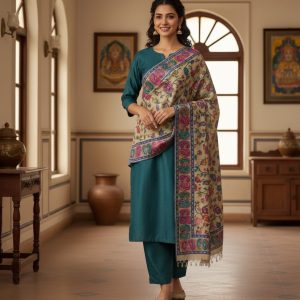
Beige Wool Hand Kalamkari Embroidery Pashmina Shawl for Women
Read more -
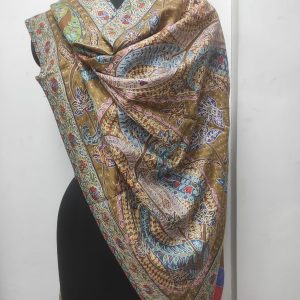
Olive Green Wool Hand Kalamkari Embroidery Pashmina Shawl for Women
Read more -
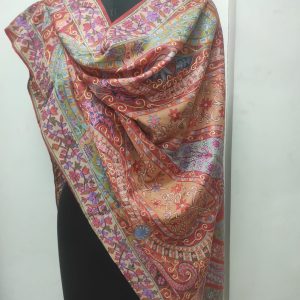
Multicolor Wool Hand Kalamkari Embroidery Pashmina Shawl for Women
Read more -
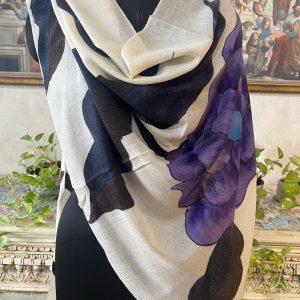
Off-White Wool Hand-Painted Pashmina Shawl with Purple Floral Design
Read more -
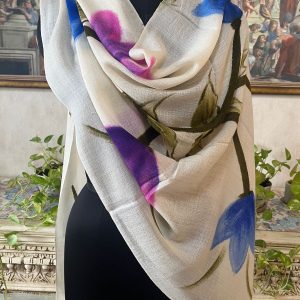
Hand-Painted Floral Pashmina Shawl for Women
Read more -
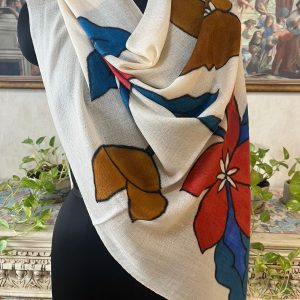
Off-White Wool Hand-Painted Pashmina Shawl with Multicolor Floral Design
Read more -
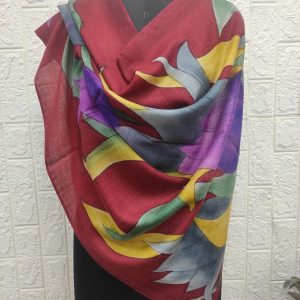
Grey Wool Hand-Painted Pashmina Shawl with Multicolor Floral Design
Read more -
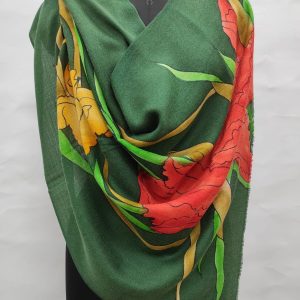
Green Hand-Painted Floral Pashmina Shawls for Women
Read more -
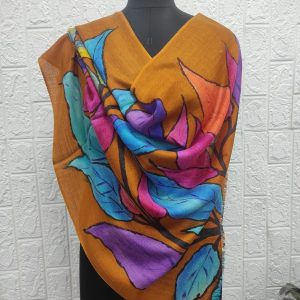
Mustard Hand-Painted Multicolor Floral Pashmina Shawls for Women
Read more