Have you ever picked up a shawl at a store, felt how soft it was, checked the label that said “100% Pashmina,” and still felt unsure? If you have, you are in very good company. Buyers across the world, from individual shoppers to boutique owners and fashion retailers, deal with this confusion every single season.
The market for a real Pashmina shawl has been flooded with imitations for decades. Acrylic blends, viscose mixes, and synthetic fibres get dressed up with premium labels and sold as the genuine article. Unless you know exactly what to look for, it is easy to be misled, even if you have been buying or selling shawls for years.
This guide is written specifically for retailers, boutique owners, fashion brands, and B2B buyers who want to make informed sourcing decisions. Here are 8 proven, practical ways to identify a real Pashmina shawl from a fake one, along with what each test means for your business.
What Is a Real Pashmina Shawl?
A real Pashmina shawl is woven from the fine undercoat of the Changthangi goat, a breed that lives on the Changthang plateau of Ladakh, India, at altitudes above 14,000 feet. The fibre harvested from this goat, locally called pashm, measures between 12 and 16 microns in diameter. For comparison, regular sheep wool averages between 25 and 40 microns. This extreme fineness is what makes authentic Pashmina so remarkably soft, warm, and lightweight.
No synthetic fibre comes close to replicating this combination. Many have tried. None have succeeded.
According to Wikipedia, Pashmina is a fine type of cashmere wool that has been produced in South Asia for centuries, with deep historical roots in the Kashmir Valley Pashmina.
Understanding what real Pashmina actually is forms the foundation for everything that follows.
Way 1: The Ring Test Is the Oldest Way to Verify a Real Pashmina Shawl
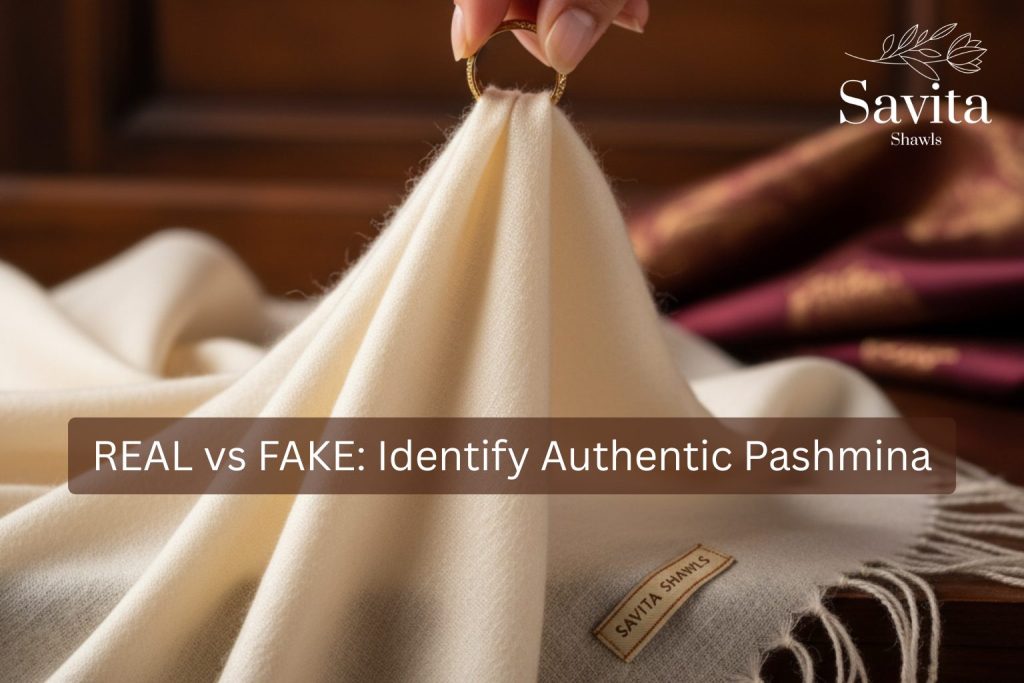
The ring test involves pulling a full-sized shawl through a standard finger ring. A real Pashmina shawl, no matter how large, will slide through a ring effortlessly. This is possible because authentic Pashmina fibres are extremely fine and the weave compresses without resistance.
A fake Pashmina shawl made from wool blends, acrylic, or synthetic fibres will bunch up, catch, or refuse to pass through entirely. The fibres are coarser, the weave is bulkier, and the fabric does not compress the same way.
This test takes about three seconds and has been used by traders and artisans for centuries. It is one of the most reliable quick checks available.
Way 2: The Burn Test Confirms Whether Your Pashmina Shawl Is Real
Pashmina is made from keratin, the same protein found in human hair. When you burn a small thread pulled from a real Pashmina shawl, it behaves exactly like hair.
A genuine real Pashmina shawl thread will:
Burn slowly and stop burning once the flame is removed
Produce a smell similar to burning hair or feathers
Leave behind soft, dark ash that crumbles between your fingers
A fake Pashmina shawl made from acrylic or polyester will:
Melt and form a hard bead at the tip
Smell like burning plastic or chemicals
Leave behind a shiny, rigid residue that does not crumble
For B2B buyers placing bulk orders, always request a sample thread from your supplier before committing. A credible shawl manufacturer in India will always allow this test without hesitation. If a supplier refuses, that tells you everything you need to know.
Way 3: The Touch and Feel Test Reveals a Real Pashmina Shawl Instantly
A real Pashmina shawl has a warmth and softness that is genuinely difficult to put into words, but very easy to recognise once you have felt it. It is warm without feeling heavy. It is soft without feeling slippery. It settles against your body naturally rather than sitting stiff or sliding off.
Run your fingers across the fabric slowly. Authentic Pashmina has a very subtle, almost imperceptible texture. Synthetic imitations tend to feel either too smooth and silky (a sign of viscose blending) or slightly scratchy (a sign of coarse wool or acrylic content).
Here is a professional tip that many buyers use: warm the shawl between both palms for about ten seconds. A real Pashmina shawl will absorb your body heat and feel noticeably warmer. A synthetic shawl will remain cool and indifferent.
Way 4: Pilling Is a Sign That Your Pashmina Shawl Is Real
Yes, and this surprises a lot of buyers. A real Pashmina shawl will develop light surface pilling with regular use. This is not a defect. It is a direct result of the short, natural fibre length that makes Pashmina so fine in the first place. Friction causes a small number of loose fibres to gather into tiny soft balls on the surface.
The key difference between real and fake pilling is texture. Authentic pilling on a real Pashmina shawl is soft. It brushes off with a gentle swipe of the hand, and the shawl looks pristine again. Pilling on synthetic blends, if and when it appears, tends to be firmer, harder to remove, and leaves the fabric looking worn.
If you are a retailer, educating your customers about this upfront is a smart strategy. It builds trust, manages expectations, and significantly reduces returns.
Way 5: Price Is One of the Clearest Signals of an Authentic Pashmina Shawl
Why are real Pashmina shawls expensive?
There is no polite way to say this: you cannot buy a real Pashmina shawl at a bargain price. If someone is offering you a “100% Pashmina” shawl at a price that seems too good to be true, it is almost certainly synthetic or a heavily blended product.
The journey of raw pashm from goat to finished shawl is long and labour-intensive. The fibre is hand-combed from the goat’s undercoat during the moulting season. It is then cleaned, hand-spun into yarn, and woven by skilled artisans on traditional looms. Each stage adds time, skill, and cost. A genuine real Pashmina shawl reflects that investment in its price.
For boutique owners and fashion brands sourcing in bulk, partnering with a trusted bulk shawls supplier means getting authenticated products at fair trade prices. The price difference between a real Pashmina shawl and a synthetic one is not arbitrary. It is a reflection of what went into making it.
Way 6: The Weave Structure of a Real Pashmina Shawl Has Distinct Characteristics
How can you identify a real Pashmina shawl by its weave?
Hold a shawl up to a window or a strong natural light source and look at the weave carefully. A real Pashmina shawl will have a fine, even, slightly open weave where individual threads are visible but consistent. You may also notice tiny, natural irregularities in the weave. These are not flaws. They are proof of handcraftsmanship.
Machine-made synthetic shawls have a very different weave profile. The threads are thicker, the weave pattern is perfectly uniform in a mechanical way, and the overall texture under light looks denser and less refined.
Three specific things to check in the weave of a real Pashmina shawl:
The weave is consistent but not robotically perfect. Natural slight variation is a good sign.
The fringe, if present, should feel soft and fine, not stiff or plasticky.
The fabric should allow a gentle diffusion of light through it when held to a natural source. Authentic Pashmina fibres are fine enough to create this effect.
Way 7: Certifications and Sourcing Transparency Confirm a Real Pashmina Shawl
What certifications should a real Pashmina shawl have?
A responsible shawl manufacturer in India will always be willing to share proper documentation for the products they supply. In today’s B2B sourcing environment, transparency is not optional. It is a baseline expectation.
When you are buying a real Pashmina shawl in bulk, always ask for the following:
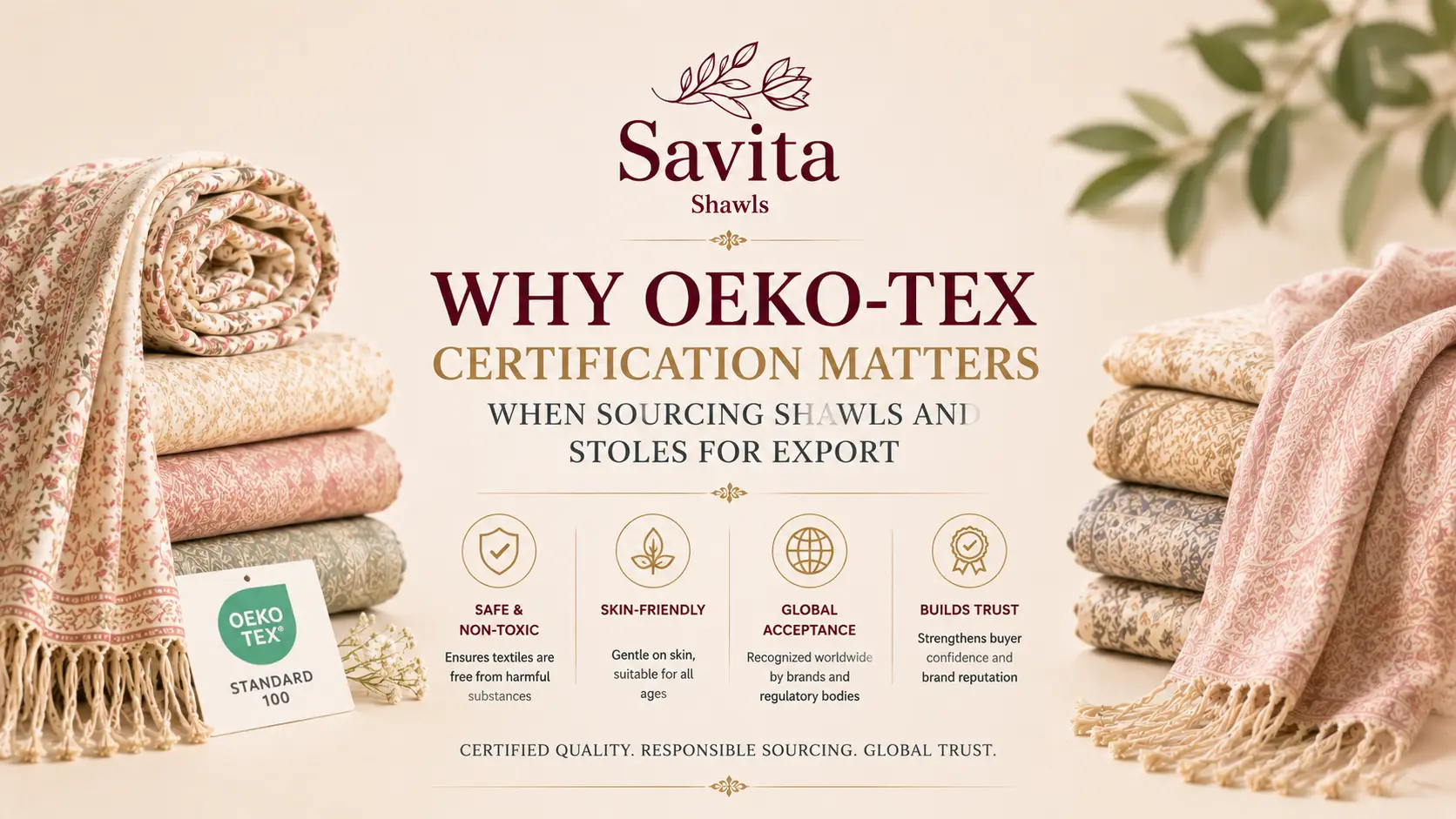
Fabric composition test reports from an accredited laboratory
Country of origin documentation
GI (Geographical Indication) certification if the product is being sold specifically as Kashmiri Pashmina
Ethical production certificates and material safety documentation
Having this paperwork protects your business. It allows you to market your real Pashmina shawl collection with complete accuracy and confidence, which is exactly what premium retail customers and international wholesale buyers expect.
At Savita Shawls, our pashmina shawls collection comes with full fabric transparency and traceability. Our Gurgaon manufacturing facility holds IEC certification and exports to more than 20 countries. Documentation is always available.
Way 8: The Moisture Absorption Test Is a Reliable Way to Verify a Real Pashmina Shawl
Does a real Pashmina shawl absorb moisture?
Yes, and this is one of the less well-known tests but one of the most accurate. Pashmina is a natural animal fibre with excellent moisture-wicking properties. It absorbs moisture quickly and naturally.
To perform this test, breathe lightly on a small section of the fabric or place a single small drop of water on it. A real Pashmina shawl will absorb the moisture almost immediately. A synthetic or blended shawl will cause the moisture to bead up on the surface or spread outward very slowly.
This moisture-absorbing quality is also why authentic Pashmina is so comfortable to wear in cold, dry conditions. It regulates humidity against your skin passively, which is why nomadic communities in Ladakh and traders along the Silk Road prized it so highly for centuries.
Why Sourcing a Real Pashmina Shawl from a Verified Manufacturer Is a Business Decision
The luxury textile market is more competitive and more transparent than it has ever been. Today’s retail buyers, wholesale clients, and end consumers research what they buy. They read labels, ask questions, and in some cases, run their own tests.
A single instance of selling a fake Pashmina shawl as authentic can destroy a brand’s credibility, particularly when that information spreads through online reviews or social media. The risk is simply not worth it.
This is why choosing a reliable custom scarf manufacturer who specialises in authentic luxury fibres is a strategic decision, not just a quality preference.
At Savita Shawls, we supply real Pashmina shawls and premium blended shawls to B2B buyers, fashion brands, wholesalers, and private label clients across the globe. Every product is manufactured to specification, documented properly, and backed by samples you can evaluate before committing to a bulk order.
What You Get When You Work with Savita Shawls
Minimum order quantity starting from 100 pieces, which works for boutiques and growing fashion labels
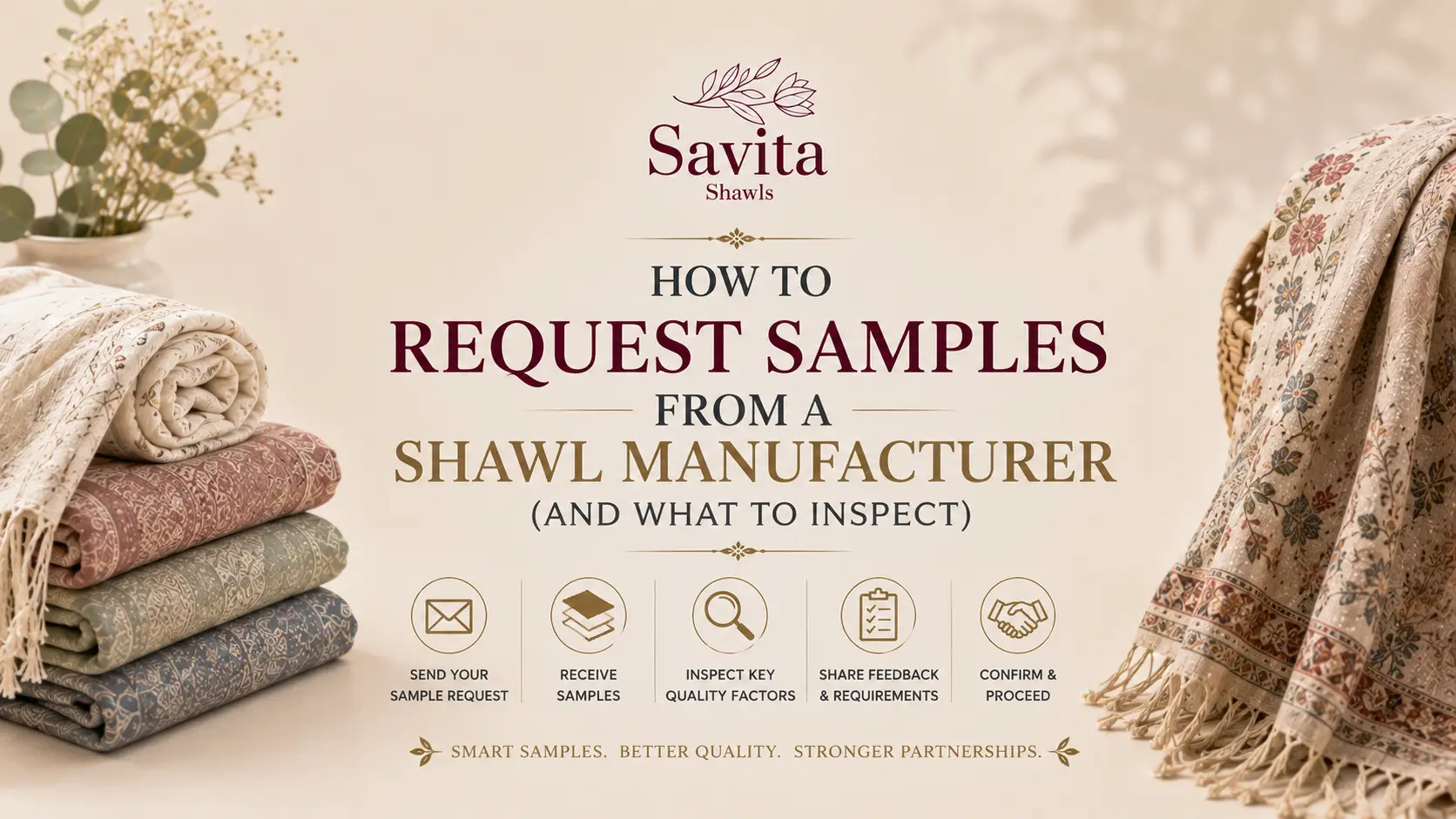
Sample delivery in 5 to 7 days so you can evaluate quality firsthand
Private label and OEM manufacturing with your branding, your packaging, your specifications
Full IEC-certified export documentation for international buyers
A 30-day lead time with transparent production tracking throughout
Whether you need a classic ivory real Pashmina shawl for a premium gifting programme, embroidered shawls Pashmina stoles for a wedding collection, or a seasonal bulk order for your retail catalogue, we are equipped to deliver at scale without compromising quality.
Current Trends in the Real Pashmina Shawl Market
Understanding market direction helps B2B buyers make smarter sourcing decisions. Here is where the real Pashmina shawl market is heading in 2025 and 2026.
Slow fashion adoption is accelerating. Consumers are buying fewer pieces but spending more on items that last. A well-maintained real Pashmina shawl lasts decades. This makes it a compelling proposition for premium retail.
Corporate and wedding gifting demand is growing. A real Pashmina shawl is now one of the most requested items for bulk gifting in corporate, festive, and wedding contexts across India, the Middle East, and Southeast Asia.
Private label luxury is expanding. Mid-sized fashion brands are building signature Pashmina lines to differentiate themselves. This is creating strong demand for trusted manufacturing partners.
Heritage weave revival is gaining momentum globally. Kani and Jamawar weave patterns on real Pashmina shawls are drawing significant interest in European, Japanese, and American markets. Buyers who move early on this trend will build meaningful competitive advantage.
Partnering with an established shawl manufacturer in India now positions your brand to capture this demand as it grows.
Conclusion: A Real Pashmina Shawl Is Worth Getting Right
A real Pashmina shawl is not just a product. It represents centuries of artisan knowledge, ethical sourcing, and a fibre so rare that it was historically reserved for royalty. When you choose to stock, sell, or brand a real Pashmina shawl, you are associating your business with that legacy.
The eight tests in this guide give you the practical tools to tell the difference between genuine and fake, whether you are standing in a trade showroom, reviewing a sample at your desk, or briefing your procurement team before a bulk order.
For retailers building luxury accessories lines, boutique owners looking for a dependable bulk shawls supplier, or fashion brands exploring private label Pashmina, the path forward starts with sourcing authentically.
Get in touch with Savita Shawls today. Request samples, ask for documentation, and start a conversation about what a genuine real Pashmina shawl partnership looks like for your business.
A real Pashmina shawl is made from the fine undercoat fibre of the Changthangi goat, native to the high-altitude Changthang plateau of Ladakh, India. The fibre is known as pashm and measures between 12 and 16 microns in diameter. This makes a real Pashmina shawl significantly finer, softer, and lighter than products made from regular sheep wool or any synthetic fibre.
The three most reliable home tests for a real Pashmina shawl are the ring test (the shawl passes through a finger ring without resistance), the burn test (a loose thread smells like burning hair and leaves soft ash, not hard plastic residue), and the touch test (a real Pashmina shawl feels warm and naturally soft, not artificially slippery). Running all three tests together gives a very accurate result.
Yes, A real Pashmina shawl will develop light pilling with regular use. This is a sign of authenticity, not poor quality. The short natural fibre length of authentic pashm causes minor surface pilling over time. The pills are soft and brush away easily. Synthetic shawls either do not pill initially or produce hard, non-removable pills that damage the fabric appearance permanently.
A real Pashmina shawl is expensive because the raw fibre is rare, hand-harvested, and processed through multiple labour-intensive stages before it becomes a finished product. The pashm is hand-combed from the Changthangi goat’s undercoat once a year, then cleaned, spun, and handwoven by skilled artisans. Each step adds time and skilled labour. The resulting price reflects genuine cost, not a marketing premium.
Yes, Many certified shawl manufacturers in India offer private label manufacturing for real Pashmina shawls. This means buyers can have authentic Pashmina products made to their own specifications, branded with their own labels, and packaged to their standards. Savita Shawls provides full private label and OEM services starting from a minimum order of 100 pieces with a 30-day lead time.
Not exactly, GI-tagged Kashmiri Pashmina is a specific category of real Pashmina shawl that is handwoven in Kashmir using locally sourced raw pashm and certified under India’s Geographical Indication system. All GI-tagged Kashmiri Pashminas are genuine Pashmina products. However, high-quality real Pashmina shawls are also manufactured in other certified Indian facilities using authentic pashm fibre without carrying the Kashmiri GI label specifically.
To find a trustworthy bulk shawls supplier for real Pashmina shawls, look for manufacturers with IEC (Import Export Code) certification, fabric composition test reports, sample availability, and a clear communication process. Ask for burn test samples before placing any order. Check their export history and ask for references. Savita Shawls, based in Gurgaon, is an IEC-certified shawl manufacturer in India that exports real Pashmina shawls to over 20 countries with full quality documentation and sample delivery in 5 to 7 days.