Pashmina fiber quality is a theme that has gripped the attention of lovers of hot textiles, fashion constructs in the culturally conscious. Naaba “Pashmina” originates from “pashm” in Persian which means wool or for that matter soft gold. This name already carries with it a whole legacy of luxury, elegance and extreme attention to detail.
As you already know, we may be talking about the township of Pashmina but it will not be right to say we are discussing a meagre amount woven fiber. Woven and measured down the ancient drapery route with kings and queens showered with it is an age that weaves this exquisite cloth for kings and their kin.
Pashmina fiber quality goes much beyond, as there is a need to understand the biology of the animal that produces this kind of fiber, the specific geographical location where it has been sourced, the techniques that have been used to manufacture the particular item, and the conduct which sets apart an authentic and quality Pashmina from the cheap downgrades that have infested the world.
This all-inclusive volume will embrace you in all aspects of Pashmina fiber quality completely, making it possible for you to fully appreciate how the material manages to be infreezingly touch, surprisingly strong and valuable. Starting from the lofty icy regions of the Himalayas down to the diligent hands of Kashmiri artisans the Pashmina fiber quality enhancing continuum stretches through a series of processes; natural and added processes that define the finality of the character of the textile.
Be it a consumer who wants to purchase a Pashmina shawl, a fashion designer looking for some fabrics to work in, or someone who just wants to know more about what makes Pashmina different from every other product, this blog will explain and teach everything for one to enjoy Pashmina and enhance Pashmina fiber quality.
The subsequent sections tackle a different dimension of why Pashmina is different and special; its uniqueness being at the root of the fiber diameter, the age, and breed of the goat, altitude of pastureland up to hand-spinning and weaving procedures. Without further ado, let’s dive into the fascinating world of Pashmina fiber and its quality determinants.
The Origins of Pashmina Fiber Quality: Understanding the Source
The creation of Pashmina fiber quality does not begin when the wheel starts or the loom is set in place, but on the Himalayan high-level plateaus in remote regions of Ladakh in India, some parts of Nepal, or the vast Tibetan Plateau.
Between an elevation of 14,000 feet and 18,000 feet from where earth’s surface stops being visible, where in most of the winters supressed temperatures reach extremely cold levels, there exists a certain specie of goat called the Changthangi or Himalayan mountain goat which survives there.
The undercoat from this wonderful animal is authentic pashmina and the harsh climate that this goat lives in is present, and as such, contributes alongside other factors to the excellent Pashmina fiber quality that people from around the world understand and love. The Changthangi goat is reared by the nomadic families of the Changpa people, who are constantly on the move in the region. These goats have developed a feathery top layer and an underlying woolen layer to protect themselves against the freezing temperatures.
The top layer is a rough protective guard’s hair to keep away wind and moisture and the next thing is the soft buttery undercoat, the basis for true Pashmina quality. The basis of the undercoat layer of the Ghillie Blankets blanketing the surfaces is subzero temperatures and advanced regions of the foliage.
The colder the weather the more soft and thin this undercoat should be because there are so many more air spaces that need to be retained and kept warm which necessitates that these fibers must become increasingly thinner.
Pashmina fiber quality is produced in such a way that this conceivable refinement in such warmth is possible due to the biological consistency. Geographic factors are therefore inextricably linked to the quality of the Pashmina fiber. Efforts to domesticate the Changthangi goats in regions of low altitude and high temperature have yielded goats which do not produce Hun at the same standard.
The fiber thickens, is less shinny and is rougher when it is taken out of the goat’s native land. Consequently, the genuine high quality Pashmina fibers has high affinity to the Himalayas and other high altitudes alone. The harsh freezing temperatures, optimum levels of ultraviolet light, less vegetation in such areas which limits the growth of these animals into huge sizes and the distinctive biological composition of the Changthangi goat all combine to produce a fiber that is second to none in the world.
The quality of pure pashmina in its real and original sense is favored by the collaboration of nature and all its forms, associated with pet breeding and natural conditions.
The Role of Altitude and Climate in Determining Pashmina Fiber Quality
The area in which Changthangi goats are raised significantly affects the Pashmina fiber quality of the fiber produced. Studies that examine the relation of terrain to fiber growth and structure have corroborated this finding where higher altitude regions producing goats are warmer at above fifteen thousand feet level fibrous structure and less aggressive for goats confined to lower altitudes. One hypotheses does focus on the ideas of thermoregulation.
Where the height is great, winters are very cold, down to minus 40 Celsius. In order to withstand such temperatures, the goat has to produce fiber that is ever thinner. Otherwise, it would be impossible for the animal to produce a sufficient outer layer. The necessity of producing such fine fiber for survival is the essence of the high Pashmina fiber quality.
The variation in the weather cycles has a seasonal effect on the quality of Pashmina fiber. The goats regularly molt their coat in spring and the undercoat is combed, instead of every m The fiber combing is usually done in the months of March, April or May which is the period of moult. Consequently, the date and the manner in which this particular fiber is gathered determines the quality that will be achieved.
That fiber combed out during the molting period, being the finest and considerable uniform, results in Pashmina fiber quality that is superior. Any fiber retrieved during the molt at an inappropriate time — either too early or too late — risks being nonuniform, with more guard hair or of some other lengths than what is desirable, which may tend to alter the end product as a whole in terms of its softness and workability. Changpa herders have dealt with these seasonal nuances and their skills in managing the harvest of the goats are equally instrumental in keeping the pashmina very pure.
Fiber Diameter: The Most Critical Measure of Pashmina Fiber Quality
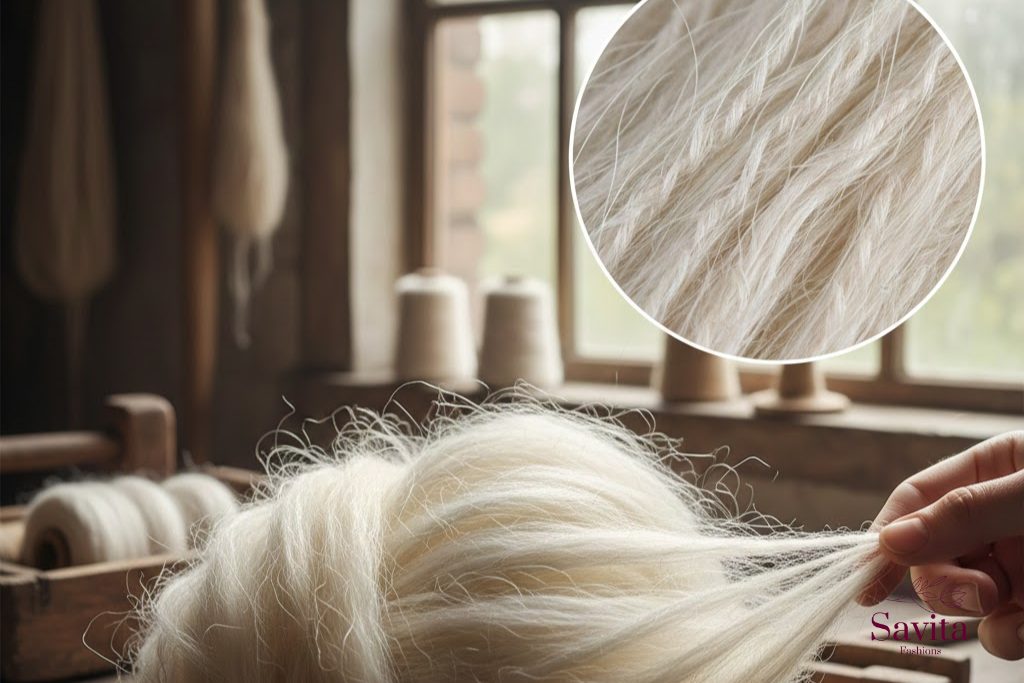
The most accurate and scientific indicator of Pashmina fiber quality is the thickness of an individual fiber strand, usually expressed in microns. A micron is equal to one hundredth of a millimeter, and in the sphere of premium fibers, an even slight variation of one or two microns changes how a fabric will feel on the body, how it flows, takes color, as well as how strong it will be over time. The quality of authentic Pashmina fiber can be defined by the presence of fibers which have a thickness of between 12 and 16 microns.
To put it into perspective, one strand of human hair tends to be within the range of 70 to 100 microns – therefore when compared to a human hair, a Pashmina fiber is about five to seven times finer. With such exquisite fineness comes the noteworthy figure of softness in the Pashmina fiber quality.
The finest and most exclusive grades of Pashmina fiber quality are characterized by fiber diameters, usually in the range of 12 to 13 microns, which is common to describe them as being in the lowest limit of allowable thickness. Such extreme fineness is scarce and therefore pricey since only the healthiest best-cared fBhAngle Changthangi goats will produce this kind of hair under the most favorable of conditions of high altitudes.
As the thickness climaxes over 16 microns, some of the softness is lost and it starts feeling slightly less smooth and rich against the delicate skin. Nonetheless, it is still much softer than most of the natural fibers sold in the market. The diameter of Pashmina fibers also determines their strength because short diameters make it possible to fabricate very fine but durable fabrics when they are weave prepared excellently.
Determining the diameter of fibers is a very complex process which in most cases is carried out with the use of devices such as an Air-Flow Fiber Fineness Tester, and in more advanced cases, an Optical Fiber Diameter Analyzer (OFDA). Using such means, it is possible to achieve maximum accuracy in determining the diameter of hundreds thousands of measured fibers, or even the sampling of the given Pashmina fibers manufactured in the batch.
Thus, quality testing is what reputed Pashmina makers and sellers utilize to classify the quality and, it is recommended to the buyers wishing to buy pure pashmina to ask for the fiber diameter test report even before a bulk order of such products is made. The 12-16-micron limit is highly indicative of the soft and finest form of Pashmina, and any attempt at evaluating the Pashmina fiber quality would be incomplete without paying attention to this aspect.
The Influence of Fiber Diameter on the Quality Enhancement in Pashmina Fiber Softness Regarding the difference in fiber thickness and its softness, it is not a popular tale only – it is an underlying concept in textile science which controls the quality of Pashmina directly. Fine enough threads do not provoke pain sensors found in the skin, thus creating incredible soft feeling. Fibres more than about 30micron make the skin of certain people itchy or have a rough feeling.
Conversely, fibers measuring less than 20microns are not perceived as single fibers unless in huge volumes. This is the extremely soft and almost light air feeling that Pashmina is known for. For fiber diameter of 12 ~ 16 microns whereas of Pashmina, such softness in Pashmina fiber quality is comfort but more importantly, it is a luxury.
It softly embraces the body, providing warmth and softness that cannot be imitated by most natural materials. This plushness is not simply a cosmetic feature — it associates with the very essence of the fiber and lingers during the lifetime of the textile, if used right. Excellent Pashmina fiber quality translates into the fact that the article retains most of the soft feel in a shawl or scarf even after years of usage, as long as it is eaten in a toned fit.
This is also one of the reasons why genuine Pashmina items are kept as family treasures and passed on from one generation to the next. The fiber is built by proteins, just like human hair which is why it is strong in a way that no synthetic analog can substitute.
There is a need to understand how two perceptions such as thickness of a hair and softness of a fiber are related in order to understand the price tagged on genuine Pashmina fiber quality and the fact that those who have used it always do not want any other material after the first use.
Fiber Length and Uniformity: Hidden Pillars of Pashmina Fiber Quality
Aside from fiber diameter, the length of individual fibers and their uniformity are equally crucial factors quantified in determining the pashmina fiber quality. The staple length, which is an average of the raw fiber length, determines how the fiber will be woven into yarn, how smooth the yarn will be and how well the woven or knitted material will appear and worn out.
The accepted attribute of good quality Pashmina fiber quality does not allow the staple length to be less than 3 cm and more than 8 cm. In this context, long fibers can be used to manufacture fine and durable yarns through spinning, which are neither short nor complicate the yarn hand spinning process.
Another characteristic trait of high-quality Pashmina is that the batch of fiber has fibers that are of the same length. In instances where the fibers have different lengths, the yarn becomes either too thin or too thick, which poses a challenge to the use and the aesthetics of the woven fabric.
This problem is avoided by the uniform length of the fiber, which makes it possible for the artisans to obtain yarn with the same twist and size, thereby maintaining uniformity in the construction of the fabric and the smoothness of its surface. This is due to a balance of several factors relating to the health and age of the animal, as well as the time and method of harvesting the fiber and the careful technique of applying the primary processing, in particular, removal of hair and classification.
Further, there is considerable emphasis on such initial phases while assessing the finest quality of pure pashmina. Pashmina fiber is usually processed by separating the fine undercoat from the harsher outer coat in a process called dehairing. This is an important stage of Pashmina fiber as the dresses can become harsh due to the presence of some guard fibers on the surface of the dressed fabric.
Virgin dehairing is carried out traditionally by hand very commonly in Kashmir method is considered the best, as in it no machine crops are done. Though mechanical dehairers are available for faster production such machines generally do not dehair well. The hand machine dehaired fiber is rated superior among the rest of the Pashmina fibers since it retains the whole of fine undercoat free from any impurities.
At this stage, dehaired fibre containing a negligible amount resides within the undercoat, and it is not only clean but also soft, brimming ready to be spun. Division and Weighting How Pashmina Fiber Quality is Ordinal Once the pashmina fibers have been dehaired, they are refined using grading and sorting. The quality of the Pashmina fiber is further enhanced in this step.
Experienced graders – mostly women from the Kashmiri artisan families, who over the years have developed extraordinary touch skills assess how each dehaired fiber should be used and categorize them accordingly, such as thickness for weaving and knitting, color, length, and hygiene. Sorting itself is as much an art as anything else in the Pashmina-making because it requires experience to a degree where all Pashmina fiber quality always remains intact throughout the production cycle.
Only the best quality fiber i.e. 12-14 microns, showing the highest degree of even length and natural shine is gathered for the best quality products. The grading systems used at different locations and by different producers are mostly the same.
Within the hierarchy system, the level of Pashmina fiber quality is an indicative factor of fineness and can be structured around the diameter of the fiber, on the percentage of guard hair, and on the tendency of the fibers to have varied diameters of guard hair. Fibers without guard hairs with descent diameter are generally called as Grade A fibers.
For example Pashmina containing relatively big fibers within mixed fiber classification is referred by philosophy as grade B. Pure hair may also contain larger fibroid grades marketed as pashmina whose fiber diameter is 20 microns or more, thereby making it hard and stiff.
Those who wish to have authentic pashmina need to remember these grades and their explanations, as well as choose manufacturing companies that have controls and standards in place to verify to which grade certain furs belong.
The Spinning Process and Its Impact on Pashmina Fiber Quality
It is the conversion of untreated Pashmina fiber into the desired yarn that is the most demanding phase of the process and possibly the one with the greatest influence on Pashmina fiber quality.
The people of Kashmir still practice this old art of spinning Pashmina, using only a basic wooden spinning wheel, which they traditionally called The Yinder or Charkha. The technique of hand spinning has been practiced for hundreds of years, and this is the only way to achieve the highest Ravel and Consequently Pashmina fiber quality shading, synchro box in split indexing hand, as the amount of twist applied to the yarn during spinning is precisely controlled by the spinner him self.
However, machine spinning of Pashmina is also possible and it is much quicker, though the resulting textiles tend to be very even and lack the characteristic warmth of the hand spun that is more often than not appreciated by many admirers of Pashmina fiber quality and that they say is both seen and felt in the final fabric.
The level of twist introduced during spinning is an important technological fact that invariably contributes to the Pashmina fiber quality of the end product. Under twisting the yarn makes it the surface of the fabric extremely weak and susceptible to pilling – i.e. getting little fiber balls on its surface.
Conversely, when there is excessive twist in the yarn, it turns wiry, sacrificing some softness which makes the fabric less in touch and not draping the way good quality Pashmina cloth should. When sheers are made of yarn, since the level of twist and tension is controlled with the operator’s discretion, he/she is able to achieve an ideal balance of softness and strength.
This is also an essential aspect of the Pashmina fiber quality. Although one cannot quite explain how such knowledge occurs when it is used while performing a given task, that is also one of the reasons why such yarns differentially priced from the machine manufactured ones.
Once the yarn has been spun to its adequate length, a textile craft technique known as plying may be introduced, which consists of twisting two or more spun yarns into one with the aim of making the result a thicker, more durable compound yarn. That is, durability of a Pashmina fiber is more in the case of wholesale retail comparison, the former being multiple single-ply protective yarns twisted together and the latter a yarn composed of many strands entwined in a single structure.
One disadvantage, nonetheless, of plied yarn is that it also modifies the softness and fluidity of so created garment, adding bulk to it as well. As such, choosing single-ply or plied yarn is a necessary consideration in any design as it is largely influenced by the purpose for which the Pashmina product is created.
Single ply more often than not is used in fine, gauzy looking shawls where lightness is also of paramount importance, as for the most part shawls are made of the highest quality of Pashmina fiber and thus are very light. On the contrary, it is possible to mention factors which determine that the shawl should rather be designed for high use or cold weather, thereby plied yarn might help in their purpose resistance.
Methods of Weaving and Its Influence on the Pashmina Fiber Quality In the weaving process or the formulation of the intricate design or structure of the suiting material, the Pashmina fiber quality as indicated and retained in the primary products of raw fibers and yarn is directly converted into the architectural structure of the manufactured textile.
The weaving in Kashmir is primarily the original Kashmiri method which hitherto has been the way of weaving the tfought and the improved Pashmina came from the Kashmiri which uses a loom compriseing its frame which is always of wood unlike the looms in uses today where the warp and weft interlocking is done by means of clicks woven into the plot.
Pashmina fiber quality varies depending on its densness or, better say, the number of threads in one inch; the higher the density, the heavier the cloth, the warmer, the more robust, and the more decorous the end product. An evenly woven Pashmina made from superior quality fiber will show that its structure is firm, soft, even, very clear, with a radiant effect owing to the smooth surface created by the natural fibers.
An extremely important factor while discussing the Pashmina fiber quality is the type of weave pattern. The simplest weave such as a plain or twill weave helps to bring out the crosses as well as the colour of the pashmina the best while other kinds of weaves for example handloomed Kashmiri Kani shawls, where designs are done with each of the threads on a different pin, offer ornamentation of the same material without losing its essential virtue. Twill weavoidnthe cross texture and adn that is affectionately praised by pashmina enthusiasts.
A Twill Woven Cloth: Very Practical And Resistant To Transverse IDio The Pashmina Results in a Greater Strength of the Cloth due to the fact that the tprowadly extends t tensile loads diagonally 보다 a plain weave. The stages following completion of weaving play an important role in the Pashmina fiber quality expected by the final consumer. Among these steps is washing with cold water and mild detergents, to remove the oil or any other process remains. The fabric is also stretched and evaluated for blocking to keep its proportions.
Further, a facilitated handwork, also referred to as raising, takes place where the fabric is meticulously brushed to attract the fibers of the tiny hairs present towards the surface resulting in a typical fluffy feel of good Pashmina. Where embroidery is necessary, complementary threads would be used to avoid compromising the Pashmina quality of the fabrics. As a practice, the people of Kashmir use silk threads to stitch in pattern on Pashmina, because the natural prousity of silk is compatible with or rather, non-occlusive to Pashmina and does not wear out the foundation fabrics.
Pure Pashmina Quality vs. Blended Products: Understanding the Difference
Pashmina has a few distinctions, wherein an understanding of variations in the Pashmina fiber quality is that of a comparison between pure pashmina such as fine garments and blends where pashmina is used combined with a technique and other fine fibres like silk, merino wool, cotton or polyester. Pure pashmina is also known as textiles that are made from only the undercoat of the Changthangi goat, practitioners of the art regard this as the unsurpassed refinement of pashmina.
Blended products, even though positioned as Pashmina, are at most a substandard version of the commonly known Pashmina fiber quality. It is essential for any patron planning to buy quality Pashmina to have an ability to appreciate this difference in quality. Silk blends are the most sought after, and at times, the most appropriate choice of Pashmina blending resulting in Pashmina fiber quality.
Since Pashmina yarn is combined with delicate silk — usually in the proportions of seven parts of Pashmina and 3 parts of silk — the alteration that follows gives the textile better endurance and a finer shine without compromising much the super soft quality that high quality Pashmina fiber maintain. Blends of silk and Pashmina are also moderately more tenacious than unblended Pashmina fabric, which facilitates a broader range of uses.
Nevertheless, it is important to note that such combinations must be marketed as blends and not labeled as pure Pashmina because such clarity helps the consumers understand and select what they want depending on their needs and tastes. When Pashmina is combined with wool – even merino wool of a very fine quality – the overall quality of the Pashmina fiber is reduced due to the fact that firstly, the wool fibers are bigger in diameter than real Pashmina fibers.
Fine merino wool which is about 17 microns or 18 microns or 19 microns in thickness is most certainly thicker than pashmina which is about 12 microns or 14 microns in thickness and thus using superior coarser wool fiber will dilute the superb softness which is one of the defining bio properties of Pashmina or reverse Pashmina fiber quality. Furthermore, by also mixing with synthetic fibers like acrylic or polyester, a type of material popular and very common in cheap open markets, it becomes almost devoid of any Pashmina fiber quality material because it gets completely ruined.
Genuine pashmina, which has heat retention, moisture wicking, hypoallergenic and washable properties and softness, can never be devised or kept when its natural content is changed with foreign content. To the ultimate desired level, pure pashmina quality can only be achieved with pure Changthangi fiber embedded without any other content.
How to Distinguish Authentic Pashmina: Techniques and Testing Methods In light of the rise of fake substances on the global scene, the ability to distinguish the Pashmina fiber quality and the pure pashmina quality has become of utmost importance for a consumer. There are a few dozen of simple tests and additional secondary criteria which help to determine which will be the real Pashmina but the more accurate ways include laboratory examinations.
The burn test is probably the most popular field test: when the real Pashmina fabric is singed, it does this very slowly with the odor of a burning hair (mainly due to Pashmina containing a huge amount of keratin being chief components in all animal fibers) and with the ash that can be pressed into powder.
Whereas synthetic fibers are fused or melted rather than burnt and come with a plastic type of smell. This result indicates the presence of false synthetics in the knit samples; however it fails in distinguishing Pashmina from other luxury animal fibers such as cashmere and angora. Pashmina fiber quality can be more reliably determined by first placing the fabric under a microscope and checking arbitrarily. Authentic Pashmina fiber has a typical surface character with fine scales along its shaft – a characteristic inherent in proteinous animal fibers. It is these scales that uniquely transforms the fibers to appear differently than artificial fibers which usually have smooth linear surfaces.
Using a device called OFDA (Optical Fiber Diameter Analyzer) or LASERSCAN, through laboratory examination, it is possible to measure the fiber diameter quite accurately and, for pashmina, fibrous quality measurement cannot be surpassed. To ensure quality control and safeguard the Pashmina market, a number of leading Pashmina producers and marketers argue in favor of comprehensive lab testing, mandatory labeling requirements.
Evaluating how Pashmina feels, though subjective, is arguably one of the most practical ways of determining Pashmina fiber quality. Authentic and top-quality Pashmina is noticeably soft and incredibly warm as one touches or wearing it. Fine Pashmina, unlike heavy wool carry an illusion of floating, or levitating. The material should glow naturally instead of the glaring glossiness seen in the materials such as polyesters.
If authentic Pashmina is pulled slightly between two hands, it retains its original form due to the elasticity of keratin fibers, whereas poor quality fakes tend to remain stretched or even sag. Together with the tactile and visual assessments, the buyer’s assurance regarding the Pashmina fiber quality of the product may be increased together with the description of the item by the shop assistant.
The Role of Natural Dyes and Processing in Preserving Pashmina Fiber Quality
The dyeing process of Pashmina fiber is one that calls for caution, especially in order not to diminish the very high Pashmina fiber quality of the raw material. As it is made up of highly fragile keratin proteins, Pashmina fiber is prone to degrading agents such as chemicals, inappropriate pH levels and even heat which destroys the structure of the fibre and impacts tightly interwoven qualities such as the softness, sheen and power of a good Pashmina fiber quality.
Knowledge of natural fibers by the Kashmiris has been accumulated over hundreds of years which has boiled down to this particular traditional Kashmiri dyeing process which contains plant, mineral and insect dyes that are quite mild to the Pashmina protein molecule thus avoiding denaturation. Such colorants are used to produce vibrant, bejeweled colors, the famous of which is Kashmiri Pashmina.
As opposed to the natural colors, synthetic shades that replaced the natural dyeing agents are more affordable because of vast choices of the colors available in the market, therefore, their dominance is on rise for the coloring of Pashmina. Despite this, for instance, whenever the use of good quality synthetic dyes is recommended under controlled conditions of temperature and pH, such can be spot on as they will cause no significant damage of the Pashmina fibers with brilliant and color fast dyeing.
Complex and professional processes are not used when dealing with poor quality dyeing that involves the use of aggressive chemicals as well as wrong fixation practices. Weakening of the fibers, as well as color bleeding or fading/uneven color to mention a few, would often result. The dyeing quality of Pashmina fiber exhibits the dark, deep uniform color with a high wash and light fastness i.e. the color does not wash out in the water after being washed and otherwise fades when exposed to the sun during outdoor laundering.
People look at various qualities when rating Pashmina fiber quality, one of them is the colorfastness of the dye used, since this indicates how the fabric was handled during the Pashmina production process. Washing and finishing after dyeing are crucial in maintaining the quality of Pashmina fiber. Normally, pashmina is washed in cool or tepid water with mild soap and/or specifically-made wool detergent.
Use of hot water is not advisable as it leads to shrinking and felting of the fibre which is a permanent change in the fabric. Friction is also reduced to no friction at all during washing since too much strain can fuse the delicate fibers together. It is then rinsed, and water is squeezed out by hand within a towel, allowing Pashmina structures to dry without any dimensional deformation. Such pre-treatment finishing is one of the factors that enhance the finis’ quality of the Pashmina fabric throughout the manufacturing stages and should be addressed to the final customers as instructions regarding care and maintenance of their Pashmina clothes.
Pashmina is More Resistant Than It Looks A widespread misconception regarding Pashmina fiber quality is the way in which its smoothness and incredible softness are related to its functional ability. Most people believe that such fine and soft Pashmina Fiber could not be very strong and would not last very long. However, such beliefs would be wrong because even according to history, Pashmina Shawls are in existence surviving a lot of use. Also, science has also shed light on some facts concerning fine keratin fibers.
The durability of Pashmina shawls, as long as the fiber used is authentic, high-quality Pashmina fiber, and the fabric itself is properly made and maintained, is surprisingly high. Pashmina fiber quality by nature of its protein composition gives rise to a certain degree of elongation allowing it to endure considerable stress without breaking apart in ordinary circumstances. Durability in Pashminas is attributed principally to the levels of keratin contained within the fibers themselves.
The polymers making up the tensile components of the fabric are wound in such a way as to cause a springy effect – taut under stress but still regain their shape upon reducing the stress. Such a feature is not in abudance as the strands would relieve if the level was extreme. However, with high Pashmina fiber quality, that is extended – affords wear and tear on the material. T
hus, a where one can store a properly-made Pashmina shawl and wash it gently will help maintain its structure, softness, and form over decades as possible – one of the most resilient luxury textile investments. One of the recurrent issues associated with Pashmina and, in particular, its longevity is pilling. Pilling refers to the process whereby, through wear, the loose ends of the short fibers that are on the outside of the fabric become detached and form a tangle of small balls.
This is a property of protein fiber materials and does not mean that the Pashmina fibers are bad quality – that can be experienced with the best of Pashminas as well, where pilling happens at the very beginning when all the short ends of the fibers are used to spin and weave the materials.
Conversely, extreme or prolonged pilling is usually a sign of substandard Pashmina fiber quality – say that – meaning the fibers have more of short ends, the twist in the yarn is not enough to hold the fibers in place, or the spacing in the weave between the threads is too wide and the fibers cannot be any more secured. Premium fiber Pashmina all over the world will usually pill the first few months and the users will use a Pashmina comb or a lint shaver to remove the pilling quickly and smoothly, restoring the elegance of the fabric.
The Impact of Goat Age, Health, and Breed on Pashmina Fiber Quality
The dyeing process of Pashmina fiber is one that calls for caution, especially in order not to diminish the very high Pashmina fiber quality of the raw material. As it is made up of highly fragile keratin proteins, Pashmina fiber is prone to degrading agents such as chemicals, inappropriate pH levels and even heat which destroys the structure of the fibre and impacts tightly interwoven qualities such as the softness, sheen and power of a good Pashmina fiber quality.
Knowledge of natural fibers by the Kashmiris has been accumulated over hundreds of years which has boiled down to this particular traditional Kashmiri dyeing process which contains plant, mineral and insect dyes that are quite mild to the Pashmina protein molecule thus avoiding denaturation. Such colorants are used to produce vibrant, bejeweled colors, the famous of which is Kashmiri Pashmina.
As opposed to the natural colors, synthetic shades that replaced the natural dyeing agents are more affordable because of vast choices of the colors available in the market, therefore, their dominance is on rise for the coloring of Pashmina. Despite this, for instance, whenever the use of good quality synthetic dyes is recommended under controlled conditions of temperature and pH, such can be spot on as they will cause no significant damage of the Pashmina fibers with brilliant and color fast dyeing.
Complex and professional processes are not used when dealing with poor quality dyeing that involves the use of aggressive chemicals as well as wrong fixation practices. Weakening of the fibers, as well as color bleeding or fading/uneven color to mention a few, would often result. The dyeing quality of Pashmina fiber exhibits the dark, deep uniform color with a high wash and light fastness i.e. the color does not wash out in the water after being washed and otherwise fades when exposed to the sun during outdoor laundering.
People look at various qualities when rating Pashmina fiber quality, one of them is the colorfastness of the dye used, since this indicates how the fabric was handled during the Pashmina production process. Washing and finishing after dyeing are crucial in maintaining the quality of Pashmina fiber. Normally, pashmina is washed in cool or tepid water with mild soap and/or specifically-made wool detergent.
Use of hot water is not advisable as it leads to shrinking and felting of the fibre which is a permanent change in the fabric. Friction is also reduced to no friction at all during washing since too much strain can fuse the delicate fibers together. It is then rinsed, and water is squeezed out by hand within a towel, allowing Pashmina structures to dry without any dimensional deformation. Such pre-treatment finishing is one of the factors that enhance the finis’ quality of the Pashmina fabric throughout the manufacturing stages and should be addressed to the final customers as instructions regarding care and maintenance of their Pashmina clothes.
Pashmina is More Resistant Than It Looks A widespread misconception regarding Pashmina fiber quality is the way in which its smoothness and incredible softness are related to its functional ability. Most people believe that such fine and soft Pashmina Fiber could not be very strong and would not last very long. However, such beliefs would be wrong because even according to history, Pashmina Shawls are in existence surviving a lot of use. Also, science has also shed light on some facts concerning fine keratin fibers.
The durability of Pashmina shawls, as long as the fiber used is authentic, high-quality Pashmina fiber, and the fabric itself is properly made and maintained, is surprisingly high. Pashmina fiber quality by nature of its protein composition gives rise to a certain degree of elongation allowing it to endure considerable stress without breaking apart in ordinary circumstances. Durability in Pashminas is attributed principally to the levels of keratin contained within the fibers themselves.
The polymers making up the tensile components of the fabric are wound in such a way as to cause a springy effect – taut under stress but still regain their shape upon reducing the stress. Such a feature is not in abudance as the strands would relieve if the level was extreme. However, with high Pashmina fiber quality, that is extended – affords wear and tear on the material. T
hus, a where one can store a properly-made Pashmina shawl and wash it gently will help maintain its structure, softness, and form over decades as possible – one of the most resilient luxury textile investments. One of the recurrent issues associated with Pashmina and, in particular, its longevity is pilling. Pilling refers to the process whereby, through wear, the loose ends of the short fibers that are on the outside of the fabric become detached and form a tangle of small balls.
This is a property of protein fiber materials and does not mean that the Pashmina fibers are bad quality – that can be experienced with the best of Pashminas as well, where pilling happens at the very beginning when all the short ends of the fibers are used to spin and weave the materials.
Conversely, extreme or prolonged pilling is usually a sign of substandard Pashmina fiber quality – say that – meaning the fibers have more of short ends, the twist in the yarn is not enough to hold the fibers in place, or the spacing in the weave between the threads is too wide and the fibers cannot be any more secured. Premium fiber Pashmina all over the world will usually pill the first few months and the users will use a Pashmina comb or a lint shaver to remove the pilling quickly and smoothly, restoring the elegance of the fabric.
Kashmiri Heritage and Its Inseparable Connection to Pashmina Fiber Quality
For perhaps over six centuries, the Pashmina fiber quality of Kashmir has been intertwined with the most exquisite craftsmanship, the favor of the mightiest emperors, and the enduring symbolism of a material. Image after image, the history shows the need as well as creation of the first factory manufacturing Kashmir’s shawls as early as during the transformation (around 1500 AD) of Sultan Zain-ul-Abidin’s kingdoms in the Central Asia.
As Idarah Bagho, father of Jalaluddin, Babur did not repeat, extension of the empire was ensured. Each level of furniture used for the exposition was not only of the Mughals but also for each one separately. This Munificent tradition under the patronage of the Emperors and foils took the Pashmina fiber quality and the weavers’ excellence to overwhelming levels, a standard which the best Kashmiri Pashmina has retained till today.
The India government’s granting of Geographical Indication (GI) to the Kashmiri Pashmina is a validation of the region’s association with a certain level of the Pashmina fiber quality. The purpose of a geographical indication is to certify a product as having certain qualities, reputation or characteristics due solely to that place of origin and in the case of the Kashmiri Pashmina is to identify the real Pashmina manufactured in Kashmir from that made elsewhere.
GI certification help in the maintenance of the market for pure peshm quality because it offers protection against abuse of the brand name Pashmina and warranty to the consumers who are concerned with the genuineness of the goods they purchase. For offshore buyers, the concept of the GI and how these factor into the Pashmina fiber quality becomes vital, as it may be difficult to determine the place the goods originate from.
The preservation of the unique heritage embedded in the method of making high-quality Pashmina is in itself a task that is clear to many at this stage, as it is a form of culturally important and often intangible practices. The craft and tradition of the Pashmina’s spinning, weaving, finishing and hairy fibre qualitative transformation is as painful as it is long and would have been very difficult to formulate and then later transfer to materials-in production without losing the majority of the qualities which are still considered as maximum yarn quality of the Pashmina refinement.
Organizations active in Kashmir Pashmina conservation and promotion recognize that retaining this living heritage is not only a cultural imperative but also an economic necessity for the thousands of art production families who are engaged in Pashmina making. efforts are therefore being made to also enable artisan skill retention through training, marketing and quality certification which all sing-the same song with respect to the upper limit of the Pashmina fiber quality in the current generation and generations to come.
The International Market and Standardization of Pashmina and Its Quality of Fibers In the last fifty years there has been a considerable expansion in the international market of Pashmina with the increasing recognition of this fiber among the consumers in Europe, North America, East Asia and the Middle East. Nevertheless, the demand growth in turn has brought with it a severe problem associated with the Pashmina fiber quality standards in that the market is now saturated with a plethora of products of a very garbled quality, most of which carry the name Pashmina even when they can hardly pass for Pashmina at least in the pure version of the material.
Some of these machine products use inferior fiber content or even blended fiber, which are often advertised in a non-deceptive manner that has misled the consumers and led to the dilution of the Pashmina name to the point of being an assurance of quality.
The improvement of Pashmina fiber quality and its protection is a work in progress as castigating and clarifying sockets for the industry in the country is a multilateral process. These include government, certification bodies, producers associations and producers themselves. Within the India segment, Wool Research Association and Craft Development Institute Srinagar have been able to come up with methods of testing and certifying pure Kashmiri Pashmina for the market.
There also exists the participation of international standards bodies towards designing testing procedures for fibers which are effective between laboratories and provide Pashmina fiber quality assessments due to different characteristics available on the said material. Creation of these standards is very important to the future of Pashmina trade and to the satisfaction of clients who are ready to spend more money to enjoy real Pashmina.
Conclusion: Why Pashmina Fiber Quality Remains the Gold Standard of Luxury Fiber
Whether you think about the biology of Changthangi Goats, the terrain of the Himalayas, the structural aspects of fiber diameter, hand spinning-and-weaving, turning the global market, or safeguarding the industry in the worst case scenario, after this analysis of Pashmina fiber quality from every angle it is easy to understand how the latter is considered the epitome of luxury natural fibers that has outlived centuries.
Pashmina fiber quality is not an individual characteristic in simple terms, it is many and only surfaces when several distinctive processes, environmental, biological, and centuries of artistry among others, are synthesized perfectly. There is no other fiber found in nature which contains in its structure a large number of phenomena like fineness of Pashmina to its warmth, softness, lightness, moisture management and more importantly Pashmina durability.
Grasping the quality of Pashmina fibers in detail is the first step to being a responsible consumer, an investor, and even a textile specialist. Quality pure pashmina – that is, fabrics composed of certified Changthangi goat undercoat fibre of the exact fineness, prepared using traditional methods or the finest contemporary techniques and sincerely presented to the consumer – is a product that is to be desired, to buy and to preserve throughout a lifetime.
The phenomenal softness, the warm caressing touch, the weightless feel, and the calm and lasting beauty of true Pashmina fiber quality are, experience to experience, very difficult to find, such that they remain embedded in the memory for years and are hard to replace by anything else.
Pashmina, without a doubt, is one of the most unique natural materials and we are indeed privileged to use it. We have a duty to the purveyors, the environment and the animals that consume it to improve Pashmina fiber quality. In order to ensure that pashmina will retain this quality.
it is important to purchase a product, which is perfectly sourced, has a certification of authenticity, was ethically manufactured and understand the intricacies and nuances of the definition of high quality Pashmina. Pashmina series of narratives is first and foremost about various forms of human creation and the relations with nature’s beauty, is, however, the tale that must be told from one generation to the other. This is inherent in its definition.
Related Products
Showing 1–9 of 807 results
-
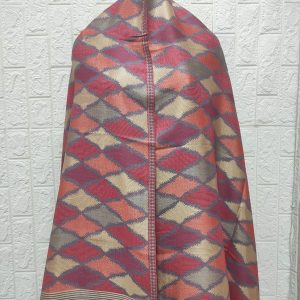
Fine Wool Zari Chevron Pattern Stole for Women | 70 x 200 cms | Savita Shawls
Read more -
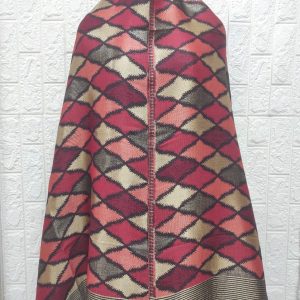
Fine Wool Resham Self Design Stole 70×200 Cms | Moonlight Shawls for Women | Savita Shawls
Read more -

Savita Shawls Royal Blue & Black Wool Natural Silk Box Pashmina Shawl for Women
Read more -

Savita Shawls Elegant Grey & Black Wool Natural Silk Box Pashmina Shawl for Women
Read more -

Beige & Charcoal Wool Natural Silk Box Design Pashmina Shawl for Women
Read more -

Yellow & Navy Wool Natural Silk Box Design Pashmina Shawl for Women
Read more -

Grey & Black Wool Natural Silk Box Design Pashmina Shawl for Women
Read more -

Red & Beige Wool Natural Silk Box Design Pashmina Shawl for Women
Read more -

Green & Blue Wool Natural Ombre Pashmina Shawl for Women
Read more