There’s a test that experienced pashmina buyers swear by. They take one end of a shawl, bunch it up completely, and try to pull it through a finger ring. If it passes through smoothly — the whole shawl, through a single ring — it’s the real thing. If it doesn’t, something’s off. This ring test has been used for centuries as a quick field assessment of pashmina fiber quality, and the fact that it still works today tells you something important: genuine pashmina fiber quality is unmistakable when you know what to look for.
But for retailers, boutique owners, and fashion brands sourcing pashmina in bulk, the ring test is just the beginning. True pashmina fiber quality is determined by a combination of factors — the geography where the goat lives, the time of year the fiber is collected, how it’s processed, and what happens to it before it ever becomes a shawl. Understanding these factors isn’t just about appreciating craft. It’s about making smarter sourcing decisions, building stronger product offerings, and ultimately, giving your customers something they’ll value for a lifetime.
What Is Pashmina Fiber Quality, Really?
When people talk about pashmina fiber quality, they’re usually referring to softness. And softness matters — a lot. But pashmina fiber quality is actually a more nuanced concept that covers at least three distinct characteristics working together.
Fineness (measured in microns), strength (the fiber’s ability to resist breakage during spinning and weaving), and length (how long each individual fiber strand is) — together, these three factors define pashmina fiber quality in technical terms. The finest pashmina fibers measure between 12 and 16 microns in diameter. To put that in perspective, human hair averages 70 microns. The difference is extraordinary.
When all three quality factors align — fine diameter, sufficient length, and strong tensile structure — you get pashmina fiber quality that can be spun into yarn thin enough to weave a shawl so light it weighs under 100 grams, yet warm enough to function as a proper winter wrap.
Where Pashmina Fiber Quality Begins — Geography and Climate
Pashmina fiber quality is inseparable from where it comes from. The Changthangi goat, native to the Changthang plateau of Ladakh in northern India — at altitudes exceeding 14,000 feet — produces the fiber that defines authentic pashmina. The extreme cold of this environment is not incidental to pashmina fiber quality. It is the cause of it.
In temperatures that can plunge to minus 40 degrees Celsius during winter, the Changthangi goat develops an extraordinarily fine and dense undercoat as a survival mechanism. This undercoat — the pashm — is what becomes pashmina. The harsher the winter, the denser and finer the fiber. Lower altitudes simply cannot replicate these conditions, which is why pashmina fiber quality from Ladakh and Kashmir remains unmatched globally.
According to the Pashmina, genuine pashmina must originate from this specific geographic and climatic context to earn its classification — a detail that has significant implications for buyers navigating a market full of mislabeled products.
For B2B buyers, this means one critical thing: always ask your manufacturer about fiber provenance. Pashmina fiber quality is traceable, and a responsible manufacturer should be able to document it.
How Pashmina Fiber Quality Is Affected by Harvesting
The way pashmina fiber is collected plays a surprisingly large role in determining pashmina fiber quality at the finished product stage.
Unlike sheep’s wool, which is shorn, pashmina is combed or hand-collected during the spring molting season when the goats naturally shed their winter undercoat. This gentle collection method is critical to preserving pashmina fiber quality — forceful or premature shearing can damage the delicate fiber structure, shortening fiber length and introducing breakage that carries all the way through to the finished shawl.
Each Changthangi goat produces only about 80 to 170 grams of pashm per year. This scarcity is a fundamental driver of pashmina fiber quality’s premium positioning in the market — and it’s why volume shortcuts are a red flag. When you encounter pashmina at a price point that seems too good to be true, it almost certainly reflects compromised fiber quality, blending with lower-grade fibers, or outright mislabeling.
The De-Hairing Process and Its Role in Pashmina Fiber Quality
Here’s a step that most retail buyers never hear about — but it’s one of the most important determinants of pashmina fiber quality in the finished product.
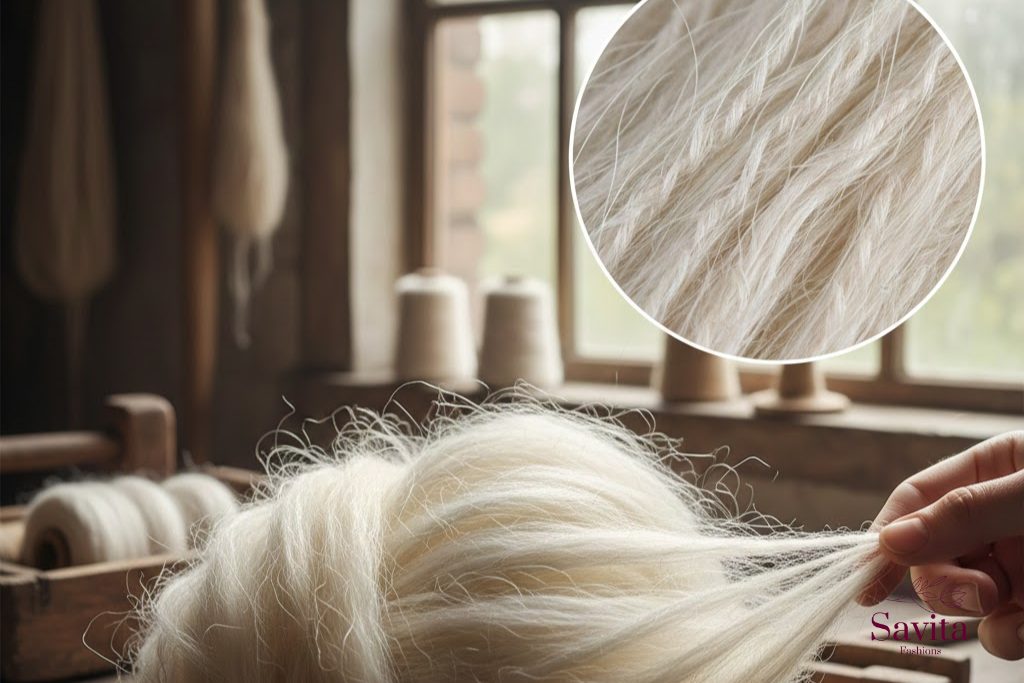
Raw pashm fiber, as collected from the goat, contains two types of fiber: the fine, soft undercoat (the pashm itself) and coarser guard hairs from the outer coat. These guard hairs are what cause itchiness and reduce drape quality. The process of separating them — called de-hairing — directly determines the pashmina fiber quality of everything that follows.
High-quality de-hairing removes virtually all guard hairs, leaving only the finest pashm fibers. The resulting material is then graded by fineness, with the finest grades (sub-14 micron) reserved for the most premium pashmina products. Lower de-hairing standards mean more coarse fibers remain — reducing softness, increasing pilling potential, and compromising the pashmina fiber quality that customers can feel the moment they touch the shawl.
At Savita Shawls, we source de-haired pashmina fiber that meets strict quality benchmarks before it enters our production process. This commitment to upstream pashmina fiber quality is why the finished shawls we produce for our B2B clients perform consistently across large bulk orders.
Spinning and Yarn Quality — The Next Stage of Pashmina Fiber Quality
Even the finest raw pashm can be undermined by poor spinning. Traditional hand-spinning — still practiced in Kashmir and valued for preserving pashmina fiber quality — produces yarn with a slightly irregular, natural character that machine-spun yarn cannot replicate. This irregularity is not a defect. It’s a feature. It’s what gives hand-spun pashmina shawls their distinctive warmth and drape.
Machine-spun pashmina yarn is more uniform and better suited to certain weaving applications — particularly for bulk orders requiring absolute consistency. Neither approach is inherently superior; they serve different product requirements. What matters is that the spinning process respects the integrity of the fiber.
Over-spinning — applying too much twist to the yarn — can stress and weaken pashmina fibers, compromising both softness and durability in the final product. This is why pashmina fiber quality isn’t just a raw material metric. It follows the fiber all the way through production.
For retailers seeking both artisanal character and scalable supply, working with a shawl manufacturer in India who understands both spinning traditions — and when to use which — is essential.
Weaving’s Impact on Pashmina Fiber Quality in the Final Product
The relationship between weave structure and pashmina fiber quality is something every serious buyer should understand. A high-quality pashmina fiber can be diminished by the wrong weave, and a skilled weave can elevate even a mid-grade fiber into a beautiful finished product.
The two most common weave structures for pashmina are plain (twill) weave and twill weave with a 2×2 diagonal structure. Twill weaves — which are the more traditional choice for pashmina shawls — allow the fiber to breathe and drape naturally, enhancing the softness that defines genuine pashmina fiber quality.
Tighter weaves increase durability but can sacrifice that signature lightweight feel. Looser weaves enhance drape and softness but require higher pashmina fiber quality to maintain structural integrity. Getting this balance right is a manufacturing skill that develops over years of working with the material.
Our pashmina shawls collection is built on weave specifications that have been refined through thousands of production runs — giving our B2B clients finished products where pashmina fiber quality is evident in how the shawl looks, feels, and performs.
How to Identify Genuine Pashmina Fiber Quality — Practical Tests
For buyers who receive samples before placing bulk orders — which we always recommend — here are the practical ways to assess pashmina fiber quality:
The Burn Test: Genuine pashmina, like all protein fibers, burns slowly, smells like burnt hair, and leaves a crushable ash. Synthetic blends melt, produce black smoke, and leave hard residue. This test is a quick and reliable indicator of pashmina fiber quality.
The Feel Test: Authentic high-grade pashmina fiber quality produces a distinctive warmth on contact with skin — not just softness. Place the shawl against your inner wrist. Genuine pashmina should feel warm within seconds, even before you’ve draped it.
The Ring Test: The classic mentioned at the start of this article. A full pashmina shawl of genuine fiber quality should pass through a finger ring. This works because of the fineness and lightweight nature of authentic pashmina fiber.
The Pilling Test: Gently rub a small section of the shawl between your fingers. Some light pilling is normal in early use of pure pashmina (short fiber ends working to the surface), but excessive immediate pilling indicates lower pashmina fiber quality or significant blending with lesser fibers.
The Drape Test: Hold the shawl at one corner and let it fall. Genuine pashmina fiber quality creates a fluid, natural drape with no stiffness or artificial sheen.
Retailers who educate their customers on these tests build significant trust — and position their pashmina offering as genuinely premium. Consider including a simple care and authentication card with your pashmina products.
Pashmina Fiber Quality vs. Cashmere — What’s the Difference?
This is one of the most common questions in the B2B pashmina space, and it’s worth addressing directly.
Cashmere is a broader category of fine goat fiber, collected from various breeds across China, Mongolia, Afghanistan, and other regions. Pashmina is technically a specific type of cashmere — but the finest type, from the Changthangi goat specifically.
The pashmina fiber quality of genuine Ladakhi pashm is typically superior to standard cashmere because of the extreme altitude conditions that produce finer, longer fibers. Standard cashmere averages 15–19 microns, while premium pashmina consistently measures 12–16 microns. That difference in micron count translates directly into the softness difference that customers can feel.
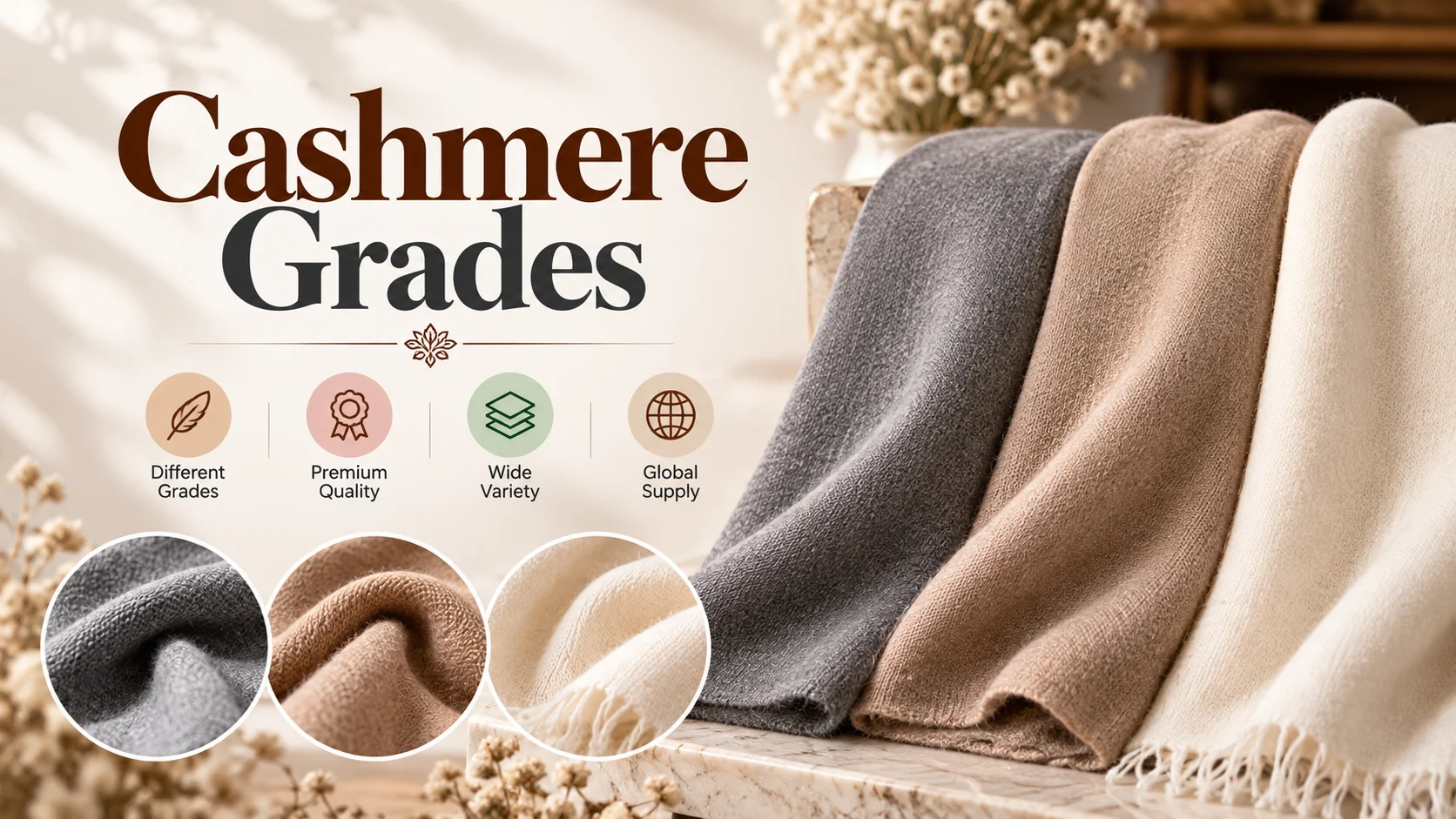
For retailers, this distinction matters in how you communicate product value. Our cashmere shawls and pashmina ranges serve different market segments, and understanding the pashmina fiber quality distinction between them helps you position each correctly.
Why Pashmina Fiber Quality Should Drive Your Bulk Sourcing Decision
For boutique owners and fashion retailers placing large orders, pashmina fiber quality at the bulk level is about consistency as much as grade. When you’re selling 200 or 2,000 shawls, every piece needs to deliver the same softness, the same weight, the same drape. One substandard piece reaching a customer can undo the reputation that dozens of good pieces built.
This is why sourcing from a manufacturer with defined quality control at every production stage — raw fiber grading, de-hairing standards, spinning specifications, and weave quality checks — is non-negotiable. Generic suppliers who aggregate from multiple unverified sources cannot guarantee pashmina fiber quality at scale.
As a dedicated bulk shawls supplier, Savita Shawls applies the same pashmina fiber quality standards to a 100-piece order as we do to a 10,000-piece export. Our sampling process — with dispatch within 5–7 working days — lets buyers verify pashmina fiber quality before committing to full production runs.
Custom Manufacturing and Pashmina Fiber Quality Control
One advantage of working with a direct manufacturer rather than a reseller is the ability to specify pashmina fiber quality parameters for custom orders. Rather than accepting whatever grade happens to be available, B2B buyers can define the micron range, fiber blend ratio, weave structure, and finishing details for their specific product needs.
This level of specification is particularly valuable for fashion brands building private label pashmina collections, bridal boutiques sourcing for a premium segment, and corporate gifting buyers who need guaranteed consistency across large volumes.
As a custom scarf manufacturer with in-house quality control, we work with clients to define pashmina fiber quality specifications at the outset of a project — eliminating the ambiguity that leads to disappointing bulk orders.
Caring for Pashmina — Protecting Fiber Quality After Purchase
Pashmina fiber quality doesn’t just matter at the point of manufacture. It needs to be preserved through correct care. For retailers, providing care guidance adds real value to the customer relationship.
Gentle hand wash in cold water with a mild, pH-neutral shampoo or specialist wool wash is ideal. Never wring or twist pashmina — instead, press gently between clean towels and reshape while damp. Dry flat, away from direct sunlight or heat sources, both of which can damage pashmina fiber quality over time.
Store pashmina folded — never hung — to prevent stretching. Cedar blocks rather than mothballs are recommended for long-term storage, as chemical moth repellents can affect the fiber. Properly cared for, a pashmina shawl of genuine fiber quality will last decades and soften further with each careful wash.
Conclusion — Pashmina Fiber Quality Is the Foundation of Everything
Every decision in the pashmina supply chain — from where the goat grazes, to how the fiber is combed, de-haired, spun, and woven — builds toward one thing: a finished product that either has genuine pashmina fiber quality or doesn’t. There’s very little middle ground at the premium end of this market.
For retailers and B2B buyers, understanding pashmina fiber quality is your most powerful sourcing tool. It helps you ask the right questions, evaluate samples accurately, communicate value to your customers, and build a product reputation that creates long-term loyalty rather than one-time transactions.
At Savita Shawls, pashmina fiber quality is not a promise on a label — it’s a process, documented from raw fiber selection through to finished product dispatch. Whether you’re building a bridal collection, a corporate gifting line, or a full retail pashmina range, we have the manufacturing depth to deliver pashmina fiber quality at every scale.
Request your samples today at savitashawls and experience the difference that genuine pashmina fiber quality makes — before you commit to your bulk order.
The finest pashmina fiber quality is measured at 12 to 16 microns in diameter — significantly finer than standard cashmere (15–19 microns) and far finer than wool or human hair. The lower the micron count, the finer and softer the fiber, and the higher the pashmina fiber quality in terms of tactile luxury. Sub-14 micron pashmina represents the very top tier of the market.
Always request physical samples before placing a bulk order. Assess pashmina fiber quality using the burn test, ring test, feel test, and drape test as described in this guide. Additionally, ask your manufacturer for documentation on their fiber sourcing, de-hairing standards, and quality control processes. A reliable manufacturer will welcome these questions — it’s a sign they stand behind their pashmina fiber quality.
Yes, Pashmina collected during the spring molting season — when the Changthangi goat naturally sheds its winter undercoat — delivers the best pashmina fiber quality. Fiber collected at other times or forced through premature shearing tends to be shorter, less fine, and weaker. Seasonal sourcing discipline is one of the markers of a quality-focused manufacturer.
Pashmina is technically a premium subset of cashmere. Genuine pashmina from the Changthangi goat of Ladakh offers superior fiber quality in terms of fineness (12–16 microns versus cashmere’s 15–19 micron average) and softness. Both are luxury fibers, but pashmina fiber quality represents the pinnacle of the category. For international markets where “cashmere” is the dominant terminology, the distinction matters for honest product labeling.
Yes — when blended correctly. A well-executed 70:30 or 80:20 pashmina-to-silk blend preserves pashmina fiber quality in terms of softness and warmth while adding the durability and sheen that silk provides. The key is maintaining a pashmina-dominant ratio and using high-grade silk that complements rather than overwhelms the pashmina fiber. Blends with excessive synthetic content, by contrast, significantly undermine pashmina fiber quality.
Embroidery — particularly fine Sozni hand embroidery — places additional tension on the base fabric during the needlework process. A pashmina base with strong pashmina fiber quality holds embroidery thread more securely, allows finer needle work, and recovers its shape and drape after the embroidery is complete. Lower pashmina fiber quality bases can stretch, distort, or thin out under the pressure of embroidery, compromising both the craft and the finished product.
This is one of the most important questions for B2B buyers to ask. A manufacturer sourcing raw fiber from a single, documented supply chain can guarantee pashmina fiber quality consistency across large bulk orders. Manufacturers who aggregate from multiple unverified sources cannot make this guarantee. Always request consistency guarantees — ideally backed by a quality control process — when placing bulk pashmina orders.