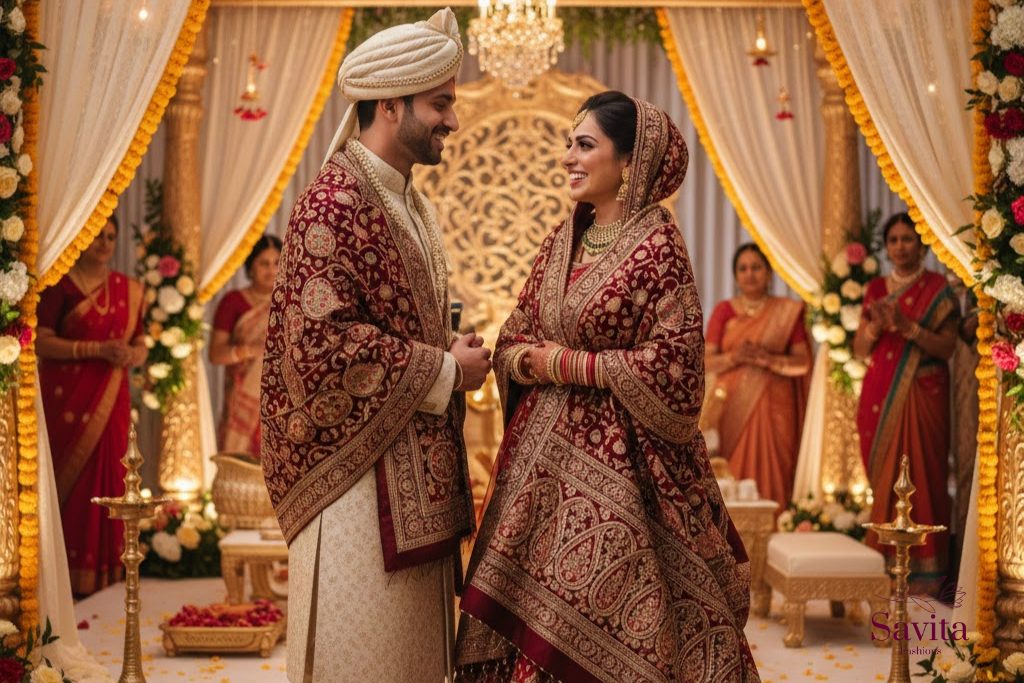
Walk into any Indian wedding during the cooler months and you’ll notice something beautiful happening on the shoulders of the bride, her mother, and half the guest list. A soft, intricately woven wrap, light as a whisper yet warm as a hug, draped over a heavy lehenga or a crisp sherwani. That’s pashmina doing what it has done for centuries, quietly stealing the spotlight without ever trying too hard.
Pashmina in Indian weddings isn’t a trend. It’s tradition wearing a new outfit every season. From Kashmiri valleys to Rajasthani palaces, from Delhi banquet halls to Mumbai’s five-star ballrooms, pashmina shawls have become the unspoken signature of a wedding that means business when it comes to elegance. If you’re a retailer, boutique owner, or fashion brand trying to understand why pashmina in Indian weddings continues to dominate bridal styling year after year, you’re in exactly the right place.
In this article, we’ll unpack the cultural weight behind pashmina, the craftsmanship that makes it special, styling ideas for different wedding shawls manufacturer, and why sourcing from a genuine manufacturer matters more than ever. Whether you’re stocking up for the wedding season or building a private label collection, understanding the role of pashmina in Indian weddings will help you sell smarter and tell a better story to your customers.
Why Pashmina Holds Such a Special Place at Indian Weddings
There’s a reason grandmothers pass down their pashmina shawls like heirlooms instead of folding them away in storage. Pashmina in Indian weddings represents something deeper than fashion. It represents continuity, warmth between generations, and a kind of quiet luxury that doesn’t need logos to prove itself.
In North Indian weddings especially, the bride’s trousseau is incomplete without at least one pashmina piece. It’s gifted by the mother-in-law, worn during the “vidaai” (farewell ceremony), and often becomes the one item the bride keeps using for decades after the wedding ends.
Think about it this way: jewelry gets locked in a vault, the lehenga gets worn once and stored, but a pashmina shawl gets used at every cold evening function for years. That’s emotional value combined with practical value, and that combination is exactly why buyers keep coming back for pashmina in Indian weddings season after season.
The Symbolism Behind Pashmina: Purity, Warmth, and Status
Every culture has its symbols, and in Indian wedding traditions, pashmina carries three meanings at once.
Purity — The fine, undyed white or cream pashmina has historically symbolized purity and new beginnings, often gifted at the start of a couple’s journey together.
Warmth — Beyond literal warmth in winter weddings, pashmina symbolizes emotional warmth, the wish for a marriage that stays cozy and protected through life’s seasons.
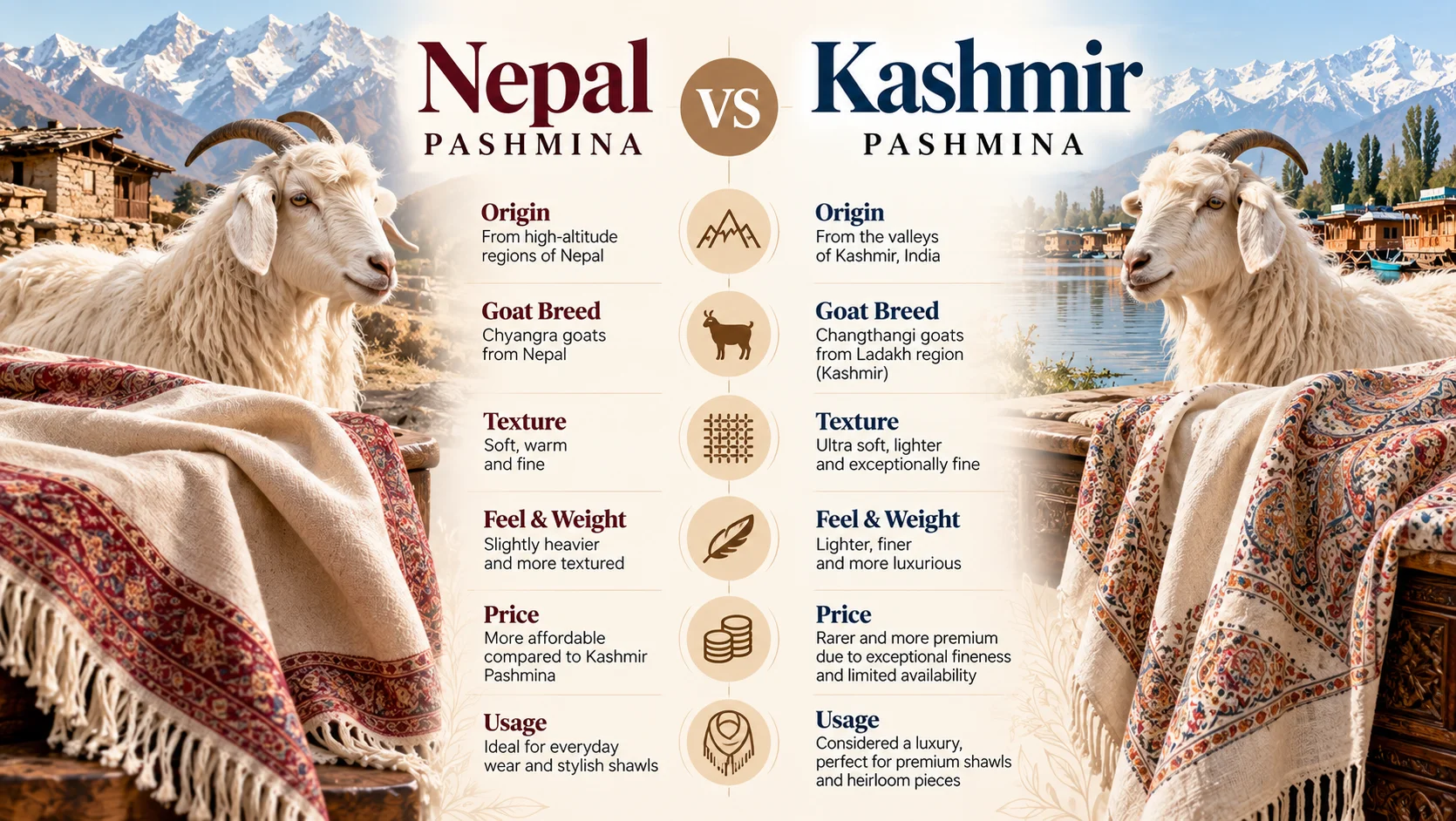
Status — Genuine pashmina, hand-spun from the undercoat of Changthangi goats found in the high-altitude regions of Ladakh, has always been associated with royalty and refinement. Wearing it at a wedding subtly signals that a family values quality and heritage over flash.
This is precisely why pashmina in Indian weddings isn’t reserved for just the bride. Mothers, mothers-in-law, and even close relatives are seen draped in pashmina during sangeet, mehendi, and reception functions.
Types of Shawls That Dominate Wedding Functions
If you’re stocking inventory or designing a private label range, it helps to know which categories actually move during wedding season.
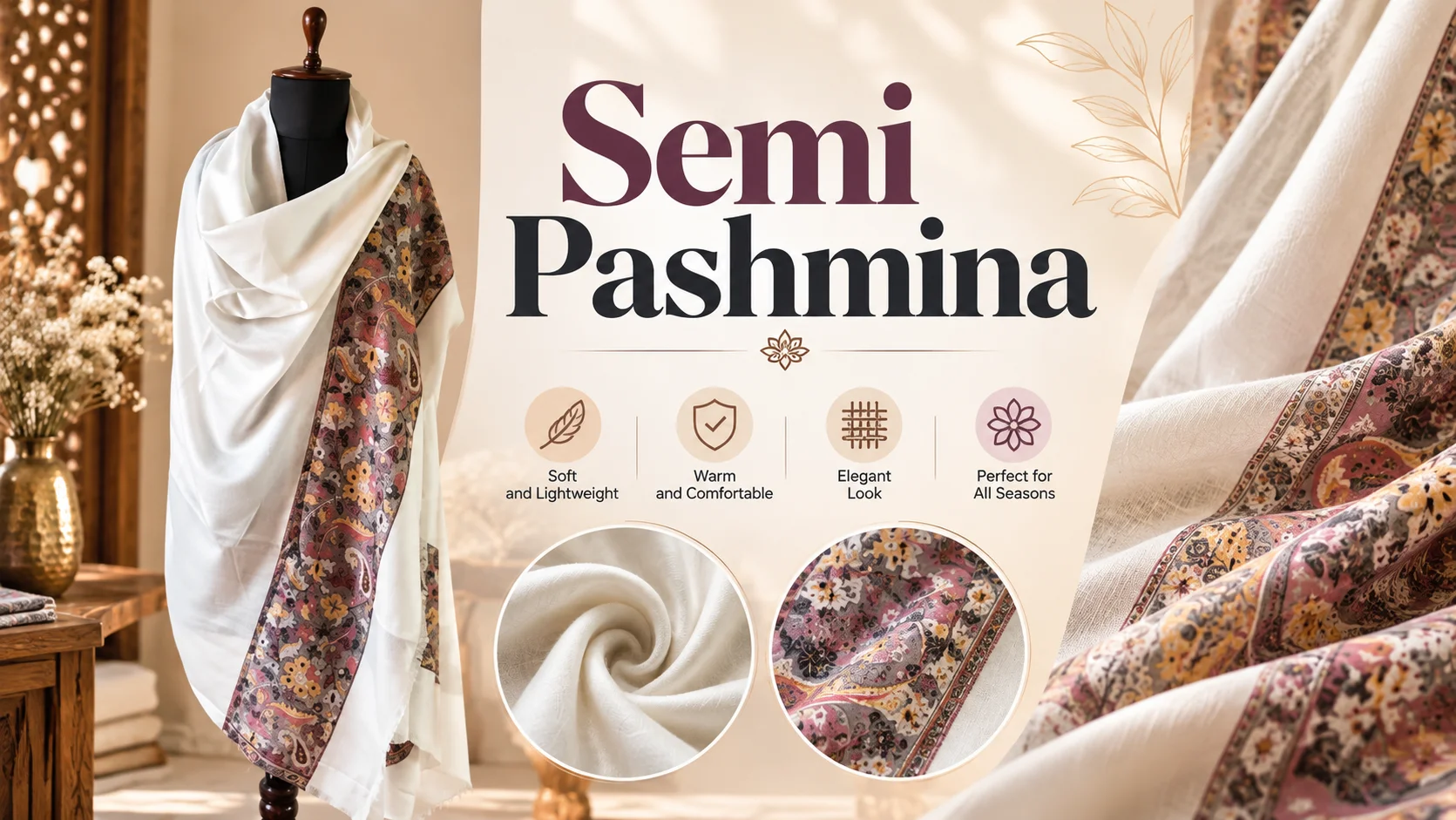
- Pashmina shawls — The undisputed king of bridal wraps, prized for being featherlight yet incredibly warm.
- Cashmere shawls — A close cousin to pashmina, often used in blended fabrics for a slightly heavier drape.
- Kani shawls — Famous for their woven, paisley-style motifs, perfect for traditional ceremonies.
- Jamawar shawls — Rich, regal, and heavily patterned, ideal for the reception or sangeet night.
- Embroidered shawls — Hand-finished with zari or thread work, commonly chosen for the wedding day itself.
- Silk-blend stoles — Lighter alternatives for warmer climates or daytime functions like haldi.
Each of these has its own moment in a wedding calendar, but pashmina remains the most requested across every single function, from the cold mountain weddings of Himachal to the milder winter evenings of Delhi NCR.
Materials Matter: Understanding Pashmina, Cashmere, Silk, and Wool
A lot of buyers assume pashmina, cashmere, and wool are interchangeable terms. They’re not, and knowing the difference matters when you’re explaining product value to your own customers.
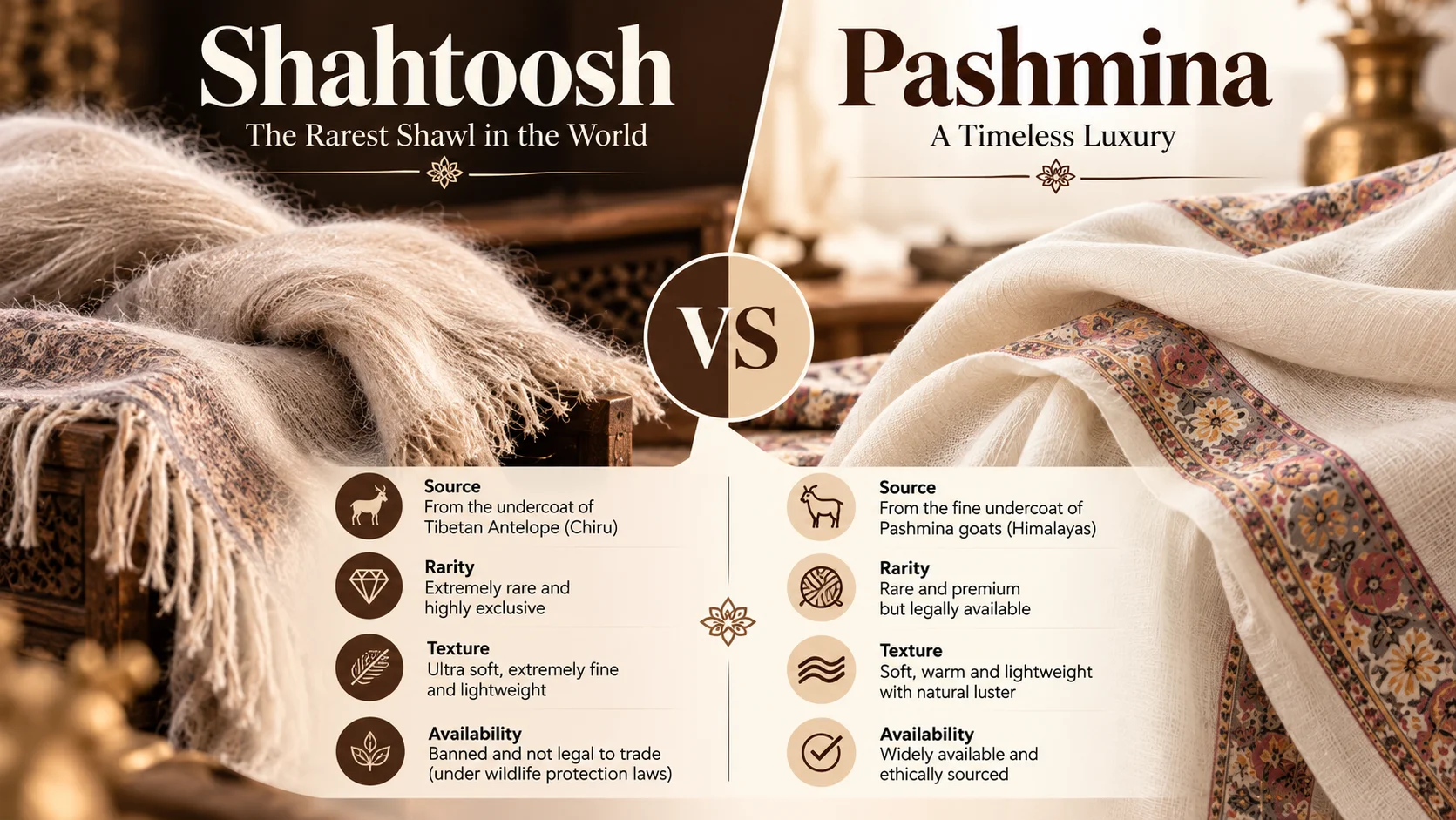
Pashmina comes specifically from the fine undercoat fiber of the Changthangi goat, hand-spun and hand-woven, primarily in Kashmir and Ladakh. This is what gives genuine pashmina in Indian weddings its reputation for being so soft and warm despite being almost weightless.
Cashmere is a broader category that includes pashmina but also covers wool sourced from a wider range of goat breeds across different regions, often machine-processed for scale.
Wool shawls, including merino and lambswool, offer durability and warmth at a more accessible price point, useful for bulk wedding gifting orders.
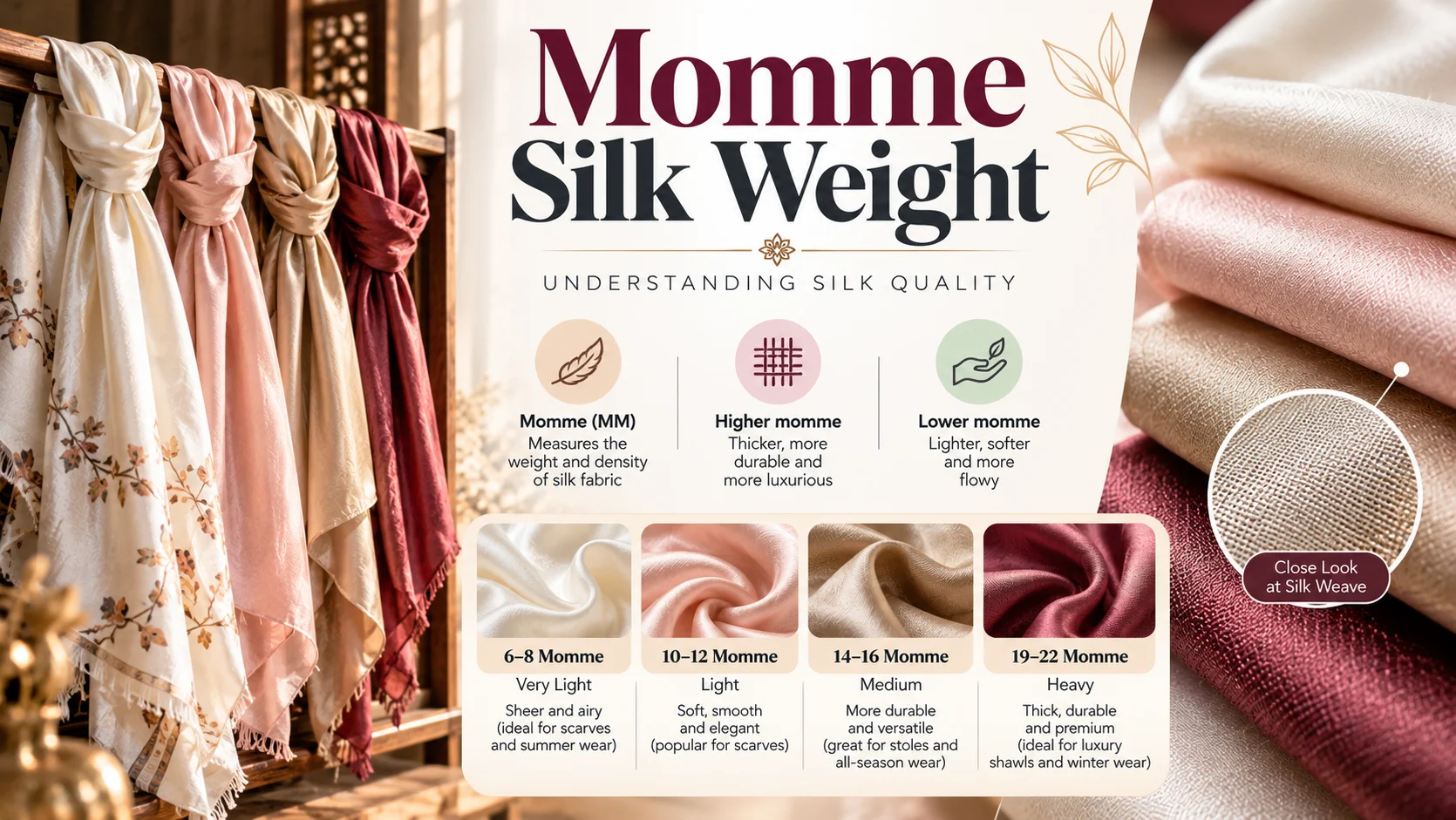
Silk shawls and stoles add sheen and drape, often blended with wool or pashmina to create something that photographs beautifully under wedding lighting.
If you want to understand the heritage and global recognition behind this fiber, the Wikipedia entry on pashmina offers useful background on its origins and traditional production methods.
How Authentic Pashmina Shawls Are Made
Real pashmina isn’t churned out on an assembly line, and that’s exactly why pashmina in Indian weddings continues to command respect among people who know their textiles.
The process typically involves:
- Hand-combing the soft undercoat from Changthangi goats during their natural moulting season.
- Hand-spinning the fiber into fine yarn, a skill passed down through generations of artisans.
- Hand-weaving on traditional looms, sometimes taking days for a single shawl.
- Finishing touches like embroidery, fringing, or block printing, depending on the design.
This is also where buyers need to be careful. Not everything marketed as pashmina is genuine. A reliable shawl manufacturer in India will be transparent about fiber composition, sourcing, and provide material certificates when asked, something every serious B2B buyer should insist on before placing a bulk order.
Styling Pashmina for Different Wedding Functions
Pashmina in Indian weddings isn’t a one-size-fits-all accessory. Styling changes depending on the function, and this is valuable information to pass along to your retail or boutique customers.
For the Sangeet and Mehendi
Lighter pashmina-silk blends in pastel or floral tones work beautifully here, draped loosely over one shoulder for ease of movement during dance performances.
For the Wedding Ceremony
Heavier, embroidered pashmina shawls in deeper jewel tones complement the bride’s main outfit and provide warmth during long ceremonies, especially in winter weddings in North India.
For the Reception
Jamawar or richly patterned pashmina shawls add drama and photograph well under reception lighting, often chosen in gold, maroon, or deep green.
For Guests and Family
Solid-color or subtly embroidered pashmina stoles work as elegant, easy-to-style options for guests who want to look coordinated without overshadowing the bridal party.
Why Retailers and Boutiques Should Stock Pashmina Ahead of Wedding Season
If you’re in the business of selling wedding accessories, timing is everything. Indian wedding season typically peaks between October and February, which means inventory planning needs to start months earlier.
Here’s why stocking up matters:
- Demand for pashmina in Indian weddings spikes predictably every winter wedding season.
- Customers often buy multiple pieces, for the bride, mother, and gifting purposes.
- Pashmina holds resale and perceived value better than synthetic alternatives, making it easier to price profitably.
- A well-curated pashmina shawls collection can become a signature offering that differentiates your boutique from competitors stocking only mass-market wraps.
This is also where working with the right manufacturing partner becomes critical, because running out of stock during peak wedding season means losing sales to a competitor down the street.
Benefits of Buying Pashmina Shawls in Bulk from a Manufacturer
For boutique owners, fashion brands, and wholesale buyers, going directly to a manufacturer instead of a middleman changes the entire economics of your business.
- Better pricing — Factory-direct rates mean healthier margins when you resell.
- Custom design control — Work directly on colors, patterns, and embroidery specific to your brand.
- Private label opportunities — Add your own branding, woven labels, and packaging.
- Consistent quality — A trusted bulk shawls supplier maintains the same fiber quality and finish across every batch.
- Reliable lead times — Especially important when wedding season inventory needs to arrive on schedule.
When you buy in bulk, you’re not just saving money. You’re building a supply chain relationship that lets you scale your wedding season offerings year after year without scrambling for stock at the last minute.
Why Choosing the Right Shawl Manufacturer in India Matters
This is the part that separates a one-time transaction from a long-term, profitable partnership. A genuine shawl manufacturer in India should offer:
- Transparent sourcing from Kashmir and Ladakh for authentic pashmina.
- In-house quality control across raw material, weaving, and pre-shipment stages.
- Custom OEM and private label manufacturing with full design confidentiality.
- Export documentation, IEC registration, and GST compliance for smooth international shipping.
- Reasonable MOQs that work for both boutique-scale and large wholesale orders.
If you’re looking specifically for a custom scarf manufacturer who can also handle wedding shawl collections at scale, working with an established Indian manufacturer with decades of experience gives you both authenticity and reliability, two things that matter enormously when your customers are buying for one of the most important days of their lives.
Current Trends Shaping the Pashmina and Wedding Shawl Industry
The shawl industry isn’t standing still, and pashmina in Indian weddings is evolving alongside changing bridal preferences.
- Reversible shawls — Two looks in one piece, increasingly popular for guests who want versatility.
- Sustainable and OEKO-TEX compliant production — Eco-conscious buyers are now asking about dyes and sourcing ethics.
- Fusion designs — Pashmina paired with contemporary cuts and Western-inspired drapes for destination weddings.
- Personalized gifting — Couples increasingly request monogrammed or custom-embroidered pashmina shawls as wedding favors for guests.
- Color experimentation — Beyond traditional reds and golds, pastel and jewel-toned pashmina shawls are gaining traction for daytime functions.
Staying ahead of these trends is easier when you’re sourcing from a manufacturer who’s already innovating, rather than one stuck producing the same five designs every year.
Conclusion: Pashmina in Indian Weddings Is Here to Stay
Trends come and go, but pashmina in Indian weddings has proven, decade after decade, that genuine craftsmanship never really goes out of style. It’s warm without being heavy, luxurious without being loud, and meaningful in a way that few wedding accessories manage to be.
For retailers, boutique owners, and fashion brands, this isn’t just a seasonal opportunity, it’s a long-term category worth investing in properly. Partnering with an experienced shawl manufacturer in India gives you access to authentic fiber, consistent quality, and the kind of custom manufacturing flexibility that turns a simple wholesale order into a signature collection.
If you’re ready to stock your shelves with shawls that actually represent what pashmina in Indian weddings has always stood for, purity, warmth, and timeless elegance, explore our pashmina shawls collection or get in touch as a bulk shawls supplier partner today. And if your brand is looking to create something entirely its own, our team works as a dedicated custom scarf manufacturer ready to bring your vision to life, one thread at a time.
Pashmina in Indian weddings is popular because it combines lightweight comfort with deep cultural symbolism, representing purity, warmth, and status across generations.
Genuine pashmina comes from the fine undercoat of Changthangi goats and is hand-spun, making it softer and warmer than standard wool, which is one reason pashmina in Indian weddings remains the preferred choice.
Pashmina works beautifully across sangeet, the main ceremony, and receptions, with lighter blends for daytime events and richer embroidered pieces for evening functions.
Yes, many manufacturers offer private label and OEM options, allowing boutiques to stock pashmina in Indian weddings collections under their own brand name and packaging.
Authentic pashmina suppliers provide material composition certificates and source directly from Kashmir or Ladakh, which is worth confirming before placing a bulk order.
MOQs typically start around 100 pieces per design for custom orders, though some manufacturers offer flexibility for smaller boutique-scale orders.
Absolutely, pashmina in Indian weddings is worn by brides, mothers, and guests alike, making it a versatile addition to any wedding accessory lineup.