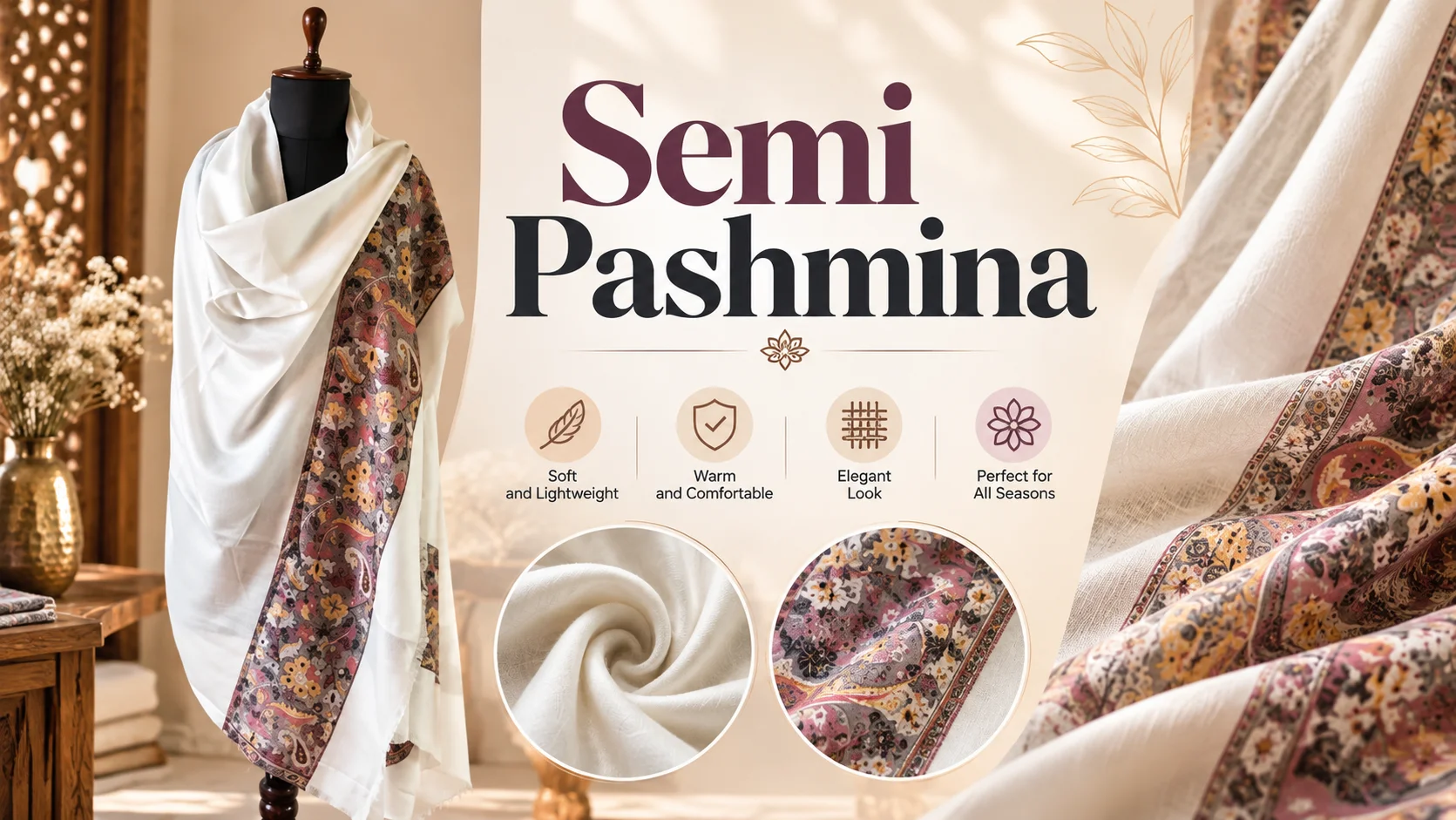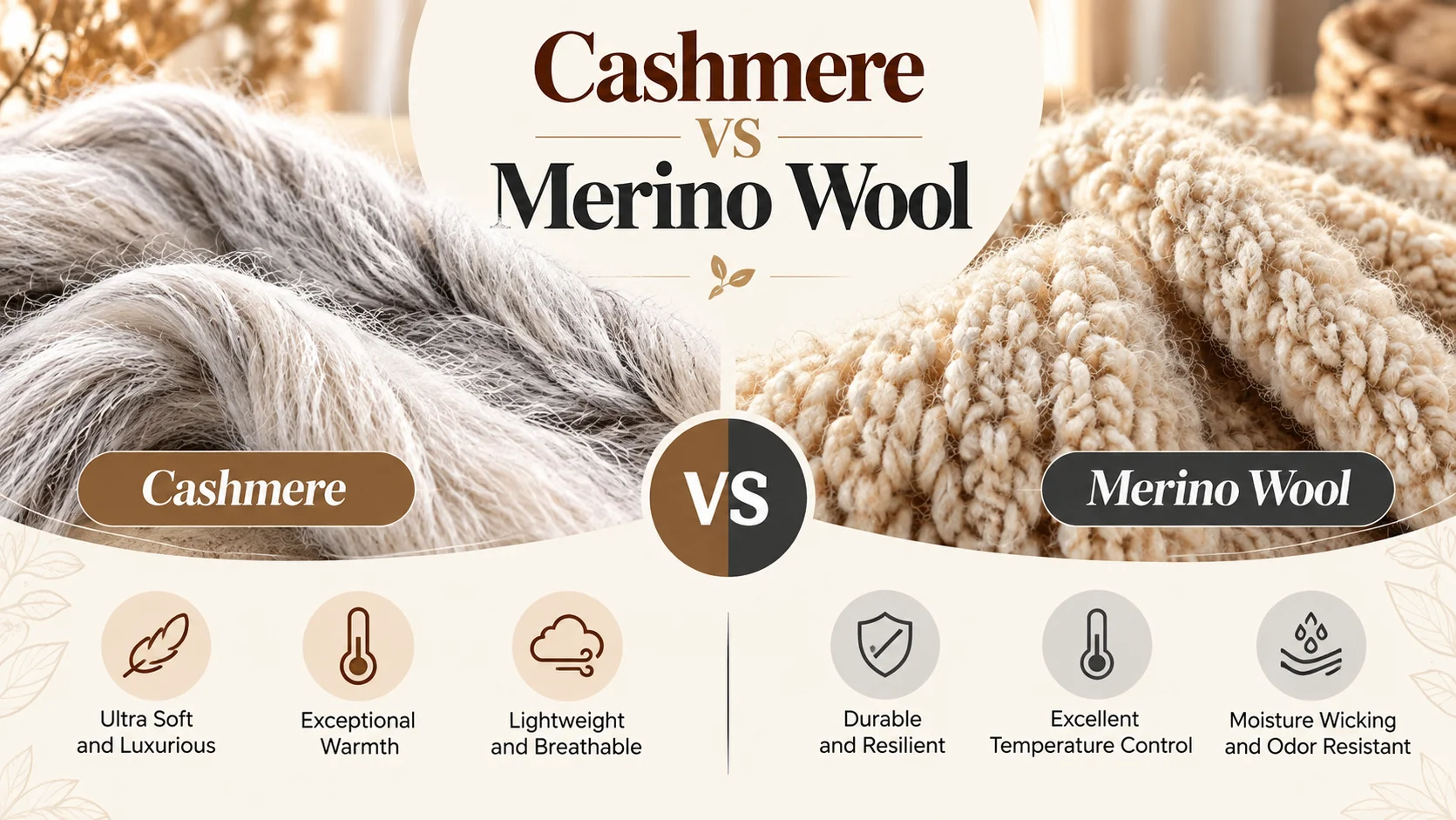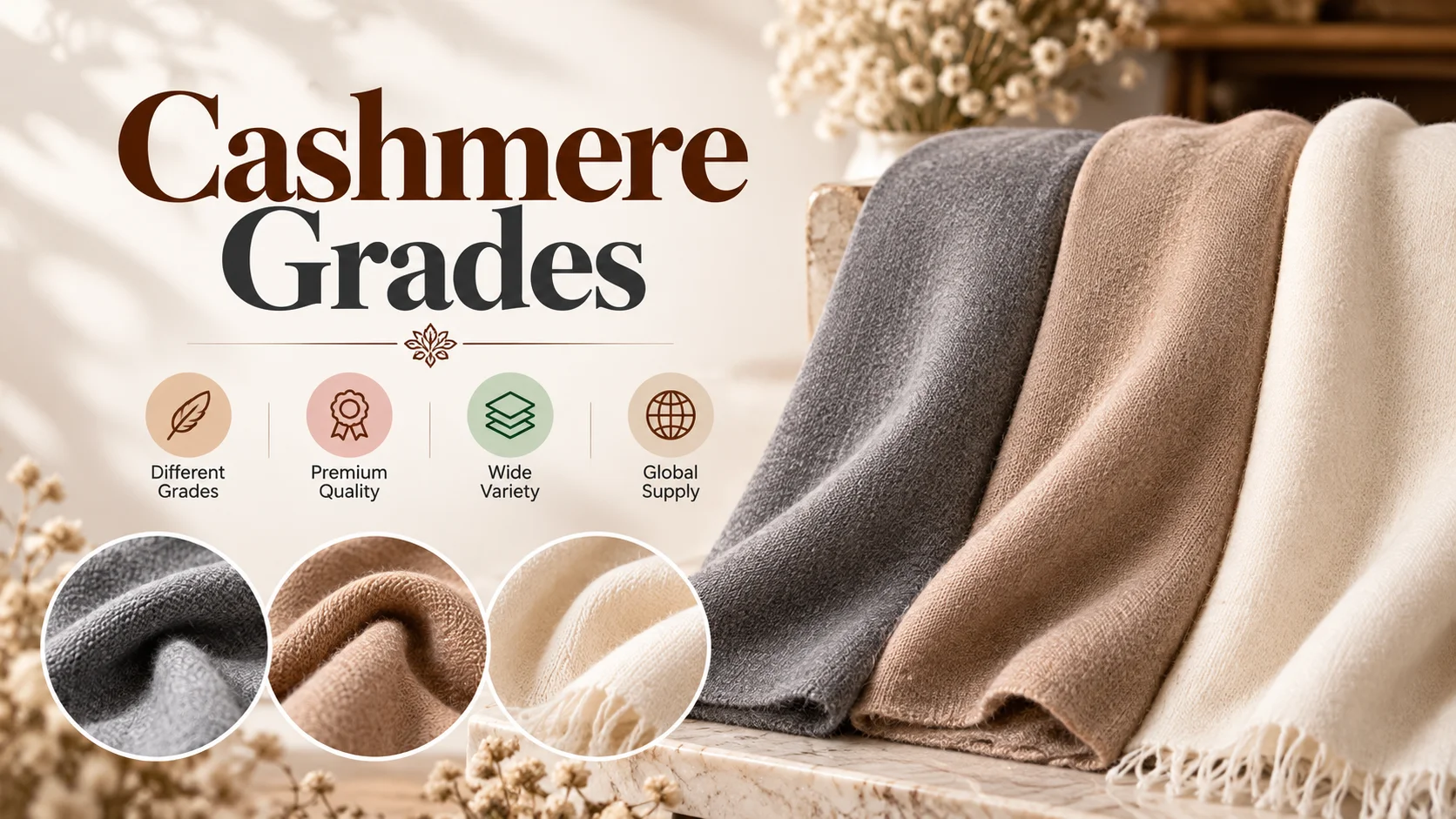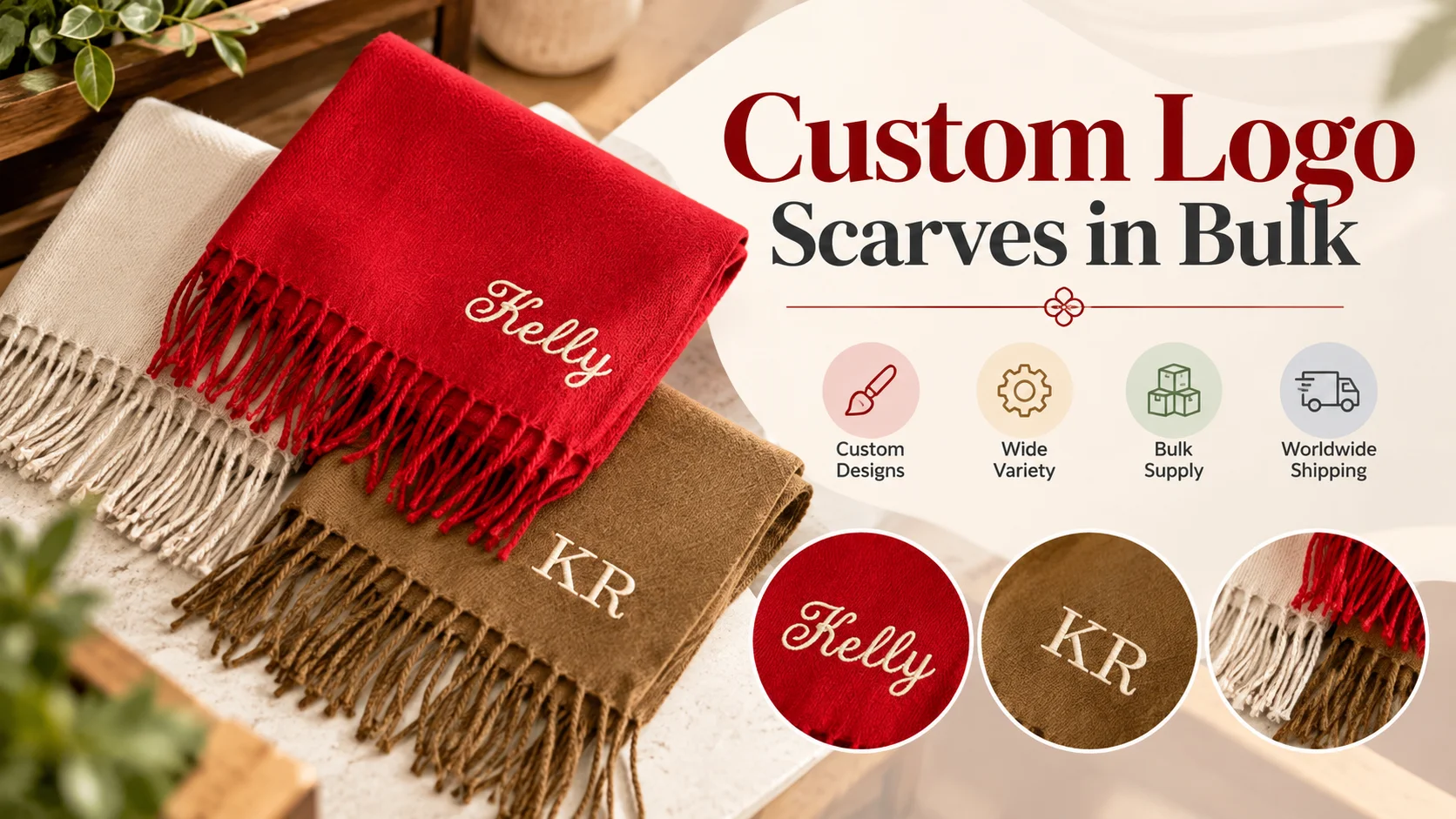
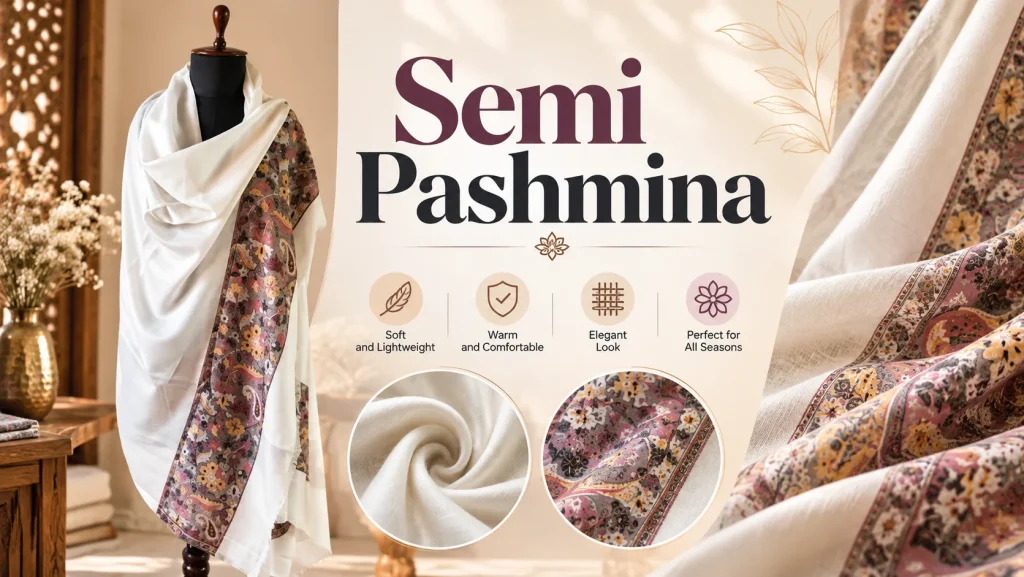
A semi pashmina shawl is a blend that contains some pashmina or cashmere fibre mixed with another fibre, most often wool or silk. A common example is 20 percent pashmina and 80 percent wool. Other trade names such as fine wool, viscose pashmina and “pashmina style” usually describe shawls with little or no pashmina at all. Each can be a good product at its own price, as long as the fibre content is stated honestly.
Key takeaways
- Pure pashmina means 100 percent pashmina fibre. Every other name needs a fibre percentage to mean anything.
- Semi pashmina, pashmina silk and pashmina wool are blends. Ask for the exact ratio in writing.
- Fine wool, viscose and acrylic “pashminas” are pashmina-style shawls, not pashmina fibre.
- Labels must state the real fibres. Trade names alone can mislead customers and breach labelling rules.
Why are pashmina trade names so confusing?
The word pashmina is used in two ways. In India and Nepal it means the fine fibre from Himalayan goats, traditionally hand-spun and woven in Kashmir. In much of the Western market, “pashmina” became the everyday name for any soft, plain rectangular wrap, whatever it is made of.
Suppliers then added their own terms, such as semi pashmina, fine pashmina, pashmina feel and viscose pashmina. None of these is a fibre name. Without a percentage, they tell a buyer very little about what they are paying for.
Our guides to the GI tag for Kashmir pashmina and why pashmina is expensive explain what makes the real fibre special.
Pashmina trade names decoded
| Trade name | What it usually means | Typical fibre content | Relative price |
|---|---|---|---|
| Pure pashmina | Shawl made entirely of pashmina fibre | 100% pashmina | Highest |
| Pashmina silk | Pashmina blended with silk for sheen and strength | Often 70% pashmina, 30% silk | High |
| Semi pashmina | Pashmina or cashmere blended with another fibre | Often 20% to 50% pashmina, rest wool or silk | Mid to high |
| Cashmere wool blend | Cashmere blended with merino or lambswool | Often 10% to 30% cashmere | Mid |
| Fine wool | Fine merino or wool shawl in a pashmina style | 100% wool or wool blend | Mid |
| Viscose or modal “pashmina” | Cellulose fibre brushed for a soft hand | 100% viscose or modal, or blended with wool | Low to mid |
| Acrylic “pashmina” | Synthetic shawl, sometimes sold as cashmilon or faux pashmina | 100% acrylic | Lowest |
Ratios vary between suppliers, so treat this table as a guide and confirm the exact composition for each order.
What is a semi pashmina shawl?
A semi pashmina shawl blends pashmina or cashmere with a cheaper or stronger fibre. Wool adds warmth and body, while silk adds sheen and strength. The result feels softer and more premium than plain wool, at a price well below pure pashmina.
The problem is that “semi” has no fixed meaning. One supplier’s semi pashmina may contain 50 percent pashmina, another’s only 10 percent. Always ask for the ratio on the quote, the invoice and the label. Browse our pashmina shawls and read our guide to wholesale pashmina shawls for pricing context.
Fine wool vs pashmina: what is the difference?
Fine wool shawls are made from fine merino or similar wool. They are soft, warm and durable, and they usually cost far less than pashmina. They are not pashmina, and they should be sold as wool.
Pashmina is finer and lighter, with a softer, silkier hand. Fine wool feels slightly springier and heavier at the same warmth. For many retailers, a well-made fine wool shawl is the better product for everyday customers because it is easier to care for and sells at a friendlier price. See our fine wool stoles and our merino wool shawls guide.
What does viscose pashmina mean?
A viscose pashmina is a shawl made from viscose, a cellulose fibre, finished to feel soft and drape like a pashmina. It is light, colourful and affordable, and it suits warm climates, fashion ranges and gifting. It contains no pashmina fibre unless the label says it is blended.
The same applies to modal pashmina and acrylic pashmina. They are honest, useful products when sold as viscose, modal or acrylic. Our guides to viscose stoles, viscose scarves and modal scarves cover these fabrics.
What should a supplier quote include?
A quote that says only “pashmina quality” cannot be compared with another. Ask every supplier to state:
- Fibre composition for each component, such as 30% pashmina and 70% merino wool.
- Yarn details, including count and whether it is hand-spun or machine-spun.
- Size, weight and GSM of the finished shawl.
- Weave and finish, such as diamond weave, twill, brushed or plain.
- Test reports available for fibre composition.
Our articles on what makes an authentic pashmina shawl and on pashmina vs cashmere vs wool vs acrylic help you judge each quote.
How can you check what a shawl is made of?
Quick checks can raise doubts, but only a lab test proves fibre content.
- Price. Pure pashmina at a viscose price is not pure pashmina.
- Hand feel. Pashmina feels warm, light and slightly matte. Viscose feels cool and slippery. Acrylic often feels squeaky or static.
- Burn test on a loose thread. Animal fibre smells like burnt hair and leaves crushable ash. Viscose smells like burning paper. Acrylic melts into a hard bead. Test a thread, never the shawl.
- The ring test. Passing a shawl through a ring does not prove it is pashmina, because fine viscose passes too.
- Lab report. Ask for a fibre composition test on your order.
Our guides on how to identify real pashmina, 8 ways to identify a real pashmina shawl and how to spot fake pashmina online go into more detail.
What do labelling rules say?
Labels must name the real fibres and their percentages, not trade names.
- European Union: fibre names follow a regulated list. Pashmina is not on it, so pashmina fibre is usually declared as cashmere, with blends shown by percentage.
- United States: cashmere must meet a legal fineness definition, and wool products must list each fibre by percentage.
- India: the Bureau of Indian Standards has published a standard for identifying and labelling pashmina products.
If you sell a viscose or wool shawl as “pashmina” without stating the real fibre, you risk customer complaints, returns and regulatory action. Our guide to care label requirements for textile export explains labelling in more detail.
Which quality should you stock?
| Customer | Suggested quality |
|---|---|
| Luxury and bridal stores | Pure pashmina and pashmina silk |
| Premium boutiques | Semi pashmina with a stated ratio, plus pashmina silk |
| Department stores | Fine wool and cashmere wool blends |
| Fashion and online retail | Viscose and modal pashmina-style shawls |
| Value and promotional buyers | Acrylic and viscose shawls |
Many retailers carry two or three tiers and label each clearly, which lets customers trade up with confidence. Our guide on how to price shawls helps set a sensible gap between tiers.
MOQ and ordering at Savita Shawls
| Term | Savita Shawls standard |
|---|---|
| MOQ | 100 pieces per design, lower on some stock styles |
| Stock styles with your label | 10 to 15 working days |
| Custom woven designs | 45 to 60 working days after sample approval |
| Samples | Delivered internationally in 7 to 10 working days |
| Documents | Material composition certificates on request |
Order pashmina and pashmina-style shawls from Savita Shawls
Savita Shawls has manufactured shawls and stoles in Gurgaon since 1984 and exports to more than 40 countries, with fibre content stated on every quote. Ask about private label manufacturing, read our pashmina stoles wholesale guide, or request a bulk quote with your preferred quality and quantity.
Frequently asked questions
What is a semi pashmina shawl?
A semi pashmina shawl blends pashmina or cashmere with another fibre, usually wool or silk. Common ratios range from about 20 to 50 percent pashmina, so always ask for the exact percentage.
Is fine wool the same as pashmina?
No. Fine wool is made from fine merino or similar wool. It is soft and warm but heavier and less silky than pashmina, and it costs much less.
Does a viscose pashmina contain any pashmina?
Usually not. A viscose pashmina is a viscose shawl made in a pashmina style. It contains pashmina only if the label shows a blend percentage.
What does pashmina silk mean?
Pashmina silk is a blend of pashmina and silk, often around 70 percent pashmina and 30 percent silk. The silk adds sheen and strength to the shawl.
Can I sell a viscose shawl as a pashmina?
You can describe it as a pashmina-style shawl, but the label and product listing must state that it is viscose. Calling it pashmina without the real fibre content misleads customers and can breach labelling rules.
Is the ring test a reliable way to check pashmina?
No. Fine viscose and other light fabrics also pass through a ring. A fibre composition test is the only reliable check.
What is the minimum order for pashmina blend shawls?
Savita Shawls starts at 100 pieces per design, with lower quantities on some stock styles.