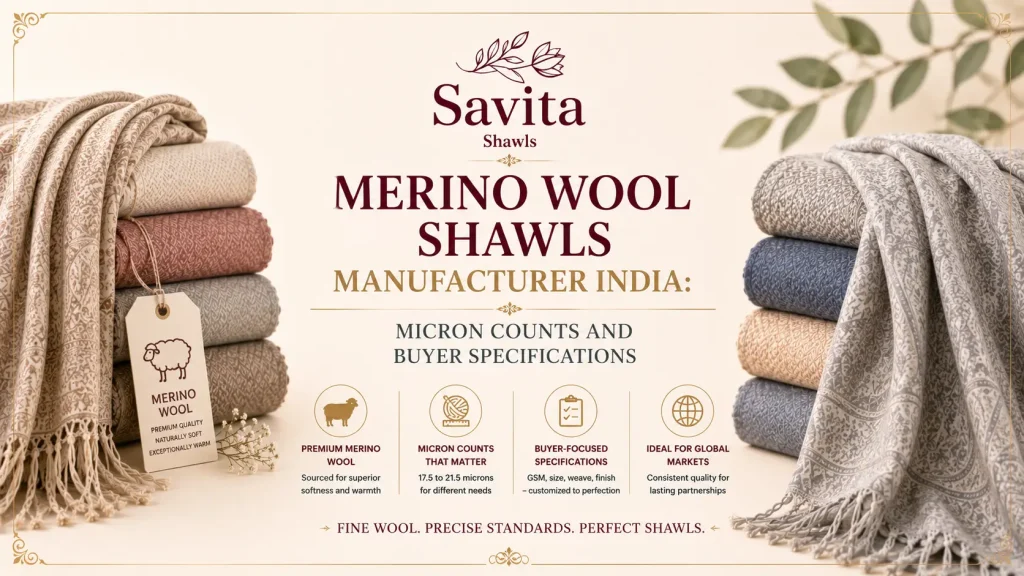
Merino is the fibre that makes a winter range work commercially. It is soft enough to wear at the neck, warm enough to justify the purchase, and priced where a mid market customer will actually buy. It also carries two questions most buyers never ask their supplier: what micron, and where did the fibre come from. A merino wool shawls manufacturer India worth a long term relationship answers both without hesitation, because Indian mills import most of their merino and the origin affects both price and the ethical claims you can make in your listings.
Micron grades a merino wool shawls manufacturer India works with
Merino refers to the sheep breed rather than to a single quality, and micron count varies widely within it.
Superfine merino runs 17 to 18.5 microns and is soft enough for genuine next to skin wear. It carries premium retail comfortably.
Fine merino runs 19 to 21 microns and is the most widely traded grade in accessories. Most customers describe it as soft and it costs considerably less than superfine.
Medium merino runs 22 to 24 microns. It is warm and durable and reads as slightly rustic against the neck, which suits outerwear weight shawls better than scarves.
Above 24 microns the fibre is generally described as crossbred rather than merino, and it should be priced accordingly.
The relationship between micron and price is steep and non linear. Each step finer costs disproportionately more, which is why a merino wool shawls manufacturer India quoting a single price for merino without stating micron is quoting something you cannot compare.
Fibre origin and the mulesing question
Most merino used in Indian mills is imported, principally from Australia and to a lesser extent New Zealand and South Africa. This matters for two reasons.
Price tracks the international wool market rather than Indian conditions, which means merino quotes move with global auction prices. A supplier holding a quoted price for six months is either absorbing risk or planning to change grade.
Mulesing is the larger issue for European retail. It is a husbandry practice used on some Australian flocks, and a growing number of European and North American retailers require non mulesed certification from their suppliers. If your customers ask, you need documentation rather than assurance.
Ask your merino wool shawls manufacturer India where the fibre originates and whether non mulesed certification is available. Certification schemes including Responsible Wool Standard exist for exactly this purpose, and the Woolmark organisation publishes standards material on wool quality and provenance.
Indian domestic wool, documented through the Central Wool Development Board, is generally coarser than merino and serves a different product tier.
Superwash, finish and what changes in the hand
Superwash is a treatment that removes or coats the scales on wool fibre so the yarn resists felting and can be machine washed. It changes the hand feel slightly, adds cost, and substantially reduces care related returns.
For retail sold to customers who will not read a care label, superwash is worth the premium. For premium retail where a customer expects to hand wash cashmere anyway, untreated wool has a better hand.
Milling and raising soften the surface and produce the immediate softness that closes a sale on the shop floor. Aggressive raising produces pilling within a season, so ask how the piece is finished rather than judging by first touch alone.
Anti pilling treatment is available and worth specifying for volume retail, since pilling is the most common wool complaint after itch.
Pricing from a merino wool shawls manufacturer India
Micron first, and it dominates. The gap between 18 micron and 22 micron at identical dimensions is substantial.
Weight second. Wool is priced largely by fibre content, and a 280 GSM shawl costs meaningfully more than a 200 GSM piece.
Yarn dyeing third, which is required for woven checks, stripes and herringbone and costs more than piece dyeing.
Treatment fourth, covering superwash, anti pilling and specialty finishes.
Blend ratio last and most importantly for comparison. A merino acrylic blend costs a fraction of pure merino and is a legitimate mid market product. It is not merino, and any quote that looks impossibly cheap for the stated micron is a blend. Ask for the fibre composition report on a first order.
MOQ, sampling and lead times
Minimum order quantity from a merino wool shawls manufacturer India generally sits at 100 pieces per design for stock styles and 200 for custom work, with custom colours sometimes higher because yarn dyeing needs a viable lot.
Sample in the exact micron and GSM you intend to buy, since a 19 micron sample and a 22 micron production piece feel different in a way customers notice immediately.
Wash test the sample according to the care label you intend to use. If you plan to label a piece machine washable, wash it in a machine before you commit.
Lead times run 10 to 15 working days for stock styles with your label, 20 to 25 for custom printed work, 30 to 40 for embroidery and 45 to 60 for custom woven designs. Yarn dyed woven wool sits at the long end because dyeing precedes weaving.
Order for winter by June for a Northern Hemisphere October launch, and by January for a Southern Hemisphere June season. The full seasonal calculation, including why sea freight matters on bulky wool, is set out in the guide to woolen stole sourcing.
Labelling and compliance for wool products
Wool carries specific labelling rules in most export markets. Fibre content must be declared with percentages, and terms like pure new wool and virgin wool have defined meanings that cannot be applied loosely.
Care instructions must match the treatment. A superwash merino shawl can carry a machine wash label. An untreated one cannot, and mislabelling produces returns and, in some markets, a compliance problem.
Country of origin marking is required on textile imports across the EU, UK, USA and GCC markets. The requirements by destination are covered in the guide to care label requirements for export.
Buyers comparing merino against the fibres immediately above it should read the guides to cashmere stole grades and pashmina stole sourcing, since the three cover consecutive tiers of the same winter shelf.
Savita Shawls as a merino wool shawls manufacturer India
Savita Fashions LLP, trading as Savita Shawls, has manufactured shawls, stoles and scarves from Gurgaon, Haryana since 1984 and supplies buyers in more than 20 countries including the UK, USA, Germany, France, Italy, Sweden, Denmark, Canada, Japan and Australia. GST registration is 06AFPFS3876N1Z0 and IEC is AFPFS3876N, verifiable on the GST portal. The company is registered with FIEO and AEPC.
Terms are 100 pieces per stock design and 200 pieces per custom or OEM design, with corporate gifting from 50 pieces with branding. Samples dispatch within 5 to 7 business days with the cost credited against the bulk order. Production runs 10 to 15 working days for stock styles with your label and 45 to 60 working days for custom woven designs including jacquard and kani.
Merino sits alongside lambswool, cashmere, pashmina, silk, modal, cotton, linen and viscose in the range, so a winter programme can span accessible and luxury tiers within one order and one set of shipping documents. The fine wool stole range and the winter scarf and shawl range show the formats available. Fibre composition documentation is available on request. Buyers new to sourcing should start with the guide to choosing a stole manufacturer.
Frequently asked questions
What micron should a merino wool shawls manufacturer India supply?
Superfine merino at 17 to 18.5 microns suits premium retail and genuine next to skin wear. Fine merino at 19 to 21 microns is the most widely traded accessories grade and reads as soft to most customers. Medium merino at 22 to 24 microns suits outerwear weight shawls. Above 24 microns the fibre is generally crossbred rather than merino.
Is Indian merino wool locally produced?
Most merino used by Indian mills is imported, principally from Australia and to a lesser extent New Zealand and South Africa. Indian domestic wool is generally coarser and serves a different product tier. This means merino pricing tracks international wool auction markets rather than Indian conditions, so quotes move with global prices.
What is mulesing and does it affect my order?
Mulesing is a husbandry practice used on some Australian merino flocks. A growing number of European and North American retailers require non mulesed certification from suppliers. If your customers ask about it, you need documentation rather than verbal assurance. Ask your supplier about fibre origin and whether certified non mulesed wool is available.
Should I specify superwash merino?
Superwash treatment removes or coats the fibre scales so wool resists felting and can be machine washed. It reduces care related returns substantially, which matters for volume retail where customers will not read care labels. It slightly changes the hand feel and adds cost, so premium retail sometimes prefers untreated wool for the better hand.
What GSM works for merino wool shawls?
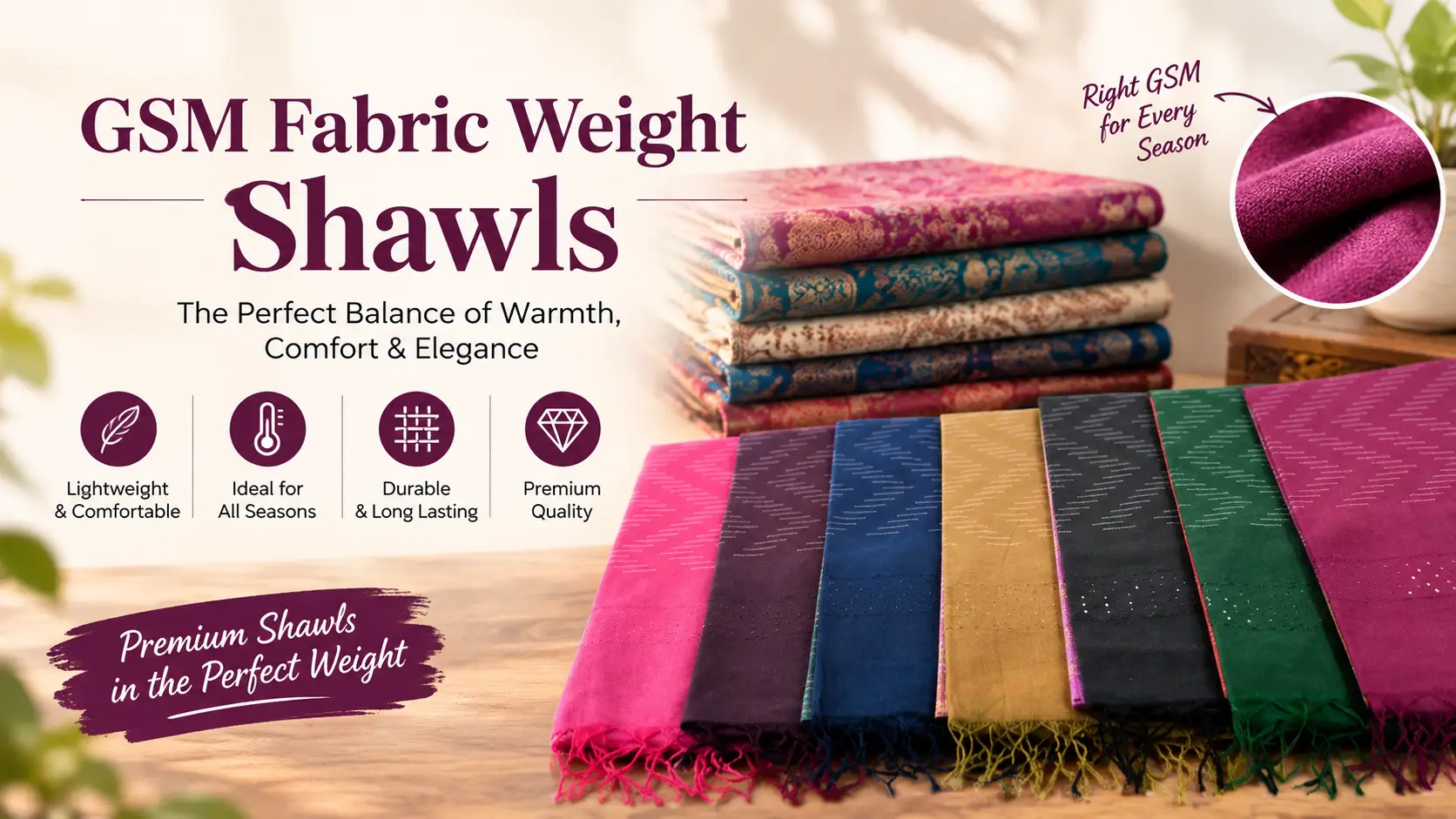
Merino shawls run 180 to 300 GSM. Around 200 to 250 suits most winter retail. Northern European, Canadian and Scandinavian markets take the heavier end. Merino blended with silk or cashmere runs lighter at 150 to 240 GSM while retaining warmth. Specify GSM in writing and check bulk delivery against the approved sample.
What is the minimum order from a merino wool shawls manufacturer India?
Most Indian manufacturers set minimums at 100 pieces per design for stock styles and 200 pieces for custom or OEM work. Custom colours can require more since yarn dyeing needs a viable lot size. Savita Shawls works to these figures, with corporate gifting programmes accepted from 50 pieces with branding applied.
How does merino compare with cashmere for retail?
Merino is warmer per gram and considerably more durable, cashmere is softer and carries a stronger luxury name. Merino at 18 microns and cashmere at 16 microns are closer in hand feel than the price gap suggests. For mid market winter retail merino usually delivers better margin. For luxury positioning the cashmere name carries the purchase.
When should I order merino shawls for winter retail?
Order by June for a Northern Hemisphere October launch, allowing production of 10 to 60 working days depending on customisation plus freight. For Southern Hemisphere winter retail in June, order between January and March. Wool is bulky relative to weight, so planning far enough ahead to ship by sea rather than air protects several points of margin.
Ready to order
Send your requirement with micron preference, GSM, dimensions, quantity per design and any certification requirements, and Savita Shawls will return pricing, confirmed lead times and sample availability. Samples ship within 5 to 7 business days with the cost credited against your bulk order. Contacting a merino wool shawls manufacturer India early in the seasonal cycle is worth more than negotiating hard late. Start with a merino wool quote request, email sales@savitashawls.com or call +91 7696677766.