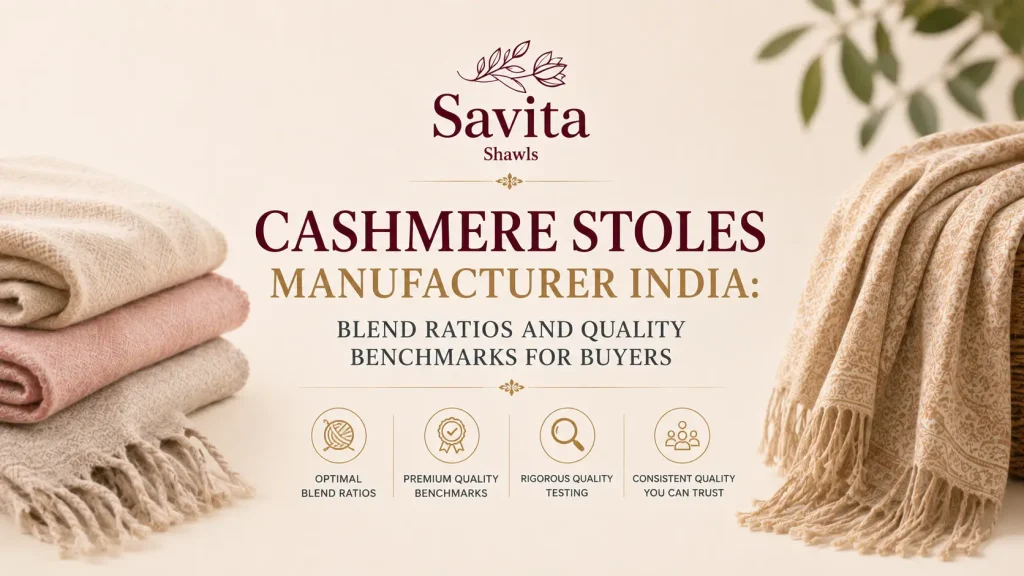
Cashmere is the most substituted fibre in the accessories trade after silk, and the substitutions are getting better. Blended yarns at 30 percent cashmere are sold as cashmere. Recycled cashmere from shredded garments is sold as new. Neither is illegal where it is declared, and both are common where it is not. A cashmere stoles manufacturer India buyers can rely on states the micron, the ply and the percentage in the quotation without prompting. This guide covers the grades, the tests, and the pricing logic that tells you whether a quote is plausible.
Cashmere grades a cashmere stoles manufacturer India works with
Cashmere is the fine undercoat of cashmere goats, combed rather than sheared. Fibre diameter runs 15 to 19 microns across commercial grades, with finer fibre commanding sharply higher prices.
Grade A cashmere runs roughly 15 to 16.5 microns with long fibre length, producing the softest, most durable cloth. Grade B runs around 17 to 18 microns. Grade C runs above 19 and is noticeably coarser, though still legitimately cashmere.
Fibre length matters as much as diameter. Long fibre resists pilling far better than short. A stole made from fine but short fibre feels wonderful for a month and then fuzzes, which is the most common cashmere complaint in retail.
Pashmina is a specific high grade of cashmere from Changthangi goats at 12 to 16 microns, covered in the guide to pashmina stole sourcing.
Recycled cashmere is reclaimed from used garments, shredded and respun. Fibre length is inevitably shorter, so pilling resistance is lower. It has a legitimate sustainability argument and a lower price, and it should be declared.
Ply, GSM and construction
Ply describes how many yarn strands are twisted together. Two ply is stronger and more durable than single ply at the same fibre grade, and it costs more. A cheap cashmere stole is usually single ply of short fibre, which is precisely the combination that pills.
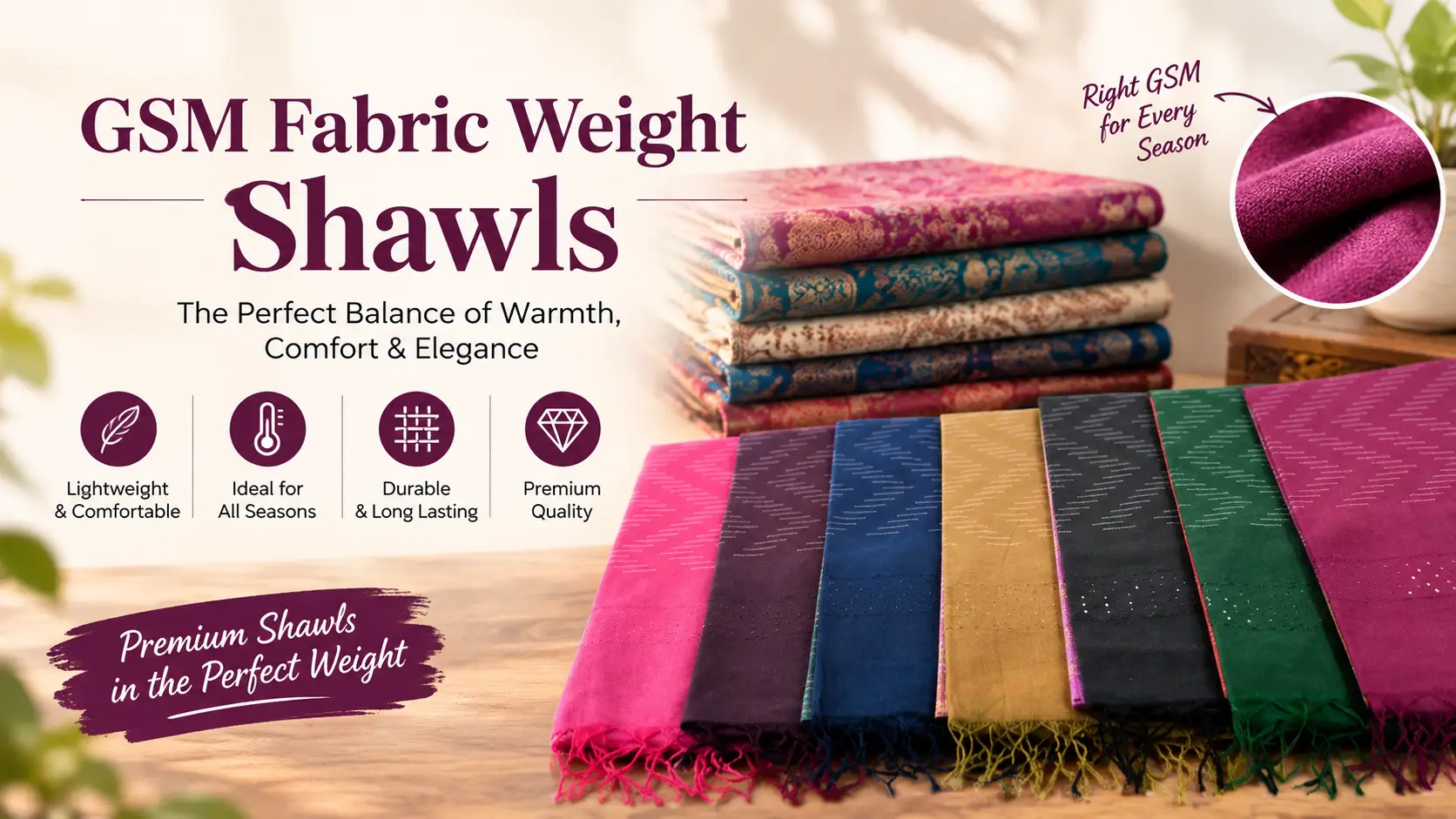
GSM for cashmere stoles runs 120 to 220 depending on ply and intended market. Lighter weights suit transitional and evening wear. Heavier weights suit genuine cold weather retail.
Construction affects both warmth and appearance. Plain weave is the baseline. Twill and herringbone add structure and a classic look. Jacquard builds pattern into the cloth, covered in the guide to jacquard stole production.
Finish matters considerably on cashmere. Milling and brushing raise the surface and produce the softness buyers expect on first touch. Aggressive brushing produces a stole that feels extraordinary in the showroom and pills within weeks, so ask any cashmere stoles manufacturer India how the piece is finished rather than only how it feels.
Verifying cashmere content
The burn test distinguishes animal fibre from synthetic but cannot distinguish cashmere from wool, since both are protein fibres that smell of burnt hair.
Micron testing at a laboratory is the only way to confirm grade. For any meaningful cashmere order, request a fibre fineness report and consider an independent test on a first shipment from a new supplier.
Price is the most useful practical indicator. Raw cashmere fibre trades at a globally known price, and a finished stole quoted below the cost of its fibre content is not what it claims to be. If a quote seems too good, it is describing a blend.
The rub test gives a rough pilling indication. Rub the surface firmly for thirty seconds with the flat of your hand. A piece that fuzzes immediately will fuzz in wear.
Ask any cashmere stoles manufacturer India for the fibre percentage in writing on the proforma invoice, not merely in conversation. Fibre content claims that appear on shipping documents carry consequences that verbal assurances do not.
Pricing from a cashmere stoles manufacturer India
Fibre grade drives everything. The gap between Grade A and Grade C at the same dimensions is substantial, because you are buying materially different raw material.
Weight follows, since cashmere is priced largely by fibre content. A 200 GSM stole costs meaningfully more than a 140 GSM piece of the same grade.
Ply next. Two ply costs more than single ply and lasts considerably longer.
Blend ratio is where most confusion sits. A 70/30 cashmere wool blend costs far less than pure cashmere and is a legitimate product at its own price point. Problems arise only when the blend is quoted as pure. Always obtain percentages in writing.
Quantity moves the number less than in most categories, because raw material dominates the cost structure and fibre supply is genuinely constrained.
MOQ, sampling and lead times
Minimum order quantity from a cashmere stoles manufacturer India generally sits at 100 pieces per design for stock styles and 200 for custom work, with custom colours sometimes higher because yarn dyeing fine fibre requires a viable lot.
Sample in the exact grade, ply and GSM you intend to buy. Cashmere is the category where a sample and a production piece diverge most easily, because grade substitution is invisible to the hand within one or two microns.
Wash test the sample. Cashmere should be hand washed or dry cleaned, and a piece that felts or distorts in gentle hand washing indicates poor finishing.
Lead times run 10 to 15 working days for stock styles with your label, 30 to 40 for embroidered work and 45 to 60 for custom woven designs. Yarn dyed woven cashmere sits at the longer end.
Order early for winter. The seasonal calendar and freight considerations are covered in the guide to woolen stole sourcing, and the same logic applies with less margin for error, since cashmere sells in a narrower window.
Which retail markets buy cashmere stoles
Luxury boutique retail is the core, particularly in Northern Europe, Canada, the northern United States and Japan, where cold weather and high disposable income meet.
Executive corporate gifting buys cashmere at moderate volume with logo embroidery and premium packaging, where the fibre name carries the gift.
Hotel and airline amenity programmes buy lightweight cashmere and cashmere silk blends for cabin and suite use.
Department store accessories floors buy across grades, using Grade B and blends to hit accessible price points alongside a small Grade A range for positioning.
Buyers comparing cashmere against neighbouring fibres should read the guides to merino wool sourcing and pashmina stole sourcing, which cover the tiers immediately above and below.
Savita Shawls as a cashmere stoles manufacturer India
Savita Fashions LLP, trading as Savita Shawls, has manufactured stoles, shawls and scarves from Gurgaon, Haryana since 1984 and supplies buyers in more than 20 countries including the UK, USA, Germany, France, Sweden, Denmark, Canada, Japan and Australia. GST registration is 06AFPFS3876N1Z0 and IEC is AFPFS3876N, verifiable on the GST portal. The company is registered with FIEO and AEPC.
Terms are 100 pieces per stock design and 200 pieces per custom or OEM design, with corporate gifting from 50 pieces with branding. Samples dispatch within 5 to 7 business days with the cost credited against the bulk order. Production runs 10 to 15 working days for stock styles with your label, rising to 45 to 60 working days for custom woven designs.
Cashmere sits alongside pashmina, merino, fine wool, silk, modal, cotton and viscose in the range, letting a winter programme span luxury and accessible tiers within one purchase order. Fibre composition documentation is available on request for customs and retail compliance, which matters in this category more than most. The cashmere product range shows the formats available. Buyers new to sourcing should start with the guide to choosing a stole manufacturer.
Frequently asked questions
What micron should a cashmere stoles manufacturer India supply?
Commercial cashmere runs 15 to 19 microns. Grade A at 15 to 16.5 microns with long fibre length gives the softest and most pilling resistant cloth for luxury retail. Grade B at 17 to 18 microns suits premium mid market. Above 19 microns the fibre is noticeably coarser, though still legitimately cashmere.
How can I verify cashmere content?
Laboratory micron testing is the only definitive method, since a burn test distinguishes animal fibre from synthetic but cannot separate cashmere from wool. Request a fibre fineness report from the supplier and consider an independent test on a first shipment. Price is a useful practical check, since a quote below raw fibre cost is not pure cashmere.
Why do cashmere stoles pill?
Pilling comes from short fibre length rather than from fibre diameter. A stole made from fine but short cashmere feels excellent initially and fuzzes within weeks. Single ply construction pills faster than two ply. Aggressively brushed finishes feel softer in the showroom and pill sooner. Ask about fibre length and ply, not only micron.
What is the difference between cashmere and pashmina?
Pashmina is a specific high grade of cashmere, taken from Changthangi goats raised at high altitude in Ladakh and Kashmir, measuring 12 to 16 microns. General cashmere covers a wider range of goat breeds and regions at 15 to 19 microns. All pashmina is cashmere. Most cashmere is not pashmina.
What is the minimum order from a cashmere stoles manufacturer India?
Most Indian manufacturers set minimums at 100 pieces per design for stock styles and 200 pieces for custom or OEM work. Custom colours can require more, since dyeing fine fibre needs a viable lot size. Savita Shawls works to these figures, with corporate gifting programmes accepted from 50 pieces with branding.
Should I buy pure cashmere or a cashmere blend?
Both have a place. Pure cashmere delivers the softness and the name that justify luxury pricing. Cashmere wool and cashmere silk blends cost considerably less and perform well in mid market retail. The problem is never the blend itself but the blend sold as pure, so obtain fibre percentages in writing on the proforma invoice.
What GSM works for cashmere stoles?
Cashmere stoles run 120 to 220 GSM. Lighter weights around 120 to 150 suit transitional seasons, evening wear and travel amenity programmes. Heavier weights of 180 to 220 suit genuine cold weather retail in Northern Europe, Canada and Japan. Ply affects hand feel as much as GSM, so specify both.
Is recycled cashmere worth stocking?
It carries a genuine sustainability argument and a lower price, which suits retailers positioned on environmental credentials. Fibre length is inevitably shorter after shredding and respinning, so pilling resistance is lower than virgin cashmere. It is a legitimate product provided it is declared as recycled rather than sold as new cashmere.
Ready to order
Send your requirement with grade, ply, GSM, dimensions and quantity per design, and Savita Shawls will return pricing, confirmed lead times and sample availability. Samples ship within 5 to 7 business days with the cost credited against your bulk order, which is the only reliable way to assess what a cashmere stoles manufacturer India is actually supplying. Start with a cashmere stole quote request, email sales@savitashawls.com or call +91 7696677766.