Print sits on fabric. Jacquard is fabric. That difference decides which one belongs in your range, because a woven pattern survives every wash the garment does, cannot crack or fade at the surface, and reads as quality in the hand in a way print does not. It also costs more to start, takes longer to produce and cannot be changed once the loom is set. A jacquard stoles manufacturer India buyers work with successfully is one who explains the setup economics before quoting, not after. This guide covers weave types, the development cycle and where jacquard earns its premium.
What jacquard weaving actually is
Jacquard is a loom mechanism that controls each warp thread individually, which allows complex patterns to be woven into the structure of the cloth rather than applied to its surface.
Self jacquard, sometimes called tone on tone, weaves the pattern in a single colour so the design appears through texture and light reflection alone. It is the most widely traded jacquard stole in India and the most versatile commercially.
Multi colour jacquard uses different coloured yarns in warp and weft to build the pattern in contrasting colour. It costs more and produces a considerably bolder result.
Dobby is a simpler mechanism producing small geometric patterns. It costs less than full jacquard and suits stripes, checks and small repeating motifs.
Kani weaving, the traditional Kashmiri technique using small wooden bobbins, is a hand equivalent producing similar structural pattern at a completely different price and timescale.
Any jacquard stoles manufacturer India quoting a woven design should specify which mechanism is being used, since the cost gap between dobby and full jacquard is substantial.
The development cycle with a jacquard stoles manufacturer India
Jacquard takes longer than any other decoration method because the design must be translated into a weave structure before anything can be produced.
The sequence runs: design concept, technical weave drafting, loom card or file preparation, a woven strike off for approval, then bulk production. Each stage takes real time and none can be skipped safely.
Weave drafting is the step buyers underestimate. A drawing has to become a set of instructions telling the loom which warp threads to lift on every pick. Complex designs take longer to draft and produce more corrections at strike off.
The woven strike off is your only reliable preview. A design that looks striking on paper can read as muddy when woven, because woven pattern relies on light and texture rather than on ink. Approve the physical strike off in writing before bulk.
Expect two to four weeks for development before production even begins. Buyers who bring a clear design reference and accept the first or second strike off move considerably faster than those iterating from a vague brief.
Pricing from a jacquard stoles manufacturer India
Jacquard splits into setup cost and per piece cost, and the balance decides whether it suits your order.
Setup covers weave drafting and loom preparation, charged once per design. On 200 pieces it is a significant share of the unit price. On 2,000 pieces it disappears into the background. This is why jacquard suits repeat programmes and core range items rather than one season trend pieces.
Per piece cost depends on yarn, weave density and pattern complexity. Dense multi colour jacquard uses more yarn and runs slower on the loom than a simple self jacquard, and both effects reach the price.
Yarn dyeing is required for multi colour jacquard, since the colour must be in the thread before weaving. That adds cost and lead time compared with piece dyed fabric.
Compared against printed stole production, jacquard costs more at low volume and competes well at high volume, while delivering a product that survives washing far better.
MOQ, sampling and lead times
Minimum order quantity from a jacquard stoles manufacturer India generally sits at 200 to 300 pieces per design, higher than printed or plain goods, because the loom setup must be amortised across enough units to be viable.
Lead times run 45 to 60 working days for custom woven designs, which is the longest of any standard stole production route. Add development time before that. A jacquard programme starting from concept in January is a summer delivery, not a spring one.
Sample the woven strike off in the actual yarn and colour you intend to buy. Weave appearance changes considerably with yarn type, and a strike off in cotton tells you little about how the same structure will look in fine wool.
Retain an approved reference piece. On repeat orders, the reference is what the production run is checked against, and having one physically in your possession settles disputes quickly. The full sampling sequence is covered in the guide to requesting samples from a manufacturer.
Where jacquard earns its premium
Three commercial arguments justify the cost and the wait.
Durability. Woven pattern cannot crack, peel or fade at the surface because it is structural. For a product a customer keeps for years, this is a genuine quality difference rather than a marketing claim.
Perceived value. Jacquard reads as considered and expensive in the hand. On a shelf next to a printed stole at a similar price, it wins on touch.
Differentiation. A custom woven design is genuinely difficult to copy quickly, unlike a print, which can be photographed and reproduced within weeks. For brands protecting a signature look, this matters.
Jacquard performs particularly well in fine wool for autumn and winter ranges, where herringbone, diamond and textured weaves are staple menswear and premium accessory patterns. The fabric considerations are covered in the guide to woolen stole sourcing. Buyers running full branded programmes should read the guide to custom stole development.
Quality checks on jacquard delivery
Check pattern alignment against the approved strike off, particularly at the selvedge and at the ends of the piece where drift shows first.
Check repeat consistency along the length. A weave repeat that shifts indicates a loom tension problem.
Check for floats, meaning threads carried across the reverse of the fabric over long distances. Long floats snag in wear and indicate a drafting shortcut.
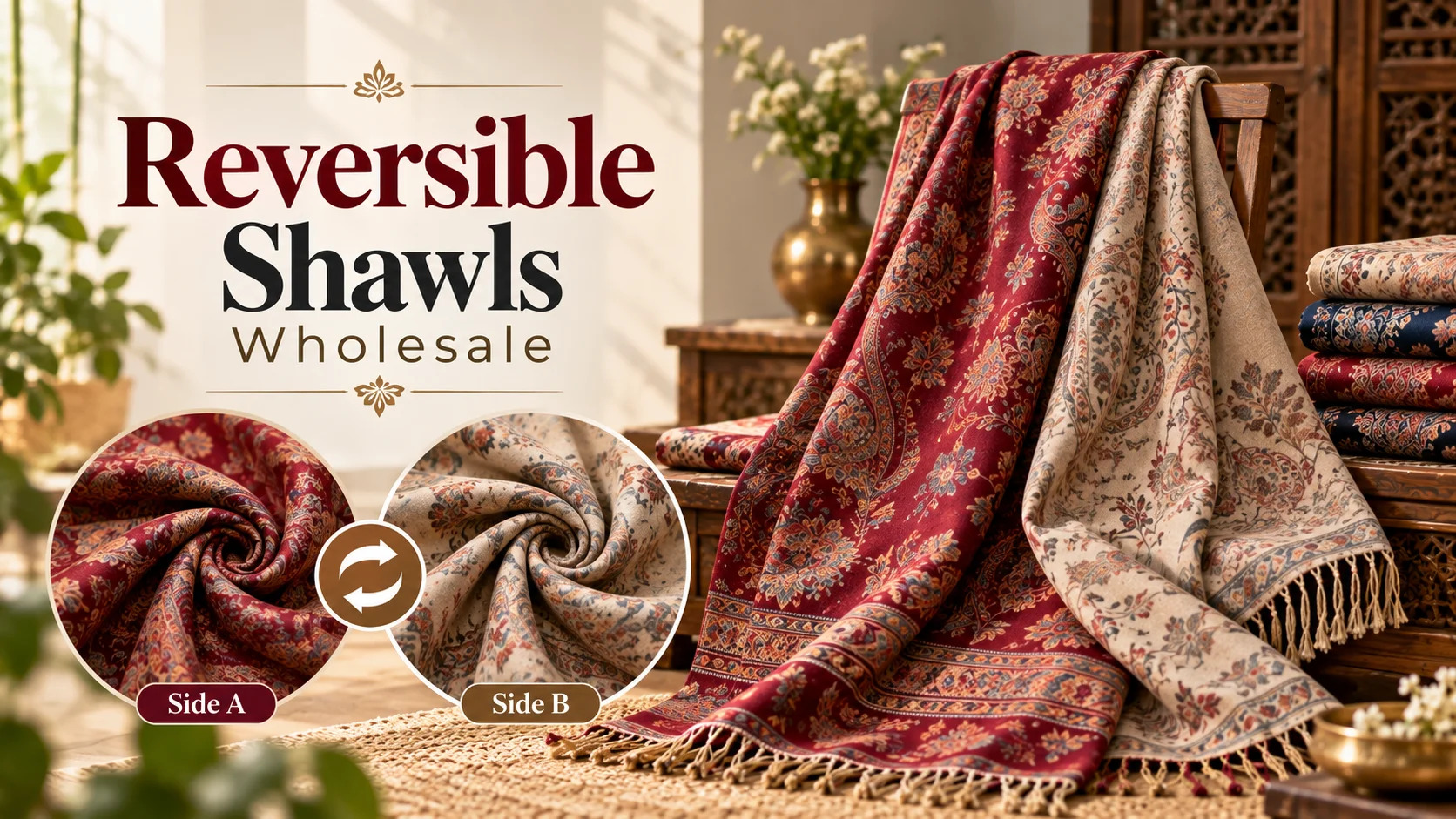
Check reverse appearance. Self jacquard is often reversible and sold as such, so if you intend to market it that way, confirm the back is presentable.
Check yarn dyed colour consistency across cartons, since jacquard colour cannot be corrected after weaving in the way piece dyed fabric sometimes can.
Savita Shawls as a jacquard stoles manufacturer India
Savita Fashions LLP, trading as Savita Shawls, has manufactured stoles, shawls and scarves from Gurgaon, Haryana since 1984 and supplies buyers in more than 20 countries. GST registration is 06AFPFS3876N1Z0 and IEC is AFPFS3876N, verifiable on the GST portal and the DGFT portal. The company is registered with FIEO and AEPC.
As a jacquard stoles manufacturer India terms are 100 pieces per stock design and 200 pieces per custom or OEM design, with corporate gifting from 50 pieces with branding. Custom woven production runs 45 to 60 working days, with development and strike off approval before that. Samples dispatch within 5 to 7 business days with the cost credited against the bulk order.
Woven design capability covers self jacquard, multi colour jacquard, dobby, diamond weave, herringbone, twill, check and traditional kani hand weaving, produced across fine wool, pashmina, cashmere, silk, modal and viscose yarns. The self jacquard stole range shows the formats available. Design confidentiality is standard with an NDA available before artwork is shared, which matters more on woven design than on print because the development investment is larger. Buyers new to sourcing should start with the guide to choosing a stole manufacturer.
Frequently asked questions
What is the difference between jacquard and printed stoles?
Jacquard weaves the pattern into the structure of the fabric using a loom that controls each warp thread individually. Printing applies design to the surface of finished cloth. Jacquard cannot crack, peel or fade at the surface and reads as higher quality in the hand. Print costs less at low volume and allows photographic artwork that weaving cannot reproduce.
What is self jacquard?
Self jacquard, also called tone on tone, weaves the pattern in a single colour so the design appears through texture and light reflection rather than colour contrast. It is the most widely traded jacquard stole type in India, works across most yarn types, and costs less than multi colour jacquard because it needs no yarn dyeing stage.
What is the minimum order from a jacquard stoles manufacturer India?
Minimums typically run 200 to 300 pieces per design, higher than printed or plain goods, because loom setup cost must be amortised across enough units to be viable. Multi colour jacquard can require more. Savita Shawls works to 100 pieces per stock design and 200 pieces per custom or OEM design.
How long does custom jacquard production take?
Production runs 45 to 60 working days, the longest of any standard stole route. Add two to four weeks before that for weave drafting, loom preparation and strike off approval. A jacquard programme starting from concept in January delivers in summer rather than spring, so plan the calendar backwards from your retail date.
What is a woven strike off and why do I need one?
A woven strike off is a physical sample of your design produced on the actual loom in the intended yarn, made for approval before bulk. It is the only reliable preview, because woven pattern relies on texture and light rather than ink, and a design that looks striking on paper can read as muddy once woven. Approve it in writing.
Is jacquard worth the extra cost over printing?
It depends on volume and positioning. Jacquard costs more at low volume because of loom setup, and competes well at high volume. It earns its premium through durability, since woven pattern cannot crack or fade, through perceived value in the hand, and through differentiation, since a woven design is far harder to copy quickly than a print.
Which yarns work best for jacquard stoles?
Fine wool carries herringbone, diamond and textured weaves particularly well and suits autumn and winter ranges. Pashmina and cashmere produce refined self jacquard at luxury price points. Silk gives high sheen contrast in multi colour work. Viscose and modal handle jacquard at accessible price points for volume retail programmes.
What should I check on a jacquard stole delivery?
Compare pattern alignment against the approved strike off, checking the selvedge and the ends of the piece where drift appears first. Check repeat consistency along the length, since a shifting repeat indicates loom tension problems. Look for long floats on the reverse, which snag in wear. Confirm yarn dyed colour consistency across cartons.
Ready to order
Send your design reference with intended yarn, dimensions and quantity per design, and Savita Shawls will return pricing, a development timeline and a strike off schedule. Samples ship within 5 to 7 business days with the cost credited against your bulk order. Given the development cycle, contacting a jacquard stoles manufacturer India early is worth considerably more than negotiating hard late. Start with a jacquard stole quote request, email sales@savitashawls.com or call +91 7696677766.