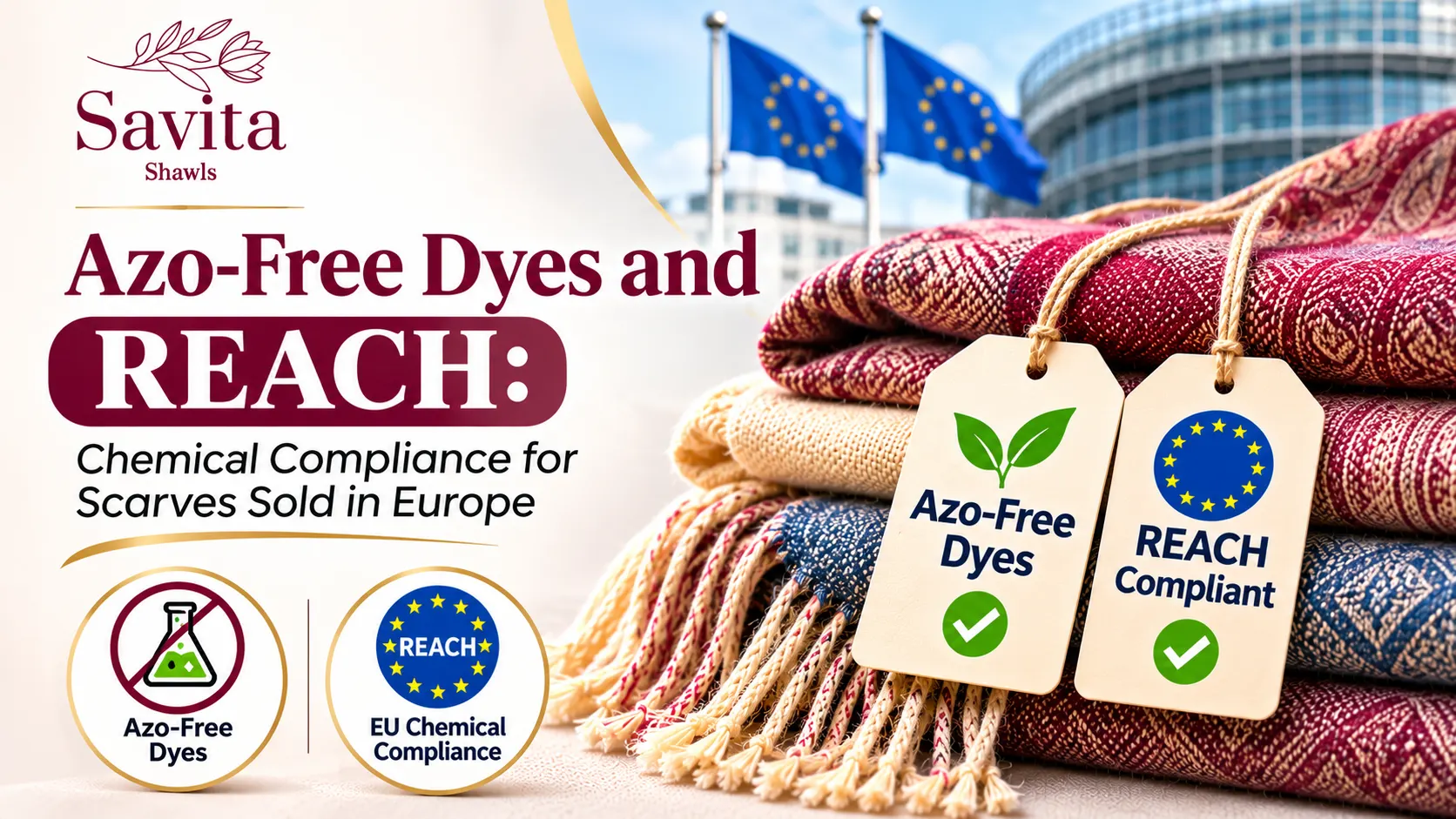
In the EU, REACH Annex XVII (entry 43) bans azo colourants that can release certain aromatic amines above 30 mg/kg in textiles that touch the skin for a long time, and scarves fall in that group. So “azo free dyes” really means no azo dyes that break down into the restricted amines, proved by a lab test on your batch. For importers, that test report is the document to ask for, because a supplier’s statement alone does not protect you.
If you import scarves, stoles or shawls into the EU, you are legally responsible for what is in them. This guide explains what the rules restrict, the other chemical limits that matter for scarves, and what to request from a manufacturer before you order.
What Does “Azo-Free Dyes” Actually Mean?
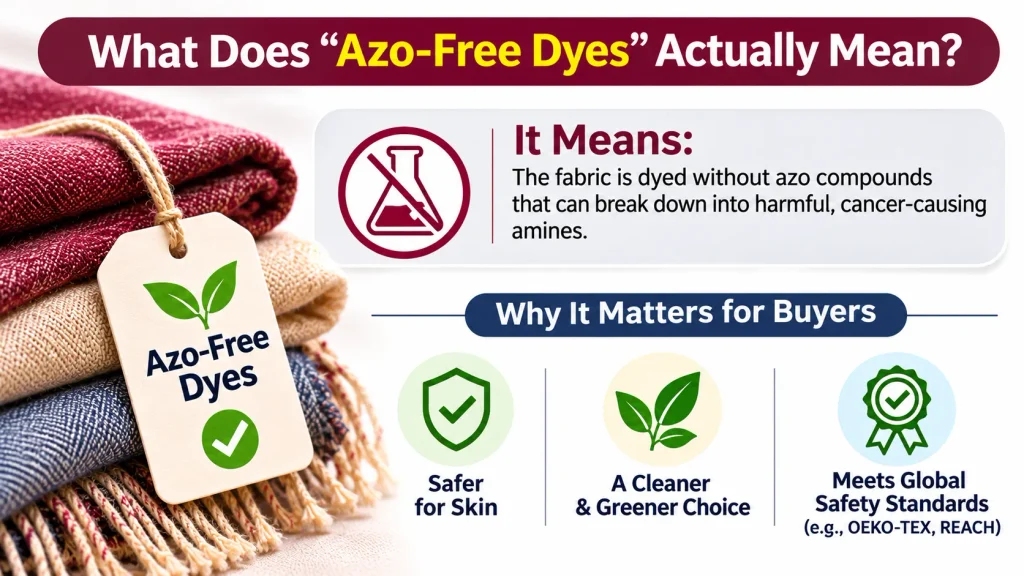
Azo dyes are a large family of synthetic colourants. Most are perfectly legal. The problem is a subset that can split apart (through reductive cleavage) and release 22 listed aromatic amines, some of which are classed as carcinogenic.
So the phrase is shorthand:
- It does not mean the scarf contains no azo dyes at all.
- It does mean the dyes used cannot release the restricted amines above the legal limit.
- It should be backed by a test report, not only a product label.
When a supplier says “azo free”, ask: “Free of which amines, tested by which method, on which batch?”
For importers sourcing different materials and designs, reviewing the production specifications of silk scarves and digital printed shawls and scarves can also help when discussing dyeing and printing requirements with a manufacturer.
What Does REACH Compliance Mean for Textiles?
REACH is the EU’s main chemicals regulation. For scarves, three parts matter most.
- Annex XVII, entry 43 (azo colourants): azo dyes releasing the listed amines above 30 mg/kg are banned in textile articles that may come into direct, prolonged skin contact. Testing follows the EN ISO 14362 series.
- Annex XVII, other entries: limits on specific substances such as nickel release from metal parts, and the restrictions on CMR (carcinogenic, mutagenic, reprotoxic) substances in clothing and related accessories. Embellished scarves with metal fittings, crystals or hardware need extra attention.
- SVHC and Article 33: if a scarf contains a Substance of Very High Concern (candidate list) above 0.1% by weight, the supplier must pass that information down the chain and to consumers on request. Importers may also have notification duties under the SCIP database.
The rules change, and PFAS restrictions in particular are tightening. Confirm the current position with a compliance specialist before relying on any list, including this one.
EU Chemical Rules for Scarves: What Else to Check
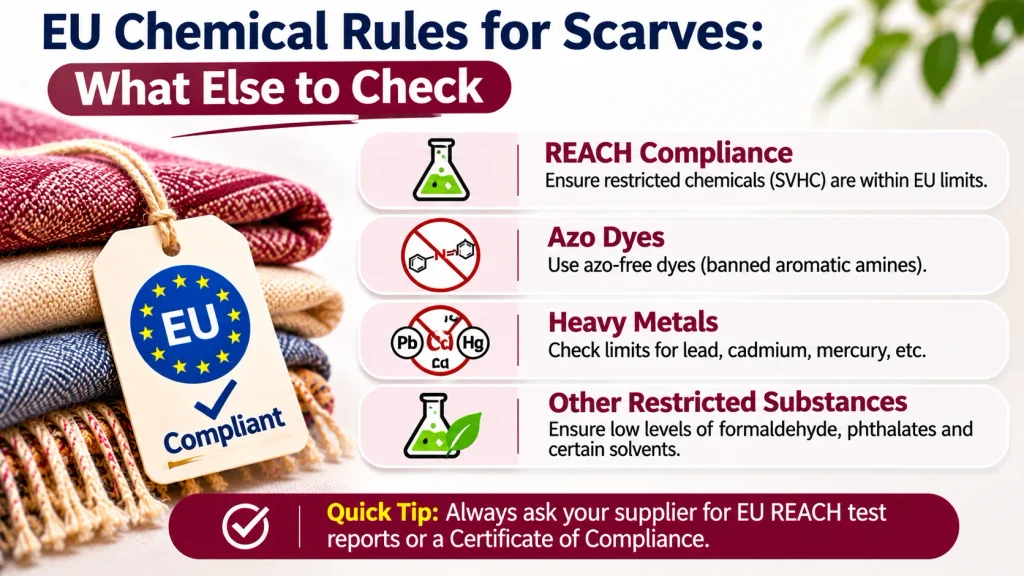
Azo dyes are only one item. For scarves sold in Europe, buyers also look at:
- Formaldehyde in finishing treatments.
- Heavy metals in dyes, prints and embellishments.
- Nickel release from metal clasps, studs and decorative parts.
- Chromium VI in dyed or tanned components.
- Phthalates and PFAS in prints, coatings and water-repellent finishes.
- Allergenic disperse dyes, which sit outside REACH but are in many brand lists, especially for synthetic and blended fibres.
Natural fibre scarves are not automatically safe, because the dyes and finishes decide compliance, not the fibre.
Restricted Substances List: How Brands Go Beyond the Law
Many brands and retailers set a restricted substances list (RSL) that is stricter than REACH. Common reference points include:
- A brand’s own RSL, usually attached to the supplier contract.
- ZDHC MRSL, which controls chemical inputs at the dye house and mill.
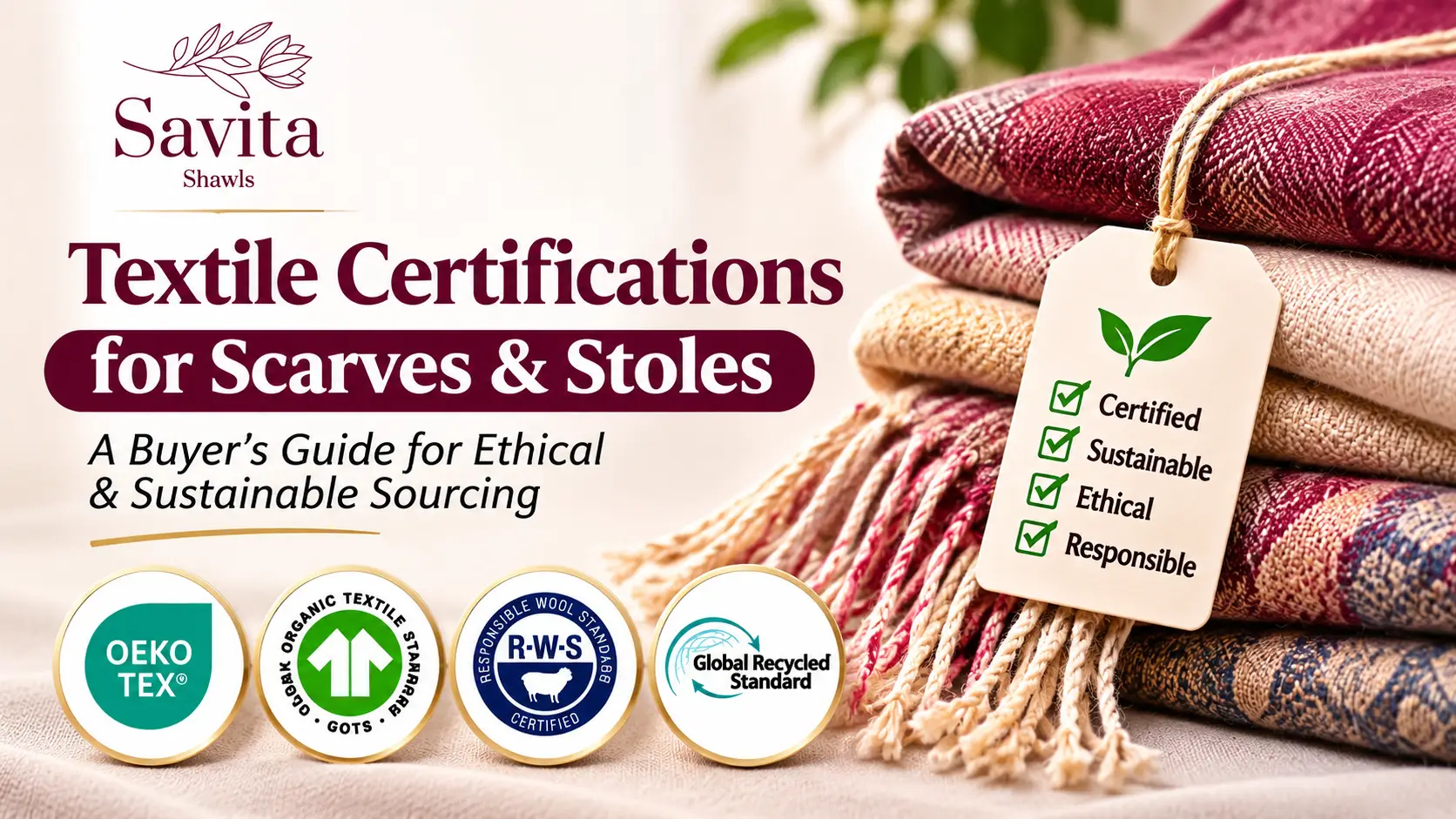
- OEKO-TEX Standard 100, a product-level test and label.
- AFIRM Group guidance, widely used by apparel and accessories brands.
Ask which list applies before production, since changing dyes after sampling is expensive.
This is particularly important for buyers developing private label shawls and scarves, where fabric selection, dyeing, printing and finishing requirements should be discussed before bulk production begins.
How to Verify a Supplier’s Azo-Free and REACH Claims
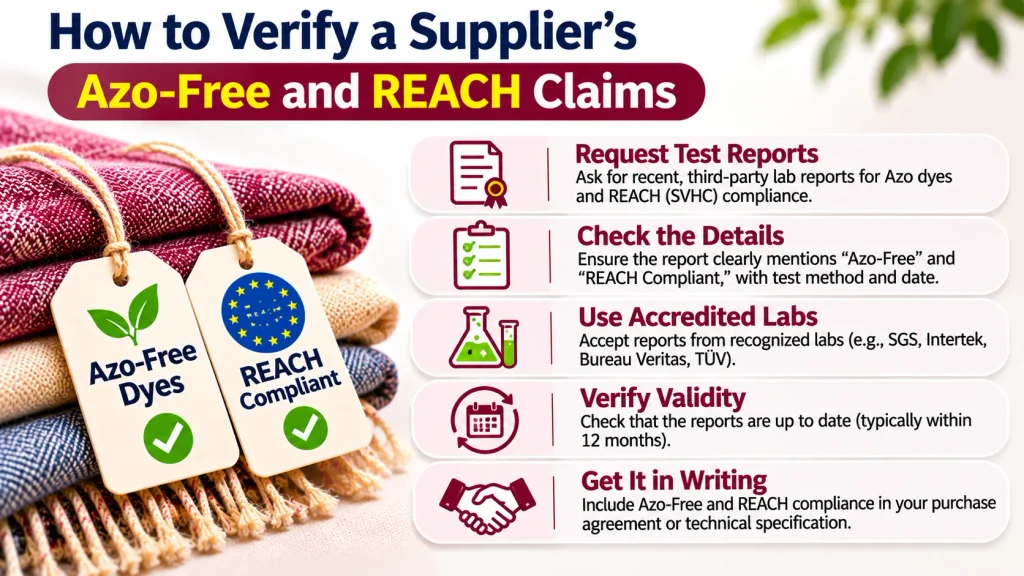
Request these documents and check the details:
- A recent lab test report from an accredited laboratory (ISO/IEC 17025), covering azo amines under EN ISO 14362-1 and -3.
- Batch or lot relevance. A report on a different fabric or colour does not prove your order is compliant.
- Test scope. The report should list the standard, the limit and the result, not just “pass”.
- A signed supplier declaration on REACH and your RSL, which supports the test but never replaces it.
- Dye house information. Confirm who dyes the fabric and whether they follow a chemical management programme.
- Retest rights. Agree that you may send production samples to your own lab.
Red Flags
- “Azo free” printed on a hang tag with no report behind it.
- A test report that is old, undated or covers another article.
- A supplier who cannot say which dye classes they use.
- No answer on SVHC or nickel for embellished products.
- Reluctance to allow third-party testing.
Our Approach at Savita Shawls
[CONFIRM: state only what Savita Fashions LLP can document, for example the lab used, the standards tested (for example EN ISO 14362-1/-3), which product ranges have current reports, and whether reports are shared at sampling or on request. Delete this block if you can’t back it up yet.]
Savita Shawls has been manufacturing shawls, stoles and scarves in India since 1984 and exports to buyers worldwide. We support private label scarves and shawls, bulk orders and corporate gift shawls, with sample dispatch the next day on payment and a standard 15-day lead time on core ranges.
If your market is the EU, tell us your RSL and test requirements at enquiry stage, and we will confirm what we can supply and what testing we can arrange before production.
What are azo free dyes?
Azo free dyes, in compliance terms, are dyes that cannot release the 22 restricted aromatic amines above 30 mg/kg. They are not necessarily free of every azo compound. The claim should be backed by a lab test, not only a label.
Are azo dyes banned in the EU?
Only certain azo dyes are banned. REACH Annex XVII, entry 43, restricts azo colourants that can release listed aromatic amines above 30 mg/kg in textiles that come into direct, prolonged contact with skin. Other azo dyes remain legal.
Do scarves have to comply with REACH?
Yes. Scarves sold in the EU must meet the REACH restrictions that apply to textiles and accessories, including the azo dye rule. The importer or the brand placing the product on the EU market carries the legal responsibility.
Which test shows a scarf is azo free?
The standard method is the EN ISO 14362 series, using part 1 for most dyed fibres and part 3 for the amine that part 1 can miss. Ask for a report from an accredited lab that states the method, the limit and the result.
What is a restricted substances list (RSL)?
An RSL is a list of chemicals a brand or retailer limits in its products, often stricter than the law. Suppliers are usually required to follow it by contract and to prove it with test reports.
Does REACH only apply to synthetic scarves?
No. REACH applies to the chemicals in the finished article, whatever the fibre. Wool, modal, viscose, cotton and acrylic scarves can all fail if the dyes or finishes contain restricted substances.
What documents should I ask a scarf manufacturer for?
Ask for a recent accredited lab test report relevant to your batch, a REACH and RSL declaration, details of the dye house, and information on SVHCs and nickel release for embellished items. Agree on your right to retest production samples.