
Viscose moves more units than any other stole fabric in India, and it is the fabric buyers complain about most. Both facts have the same cause. Viscose drapes beautifully, takes colour brilliantly and costs very little, which makes it the default choice for volume retail. It also pills, loses strength when wet and varies enormously in quality between suppliers who all describe it as viscose. A viscose stoles manufacturer India buyers can work with long term is one who acknowledges the trade-offs rather than pretending they do not exist.
What viscose actually is
Viscose is a semi synthetic fibre made from regenerated cellulose, usually wood pulp. It is neither a natural fibre like cotton nor a true synthetic like polyester, which is why it behaves like neither.
Rayon is the same fibre under a different name, more commonly used in North American markets. If a supplier quotes rayon and viscose as separate products at different prices, ask what the actual difference is, because there may not be one.
Modal and lyocell are also regenerated cellulose fibres, produced by different processes. Modal is stronger when wet and resists pilling better than standard viscose. Lyocell, sold under the Tencel brand, is stronger again and produced in a closed loop process that appeals to sustainability positioned retail. Both cost more than viscose and both are worth considering if pilling complaints are hurting you.
Quality grades a viscose stoles manufacturer India works with
Viscose quality varies more between suppliers than any other stole fibre, and the differences are not visible in a photograph.
Filament viscose uses continuous fibres and produces a smooth, lustrous fabric with good drape and less pilling. Spun viscose uses staple fibres twisted into yarn, giving a softer matte finish that pills more readily. Most cheap viscose stoles use spun yarn.
Denier measures filament thickness. Lower denier gives a finer, softer fabric. Ask any viscose stoles manufacturer India for the denier and the yarn type, and treat vagueness as an answer in itself.
Finishing makes a large difference to the final hand. Enzyme washing softens the fabric and reduces surface fuzz. Anti pilling treatment reduces the most common complaint. Both add cost and neither is standard, so specify them if your market cares.
Being straight about the trade-offs
Viscose pills. Any viscose stoles manufacturer India telling you their standard viscose does not pill is either using a higher grade fibre they have not mentioned or is not being straight with you. Spun viscose develops surface fuzz within a season of regular wear.
Viscose loses roughly half its strength when wet, which is why care labels specify hand wash or dry clean. A customer who machine washes a viscose stole on a normal cycle will damage it, and the return will land with you rather than with the fibre.
Viscose creases more readily than polyester and less than linen. It also shrinks, typically three to five percent on first wash unless the fabric has been pre treated.
None of this makes viscose a bad choice. It makes it a fabric with a defined place: high volume, fashion led, price sensitive retail where the customer expects a season or two of wear rather than five years. Position it accordingly in your listings and the complaints largely stop.
Pricing: what moves the number
Viscose is the cheapest stole fibre in commercial production, which means the price differences between suppliers come from finishing and print rather than from the base fabric.
Yarn type and denier set the baseline. Filament costs more than spun. Finishing treatments add per piece cost, with enzyme washing and anti pilling treatment each adding a small but real amount.
Print method drives more of the price than the fabric on most decorated viscose stoles. Screen printing is economical above roughly 500 pieces per design. Digital printing suits shorter runs and photographic artwork, with the detail covered in the guide to printed stole production.
Quantity moves the number less on viscose than on premium fibres, because the raw material component is already small. The step from 100 to 500 pieces is worth taking. Beyond 2,000 the saving flattens quickly.
MOQ, sampling and lead times
Minimum order quantity from a viscose stoles manufacturer India generally sits at 100 pieces per design for stock styles and 200 for custom prints. Viscose minimums are among the lowest in the trade because the fabric is widely available and dye lots are economical at modest sizes.
Order a sample and wash it. This single step tells you more about a viscose supplier than any conversation. Check for shrinkage, colour bleed and surface fuzz after one wash cycle, because your retail customer will do exactly this and will judge accordingly.
Lead times run 10 to 15 working days for stock styles with your own label and 20 to 25 working days for custom printed work. Viscose is faster to produce than wool or silk because there is no yarn dyeing stage on most printed programmes.
Which markets buy viscose stoles
Three retail segments absorb most wholesale viscose stole volume, and they want different things.
Fast fashion and high street retail wants trend prints, seasonal colour and low unit cost, with a product life measured in months rather than years. Volume is high and margin per piece is thin.
Modest wear retail is a substantial and growing market for viscose, since the fabric drapes well and holds a pin. Sizing and finish requirements differ from mainstream fashion, and the guide to hijab and modest wear stoles covers the specifics.
Promotional and event programmes use viscose and viscose blends for branded stoles at volume, where print quality and delivery date matter more than fabric longevity.
Buyers comparing viscose against natural fibres for the same price band should read the guide to cotton stole sourcing, since the two compete directly in mid market retail. The wider viscose scarf and stole range shows the formats available.
Quality checks before you accept delivery
Check shade consistency across cartons first, comparing pieces from different boxes rather than the top layer of one. Viscose takes dye readily, which cuts both ways: colour is vivid, and variation between dye lots is obvious.
Test colourfastness by rubbing a damp white cloth against the fabric. Viscose dye transfer onto a customer’s clothing is a complaint you cannot argue with.
Wash one piece from the bulk delivery, not just the sample, and compare it against an unwashed piece for shrinkage and surface change. Check hem and selvedge quality, since rushed finishing on cheap viscose shows there first.
Confirm care labelling states hand wash or dry clean rather than machine wash. Fibre content must be declared accurately, and the detail on care label requirements for export covers the destination market rules.
Savita Shawls as a viscose stoles manufacturer India
Savita Fashions LLP, trading as Savita Shawls, has manufactured stoles, shawls and scarves from Gurgaon, Haryana since 1984 and supplies buyers in more than 20 countries including the UK, USA, UAE, Germany, France, Australia and Japan. GST registration is 06AFPFS3876N1Z0 and IEC is AFPFS3876N, verifiable on the GST portal and the DGFT portal. The company is registered with FIEO and AEPC.
As a viscose stoles manufacturer India terms are 100 pieces per stock design and 200 pieces per custom or OEM design, with corporate gifting from 50 pieces with branding. Samples dispatch within 5 to 7 business days with the cost credited against the bulk order. Production runs 10 to 15 working days for stock styles with your label and 20 to 25 working days for custom printed viscose.
Viscose sits alongside modal, cotton, linen, silk, fine wool, pashmina and cashmere in the range, so a single purchase order can span price tiers from entry level to luxury. Private label covers woven inner labels, care labels in your destination language, hangtags and branded packaging. Quality control runs in three stages: raw material inspection, in line checks during weaving, dyeing and finishing, and pre-shipment inspection. Buyers new to the category should start with the wholesale stole supply guide.
Frequently asked questions
Do viscose stoles pill?
Yes, particularly spun viscose, which develops surface fuzz within a season of regular wear. Filament viscose pills less. Enzyme washing and anti pilling finishing treatments reduce it further at a small additional cost. Modal, a related regenerated cellulose fibre, resists pilling considerably better and is worth specifying if pilling complaints are affecting your returns rate.
What is the difference between viscose and rayon?
They are the same fibre under different names, with rayon the term more commonly used in North America and viscose in Europe and Asia. If a supplier quotes them as separate products at different prices, ask what the actual technical difference is. Modal and lyocell are related but genuinely different fibres produced by different processes.
What GSM should I order for viscose stoles?
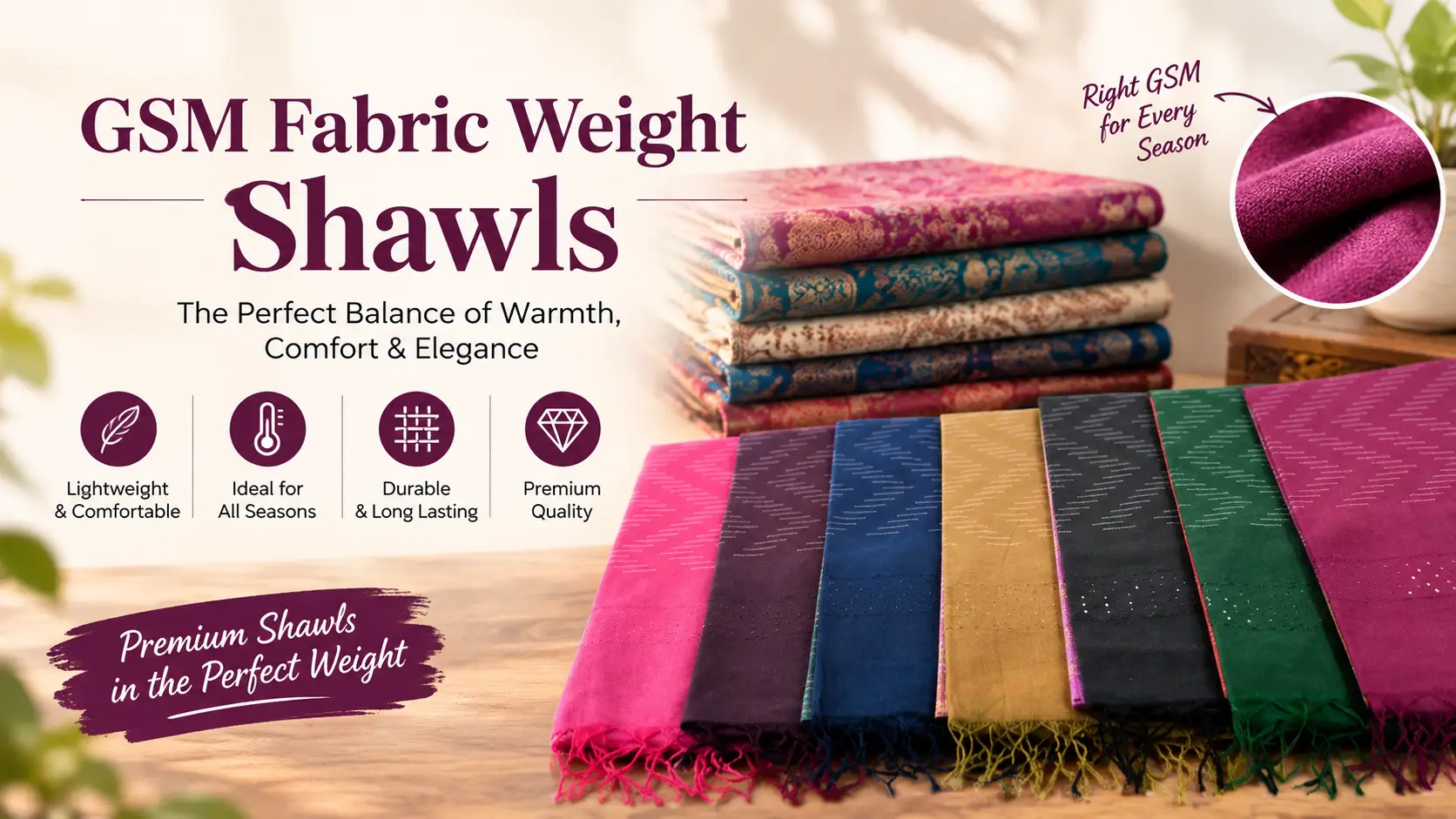
Standard viscose stoles run 90 to 130 GSM. Around 100 to 110 GSM suits most fashion retail and gives good drape. Below 90 the fabric becomes noticeably flimsy. Viscose acrylic blends for winter weight run considerably heavier at 140 to 200 GSM. Specify GSM in writing and check bulk delivery against the approved sample.
How much do viscose stoles shrink?
Untreated viscose typically shrinks three to five percent on first wash. Pre treated fabric reduces this. Viscose also loses roughly half its tensile strength when wet, which is why care labels should specify hand wash or dry clean rather than machine wash. Always wash a sample before approving bulk production.
What is the minimum order from a viscose stoles manufacturer India?
Most Indian suppliers set minimums at 100 pieces per design for stock styles and 200 for custom printed work. Viscose minimums are among the lowest of any stole fibre because the fabric is widely available and dye lots remain economical at modest sizes. Savita Shawls works to these figures, with corporate gifting from 50 pieces.
Is viscose suitable for hijab and modest wear retail?
Yes. Viscose drapes well, holds a pin and takes vivid colour, which makes it one of the most widely used fabrics in modest wear retail. Sizing and finish requirements differ from mainstream fashion stoles, with longer lengths and specific edge finishes commonly requested. Confirm dimensions in centimetres on the purchase order.
Can viscose stoles be custom printed?
Yes, and printing drives more of the final price than the base fabric on most decorated viscose. Screen printing is economical above roughly 500 pieces per design. Digital printing suits shorter runs and photographic artwork. Approve a printed strike off before bulk production, since colour on viscose reproduces differently from a screen proof.
How long does a bulk viscose stole order take?
Stock styles carrying your own label take 10 to 15 working days. Custom printed viscose takes 20 to 25 working days. Viscose produces faster than wool or silk because most printed programmes skip the yarn dyeing stage. Add freight time of 3 to 10 days by air or 15 to 35 days by sea depending on destination.
Ready to order
Send your requirement with yarn type, GSM, dimensions, quantity per design and any print direction, and Savita Shawls will return pricing, confirmed lead times and sample availability. Samples ship within 5 to 7 business days with the cost credited against your bulk order, so evaluating a new viscose stoles manufacturer India costs very little. Start with a viscose stole quote request, email sales@savitashawls.com or call +91 7696677766.