Most retail buyers approach their first wholesale stoles supplier India search the same way, by filtering a directory on price and messaging the ten cheapest results. Two months later they have a carton of stock that photographs well and feels like plastic, and no recourse because nobody wrote down what the fabric was supposed to be. The supplier relationship is the product in this trade. This guide covers how the wholesale side actually works, what to agree before money moves, and how to test a new supplier cheaply.
What a wholesale stoles supplier actually does
A wholesale stoles supplier sells finished stoles in bulk quantities to businesses rather than consumers, usually at 40 to 60 percent below the retail price you will charge. The supplier holds or produces stock, handles packing to your specification, and manages shipping. What they do not do is carry your inventory risk once the goods are dispatched.
That last point drives most of the decisions in this guide. Once a bulk order lands in your warehouse, unsold stock is your problem. This is why MOQ, fabric choice and colour selection matter far more at the purchase order stage than most first time buyers expect, and why testing a supplier with a small order beats negotiating a large one.
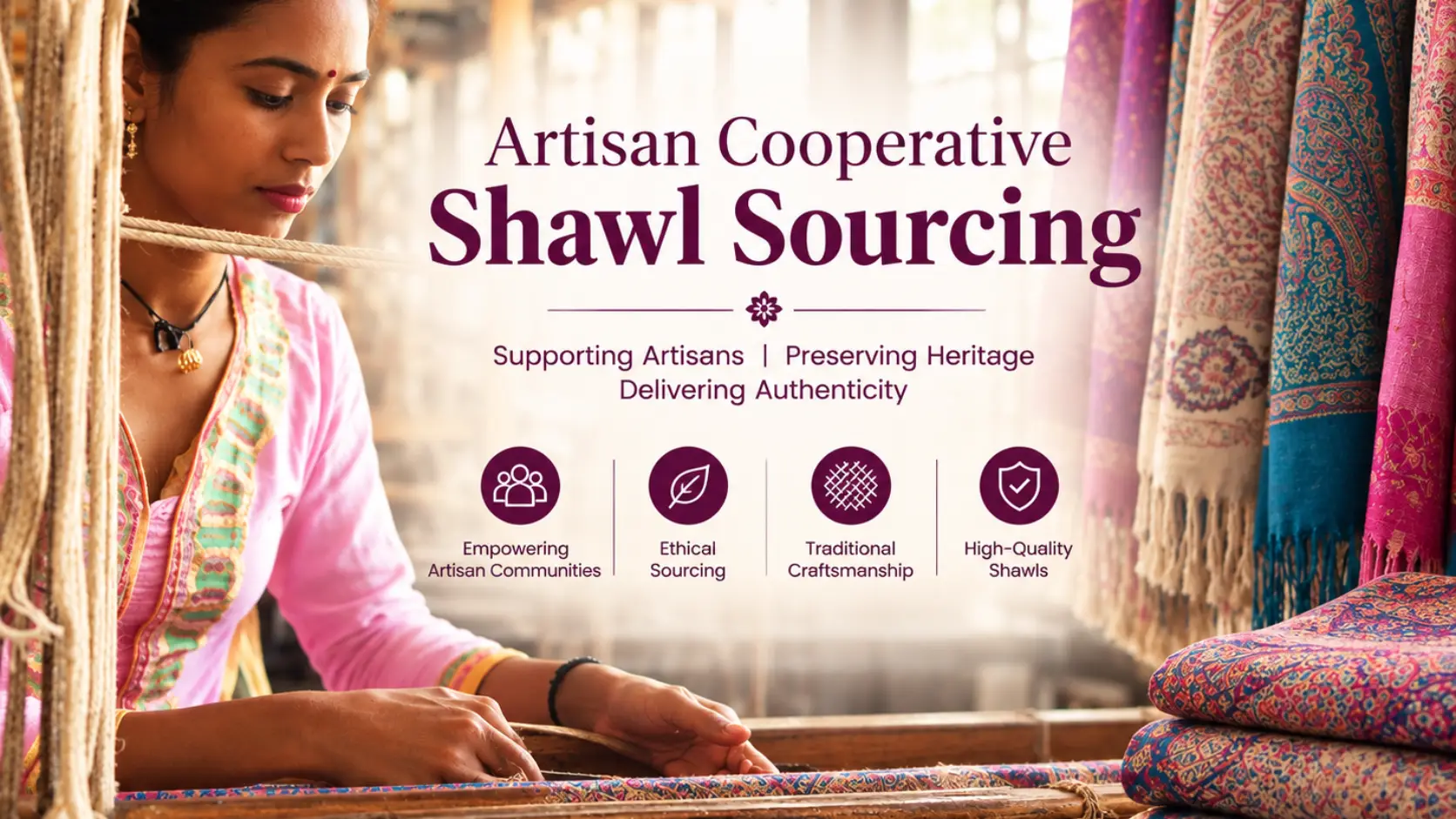
Suppliers fall into three groups: factories that manufacture, wholesalers that hold stock from several factories, and agents who own neither. Understanding how stoles are manufactured in India makes the difference between the three obvious within one phone call.
Choosing a wholesale stoles supplier India: manufacturer, wholesaler or agent
Buy from a manufacturer when you need custom work, consistent repeat quality, or your own branding. Buy from a stock wholesaler when you need small quantities across many designs immediately. Use an agent only when you are sourcing from multiple unrelated factories and genuinely need someone coordinating them.
The manufacturer route gives you the lowest per piece price and full control over specification, at the cost of higher minimums and longer lead times. Nothing ships in three days from a loom.
The stock wholesaler route suits boutiques buying 20 pieces each across 15 designs for a shop floor. You pay more per piece, you cannot customise, and the design you sold out of last month may not exist next month. For a single retail location this is often the right trade.
The agent route is where margin disappears quietly. An agent adds 15 to 25 percent and, in a dispute, represents whichever party pays them more. If your agent will not tell you which factory is producing your order, you are not going to find out when something goes wrong.
What order volumes get you which price from a wholesale stoles supplier
Price breaks in the Indian stole trade are steeper at the low end than the high end. The jump from 100 to 500 pieces per design moves the number meaningfully. The jump from 1,000 to 10,000 moves it far less, because yarn and labour do not compress much further.
Watch for the supplier who quotes a container price to win the enquiry and then reveals it applies only above 5,000 pieces of a single colourway. Ask for pricing at your actual quantity, in writing, before you spend time on samples.
Fabric mix for a first order with a wholesale stoles supplier in India
Do not put an entire opening budget into one fabric. A workable first order spreads across three price tiers so you learn what your customers buy before committing seriously to any of them.
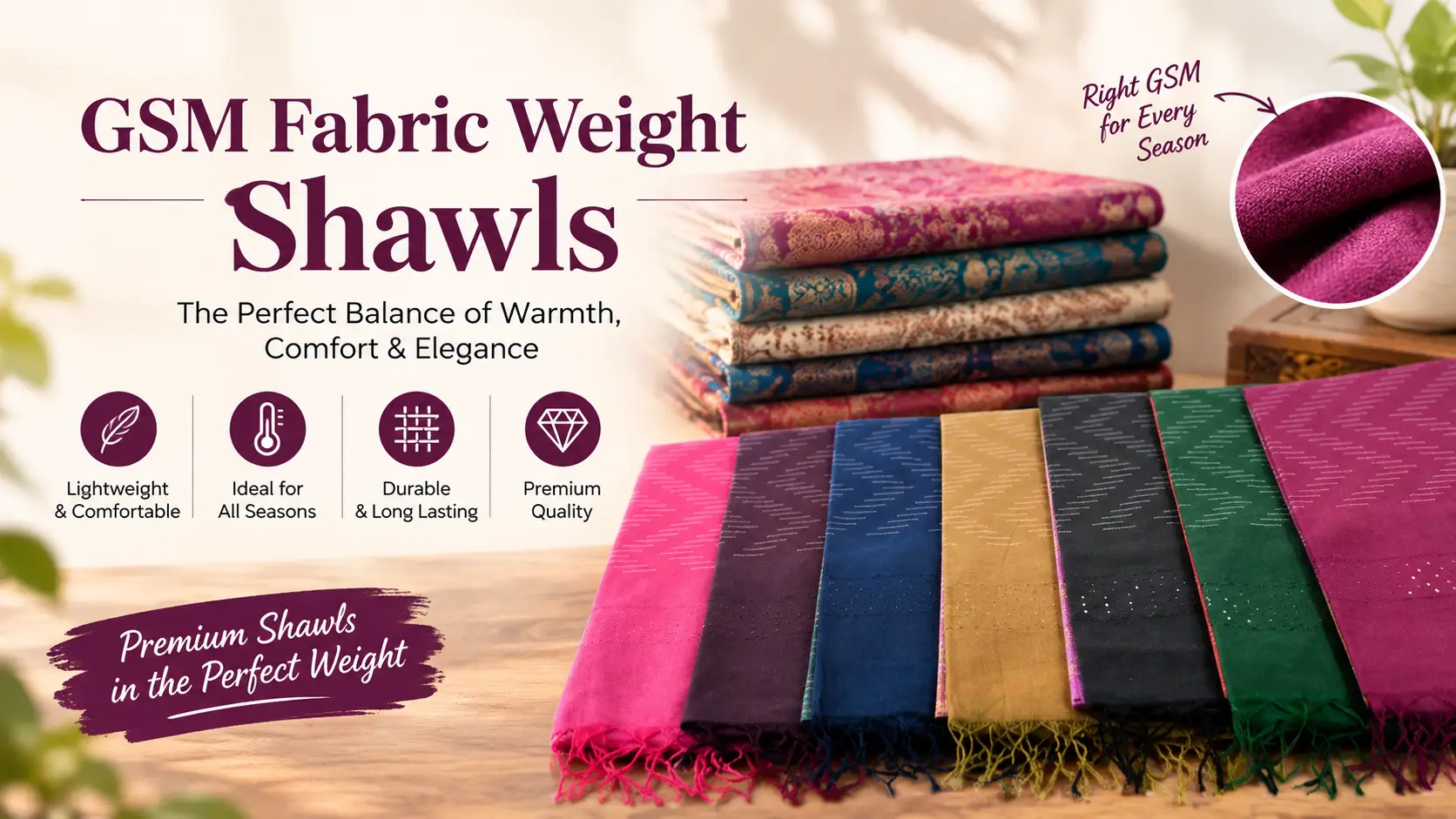
An entry tier in viscose or polyester covers price sensitive shoppers and impulse purchases. A middle tier in cotton, modal or linen covers the bulk of ordinary retail. A top tier in fine wool, silk or pashmina gives your shelf something to anchor the price perception, even if it sells slowly.
Season matters more than buyers expect. Summer stole collections in lightweight fabrics need ordering by February for a spring launch, and winter wool needs ordering by July. Placing a wool order in October means selling it in January at a discount.
If your end market is specific, weight the mix accordingly. Hijab and modest wear stoles run heavily to viscose and chiffon in specific dimensions. Bridal stole ranges run to silk and embroidery. Corporate event stole orders run to printed satin with branding. These are different buying patterns, not variations on one.
MOQ, payment terms and what is actually negotiable
Minimum order quantity is the number most buyers try to negotiate and the one suppliers are least flexible on, because it is set by loom and dye lot economics rather than by preference. A dye bath has a minimum viable size. Below it, the supplier loses money.
What is genuinely negotiable: the split of an MOQ across colourways, payment staging, packaging specification, and sample charges. What is rarely negotiable: the MOQ itself on custom work, and lead times on hand embroidery.
Standard payment terms across the Indian trade are 30 to 50 percent advance with the balance before shipment. Established repeat buyers can usually move to a letter of credit or 30 day terms after a few clean orders. Treat a supplier demanding 100 percent in advance on a first order as a supplier asking you to carry all the risk in a relationship where they hold all the information.
How to test a new wholesale stoles supplier cheaply
Order samples before anything else, and pay for them. Free samples sound generous and usually mean you are being sent whatever is nearest the door rather than a piece made to your specification.
A useful test sequence costs very little and tells you almost everything:
- Request catalogue samples in three fabrics across your intended price tiers.
- Check what actually arrives against what you asked for, including GSM and size.
- Wash one sample and check for shade loss, shrinkage and pilling.
- Ask a follow up question by email and time the reply.
- Place a trial order at or near the MOQ on one design only.
- Inspect the trial delivery for shade consistency across the full quantity.
Steps 4 and 6 are the ones that matter. Response time on a small enquiry predicts response time when a shipment is stuck. Shade consistency across a hundred pieces predicts consistency across a thousand. The full sampling process is worth reading before you make first contact.
Packing, labelling and how the stock arrives
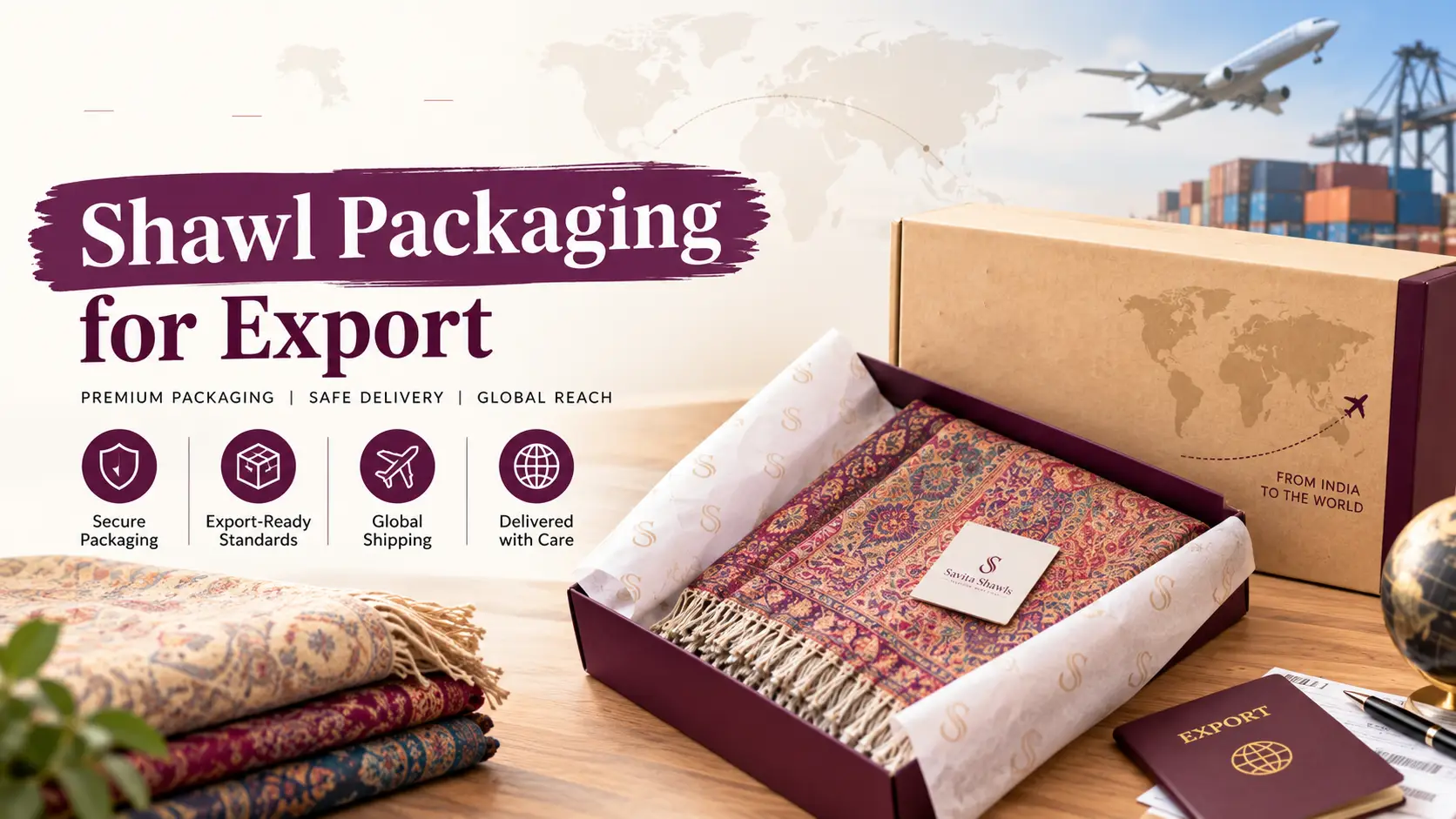
Agree packing specification in writing. Bulk flat pack in cartons is cheapest and suits distributors who repack. Individual poly bags suit ecommerce sellers shipping direct. Retail ready packing with hangtags and hangers costs more per piece and saves warehouse labour at your end.
Labelling is a compliance matter, not a design one. Most export markets require fibre content, care instructions and country of origin on the product, in the destination language. Getting this wrong stops goods at customs. Suppliers running custom stole development programmes handle labelling as part of the specification, which is one of the arguments for buying manufacturer direct.
For sellers testing demand without holding stock, some Indian suppliers now support dropshipping arrangements, though the economics are considerably tighter than bulk buying.
Red flags when choosing a wholesale stoles supplier in India
Any one of these on its own is worth a question. Two or more together is worth walking away.
The supplier will not share GST and IEC numbers. Both are verifiable on Indian government portals in a minute, and there is no legitimate reason to withhold them.
Prices are dramatically below every other quote you have. Somebody has substituted a fibre, skipped a finishing stage, or is quoting a different size than you asked for.
Photographs in the catalogue appear on three other suppliers’ websites. Reverse image search takes thirty seconds and regularly identifies traders presenting factory stock as their own production.
The specification stays vague after you ask for numbers. A supplier who cannot state GSM, exact dimensions and fibre percentages is not going to be held to them later.
Savita Shawls as a wholesale stoles supplier in India
Savita Fashions LLP, trading as Savita Shawls, has operated as a wholesale stoles supplier in India since 1984, manufacturing stoles, shawls and scarves from Gurgaon, Haryana, with wholesale customers in more than 20 countries including the UK, USA, UAE, Germany, France, Australia and Japan. GST registration is 06AFPFS3876N1Z0 and IEC is AFPFS3876N, both verifiable. The company is registered with FIEO and AEPC.
Wholesale terms are 100 pieces per stock design and 200 pieces per custom or OEM design, with corporate gifting accepted from 50 pieces with branding applied. Samples dispatch within 5 to 7 business days and the cost is credited against the bulk order. Payment is 30 to 50 percent advance with the balance before shipment, and letters of credit or 30 day terms are available to established repeat buyers.
The bulk order stole and scarf range covers viscose, modal, cotton, linen, silk, fine wool, pashmina and cashmere. Production is 10 to 15 working days for stock styles with your label, rising to 45 to 60 working days for custom woven designs. Shipping is available on FOB, CIF or DDP terms, with the full export documentation process handled in house.
Buyers unsure which product category they are actually ordering should start with the shawl, stole and scarf definitions, since mismatched terminology on a purchase order causes more sizing disputes than any other single factor. The wholesale buying guide covers the rest of the sourcing vocabulary.
Frequently asked questions
What is the minimum order for a wholesale stoles supplier India?
Most Indian wholesale stole suppliers set minimums between 100 and 300 pieces per design. Savita Shawls works to 100 pieces per stock design, 200 pieces for custom or OEM work, and 50 pieces for corporate gifting with branding. Stock wholesalers holding ready inventory sometimes accept 20 to 50 pieces, at a higher per piece price and without customisation.
How much cheaper is wholesale than retail pricing?
Wholesale stole pricing typically sits 40 to 60 percent below the retail price you will charge, depending on fabric and order volume. Factory direct pricing sits lower again because there is no wholesaler margin in between. The gap narrows on luxury fibres like pashmina and cashmere, where raw material cost forms a larger share of the total.
Can I mix different designs in one wholesale order?
Yes. Most Indian suppliers accept mixed assortment orders where you combine designs, colours and fabric types provided the total meets the minimum order quantity. Savita Shawls accepts mixed orders on this basis. Custom or OEM designs carry their own minimum per specification, since each requires separate loom setup or print artwork.
What payment terms do wholesale stole suppliers offer?
Standard terms are 30 to 50 percent advance to release production with the balance payable before shipment. Established repeat buyers can access letters of credit or 30 day credit arrangements. Accepted methods usually include wire transfer, letter of credit, PayPal for smaller sums and Western Union. Full advance payment on a first order is not standard and should be questioned.
How long does a wholesale stole order take?
Stock styles with your own label take 10 to 15 working days. Custom printed work takes 20 to 25 working days. Custom embroidered work takes 30 to 40 working days. Custom woven designs including jacquard take 45 to 60 working days. Add shipping time on top, which runs 3 to 10 days by air and 15 to 35 days by sea depending on destination.
Should I buy from a manufacturer or a wholesaler?
Buy from a manufacturer if you need custom designs, your own branding, or consistent quality across repeat seasonal orders. Buy from a stock wholesaler if you need small quantities across many designs with immediate dispatch. Manufacturers offer lower per piece prices and full specification control. Wholesalers offer speed and lower minimums at a higher unit cost.
How do I check a wholesale stoles supplier is legitimate?
Verify the GST and IEC registration numbers on the relevant Indian government portals, which takes about a minute each. Request a dated photograph or video of the production floor. Reverse image search their catalogue photographs to check whether the same images appear on competitor sites. Ask for specific GSM, dimensions and fibre percentages, and note whether the answers stay vague.
What fabrics should a first wholesale stole order include?
Spread a first order across three price tiers rather than committing to one fabric. Include an entry tier in viscose or polyester, a middle tier in cotton, modal or linen, and a small top tier in fine wool, silk or pashmina. This tells you what your customers actually buy before you commit budget to any single category.
Ready to order
Send your requirement with fabric preferences, quantity per design, size and any branding details, and Savita Shawls, a wholesale stoles supplier India buyers have used since 1984, will return pricing, confirmed lead times and sample availability. Samples ship within 5 to 7 business days with the cost credited against your bulk order, which keeps the cost of evaluating a new supplier low. Start with a wholesale stole pricing enquiry, email sales@savitashawls.com or call +91 7696677766.