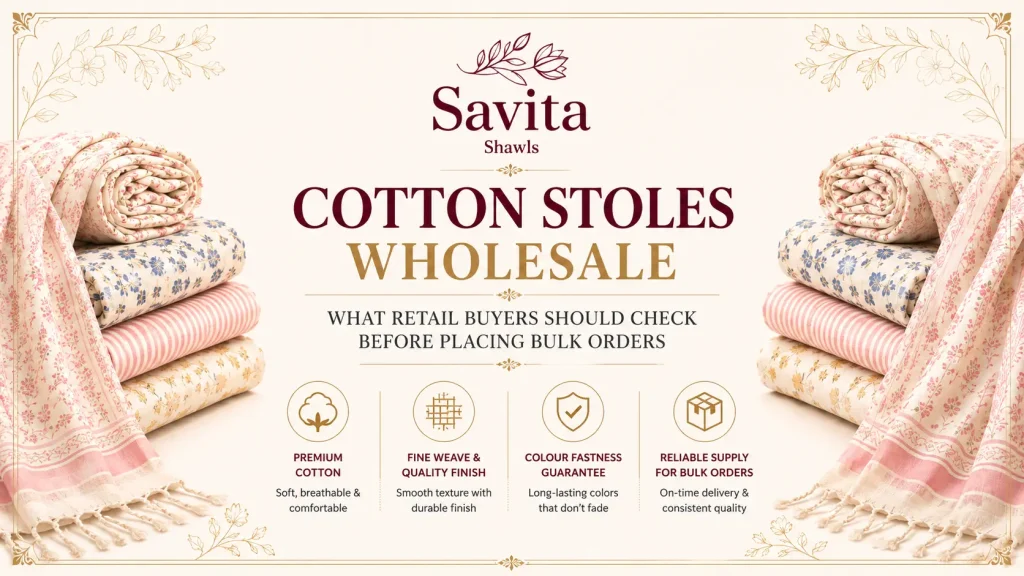
Cotton looks like the safe choice in a stole range. It is natural, it sells year round, and buyers assume the quality gap between suppliers is small. It is not. Two cotton stoles at the same size and the same quoted price can differ by twenty yarn counts, and the cheaper one will look tired after six washes. A cotton stoles wholesale supplier who knows their business will tell you the count, the GSM and the weave without being pushed. This guide covers what to ask, what the specifications mean, and what separates a serious cotton stoles wholesale supplier from a stock trader.
What a cotton stoles wholesale supplier should tell you upfront
Four numbers define a cotton stole: yarn count, GSM, dimensions and weave type. A cotton stoles wholesale supplier who cannot state all four for a product in their own catalogue is reselling somebody else’s stock and does not know what is in it.
Yarn count measures the fineness of the thread. Higher count means finer yarn, softer hand feel and a higher price. Indian cotton stoles commonly run 30s to 60s count, with 40s the most widely traded. Below 20s the fabric feels coarse. Above 80s you are into shirting territory and paying for it.
Ask also whether the cotton is combed or carded. Combed cotton removes short fibres before spinning, which reduces pilling and gives a smoother surface. It costs more. Most wholesale cotton stoles use carded yarn and there is nothing wrong with that, provided you know which one you bought.
Cotton grades a cotton stoles wholesale supplier works with
Indian cotton falls into several commercial grades and the differences reach the finished stole. Long staple varieties produce stronger, smoother yarn. Short staple produces a rougher fabric that pills sooner.
Organic cotton carries certification and a price premium of roughly 15 to 30 percent. It sells well in European and North American retail where the certification appears on the hangtag. Ask to see the certificate rather than accepting the claim, because uncertified cotton described as organic is a recurring problem in the trade. The Cotton Corporation of India publishes the grading standards used domestically.
Handloom cotton is woven on manual looms rather than power looms. The fabric carries slight irregularities that read as craft rather than defect, and it supports a higher retail price with the right story. Lead times are longer and consistency across a large batch is harder to hold.
Blends complicate the picture. Cotton silk, cotton linen and cotton modal all appear in stole catalogues. Any cotton stoles wholesale supplier quoting a blend should provide the percentage split, and you should ask for a fibre composition report on the first order.
GSM, size and weave: the specification that matters
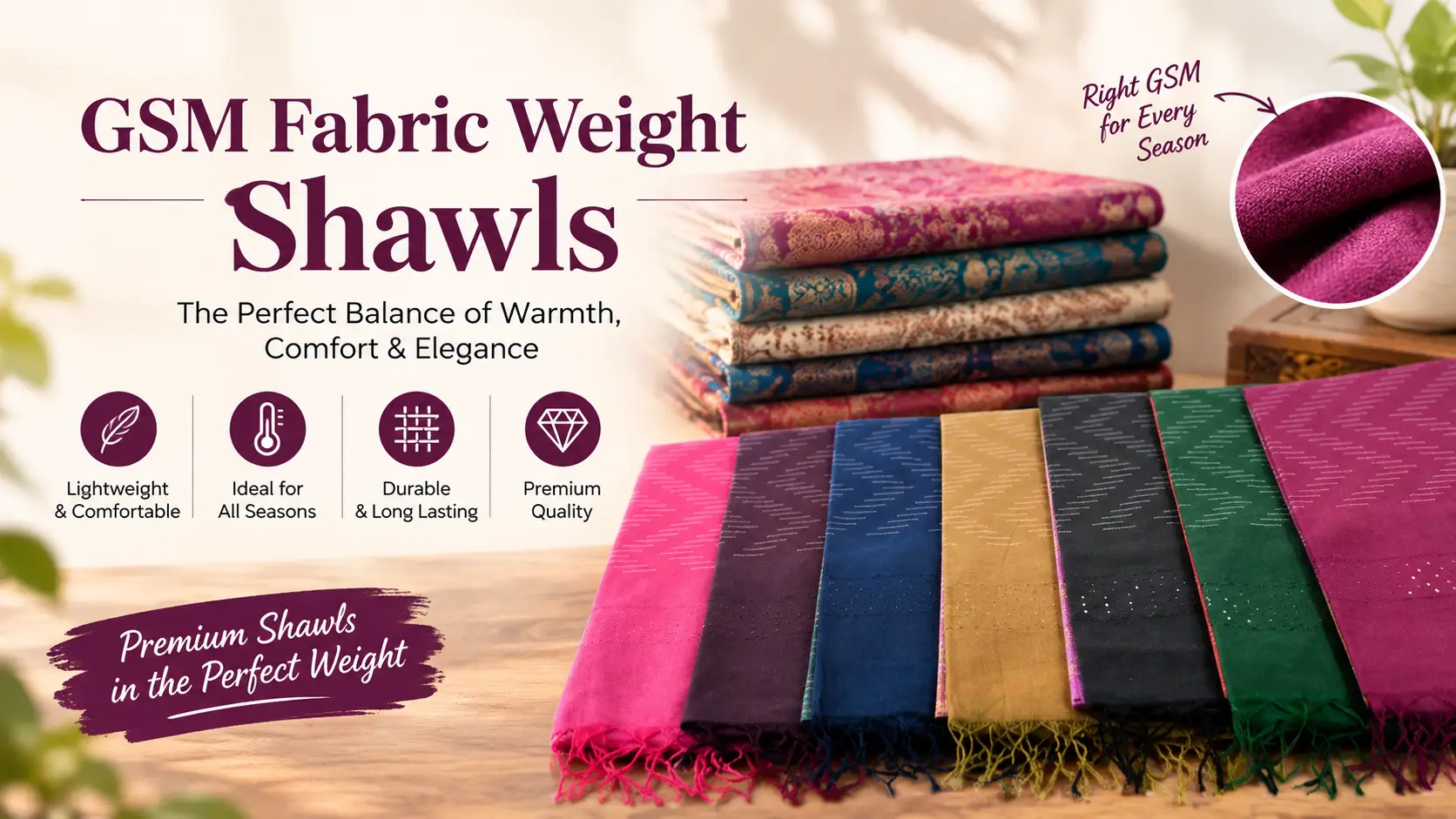
Cotton stoles run 110 to 150 GSM for standard retail weights. Below 100 the fabric becomes translucent, which suits some summer ranges and ruins others. Above 160 the piece starts behaving like a light shawl rather than a stole.
Standard dimensions are 70 by 200 centimetres, with 55 by 180 also widely sold. Confirm whether the quoted length includes the fringe. A ten centimetre fringe at each end changes the usable length by a fifth.
Weave affects both look and durability. Plain weave is the default and the cheapest. Twill drapes better and resists creasing. Dobby and jacquard build pattern into the structure rather than printing it on the surface, which costs more and survives washing better than print.
Pricing: what moves the number
Yarn count is the largest single factor, followed by finish. A 60s combed cotton stole costs meaningfully more than a 30s carded one at the same size, and the difference is visible in the hand.
Dyeing method matters more than buyers expect. Piece dyeing, where finished fabric is dyed, is cheapest. Yarn dyeing, where thread is dyed before weaving, produces better colour depth and allows woven stripes and checks, and costs more. Reactive dyes hold colour through washing better than direct dyes and cost more again. A cheap quote almost always means direct dyes on piece dyed fabric, which is why the colour fades.
Print adds cost by method. Screen printing is economical at volume. Digital printing suits short runs and photographic artwork. Hand block printing costs the most per piece and cannot be rushed, since each colour is applied and dried separately.
Quantity moves the number less than most first time buyers expect. The step from 100 to 500 pieces per design is meaningful. Beyond 2,000 the curve flattens, because cotton yarn is a commodity and the labour component does not compress.
MOQ, sampling and lead times from a cotton stoles wholesale supplier
Minimum order quantity for cotton stoles usually sits at 100 pieces per design for stock styles and 200 for custom work. The constraint is the dye bath, which has a minimum viable size below which the supplier loses money.
Order samples and pay for them. A free sample is whatever was nearest the door. A paid sample is made to your specification, and the cost is normally credited against the bulk order. Expect five to seven business days for catalogue samples and two to three weeks for a custom developed piece.
Wash the sample before you decide. Cotton shrinks, and a stole that loses four percent of its length in the first wash will generate returns. Ask whether the fabric is pre shrunk and check the claim yourself. Any cotton stoles wholesale supplier confident in their finishing will expect you to test it.
Lead times run 10 to 15 working days for stock styles with your own label, 20 to 25 for custom printed work and 30 to 40 for embroidery. Handloom and hand block printed work runs longer and does not compress under pressure.
Where cotton fits in a seasonal range
Cotton carries spring and summer ranges in most markets and sells year round in warm climates. Order by February for a spring launch, because a cotton order placed in April arrives in time for the end of the season.
Cotton sits alongside two neighbouring fabrics in a well built range. Linen stoles offer a crisper hand and a higher price point for the same season. Kantha stitched stoles apply hand running stitch to a cotton or silk base and carry a craft story that supports boutique pricing.
Buyers building a full warm weather offer should read the guide to summer stole collections, which covers the fabric mix and the ordering calendar together. The broader stole product range shows how cotton sits against the other fibres.
Quality checks before you accept a cotton stole delivery
Check six things on arrival and document anything wrong immediately, while the goods are still fresh from the carton.
Shade consistency across the full quantity, comparing pieces from different cartons rather than the top of one. Shade variation between dye lots is the most common cotton complaint. GSM against the approved sample, which you can check by weighing a piece and dividing by area. Dimensional accuracy including fringe. Colourfastness, tested by rubbing a damp white cloth against the fabric. Shrinkage after one wash. Selvedge and hem quality, which is where rushed finishing shows first.
Fibre content and care labelling should match your destination market rules. Getting this wrong is a customs problem rather than a presentation one, and the detail on care label requirements for export covers what each market expects.
Savita Shawls as a cotton stoles wholesale supplier
Savita Fashions LLP, trading as Savita Shawls, has manufactured stoles, shawls and scarves from Gurgaon, Haryana since 1984 and supplies buyers in more than 20 countries including the UK, USA, UAE, Germany, France, Australia and Japan. GST registration is 06AFPFS3876N1Z0 and IEC is AFPFS3876N, both verifiable on the GST portal and the DGFT portal respectively. The company is registered with FIEO and AEPC.
As a cotton stoles wholesale supplier the terms are 100 pieces per stock design and 200 pieces per custom or OEM design, with corporate gifting from 50 pieces with branding. Samples dispatch within 5 to 7 business days and the cost is credited against the bulk order. Production runs 10 to 15 working days for stock styles with your label, 20 to 25 for custom printed work and 30 to 40 for custom embroidery.
Cotton sits within a fabric range covering viscose, modal, linen, silk, fine wool, pashmina and cashmere, so a single purchase order can span several price tiers. Private label service covers woven inner labels, care labels in your destination language, hangtags and branded packaging. Quality control runs in three stages: raw material inspection, in line checks during weaving, dyeing and finishing, and a final pre-shipment inspection.
Buyers new to sourcing from India should start with the guide to choosing a stole manufacturer and the wholesale buying guide.
Frequently asked questions
What is the minimum order from a cotton stoles wholesale supplier?
Most Indian suppliers set minimums at 100 to 300 pieces per design. Savita Shawls works to 100 pieces per stock design and 200 pieces for custom or OEM work, with corporate gifting from 50 pieces with branding. The constraint is dye bath size rather than preference, which is why minimums on custom colours rarely move much in negotiation.
What yarn count should I specify for cotton stoles?
For wholesale retail, 40s count is the most widely traded and offers a reasonable balance of hand feel and cost. 30s suits volume and promotional programmes. 60s gives a noticeably softer finish for premium retail at a higher price. Specify combed rather than carded yarn if pilling resistance matters for your market.
How much do cotton stoles shrink?
Untreated cotton can lose three to five percent of its length in the first wash. Pre shrunk or sanforised fabric reduces this to around one percent. Always wash a sample before approving bulk production and confirm in writing whether the fabric is pre shrunk, since unexpected shrinkage generates returns you cannot recover from the supplier afterwards.
Can a cotton stoles wholesale supplier provide organic certification?
Established suppliers can source certified organic cotton and supply the certificate, usually at a premium of 15 to 30 percent over conventional cotton. Ask to see the certificate itself rather than accepting a verbal claim, since uncertified cotton described as organic appears regularly in the trade. Certification matters most for European and North American retail.
What GSM is right for a cotton stole?
Standard retail cotton stoles run 110 to 150 GSM. Below 100 GSM the fabric becomes translucent, which suits some lightweight summer ranges but not most. Above 160 GSM the piece starts behaving like a light shawl. Specify GSM in writing on the purchase order and check the bulk delivery against the approved sample.
Which dyeing method should I ask for?
Yarn dyeing produces better colour depth and allows woven stripes and checks, at a higher cost than piece dyeing. Reactive dyes hold colour through repeated washing far better than direct dyes. A quote that looks unusually cheap generally indicates direct dyes on piece dyed fabric, which is why the colour fades within a season.
How long does a bulk cotton stole order take?
Stock styles with your own label take 10 to 15 working days. Custom printed cotton stoles take 20 to 25 working days. Embroidered work takes 30 to 40 working days. Hand block printing and handloom weaving run longer because each stage is manual. Add shipping time of 3 to 10 days by air or 15 to 35 days by sea.
Should I order cotton stoles by season?
Yes. Cotton carries spring and summer ranges in most markets, which means placing orders by February for a spring launch once you account for production and freight. In warm climate markets cotton sells year round, though the pattern still favours ordering ahead of the retail peak rather than during it.
Ready to order
Send your requirement with yarn count, GSM, dimensions, quantity per design and any branding details, and Savita Shawls will return pricing, confirmed lead times and sample availability. Samples ship within 5 to 7 business days with the cost credited against your bulk order, so testing a new cotton stoles wholesale supplier costs very little. Start with a cotton stole quote request, email sales@savitashawls.com or call +91 7696677766.