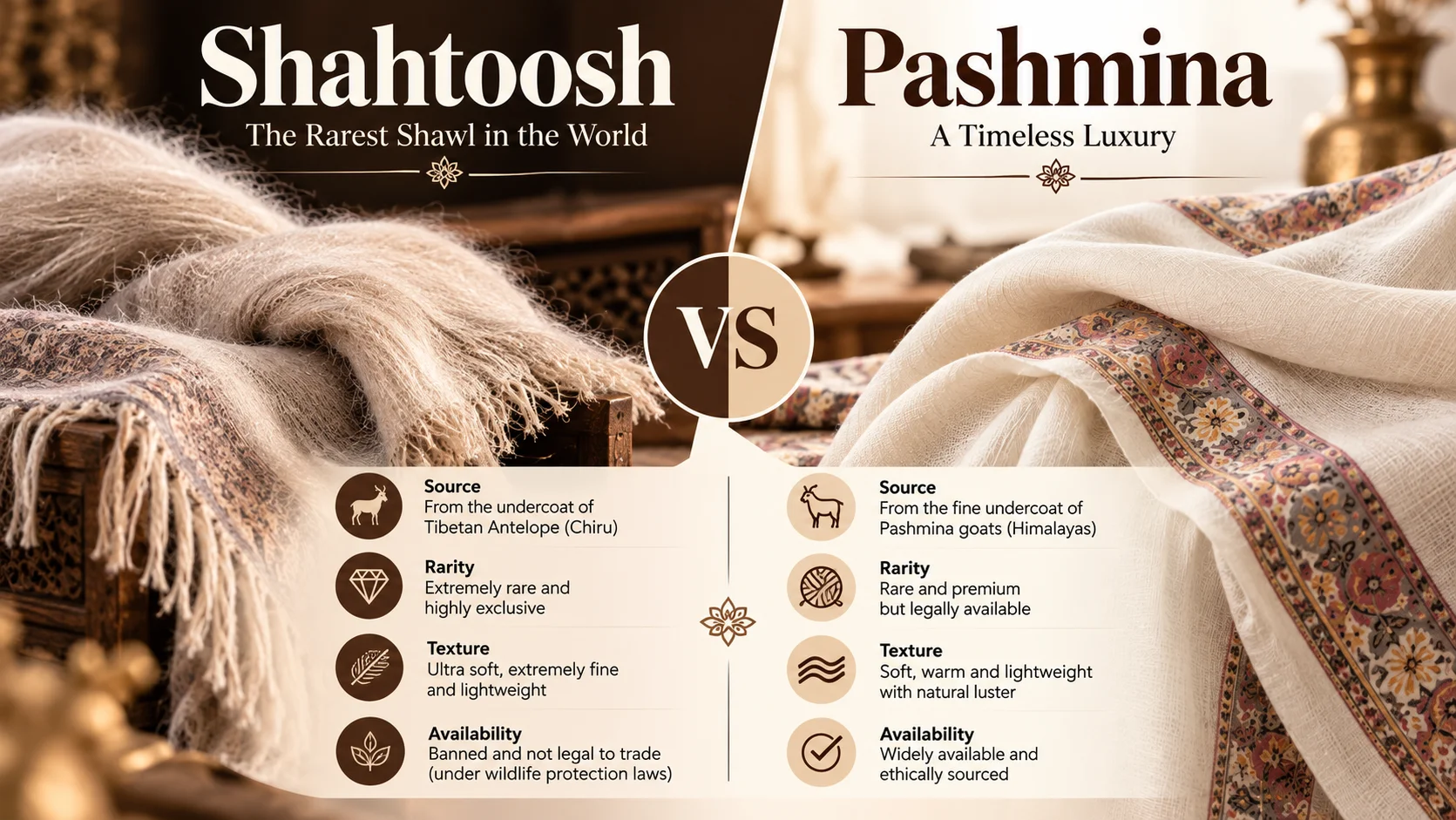
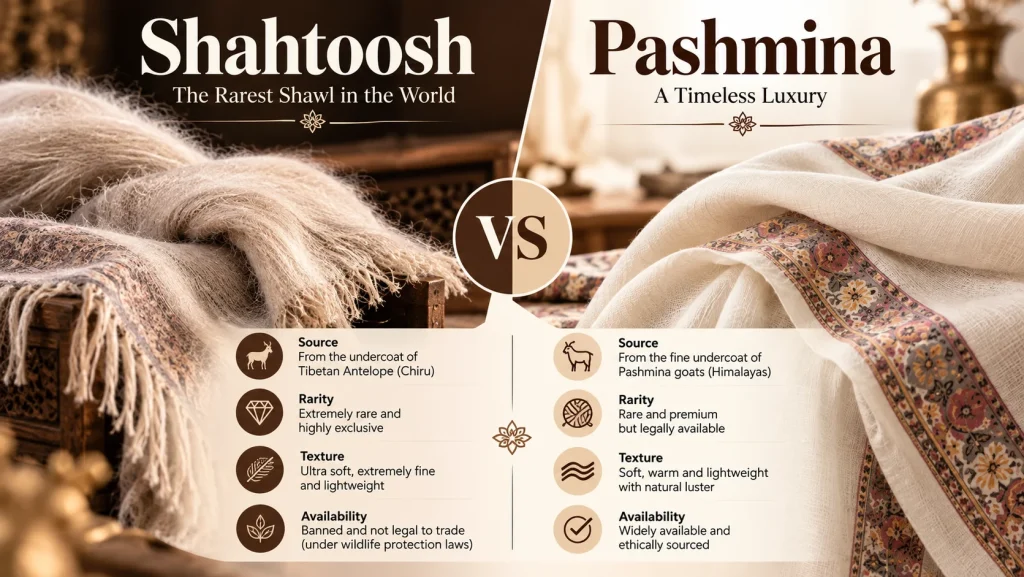
Shahtoosh is wool from the Tibetan antelope, or chiru, a wild animal that is usually killed to obtain the fibre. International trade in shahtoosh is banned under CITES, and it is illegal to buy, sell or import in most countries, including India. Pashmina comes from domesticated goats that are combed or sheared each year, and it is fully legal to trade. Importers should buy pashmina only from traceable suppliers and never stock anything sold as shahtoosh.
Key takeaways
- Shahtoosh comes from a protected wild antelope. Trading it can lead to seizure, fines and criminal charges.
- Pashmina and cashmere come from domesticated goats and are legal to import with normal documentation.
- Any shawl offered as shahtoosh, whether genuine or fake, is a serious risk to your business.
- Pure pashmina, fine cashmere and pashmina silk are the legal luxury alternatives.
What is shahtoosh?
Shahtoosh is a Persian term often translated as “king of wools”. It is the fine underfur of the Tibetan antelope, a wild species of the Tibetan Plateau. Because the antelope cannot be farmed or combed like a goat, the fibre is usually taken after the animal is killed. Estimates suggest the underfur of three to five adult antelopes is needed for a single shawl.
Shahtoosh shawls were historically woven in Kashmir and prized for being extremely fine, light and warm. They were the shawls famously said to pass through a finger ring.
Why is shahtoosh banned?
Large-scale hunting for shahtoosh drove the Tibetan antelope population down sharply. Estimates put it at close to one million at the start of the twentieth century and below 75,000 by the 1990s.
The species has been protected under CITES, the Convention on International Trade in Endangered Species, since 1979, which bans international commercial trade in shahtoosh. India protects the antelope under its wildlife laws, and Jammu and Kashmir, the historic centre of shahtoosh weaving, has also banned the trade. Conservation efforts have helped the population recover, and in 2016 the IUCN moved the species from Endangered to Near Threatened. The trade ban remains in place.
Shahtoosh vs pashmina: key differences
| Factor | Shahtoosh | Pashmina |
|---|---|---|
| Source animal | Tibetan antelope (chiru), a wild species | Changthangi and other domesticated goats |
| How fibre is obtained | Usually by killing the animal | Combed or sheared each year; the goat lives |
| Legal status | Banned in international trade under CITES and illegal in India | Legal to trade worldwide |
| Fineness | Even finer than pashmina | Very fine, typically below about 16 microns |
| Risk to buyers | Seizure, fines and criminal prosecution | Normal commercial risk only |
| Ethical position | Linked to poaching of a protected species | Supports herding communities when sourced responsibly |
Our guides to what makes Kashmiri pashmina so special and the history and origin of pashmina give more background on the legal fibre.
Is it legal to import shahtoosh?
No, not for commercial trade. Under CITES, international trade in Appendix I species is banned for commercial purposes. National laws add penalties:
- India: buying, selling or possessing shahtoosh for trade is an offence under wildlife protection law.
- European Union and United Kingdom: CITES is enforced through wildlife trade regulations, and customs seize illegal shahtoosh.
- United States: shahtoosh is covered by CITES and endangered species law, and prosecutions for selling shahtoosh shawls have taken place.
Laws and penalties differ by country, so take advice from a customs or legal adviser if you are unsure about any product. Wildlife forensic laboratories can identify shahtoosh fibre under the microscope, so a mislabelled shawl can still be detected.
How does shahtoosh fraud affect buyers?
Buyers meet two kinds of risk:
- Illegal shahtoosh sold as pashmina. Genuine shahtoosh, or a blend containing it, is passed off as fine pashmina. The buyer may be importing an illegal product without knowing it.
- Fake “shahtoosh” that is really pashmina or blends. A seller markets an ordinary shawl as shahtoosh to charge more. Even if the shawl contains no shahtoosh, offering it under that name can attract regulatory attention and destroy trust.
Either way, the word shahtoosh should never appear in your product names, listings or marketing. Do not use names such as “toosh” or “shahtoosh style” for legal pashmina either.
How can you protect your business?
- Work with traceable suppliers. Choose a registered manufacturer or exporter with a clear address, an Import Export Code and a track record. Our guide to shawl exporters in India explains what to look for.
- Ask for fibre composition reports. Lab reports confirm what the shawl contains and protect you if customs ask questions.
- Be wary of extreme claims. Offers of “original shahtoosh”, “rare antelope wool” or unusually fine shawls at odd prices are red flags.
- Ignore the ring test. Passing through a ring proves nothing, since fine pashmina and even viscose can pass.
- Keep records. Store invoices, certificates and test reports for every shipment.
Our guides on how to identify real pashmina and 8 ways to identify a real pashmina shawl explain how to check quality legally.
Are any other shawl materials restricted?
Shahtoosh is the best known, but not the only, regulated material in luxury textiles. Vicuña, a wild South American camelid, is also covered by CITES, and its fibre can be traded only from approved populations with the required documentation. Trims made from the fur, feathers or skins of protected species are restricted too.
If a shawl uses any unusual animal fibre or trim, ask the supplier for the species name and supporting paperwork before you order.
What are the legal luxury alternatives?
Customers who want the lightest, softest shawl can be served legally:
- Pure pashmina: very fine, warm and light, especially when hand-spun and handwoven in Kashmir. See our pashmina shawls and the GI tag for Kashmir pashmina.
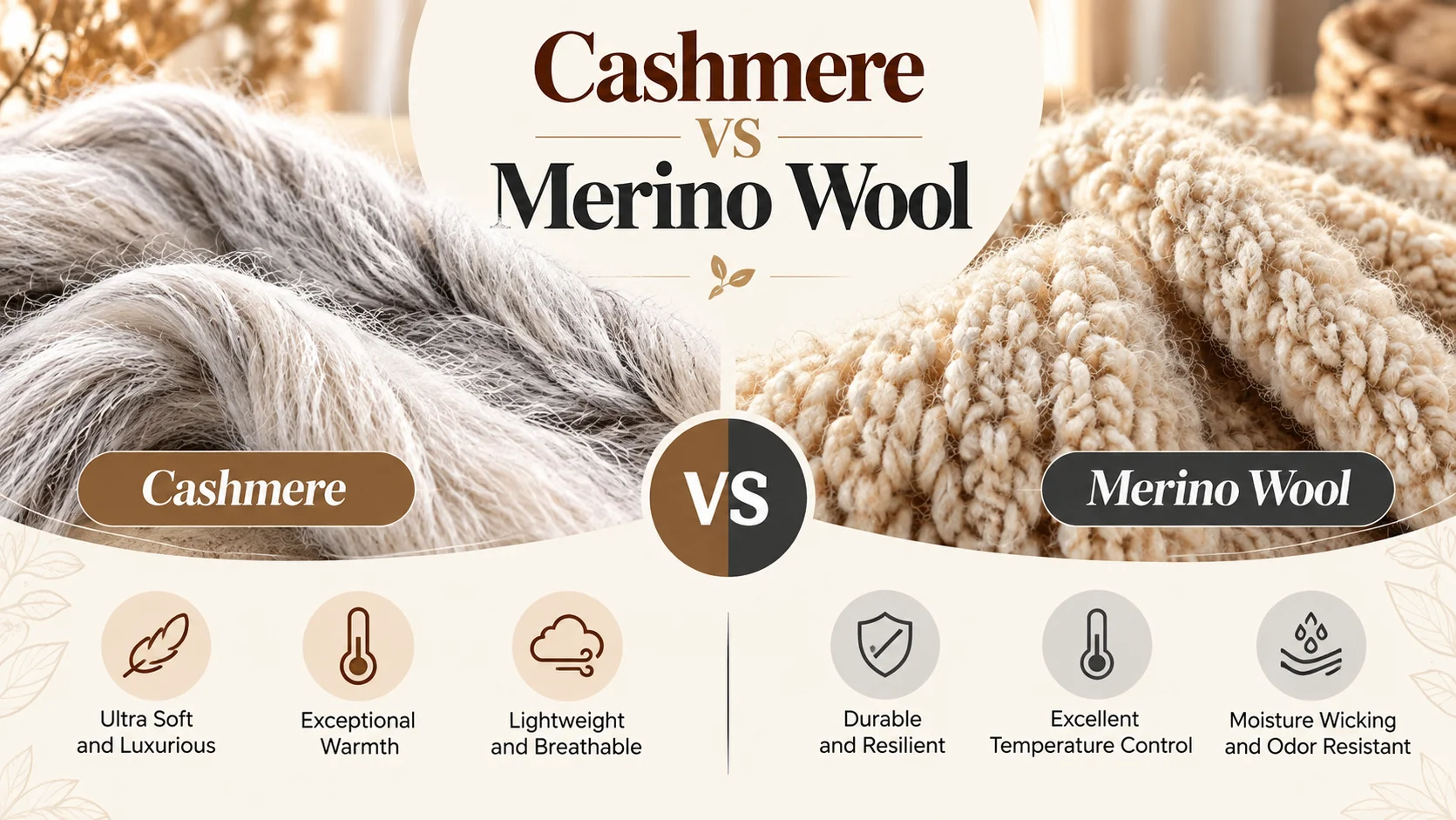
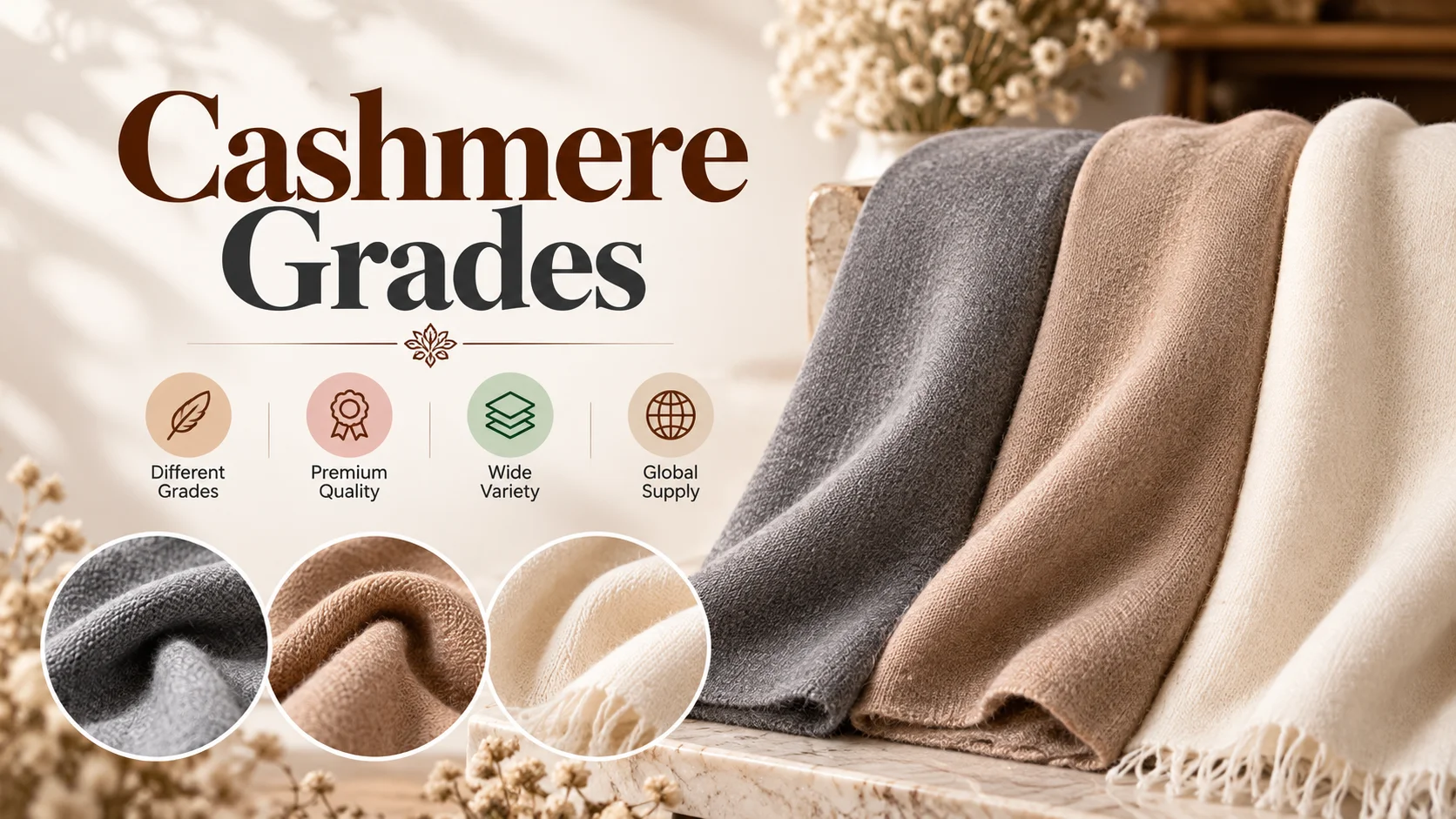
- Fine cashmere: top-grade cashmere offers similar softness at a range of prices. Browse our cashmere shawls.
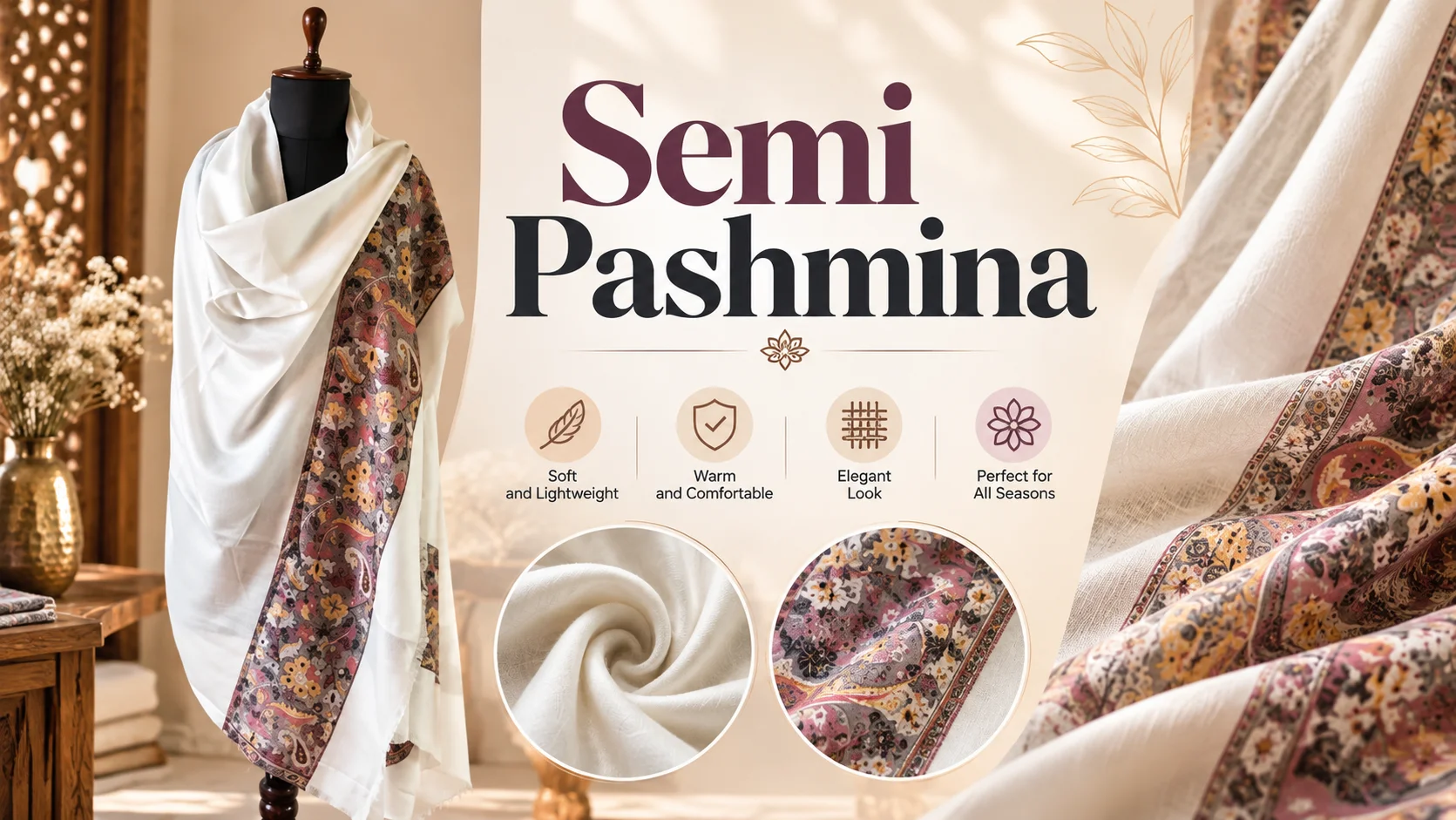
- Pashmina silk: a blend that adds sheen and strength to a very light shawl.
- Kani and Kashmiri craft shawls: heritage weaving and embroidery in legal fibres. See our Kani shawls and Kashmiri shawls.
When a customer asks for shahtoosh, explain the ban and offer pure pashmina instead. Many customers value the ethical story as much as the softness. For quality detail, read about pashmina fibre quality and what makes an authentic pashmina shawl.
What documents do pashmina imports need?
Pashmina and cashmere come from domesticated goats and are not CITES-listed, so they move as ordinary textiles. A typical export shipment from India includes:
- Commercial invoice and packing list stating fibre composition.
- Certificate of origin.
- Bill of lading or airway bill.
- Material composition certificate or fibre test report, which is useful if customs query the fibre.
- Correct product classification. Our guide to HSN codes for shawls and stoles explains how shawls are classified.
Labels must state the real fibres and their percentages. See our guide to care label requirements for textile export.
Source legal pashmina from Savita Shawls
Savita Shawls is an IEC-registered manufacturer and exporter based in Gurgaon, supplying shawls and stoles to more than 40 countries since 1984. We work only in legal fibres such as pashmina, cashmere, wool, silk, modal and viscose, and we provide material composition certificates and full export documentation. Read about sustainable pashmina, ask about private label manufacturing, or request a bulk quote.
Frequently asked questions
What is the difference between shahtoosh and pashmina?
Shahtoosh comes from the wild Tibetan antelope, which is usually killed for its fibre, and its trade is banned. Pashmina comes from domesticated goats that are combed or sheared each year, and it is legal to trade.
Is shahtoosh legal anywhere?
International commercial trade in shahtoosh is banned under CITES, and it is illegal to sell in India and many other countries. Treat any offer of shahtoosh as illegal.
Why was shahtoosh banned?
Hunting for shahtoosh caused a steep fall in the Tibetan antelope population. The species has been protected under CITES since 1979 to stop the trade.
What happens if customs find shahtoosh in a shipment?
The goods are usually seized, and the importer can face fines or prosecution under wildlife trade laws. Not knowing the shawl contained shahtoosh may not be accepted as a defence.
Can a pashmina shawl pass through a ring?
Fine pashmina shawls can pass through a ring, and so can fine viscose. The ring test does not prove a shawl is shahtoosh or pashmina.
How can I be sure a shawl does not contain shahtoosh?
Buy from a registered, traceable supplier and ask for a fibre composition report. Wildlife forensic labs can detect shahtoosh under the microscope.
What is the best legal alternative to shahtoosh?
Pure hand-woven pashmina is the closest legal alternative in softness, warmth and lightness. Fine cashmere and pashmina silk are also good choices.