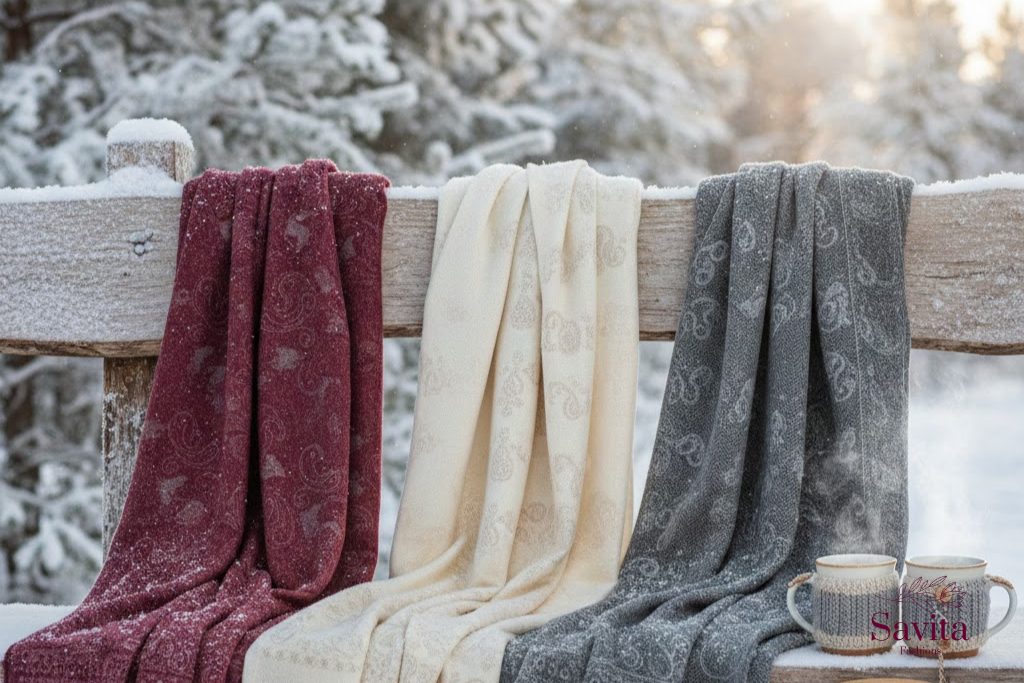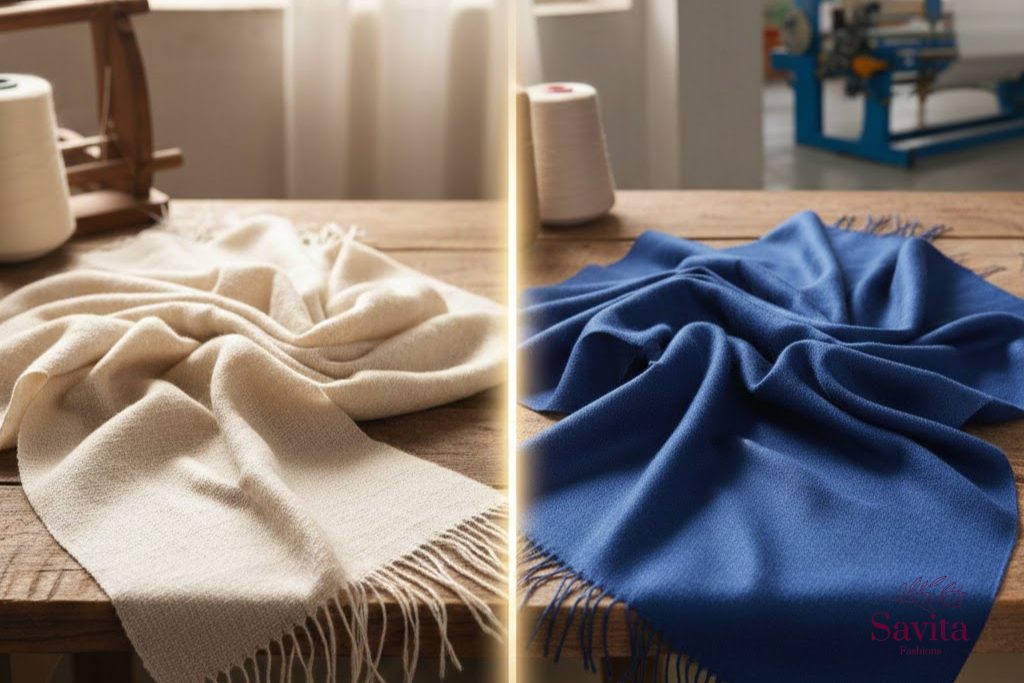
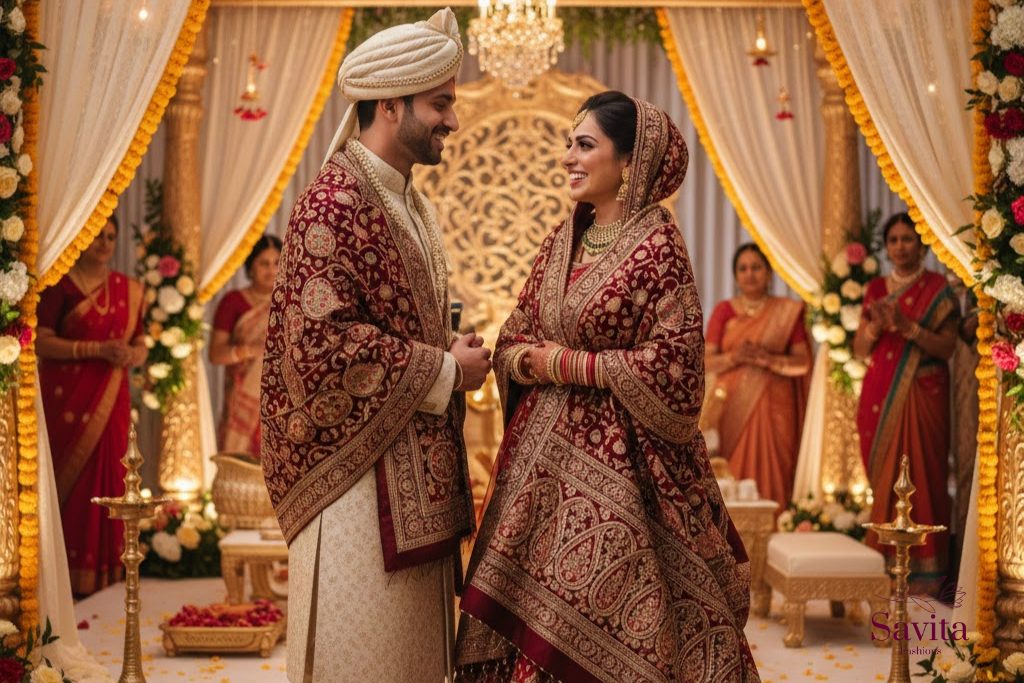
The Indian wedding tradition of pashmina usage extends beyond its status as a luxurious fabric because it represents centuries of traditional customs and pure cultural heritage. Indian weddings utilize pashmina which comes from the delicate underhair of Himalayan goats as a fundamental component of bridal trousseaus and wedding ceremonies across the entire subcontinent. The exquisite fabric of pashmina links contemporary festivities to ancient customs which establish pashmina as an everlasting emblem of sophisticated elegance and comforting affection.
People around the world recognize Indian weddings for their impressive scale and their complex ceremonial procedures and their precise work on every minute aspect. The total decorations used in these grand events hold deep spiritual value because they include everything from mandap designs to the bride’s ornamentation. Pashmina occupies a distinctive ceremonial role in Indian weddings because it symbolizes two important aspects of Indian weddings which include the start of fresh relationships and the holy marriage practices and the deep family connections.
Pashmina adds multiple dimensions of significance and elegance to wedding festivities when it appears as a wedding pashmina dupatta or as a blessing gift or as part of the bride’s outfit. Pashmina serves as the main pashmina element in Indian weddings because its value extends beyond decorative purposes and fashion demonstrations. The luxurious fabric functions as a strong cultural representation which connects modern festivities with ancient traditional practices. Families who select pashmina for their Indian wedding celebrations through their choice of pashmina create a stronger connection to their historical heritage which has been passed down from previous generations.
Pashmina functions in Indian weddings through its core traditional values which have maintained stability through time while its modern aesthetic elements have developed and its essential cultural significance still exists because of its traditional Indian wedding functions.
The Historical Significance of Pashmina in Indian Weddings
The pashmina wedding custom in India started as a royal practice which detailed its use until at least the fifth century. Indian weddings used pashmina as a ceremonial item which showed royal dignity because it remained exclusive to kings and their families. The Mughal emperors used pashmina shawls as wedding gifts which they exchanged with their courtiers to demonstrate their social status and wealth.
The historical importance of pashmina in Indian weddings cannot be overstated, as this fabric was literally worth its weight in gold during medieval times. High-society wedding festivities in medieval India used pashmina as their main ceremonial gift between families. The shawls functioned as more than decorative items because they served as royal gifts that conveyed social rank and family assets.
The bride’s family would present the groom’s family with intricately embroidered pashmina in Indian weddings as part of the dowry, symbolizing their daughter’s value and the family’s prosperity. The groom’s family would present pashmina gifts to the bride which served as their official welcome into the family and their lifelong commitment to supply her with warmth and safety. Pashmina wedding traditions developed differently throughout India because regional practices maintained consistent cultural respect for the material.
The Kashmiri wedding ceremony employed “posh poosh” when hosts used pashmina shawls to cover the bride and groom. The traditional marriage ceremony used this ritual to obtain blessings from the elders who prayed for the couple to have a happy life together. The elders would choose the most valuable pashmina items which had been passed down as family treasures to give to the newly married couple. The use of pashmina in Indian weddings within Kashmir was so integral that a wedding was considered incomplete without this ceremonial draping. Royal Rajputana weddings achieved their maximum elegance through pashmina which designers used to create gold and silver embroidered wedding attire.
Sacred Symbolism of Pashmina in Indian Weddings
The artistic presence of pashmina in Indian weddings brings deep spiritual meaning to the ceremony. The fabric’s inherent qualities—softness, warmth, purity, and durability—mirror the ideals couples aspire to embody in marriage. Indian weddings use natural pashmina to show a pure beginning of marriage while its warm nature represents the emotional security that marriage needs to provide. The sacred meaning of pashmina in Indian weddings enables couples to understand its traditional significance for their wedding.
The pure nature of pashmina serves as the main symbolic value that pashmina represents in Indian wedding ceremonies. The natural, undyed pashmina with its pristine ivory or soft beige color represents the untainted beginning of a new life together. The fabric production process requires a gentle, non-destructive method that protects animal welfare, which should also apply to marriage through mutual respect and gentle behavior between partners. The wedding pashmina dupatta functions as both visual and tactile proof of purity, which holds an important value in Hindu wedding ceremonies.
The choice of pashmina in Indian weddings thus becomes a declaration of the couple’s commitment to maintaining purity in their relationship. Pashmina in Indian weddings represents two types of warmth, which function as strong protective symbols. The fabric’s exceptional insulating properties, which can provide warmth in the harshest Himalayan winters, symbolize the emotional warmth, comfort, and security that marriage should provide. Elders bless the couple by covering them with a pashmina shawl, which brings them a lifetime of shared support and everlasting love that will endure through all stages of life. The thermal qualities of pashmina in Indian weddings serve as a constant reminder that true warmth in marriage comes from emotional connection and mutual care.
The Wedding Pashmina Dupatta: Tradition Meets Elegance
The wedding pashmina dupatta stands as the most respected pashmina element from Indian weddings. This vital component unites pashmina’s luxurious softness with traditional dupatta attributes to create an accessory which serves two purposes through its practical use and its deep-rooted cultural value. The wedding pashmina dupatta serves multiple purposes throughout festivities, from connecting bride and groom during pheras to creating elegant draping during the varmala exchange.
The selection of a wedding pashmina dupatta is often considered one of the most important decisions in planning pashmina in Indian weddings. The creation of an ideal wedding pashmina dupatta demands exceptional expertise combined with meticulous design execution. Master artisans dedicate endless work hours to develop these pashmina masterpieces which include traditional embroidery techniques such as sozni tilla and aari work. The fine pashmina base allows for intricate designs impossible on coarser materials, making pashmina in Indian weddings the ideal canvas for detailed needlework. Wedding pashmina dupattas display paisley patterns which symbolize fertility and abundance lotus flower designs which represent pure divine beauty peacock designs which show graceful beauty and vine patterns which represent marital growth and prosperity.
The color palette of pashmina in Indian weddings varies by region, with specific colors carrying particular meanings in different traditions. North Indian Hindu brides traditionally choose red pashmina because it represents passion and prosperity. A red pashmina dupatta, often embellished with gold embroidery, is the quintessential symbol of pashmina in Indian weddings across northern states. South Indian weddings use ivory and cream pashmina to represent purity, which people prefer for Bengali and South Indian ceremonies. Modern brides increasingly choose pink pashmina for Indian weddings because it represents romance and joy with its growing popularity.
Regional Variations in Pashmina in Indian Weddings
The different ways pashmina appears in Indian weddings show how diverse Indian culture is because every area of India presents its own special customs that show this beautiful fabric. The different ways pashmina appears in Indian wedding ceremonies across various regions of India show how diverse Indian wedding customs are while demonstrating how people everywhere value this expensive fabric.
The people of Kashmir practice their wedding customs through authentic pashmina which comes from their region as the central element of their wedding traditions. The “shawl ceremony” remains pivotal, with the groom’s family presenting exquisite pashmina shawls to the bride, often commissioned months in advance and embroidered with the family’s traditional motifs. Kashmiri weddings use pashmina throughout different wedding events which makes it necessary to have these valuable fabrics at every traditional Kashmiri wedding.
Kashmiri brides wear the pashmina pheran, a long, flowing version adorned with intricate sozni embroidery that represents the pinnacle of pashmina in Indian weddings. The family elders perform the “shaal andazi” ritual which involves them adding more pashmina to the bride’s shoulders as a symbol of their protection and acceptance of her into their family. The bride’s family gives pashmina shawls to the groom who wears them during the wedding events and keeps them as special gifts which completes the mutual sharing of pashmina between spouses during Indian weddings.
North Indian pashmina in Indian weddings has become synonymous with luxury in bridal trousseaus across states such as Punjab, Haryana, and Uttar Pradesh. Punjabi brides wear heavily embellished wedding pashmina dupattas with traditional lehenga-choli ensembles, creating stunning visual presentations of pashmina in Indian weddings. The dupattas show traditional North Indian festive attire through their use of gota patti work and sequins and stones which create the expected sparkling effect.
Selecting the Perfect Pashmina in Indian Weddings
The selection of pashmina for Indian weddings demands expertise, assessment skills, and the ability to identify authentic pashmina quality indicators that separate genuine products from counterfeit ones. The selection process of pashmina for ceremonial use in Indian weddings requires families to treat it as both an artistic endeavor and a scientific study because they must evaluate various elements. The first step to prove authentic pashmina exists at Indian weddings requires people to establish its existence.
Authentic pashmina in Indian weddings originates from Changthangi goats that inhabit Ladakh’s high-altitude regions which create its distinct properties that separate it from synthetic and blended products. Authentic pashmina fibers have a diameter range between twelve to sixteen microns which makes them finer than both regular wool and cashmere materials. The exceptional fineness of pashmina materials creates the soft luxurious texture which remains unique to this material because no synthetic alternative can achieve it.
The process of authenticating pashmina used in Indian weddings requires multiple testing methods. The ring test requires users to pass a pashmina through their finger ring which shows that authentic pashmina can pass through small rings because its fine weave and soft texture allow this while maintaining the size of the shawl. This test has been used for centuries to verify quality pashmina in Indian weddings and remains reliable today.
The warmth test demonstrates exceptional insulating properties; when wrapped around the hands, genuine pashmina in Indian weddings provides immediate warmth without feeling heavy or bulky. The burn test requires small fiber samples for testing but it provides definite results which show that pashmina fibers produce a natural protein scent that resembles burning hair when they ignite and turn into ash while synthetic fibers melt and emit an odor similar to burning plastic.
Color selection for pashmina in Indian weddings should align with overall wedding themes, regional traditions, and personal preferences while considering symbolic meanings associated with different hues. Red pashmina in Indian weddings will show the following requirements.
Pashmina in Pre-Wedding Ceremonies
The presence of pashmina in Indian weddings extends throughout pre-wedding rituals and celebrations that build anticipation for the main event. These ceremonies, each with unique significance, provide multiple opportunities to showcase and honor the magnificent tradition of pashmina in Indian weddings. Understanding the role of pashmina in Indian weddings during these preliminary celebrations adds depth to the overall wedding experience.
During engagement ceremonies, known as “sagai” in North India, “nischitartham” in South India, or “ashirwad” in Bengal, families exchange gifts as symbols of acceptance and goodwill. Pashmina in Indian weddings often makes its first significant appearance at this stage, with the groom’s family presenting a pashmina shawl to the bride-to-be as part of engagement gifts. This pashmina in Indian weddings, typically in an auspicious color like red or pink and often embroidered with congratulatory motifs such as flowers or peacocks, symbolizes the warmth with which the bride is being welcomed into her new family. The bride may wear this gifted pashmina during the engagement ceremony itself or save it for subsequent wedding events, but its presentation marks the formal beginning of pashmina in Indian weddings for that particular celebration.
In some communities practicing pashmina in Indian weddings, both families exchange pashmina shawls during the engagement, with the bride’s family presenting one to the groom as well. This reciprocal exchange establishes a tradition of mutual respect and equality that will continue throughout the wedding festivities and married life. The quality and beauty of pashmina in Indian weddings exchanged during engagements often sets the tone for subsequent gift exchanges and demonstrates each family’s commitment to honoring tradition.
The mehendi ceremony, where intricate henna designs are applied to the bride’s hands and feet, is a joyous, music-filled celebration attended primarily by women from both families. While the bride typically wears casual, comfortable clothing during actual mehendi application, pashmina in Indian weddings has evolved to include beautifully draped pashmina dupattas for the bride’s entrance and exit from the ceremony. Many modern brides choose vibrant, colorful pashmina dupattas for their mehendi ceremony—often in shades of yellow, orange, or green—to complement the festive, celebratory mood of this pre-wedding event.
These mehendi-specific pieces of pashmina in Indian weddings are usually lighter in weight and less heavily embellished than the wedding pashmina dupatta reserved for the main ceremony, allowing for ease of movement during celebrations. The soft, non-abrasive nature of pashmina in Indian weddings makes it ideal for this occasion, as it won’t disturb the drying henna designs. Some brides coordinate their mehendi pashmina with their outfit color scheme, creating cohesive looks that photograph beautifully while showcasing the versatility of pashmina in Indian weddings.
The sangeet night provides another prominent opportunity to showcase pashmina in Indian weddings. This pre-wedding musical celebration brings both families together for performances, dancing, and entertainment, and brides often make multiple outfit changes throughout the evening. Incorporating pashmina accessories allows brides to add variety and elegance to each look while maintaining the traditional thread of pashmina in Indian weddings throughout the celebration.
For the sangeet, brides featuring pashmina in Indian weddings might choose dupattas with contemporary embellishments such as sequin work, mirror work, or modern embroidery patterns that complement the lively, festive atmosphere. The lightweight nature of pashmina in Indian weddings allows for dynamic draping styles that move beautifully during dance performances, creating flowing, graceful movements that enhance the visual appeal of choreographed dances. Some brides coordinate their pashmina with their dance performance outfits, creating cohesive visual presentations that honor tradition while embracing contemporary wedding culture.
The haldi or pithi ceremony, where turmeric paste is applied to the bride and groom for purification and blessing, traditionally involves clothing that can be stained by the bright yellow turmeric. While pashmina in Indian weddings is generally not worn during actual haldi application due to staining concerns, some communities include draping a fresh, pure white pashmina over the bride’s shoulders after she has bathed and changed following the ceremony. This post-haldi pashmina in Indian weddings symbolizes purification and the washing away of past associations in preparation for new life ahead.
The pristine white pashmina in Indian weddings used in this ceremony represents fresh beginnings, and its purity mirrors the cleansing ritual that has just been completed. This practice is particularly prevalent in Punjabi and Gujarati wedding traditions, where the symbolism of purity and new beginnings is strongly emphasized through the use of pashmina in Indian weddings.
The choora ceremony in Punjabi and some other North Indian weddings involves maternal uncles presenting the bride with traditional red and ivory bangles. This intimate ceremony, typically held the morning of the wedding or a day before, is rich with emotion and familial bonding. The bride for this ceremony often wears a traditional outfit gifted by her maternal family, and increasingly, this includes a wedding pashmina dupatta in red or maroon, establishing another important role for pashmina in Indian weddings.
The choora ceremony pashmina in Indian weddings holds special significance as it’s a gift from the bride’s maternal side, representing their blessings and well-wishes for her new journey. This pashmina often features specific motifs that are meaningful to the maternal family or represents their regional heritage, creating a beautiful connection between the bride’s roots and her future. The emotional weight of pashmina in Indian weddings during the choora ceremony makes it one of the most treasured pieces in a bride’s collection.
The Main Wedding Ceremony
The wedding day marks the time when pashmina becomes the most important element of Indian weddings because it serves essential functions during all religious ceremonies and sacred rites. The traditional pashmina wedding ceremony in India uses pashmina because its two main functions show both practical needs and the profound cultural values which people have upheld through time. The wedding day marks the moment when all pashmina traditions create a complete experience which showcases the beauty of pashmina and the cultural heritage of India and the spiritual value of pashmina.
The bridal ensemble contains one essential element which stands out as the most important piece that takes precedence over all other components which make up her appearance. The dupatta needs to function in three different ways for pashmina in Indian weddings because it must bring beauty to the bride and provide religious ceremony coverage and represent both family traditions and cultural heritage. The wedding pashmina dupatta serves as the main element which defines the bridal look for many brides who see it as the piece which connects all other components of her wedding attire. The bridal pashmina dupatta design process begins months before the wedding day when designers and family members work with skilled artisans to create a design that reflects the bride’s character while maintaining traditional pashmina family customs.
The base pashmina needs to meet specific quality standards because families demand unprocessed pure pashmina which costs more because they believe it serves as their permanent collection. The couple’s story comes to life through the embroidery design which combines their initials and important dates and symbols of their shared interests and values to create a one-of-a-kind pashmina piece for their Indian wedding.
Post-Wedding Ceremonies and Traditions
The pashmina fabric maintains its presence throughout Indian weddings because it serves vital functions during the wedding celebration which includes all the ceremonies and rituals that happen after the main wedding event and the bride’s transition into her new life. The continuing use of pashmina during Indian wedding celebrations shows how important this fabric remains throughout every step of the wedding process.
The vidaai ceremony marks the moment when the bride leaves her parental home to start her new life which families who follow pashmina wedding traditions use to drape fresh pashmina shawls over their departing brides. The shawl which the bride’s parents or siblings give to her functions as a vital emotional element within the pashmina tradition of Indian weddings. The vidaai pashmina from her parental home gives her essential warmth together with her family’s blessings that protect her and the everlasting bond between her parents and her.
The vidaai pashmina from Indian weddings has become one of the most valuable possessions for many brides who use it to connect with their roots and their family’s everlasting love. Brides choose different colors for their vidaai pashmina than those used in their wedding ceremony because the two colors show different emotional states that emerge during this transitional period.
The vidaai pashmina in Indian weddings shows two different color options because red and bright colors dominate the wedding while the pashmina shows softer colors like pink and peach and lavender. The vidaai pashmina in Indian weddings uses white or cream pashmina to represent new beginnings which some families choose while others select colors that match their daughter’s parental home to establish a visual bond between her old and new life.
The wedding reception which usually takes place one or two days after the main wedding ceremony functions as a social gathering between two groups of relatives.
The Economics and Investment Value of Pashmina in Indian Weddings
The financial implications of pashmina used in Indian weddings encompass all expenses which include both the first purchase cost and the subsequent existence of the material as a potential family heirloom and support for artisan communities. The pashmina which families purchase for their Indian weddings serves as a fabric yet it also functions as an item which will increase its worth and significance to them through the years.
The purity of pashmina serves as the main factor which determines its pricing during Indian weddings because 100 percent pure pashmina achieves higher market value than other products. Pashmina value during Indian weddings depends on authenticity verification because the market contains fake products which sellers present as real pashmina. Families should always insist on certificates of authenticity or government-issued Geographical Indication tags when investing in pashmina in Indian weddings to ensure they receive genuine products worthy of being family heirlooms.
The price of hand-embroidered pashmina with sozni or tilla work which couples use for their Indian weddings starts at fifty thousand rupees and extends to multiple lakhs based on the intricacy of its embroidery design. The sozni-embroidered wedding pashmina dupatta requires a substantial financial commitment. The value of pashmina in Indian weddings exists beyond its material cost because each one-of-a-kind piece requires artisans to dedicate multiple hours of work.
The cost of machine-embroidered pashmina used in Indian weddings ranges from fifteen thousand to forty thousand rupees yet these products lack the special qualities which hand-embroidered items possess. The weight and dimensions of pashmina in Indian weddings determine its price because heavier and larger items need more resources to create them.
Caring for and Preserving Pashmina in Indian Weddings
The longevity and continued beauty of pashmina in Indian weddings depend significantly on proper care and preservation techniques. Understanding the specific needs of this delicate fabric ensures that pieces of pashmina in Indian weddings can be enjoyed for years and potentially passed down as cherished heirlooms to future generations. The care invested in maintaining pashmina in Indian weddings reflects the respect for tradition and the desire to preserve family heritage.
Immediately after wedding festivities conclude, all pieces of pashmina in Indian weddings should be carefully inspected for any stains, particularly from makeup, food, or ceremonial substances like turmeric or sindoor. Prompt attention to stains on pashmina in Indian weddings significantly improves the chances of successful removal without damaging the delicate fibers. However, aggressive rubbing or the use of harsh chemicals should be avoided when caring for pashmina in Indian weddings, as these can permanently damage the delicate fibers and destroy the fabric’s natural beauty.
For minor stains on pashmina in Indian weddings, gentle spot cleaning with cold water and a mild, pH-neutral soap specifically designed for delicate fabrics is recommended. The stained area should be dabbed gently rather than rubbed when treating pashmina in Indian weddings, and the fabric should be rinsed thoroughly to remove all soap residue. For significant staining or for heavily embellished pieces of pashmina in Indian weddings where home cleaning might damage embroidery work, professional dry cleaning by specialists experienced with pashmina is advisable.
Proper storage is essential for preserving pashmina in Indian weddings through the actual preservation of the fabric for future generations. Pashmina in Indian weddings should be stored in cool, dry places away from direct sunlight, which can cause fading and fiber degradation over time. The ideal storage method for pashmina in Indian weddings involves wrapping the fabric in unbleached muslin or cotton cloth, which allows the fabric to breathe while protecting it from dust and light exposure that can damage the delicate fibers.
Cedar wood boxes or wardrobes offer excellent storage solutions for pashmina in Indian weddings, as cedar naturally repels moths and other insects that might damage the fabric. Alternatively, cotton or muslin bags with sachets of dried lavender or neem leaves provide natural moth protection for pashmina in Indian weddings. Chemical mothballs should be avoided when storing pashmina in Indian weddings, as their strong odors can permeate the fabric and may cause discoloration over time.
Folding pashmina in Indian weddings requires care to avoid permanent creases that can weaken fibers. The fabric should be folded loosely along natural fold lines, with tissue paper placed between folds to prevent creasing. Ideally, pieces of pashmina in Indian weddings should be refolded periodically, every few months, along different lines to prevent permanent creases from forming in the same places. Some families with substantial collections of pashmina in Indian weddings invest in padded hangers and garment bags, allowing larger pieces to be stored hanging rather than folded, which eliminates creasing concerns entirely.
Regular cleaning of pashmina in Indian weddings, even when pieces haven’t been worn, helps maintain the fabric’s quality. Dust and environmental pollutants can accumulate on stored textiles, gradually degrading the fibers of pashmina in Indian weddings over time. An annual gentle airing, where pashmina in Indian weddings is taken outside on a dry, breezy day and allowed to air out away from direct sunlight, helps refresh the fabric and prevent musty odors from developing in stored pieces.
For deeper cleaning of pashmina in Indian weddings, hand washing is preferable to dry cleaning when possible, as the chemicals used in dry cleaning can gradually weaken pashmina fibers over repeated cleanings. If hand washing pashmina in Indian weddings, use cold water and a specialty pashmina shampoo or a very gentle, chemical-free soap. The fabric should be submerged and gently swished through the water rather than wrung or twisted, as aggressive handling can damage the delicate weave of pashmina in Indian weddings. Rinsing should be thorough but gentle, ensuring all soap residue is removed from pashmina in Indian weddings to prevent buildup that can attract dirt and damage fibers.
Modern Innovations and Contemporary Trends in Pashmina in Indian Weddings
While rooted in centuries of history and tradition, pashmina in Indian weddings continues evolving as contemporary brides and designers create new interpretations that honor the past while embracing the present. These modern innovations in pashmina in Indian weddings demonstrate the fabric’s remarkable adaptability and enduring relevance in an age of rapidly changing fashion trends and cultural values. The evolution of pashmina in Indian weddings reflects broader changes in Indian society while maintaining the core symbolic values that have made this fabric precious for generations.
Modern wedding pashmina dupattas increasingly feature fusion designs that blend traditional Indian motifs with contemporary artistic expressions, creating pieces of pashmina in Indian weddings that appeal to global sensibilities while remaining rooted in cultural heritage. Minimalist pashmina in Indian weddings, featuring subtle embellishment or even no embellishment at all, appeals to brides who want to showcase the fabric’s natural beauty rather than covering it with elaborate ornamentation. These pieces of pashmina in Indian weddings often use the finest quality fabric in natural colors, allowing the inherent luxury and softness to take center stage and make the primary visual statement.
Conversely, some contemporary designers working with pashmina in Indian weddings push boundaries with maximalist approaches, covering every inch of fabric with dense embroidery, sequins, crystals, and three-dimensional embellishments. These statement pieces transform pashmina in Indian weddings into wearable art that commands attention and photographs beautifully under modern lighting conditions. The maximalist trend in pashmina in Indian weddings demonstrates the fabric’s versatility—its ability to serve as both a subtle, elegant backdrop and a bold, dramatic focal point depending on how it’s embellished and styled.
Unconventional color palettes have emerged as a significant trend in modern pashmina in Indian weddings. While traditional reds and golds remain popular for their cultural significance, contemporary brides increasingly choose dusty roses, sage greens, powder blues, and even black pashmina for their wedding ensembles. These non-traditional colors in pashmina in Indian weddings allow for greater personalization and individual expression while still maintaining the elegance and luxury that the fabric provides. The expansion of color options has made pashmina in Indian weddings accessible to brides with diverse aesthetic preferences and has encouraged creative combinations that would have been unthinkable in traditional settings.
Modern couples increasingly consider the ethical and environmental implications of their wedding choices, and this consciousness extends prominently to pashmina in Indian weddings. Growing demand exists for certified ethical pashmina sourced from farms that treat animals humanely and provide fair wages to herders and artisans involved in production. Several organizations now provide certification schemes that verify the ethical sourcing and production of pashmina in Indian weddings, helping conscientious couples make informed choices that align with their values while still honoring tradition.
The sustainability aspect of pashmina in Indian weddings is actually inherent to the fabric’s very nature, making it an excellent choice for environmentally conscious celebrations. Unlike synthetic materials that contribute to microplastic pollution and environmental degradation, pashmina in Indian weddings is completely biodegradable and natural. Its exceptional durability means that a single piece of pashmina in Indian weddings can serve multiple generations, reducing the need for continuous consumption and contributing to more sustainable wedding practices. This aligns well with traditional Indian values of preservation and respect for quality craftsmanship.
Some contemporary initiatives work specifically to ensure that pashmina in Indian weddings supports rural artisan communities economically and socially. Direct-to-consumer models that connect brides with Kashmiri artisan cooperatives ensure that the majority of the purchase price for pashmina in Indian weddings goes to the craftspeople themselves rather than to intermediaries. This approach not only preserves traditional skills that might otherwise be lost but also provides sustainable livelihoods for artisan families who create pashmina in Indian weddings.
The digital revolution has transformed how couples shop for and engage with pashmina in Indian weddings. Virtual showrooms, augmented reality try-on features, and detailed online catalogs allow brides to explore options for pashmina in Indian weddings from anywhere in the world, breaking down geographical barriers that once limited access to authentic pieces. Video consultations with artisans in Kashmir enable personalized customization of pashmina in Indian weddings even for brides who cannot travel to purchase in person, making bespoke pieces accessible to a global audience.
Social media platforms have become important resources for brides researching pashmina in Indian weddings, with Instagram and Pinterest offering endless inspiration for draping styles, color combinations, and embellishment options. Hashtags related to pashmina in Indian weddings connect brides with vendors, artisans, and other brides who share their aesthetic preferences, creating virtual communities around this traditional fabric. However, the digital marketplace also presents challenges for pashmina in Indian weddings, particularly regarding authenticity verification, as the ease of online shopping has facilitated the spread of counterfeit products.
Contemporary pashmina in Indian weddings increasingly emphasizes personalization, with brides commissioning completely unique pieces that tell their individual stories. Artisans work with brides to incorporate meaningful symbols, important dates, or even portraits into embroidery designs for pashmina in Indian weddings. Some couples have their wedding vows or favorite quotes embroidered into their pieces, creating truly one-of-a-kind heirlooms. This trend toward personalization in pashmina in Indian weddings reflects broader cultural shifts toward individual expression while still maintaining respect for tradition.
Monogramming, traditionally associated with Western linens and accessories, has found its way into pashmina in Indian weddings, with couples’ initials subtly incorporated into border designs or corner embellishments. These personalized touches make pashmina in Indian weddings uniquely the couple’s while maintaining the overall aesthetic of traditional Indian wedding textiles. The fusion of Western personalization concepts with traditional Indian craftsmanship in pashmina in Indian weddings exemplifies the creative synthesis that characterizes contemporary Indian wedding culture.
Gifting Pashmina in Indian Weddings: Tokens of Love and Blessing
Beyond the bride’s and groom’s personal use, pashmina in Indian weddings plays significant and multifaceted roles in the gift-giving traditions that are central to Indian wedding culture. The exchange of pashmina in Indian weddings as gifts carries deep symbolic meaning and represents the sharing of blessings, prosperity, and warm wishes between families, friends, and honored guests. Understanding the gifting traditions surrounding pashmina in Indian weddings adds another dimension to appreciating this fabric’s cultural importance.
Members of the wedding party—bridesmaids, groomsmen, and close family members who play special roles in ceremonies—often receive pashmina in Indian weddings as gifts from the bride and groom. These gifts acknowledge their important contributions to the wedding while providing them with beautiful, lasting mementos of the occasion that they can treasure for years to come. The practice of gifting pashmina in Indian weddings to the wedding party represents a modern adaptation of traditional gift-giving customs, blending Western wedding party concepts with Indian textile traditions.
For bridesmaids participating in pashmina in Indian weddings, coordinated pashmina stoles in colors that complement the wedding palette create cohesive looks for photographs while giving each bridesmaid a luxury accessory she can wear long after the wedding celebrations conclude. These pieces of pashmina in Indian weddings serve dual purposes—enhancing the visual unity of the wedding party during the event and providing practical, beautiful gifts that bridesmaids will appreciate in their everyday lives. The groom’s groomsmen might receive classic neutral-colored pashmina scarves or shawls that can be incorporated into both traditional and Western attire, making these gifts of pashmina in Indian weddings versatile additions to their wardrobes.
The exchange of pashmina in Indian weddings between the bride’s and groom’s families continues traditions that date back centuries, representing one of the most significant aspects of wedding gift-giving customs. The groom’s family typically presents the bride with at least one significant piece of pashmina in Indian weddings—often the wedding pashmina dupatta itself or a ceremonial shawl of exceptional quality and beauty. This gift represents their acceptance of her as a new member of the family and their commitment to her comfort, protection, and well-being throughout her life with their son.
Reciprocally, the bride’s family presents pashmina in Indian weddings to the groom and his parents as symbols of respect, gratitude, and the formation of new family bonds. The shawl for the groom’s mother holds particular significance in these exchanges of pashmina in Indian weddings, as it acknowledges her role in raising the man who will care for their daughter and symbolizes the bond being formed between the two mothers. These gifts are typically presented during formal ceremonies in the days leading up to the wedding, with each exchange being witnessed and celebrated by extended family members, making the gifting of pashmina in Indian weddings a public affirmation of family connections.
In many communities, particularly among families with strong ties to pashmina in Indian weddings traditions, it is customary to present pashmina shawls to honored guests and elder relatives who attend the wedding. These gifts of pashmina in Indian weddings acknowledge the blessings and wisdom that elders bring to the celebration and express gratitude for the honor of their presence. While practical considerations often limit such gifting to a select few rather than all wedding attendees, the gesture carries significant meaning within the context of pashmina in Indian weddings.
Recipients of these gifts understand that the presentation of pashmina in Indian weddings represents not just a material object but an expression of deep respect and gratitude for their role in the couple’s life and their contribution to the families’ happiness. The selection of specific pieces of pashmina in Indian weddings for different recipients is often carefully considered, with families choosing colors, patterns, and styles that reflect each recipient’s preferences and the nature of their relationship with the couple.
For destination weddings or celebrations where the guest list includes significant corporate connections and international attendees, pashmina in Indian weddings serves as an elegant, culturally significant gift that represents Indian heritage while being universally appreciated across cultures. High-quality pashmina stoles can be presented to all guests as wedding favors, providing them with practical souvenirs that will remind them of the beautiful celebration they attended long after they return home. These gifts of pashmina in Indian weddings help share Indian culture with guests who may be unfamiliar with traditional textiles while ensuring that everyone takes home something of lasting value and beauty.
Some thoughtful couples choose to package these gifts of pashmina in Indian weddings with personalized cards explaining the significance of this fabric in Indian wedding traditions, the care that should be taken with the material, and the symbolism of warmth and blessing that the gift represents. This educational approach helps international or non-Indian guests appreciate the thoughtfulness and cultural significance of their gift of pashmina in Indian weddings, transforming a simple favor into a meaningful cultural exchange that enhances their understanding and appreciation of Indian traditions.
The Artisan Community Behind Pashmina in Indian Weddings
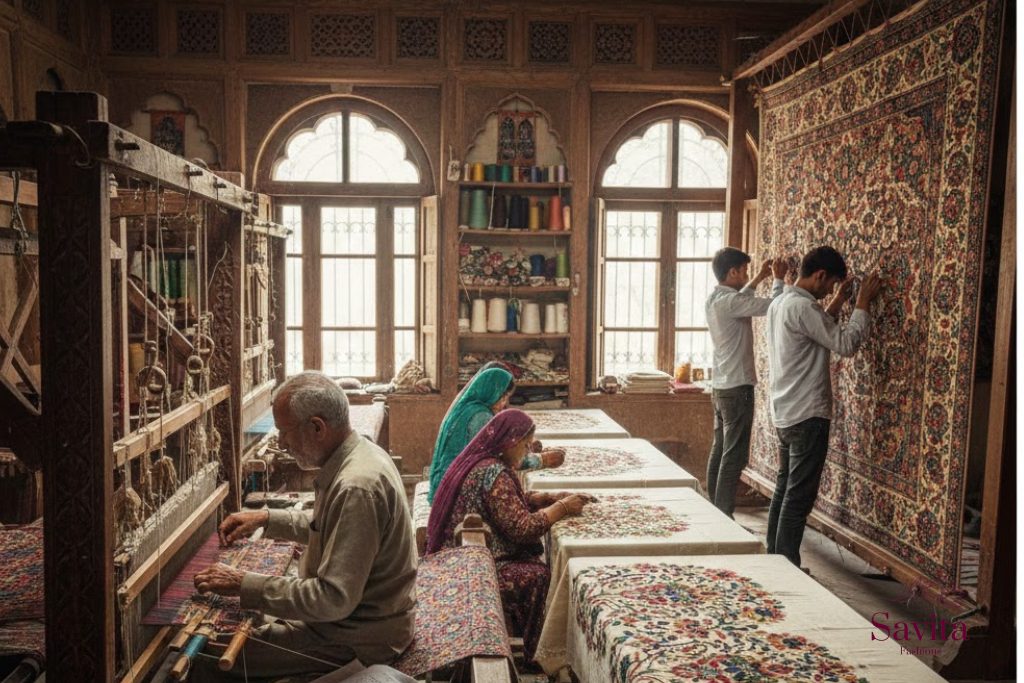
Understanding and appreciating pashmina in Indian weddings requires recognizing the extensive community of artisans whose skills, dedication, and traditional knowledge bring these magnificent pieces into existence. From the herders in high-altitude regions to the master embroiderers in Kashmir, numerous hands touch each piece of pashmina in Indian weddings before it reaches the bride, and each contributes essential skills and labor to creating these treasured textiles. The human story behind pashmina in Indian weddings adds depth and meaning to every shawl and dupatta.
The journey of pashmina in Indian weddings begins in the harsh, remote regions of Ladakh, where Changra goats, also called Changthangi or Pashmina goats, survive in altitudes exceeding fourteen thousand feet above sea level. The herders who tend these animals are the first crucial link in the chain that brings pashmina in Indian weddings to life, maintaining traditional animal husbandry practices that have been passed down through generations. These herders live in some of the most challenging environments on Earth, enduring extreme cold and isolation to care for the goats that produce the precious fiber used in pashmina in Indian weddings.
The collection of pashmina fiber for use in Indian weddings happens once annually, typically in spring when the goats naturally shed their winter undercoat as temperatures begin to rise. Unlike sheep shearing, the collection process for pashmina in Indian weddings involves gently combing the soft undercoat from the goats, a process that requires patience, skill, and respect for the animals. This gentle combing process, requiring hours of careful work per animal, aligns with the ethical concerns increasingly important in modern pashmina in Indian weddings and ensures that the goats are not harmed during fiber collection.
Once collected, the raw pashmina destined for use in Indian weddings undergoes cleaning and sorting before being spun into yarn. This spinning process, traditionally done entirely by hand on wooden spinning wheels called yinder, requires exceptional skill developed over years of practice. The fineness of pashmina fibers makes machine spinning impractical for the highest quality yarn used in pashmina in Indian weddings, meaning that hand-spinning artisans remain essential to producing premium wedding textiles. These spinners, predominantly women working in their homes, represent a critical link in the production chain of pashmina in Indian weddings.
Weaving pashmina into fabric for use in Indian weddings is equally specialized and demanding. Master weavers work on traditional handlooms, interlacing the delicate pashmina threads with precision and care that comes only from years of experience. The weaving process for a single piece of pashmina in Indian weddings can take several weeks, as the weaver must maintain consistent tension and perfect alignment to create the smooth, even fabric that pashmina is renowned for. These weavers, often working in family workshops where skills have been passed down for generations, preserve techniques that are hundreds of years old.
Embroidery artisans create perhaps the most visible and admired contributions to pashmina in Indian weddings. These craftspeople, organized in family workshops where skills pass from parent to child across generations, represent the pinnacle of textile craftsmanship. The embroidery that adorns pashmina in Indian weddings requires not only technical skill but also artistic vision, cultural knowledge, and infinite patience.
Sozni embroidery artisans, who create the finest work on pashmina in Indian weddings, train for years before achieving mastery of this demanding technique. Working with a single thin needle and using the pashmina weave itself as their guide, they create intricate patterns that seem to float on the fabric’s surface with ethereal delicacy. A single sozni master working alone might spend three to six months completing the embroidery on one wedding pashmina dupatta, depending on the design’s complexity and the density of stitching required. This extraordinary investment of time and skill explains why sozni-embroidered pashmina in Indian weddings commands premium prices.
Tilla workers, who embroider with metallic threads to create the sparkle and grandeur expected in pashmina in Indian weddings, employ different techniques but equal skill and dedication. Their work involves calculating exactly how much tension to apply to metal-wrapped threads so that they lie smoothly on the pashmina without puckering the fabric or creating excessive stiffness that would compromise the drape and feel of pashmina in Indian weddings.
The economic reality for artisans working in pashmina in Indian weddings remains challenging despite the high prices that finished pieces command in the market. Many artisans work through multiple layers of intermediaries, each taking a portion of the final price, leaving the actual craftspeople—those whose skills and labor create the value—with a small fraction of what consumers ultimately pay for pashmina in Indian weddings. This structure threatens the sustainability of traditional crafts and the livelihoods of artisan families.
Progressive brands and social enterprises working in pashmina in Indian weddings increasingly focus on fair trade models that connect artisans more directly with consumers, ensuring that craftspeople receive fair compensation for their work. These initiatives not only improve artisan livelihoods but also help preserve traditional skills that might otherwise be abandoned as young people seek more reliably profitable employment outside the heritage crafts. Supporting fair trade pashmina in Indian weddings ensures that this beautiful tradition can continue for future generations while providing dignity and economic security to the artisan communities who create these magnificent textiles.
The Enduring Legacy and Future of Pashmina in Indian Weddings
The ongoing use of pashmina at Indian weddings proves its cultural value which has maintained its significance throughout different historical periods and yet to be counted family traditions. Pashmina serves as more than a high-end fabric because it functions as the Indian wedding attire which shows the deep affection of family members together with the sacredness of marital vows and the everlasting charm of traditional arts which artisans have handed down through the years.
The usage of pashmina at Indian weddings demonstrates how traditions develop through time while their essential elements remain preserved through historical periods. Pashmina functions as a living cultural tradition because its usage at Indian weddings demonstrates how cultural practices change with time while maintaining their core cultural identity. Modern brides incorporate pashmina in Indian weddings through unconventional colors, minimalist designs, fusion styling, and personalized elements, yet the fundamental symbolism remains unchanged from what it represented centuries ago.
The pashmina dupatta which a bride wears in the twenty-first century shows the same marital desires as the pashmina shawl which a royal bride wore 500 years ago. Families use pashmina as a wedding expense because they want to show their commitment to marriage through their purchase of wedding accessories. The family makes a cultural heritage investment which supports artisan communities and builds family legacy for future generations while preserving traditions which connect past with present and future.
Each wedding pashmina dupatta selected with great dedication through several months of research together with each shawl which families keep as precious belongings and each item which receives love-filled blessings become part of Indian wedding traditions which successfully maintain their deep roots while adopting essential modern practices.
Related Products
Showing 1–9 of 805 results
-

Savita Shawls Royal Blue & Black Wool Natural Silk Box Pashmina Shawl for Women
Read more -

Savita Shawls Elegant Grey & Black Wool Natural Silk Box Pashmina Shawl for Women
Read more -

Beige & Charcoal Wool Natural Silk Box Design Pashmina Shawl for Women
Read more -

Yellow & Navy Wool Natural Silk Box Design Pashmina Shawl for Women
Read more -

Grey & Black Wool Natural Silk Box Design Pashmina Shawl for Women
Read more -

Red & Beige Wool Natural Silk Box Design Pashmina Shawl for Women
Read more -

Green & Blue Wool Natural Ombre Pashmina Shawl for Women
Read more -

Beige & Soft Pink Wool Natural Ombre Pashmina Shawl for Women
Read more -

Rust Orange & Mint Green Wool Natural Ombre Pashmina Shawl for Women
Read more