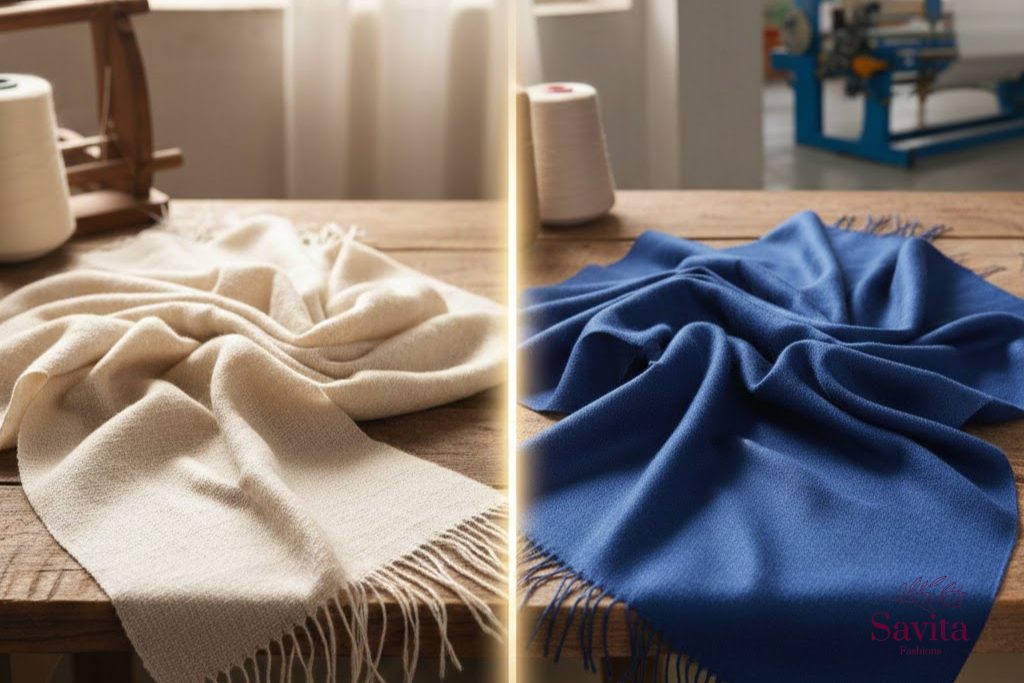
Introduction to Handwoven vs Machine-Made Pashmina
Pashmina stands as the most sophisticated and comfortable material among all luxury fabrics. The quality of pashminas differs between various products. The global market for this precious fabric has increased demand which has intensified the discussion about handwoven and machine-made pashmina products. Consumers today display a higher level of product awareness than ever before, and they need to understand the differences between handwoven pashmina shawls and machine-made pashmina shawls before they decide to purchase this high-end textile. The comparison between handwoven and machine-made pashmina products extends beyond manufacturing techniques because it encompasses cultural heritage, artisanal skills, product excellence, genuine craftsmanship, and market worth. The complete guide will show all details about handwoven and machine-made pashmina products, which will enable you to choose the best pashmina shawl for your next shopping experience.
What Is Pashmina and Why Does It Matter?
Pashmina is one of the finest natural fibers in the world, derived from the underbelly of the Changthangi goat, a special breed found in the high-altitude Himalayan regions of Ladakh and Kashmir. The word “pashmina” itself comes from the Persian word “pashm,” meaning soft gold. The material has maintained its status as a royal textile because of its extreme value and its ability to demonstrate expert skills. The fiber is incredibly soft, lightweight, and warm, making it ideal for shawls, stoles, and wraps. The current market for handwoven pashmina and machine-made pashmina creates two separate markets which exist as completely different entities. Handwoven pashmina shawls exhibit genuine authentic qualities and original textural properties and expert craftsmanship and lasting worth while they differ completely from machine-made pashmina shawls which share identical characteristics. The handwoven versus machine-made pashmina discussion depends on people understanding the actual definition of pashmina.
The Ancient Art Behind Handwoven Pashmina Shawls
Handwoven pashmina shawls have a history that stretches back more than five hundred years in the Kashmir Valley. Skilled artisans known as “karkhandars” maintain a living tradition of handweaving which they have passed down through their family lines because it forms the core of Kashmiri cultural heritage.
The most noticeable distinction between handwoven and machine-made pashmina emerges from the combination of human craftsmanship and the duration of work dedicated to each item. The time needed to create a handwoven pashmina shawl ranges from three days to multiple months because designers choose between intricate patterns and delicate weaving techniques.
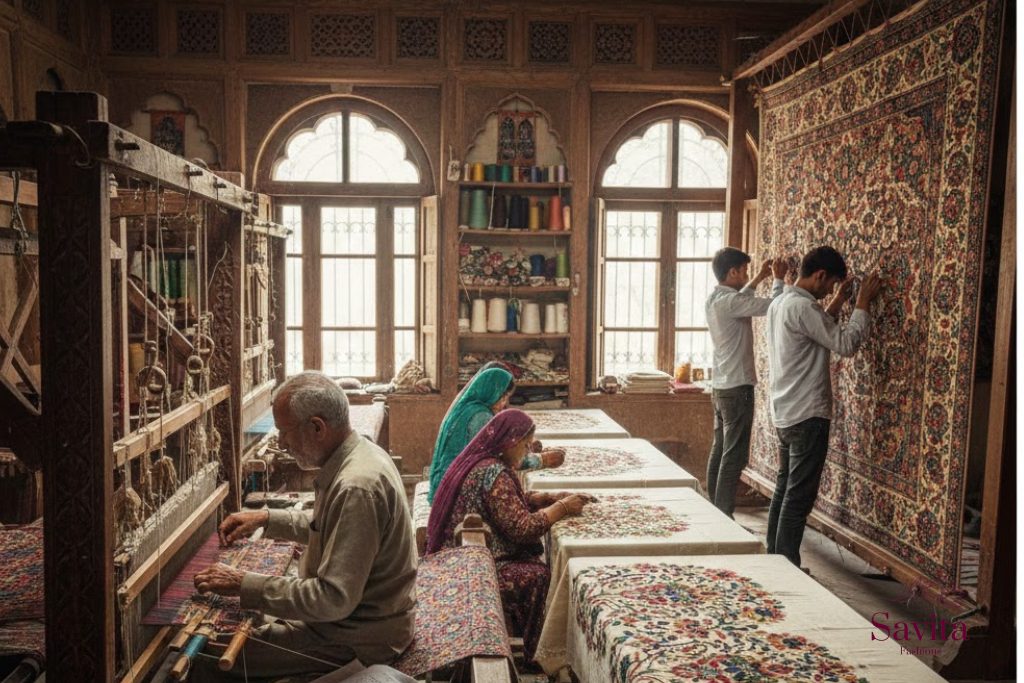
The artisans use traditional pit looms or frame looms to create fabric by hand through meticulous thread interlacing which results in both aesthetic appeal and personal significance. The craftspeople who create handwoven pashmina shawls embed their personal narratives and creative expressions into these garments. Machine-made pashmina shawls cannot create this effect regardless of the technological progress that occurs in the future.
How Handwoven Pashmina Shawls Are Made
The production process for handwoven pashmina shawls starts with using the raw fiber as its initial material. The Changthangi goats naturally shed their undercoat during spring, and the fine pashm fibers are combed out or collected gently to ensure the animal is not harmed. The raw fiber undergoes a complete cleaning procedure which removes all coarser guard hairs and all other impurities from its structure. The fiber undergoes hand spinning after cleaning through a traditional spinning wheel which people refer to as a “charkha.”
The hand-spinning process functions as an artistic craft which demands exceptional expertise for craftsmen to create yarn with uniform thickness. The artisan prepares the yarn for weaving after spinning by applying natural or chemical dyes according to their specific methods. The skilled weaver constructs the fabric on the loom by adding one thread at a time to build each row of fabric. The entire procedure which transforms raw fiber into completed handwoven pashmina shawl represents a combination of expertise and dedication. The meticulous process of handwoven pashmina creation produces exceptional character and quality which distinguishes this practice from machine-made pashmina production.
How Machine-Made Pashmina Shawls Are Produced
The production process for handwoven pashmina shawls starts with using the raw fiber as its initial material. The Changthangi goats naturally shed their undercoat during spring, and the fine pashm fibers are combed out or collected gently to ensure the animal is not harmed. The raw fiber undergoes a complete cleaning procedure which removes all coarser guard hairs and all other impurities from its structure. The fiber undergoes hand spinning after cleaning through a traditional spinning wheel which people refer to as a “charkha.”
The hand-spinning process functions as an artistic craft which demands exceptional expertise for craftsmen to create yarn with uniform thickness. The artisan prepares the yarn for weaving after spinning by applying natural or chemical dyes according to their specific methods. The skilled weaver constructs the fabric on the loom by adding one thread at a time to build each row of fabric. The entire procedure which transforms raw fiber into completed handwoven pashmina shawl represents a combination of expertise and dedication. The meticulous process of handwoven pashmina creation produces exceptional character and quality which distinguishes this practice from machine-made pashmina production.
Texture and Feel: Handwoven vs Machine-Made Pashmina
The most straightforward method to identify the difference between handwoven pashmina and machine-made pashmina lies in its tactile characteristics. The handwoven pashmina shawls display three main tactile qualities which make them exceptionally soft and airy and warm. The material demonstrates its natural texture because it was created through hand-spinning and hand-weaving techniques. The texture serves as a genuine proof of authenticity because it exists as the natural characteristic of the material.
The authentic handwoven pashmina shawl delivers immediate warmth to your body as soon as you wrap it around yourself. The machine-made pashmina shawls achieve a smoother and more uniform appearance which sometimes resembles artificial materials when they include blended fibers. The machine-made pashmina shawls display a tighter weave pattern which creates an artificial appearance that lacks the natural texture found in handwoven pashmina shawls. The tactile experience of handwoven pashmina provides enough evidence to help informed buyers identify their product through the handwoven pashmina and machine-made pashmina comparison. The authentic tactile experience of a handwoven pashmina shawl cannot be duplicated by any other material.
Visual Differences Between Handwoven and Machine-Made Pashmina Shawls
The visual examination of handwoven pashmina shows clear distinguishing factors that separate it from machine-made pashmina. The handwoven pashmina shawl shows the slightest weave differences which demonstrate the artistry of its creator. The breathing quality of handwoven pashmina shawls comes from their unique variations which machine-made pashmina shawls do not have.
The Kani and Sozni work embroidery found in handwoven pashmina shawls shows complexity through its three-dimensional designs which contain artist-specific elements. Machine-made pashmina shawls with printed or woven patterns tend to look flat, repetitive, and mechanical. The handwoven pashmina shawls show deeper, more intense color saturation because of their dyeing methods, while machine-made pashmina shawls exhibit colors that will lose intensity with time. Visual inspection serves as an effective method for distinguishing between handwoven and machine-made pashmina shawls throughout their ongoing debate.
Quality and Durability: Handwoven Pashmina Shawls vs Machine-Made Pashmina Shawls
The handwoven pashmina shawls demonstrate superior quality and durability when compared to machine-made pashmina shawls. The quality of handwoven pashmina shawls depends on two factors which are the purity of their fibers and the quality of their production process. The natural resilience and longevity of handwoven pashmina shawls arise from their use of Changthangi goat fibers which were sourced with care. A well-maintained handwoven pashmina shawl can last for decades, even being passed down through generations as heirlooms.
Machine-made pashmina shawls which contain blended or synthetic materials face a higher risk of pilling while losing softness and experiencing deterioration during washing and wear. Handwoven pashmina shawls show better structural integrity because their hand-woven construction enables the fabric to maintain its shape and texture throughout time, which machine-woven fabrics cannot achieve. Handwoven pashmina shawls show better quality and durability than machine-made pashmina shawls at all measurement points.
Purity of Fiber: A Critical Factor in Handwoven vs Machine-Made Pashmina
The primary element which determines the handwoven pashmina debate between machine-made pashmina products and handwoven pashmina products is the fiber strength of the materials used in production. Authentic handwoven pashmina shawls are typically made from 100% pure pashmina fiber sourced directly from the Changthangi goat.
The characteristic softness and lightness and warmness of handwoven pashmina shawls results from their complete fiber purity. Machine-made pashmina shawls, on the other hand, are frequently made with blended fibers — combinations of pashmina with wool, silk, viscose, acrylic, or other synthetic materials. Manufacturers use these fiber combinations because they will lower production costs yet machine-made pashmina shawls are sold at prices that remain much lower than authentic handwoven pashmina shawls.
Machine-made pashmina shawls which use blended materials lose the desirable properties that make pashmina valuable. Pure handwoven pashmina shawls surpass them in weight and softness and elegant draping abilities. The handwoven versus machine-made pashmina debate requires buyers to understand fiber purity as their main factor for making purchasing decisions.
The Role of Artisans in Handwoven Pashmina Shawls
The human element stands as the main point because it defines how handwoven pashmina shawls should be understood through their comparison with machine-made pashmina products. The artisans who create handwoven pashmina shawls are not simply workers — they are masters of a centuries-old craft that requires years of training and practice to perfect. Weaving families in Kashmir have maintained the tradition of creating handwoven pashmina shawls for five to seven generations.
The unique skills and creative abilities of each artisan create different handwoven pashmina shawls because their work results in one-of-a-kind designs. The most valuable quality of handwoven pashmina shawls comes from their ability to create distinctive pieces. Machine-made pashmina shawls use automatic systems and programmed patterns because their production does not involve any human creativity or artistic production which includes everything from the weaving process to the loom operation. The purchase of a handwoven pashmina shawl enables you to acquire a textile item while you provide support to an active artisan together with an ongoing artistic tradition. The handwoven versus machine-made pashmina debate includes this aspect which extends beyond the evaluation of fabric excellence.
Pricing: Why Handwoven Pashmina Shawls Cost More
The price becomes the primary factor that attracts customers when they evaluate handwoven pashmina shawls and machine-made pashmina shawls. The higher price of handwoven pashmina shawls compared to machine-made pashmina shawls requires customers to understand the reasons behind this difference in value. Authentic handwoven pashmina shawls carry a price that represents the expensive cost of unprocessed raw material because the material exists in limited quantities and needs extensive effort to obtain.
The price also includes all the time which skilled workers spent on the spinning and dyeing and weaving and finishing processes of creating the shawl. The total cost includes the artisan’s work requirements and the costs associated with traditional workshops and the cultural heritage that exists within each thread. The production costs of machine-made pashmina shawls remain low because manufacturers use industrial machines and substandard blended materials and require only basic skills for work. Buyers should know that machine-made pashmina shawls maintain an appealing price point because they deliver an entirely different product.
The price difference between handwoven pashmina shawls and machine-made pashmina shawls demonstrates that handwoven pashmina shawls possess actual value because they represent rare artistic creations.
Environmental and Ethical Considerations in Handwoven vs Machine-Made Pashmina
The price becomes the primary factor that attracts customers when they evaluate handwoven pashmina shawls and machine-made pashmina shawls. The higher price of handwoven pashmina shawls compared to machine-made pashmina shawls requires customers to understand the reasons behind this difference in value. Authentic handwoven pashmina shawls carry a price that represents the expensive cost of unprocessed raw material because the material exists in limited quantities and needs extensive effort to obtain.
The price also includes all the time which skilled workers spent on the spinning and dyeing and weaving and finishing processes of creating the shawl. The total cost includes the artisan’s work requirements and the costs associated with traditional workshops and the cultural heritage that exists within each thread. The production costs of machine-made pashmina shawls remain low because manufacturers use industrial machines and substandard blended materials and require only basic skills for work.
Buyers should know that machine-made pashmina shawls maintain an appealing price point because they deliver an entirely different product. The price difference between handwoven pashmina shawls and machine-made pashmina shawls demonstrates that handwoven pashmina shawls possess actual value because they represent rare artistic creations.
Cultural Heritage and the Significance of Handwoven Pashmina Shawls
The handwoven pashmina shawls exist as cultural heritage artifacts rather than simple products. The art of making handwoven pashmina shawls has been recognized by UNESCO as an Intangible Cultural Heritage of Humanity, a designation that underscores just how significant this craft is to global culture. For centuries emperors and royalty have worn Kashmiri handwoven pashmina shawls which also appear in literary works and poetry.
The famous Kani weave and Sozni embroidery techniques used in some of the most exquisite handwoven pashmina shawls are so intricate and time-consuming that they represent perhaps the pinnacle of human textile artistry. Machine-made pashmina shawls have no such cultural legacy because they result from industrialization instead of heritage. The cultural aspect of handwoven pashmina shawls emerges as a crucial element that distinguishes their value from all machine-made pashmina shawls. Your handwoven pashmina shawl brings you into a cultural tradition that has existed for thousands of years.
How to Identify Genuine Handwoven Pashmina Shawls
Serious buyers need to learn authentic handwoven pashmina shawl identification because handwoven versus machine-made pashmina distinction holds significant value. The most trustworthy method for testing authenticity requires you to perform a feel test because authentic handwoven pashmina shawls possess an extraordinary softness and warmth that enables them to heat up quickly when you rub them between your palms.
The second method requires you to examine the weave pattern because handwoven pashmina shawls display authentic production defects through their inherent unintentional weaving variations. Machine-made pashmina shawls, by contrast, will have a perfectly uniform, mechanical weave. The ring test is another popular method — a genuine handwoven pashmina shawl of standard size should be able to pass through a finger ring, owing to the fineness of the weave and the lightness of the fabric.
Buyers should also look for certification marks such as the GI (Geographical Indication) tag issued by the Craft Development Institute of Kashmir which certifies that a shawl is a genuine handwoven pashmina product. The identification methods for handwoven and machine-made pashmina products serve as essential resources which help customers who have to deal with a market that sold fake products.
The Market Deception Problem in Handwoven vs Machine-Made Pashmina
The handwoven versus machine-made pashmina market suffers from its most critical problem because the industry faces widespread fraudulent activities. Unscrupulous sellers use “handwoven” and “pure pashmina” labels to sell machine-made pashmina shawls at higher prices while they deceive their customers. This practice causes severe damage because it defrauds customers and destroys the work opportunities of artisans who create authentic handwoven pashmina shawls.
The online retail market experiences especially serious issues because customers cannot physically inspect products before they complete their purchases. Machine-made pashmina shawls are displayed in photographs that use professional styling and shooting techniques to create an appearance of authentic handwoven pashmina shawls which requires expert knowledge for proper visual identification. The handwoven versus machine-made pashmina debate has financial consequences and ethical implications that impact both buyers and artisans because it extends beyond academic research. Buyers need to learn about pashmina products from their trusted sources who hold proper certification while they search for authentic handwoven pashmina shawls instead of choosing suspiciously cheap options.
Caring for Handwoven Pashmina Shawls vs Machine-Made Pashmina Shawls
The handwoven pashmina shawls and the machine-made pashmina shawls require different care methods which createanother factor that needs evaluation in the comparison between handwoven pashmina and machine-made pashmina. Authentic handwoven pashmina shawls need gentle handling to maintain their original state throughout their entire lifespan.
Their ideal cleaning method involves dry cleaning or hand washing with cold water and a mild detergent that has pH-neutral properties. The proper procedure requires them to be air dried on a clean towel after they complete their washing process without being wrung out or dried in a dryer. Handwoven pashmina shawls need storage in breathable fabric bags that contain cedar balls because this method prevents moth damage which occurs when fabric is stored for long periods in hanging position.
The production process of machine-made pashmina shawls results in their creation from blended or synthetic fibers which enable their users to wash them through machines while requiring them to handle their maintenance work through simple methods. The handwoven pashmina shawls show greater durability than machine-made pashmina shawls because customer service maintains all their components through dedicated protection. The genuine handwoven pashmina shawl requires proper maintenance which results in the shawls beautiful appearance and warm properties that last for many years because this beauty and warmth show permanent value which machine-made pashmina shawls cannot provide.
Handwoven Pashmina Shawls as Investment Pieces
Handwoven pashmina shawls serve as actual investment items which maintain their worth or develop greater worth throughout their entire existence unlike machine-made pashmina shawls which lose their value right after customers purchase them. Handwoven pashmina shawls which contain traditional Kani weave and intricate Sozni embroidery work represent rare valuable items that auctioneers have sold for high prices while Mughal-era antique handwoven pashmina shawls exist as museum-quality artifacts which possess untold value.
High-quality contemporary handwoven pashmina shawls maintain their aesthetic value and family importance throughout more than fifty years of use because families consider them to be precious inheritance items. Unwrapped machine-made pashmina shawls function as fast-fashion products which customers find unappealing after few years because their original appearance and design stability both deteriorate.
The handwoven pashmina investment value serves as the main argument which supports choosing high-quality products instead of purchasing multiple items at a lower price. Investors should buy one exceptional handwoven pashmina shawl because it represents a better value than purchasing multiple machine-made pashmina shawls which cost less.
The Global Demand for Handwoven Pashmina Shawls and Machine-Made Pashmina Shawls
The global market for pashmina products has grown enormously over the past few decades, and understanding the demand dynamics is another important dimension of the handwoven vs machine-made pashmina debate. The fast-fashion industry and consumers who want affordable luxury at low prices both drive the demand for machine-made pashmina shawls.
Machine-made pashmina shawls are available in high street stores and online marketplaces and discount fashion outlets worldwide because they serve customers who wants low prices instead of genuine products. Handwoven pashmina shawls attract demand from connoisseurs and collectors and conscious consumers who appreciate authentic products that demonstrate traditional craftsmanship and cultural heritage.
The market for genuine handwoven pashmina shawls is smaller but far more discerning, and genuine handwoven pashmina shawls command premium prices in luxury retail outlets, artisan boutiques, and specialized online platforms. The handwoven vs machine-made pashmina market divide reflects a broader trend in consumer culture — the growing tension between mass production and artisanal quality.
Why Handwoven Pashmina Shawls Are Worth Every Penny
The handwoven versus machine-made pashmina debate establishes two opposing value systems. The question of your purchase decision lies between two options which include the acquisition of textile materials and the acquisition of craftsmanship and cultural heritage and product excellence. Handwoven pashmina shawls achieve their value because multiple factors justify their high price.
They contain the most superior and pure natural fiber which exists in the market. The artisans create products through their mastery of traditional methods which have been used for centuries and which machines cannot reproduce. The handwoven pashmina shawls are distinct because each piece exists as an entirely different creation from all others. A well-constructed handwoven pashmina shawl possesses the ability to endure for multiple decades.
Buying handwoven pashmina shawls enables customers to support artisan communities while protecting their traditional cultural practices. The authentic handwoven pashmina shawl delivers an experience that combines softness and warmth and draping qualities which machine-made pashmina shawls cannot match. The handwoven pashmina shawl proves superior to its machine-made counterpart because all aspects of the comparison show better results for handwoven pashmina shawls.
Conclusion: Making the Right Choice in the Handwoven vs Machine-Made Pashmina Debate
The handwoven versus machine-made pashmina discussion requires people to comprehend their purchase while they create a decision that aligns with their personal standards. The two types of pashmina shawls which exist as handwoven and machine-made versions show essential differences even though they appear similar at first.
The handwoven pashmina shawls demonstrate the highest human artistic skills together with cultural traditions and authentic materials and environmentally friendly production methods. The mass-produced machine-made pashmina shawls combine synthetic materials to create products which display lower quality standards. The handwoven versus machine-made pashmina comparison shows you different product qualities which enable you to make purchasing decisions that lead to better results and greater satisfaction and ethical outcomes.
The authentic handcrafted handwoven pashmina shawl represents the best choice when you want to buy yourself or someone else a pashmina shawl. Handwoven pashmina shawls functions as more than just fashion items because they serve as family treasures and artistic creations which link to one of humanity’s most exquisite and lasting textile traditions.
Related Products
Showing 1–9 of 805 results
-

Savita Shawls Royal Blue & Black Wool Natural Silk Box Pashmina Shawl for Women
Read more -

Savita Shawls Elegant Grey & Black Wool Natural Silk Box Pashmina Shawl for Women
Read more -

Beige & Charcoal Wool Natural Silk Box Design Pashmina Shawl for Women
Read more -

Yellow & Navy Wool Natural Silk Box Design Pashmina Shawl for Women
Read more -

Grey & Black Wool Natural Silk Box Design Pashmina Shawl for Women
Read more -

Red & Beige Wool Natural Silk Box Design Pashmina Shawl for Women
Read more -

Green & Blue Wool Natural Ombre Pashmina Shawl for Women
Read more -

Beige & Soft Pink Wool Natural Ombre Pashmina Shawl for Women
Read more -

Rust Orange & Mint Green Wool Natural Ombre Pashmina Shawl for Women
Read more