
A Complete Guide to Avoiding Pashmina Care Mistakes and Preserving Timeless Luxury
Pashmina is more than just a textile; it is the heritage of Kashmir’s artistry, patience, and centuries-old craftsmanship. A shawl or a stole that is made with Pashmina weaving symbolizes the manual labor of countless hours, the preservation of traditional skills, and the purity of the best Himalayan wool. Nevertheless, many people, even if they possess such a beautiful piece, commonly make Pashmina Care Mistakes that consequently damage the piece unknowingly.
If you want your handmade Pashmina to continue being soft, elegant, and long-lasting, the first thing you will need to do is to get acquainted with the most common Pashmina Care Mistakes. The present extensive guide takes a look at the most frequent mistakes people do, the reasons behind them and how to avoid them—all while honoring the genuine Pashmina process that is followed by brands like Savita Shawls.
Understanding Why Proper Pashmina Care Matters
First, it is necessary to comprehend the meaning and significance of Pashmina Care before stepping into the common Pashmina care mistakes. The Pashmina is the most expensive and softest fabric next to the skin; therefore, it requires the best treatment and knowledge of how to maintain it. Pashmina, unlike artificial fibers or machine-produced wool, is extremely delicate, naturally breathable, and praised for its exceptional regulating warmth.
These features of Pashmina make it both luxurious and vulnerable; therefore, even the slightest mistake in Pashmina care can result in irreversible damage. Pashmina care at its best ensures that the shawl keeps its original texture, warmth, and elegant drape for several years. If people neglect the proper Pashmina maintenance, they will have to face problems like breaking of fibers, losing softness, pilling, fading of the color, or shrinkage. Knowing the reason why Pashmina deserves special care, one can avoid those common Pashmina care mistakes and save the investment in this heritage fabric.
Why Pashmina Is Different from Other Wool
Among the major reasons Pashmina Care Mistakes happen, one is that most people think Pashmina can be handled like common wool or cashmere. Actually, Pashmina is much gentler and finer than other wool materials, thus rendering the standard wool care processes unfit for it.
Ultra-Fine Pashmina Fibers
Pashmina fibers are thinner than human hair, which is the reason why the fabric has its characteristic softness and lightness. This extreme fineness, however, makes the fibers very delicate and easily spoiled by friction, heat, strong detergents, and wrong handling. Washing too roughly, too much wringing, or using the wrong drying methods are some of the main Pashmina care mistakes people make in taking care of Pashmina that can actually damage the delicate fibers of the fabric irreparably.
Sourced from Himalayan Changthangi Goats
Genuine Pashmina comes from the delicate undercoat of Changthangi goats residing in the lofty Himalayan areas. The goats, in turn, produce this very fine wool, which is their shelter, thus the extreme cold does not kill them. Pashmina is a luxurious product that needs very careful handling because the fiber is not only rare but also difficult to collect in large amounts. The cleaning or storage process, which is done carelessly, shows the lack of awareness about Pashmina that is being mistreated and the pashmina care mistakes that are specific and should be avoided.
Hand-Spun and Handwoven Craftsmanship
Another factor that separates Pashmina from other wool is the traditional hand-spun and handwoven process used to create each shawl. Skilled artisans carefully transform raw fiber into luxurious textiles using age-old Pashmina weaving techniques. This artisanal process enhances the shawl’s beauty but also increases its sensitivity. Machine washing, ironing at high temperatures, or improper folding are serious Pashmina care mistakes that can damage the handwoven structure and distort the weave.
Naturally Soft, Lightweight, and Fragile
Pashmina’s natural softness and lightweight nature are what make it so desirable—but they are also why it is fragile. Unlike thicker wool, Pashmina does not tolerate excessive pressure, moisture, or prolonged exposure to sunlight. Neglecting these factors often results in irreversible damage, making proper Pashmina care essential for maintaining both appearance and functionality.
Why Awareness of Pashmina Care Mistakes Is Essential
The unique fiber composition and the artisanal craftsmanship that are involved from the very beginning on to the very end of the Pashmina shawl production process allow the Pashmina fiber to be used only in very small amount and this only through the extremely professional and proper handling techniques. Thus, in short, pashmina care mistakes can severely shorten the life of your shawl.
Just wrong choices such as, for instance, using normal detergent, improper shawl hanging, or plastic storage can lead to color fading, fiber stress, and loss of softness. Alongside that, the accumulated Pashmina care mistakes that cause a decline in quality and finally, visible deterioration. If you are well aware of the right Pashmina care, which is an essential factor in making informed decisions about washing, drying, storing, and wearing your shawls, you will also avoid the common Pashmina care mistakes easily and your Pashmina will stay elegant, warm, and luxurious for generations. To live up to the delicate nature of the Pashmina shawl, to avoid the inopportune Pashmina care errors is to preserve not only a shawl but also a piece of heritage craftsmanship that never ages.
Mistake #1: Treating Pashmina Like Regular Wool or Cashmere
The Pashmina shawl production process is characterized by unique fiber composition and artisanal craftsmanship that last from the very beginning right to the very end, which therefore permits the use of Pashmina fiber in light quantity only and that solely via the extremely professional and proper handling techniques.
In brief, if the care is not right, you could end up with a shawl that is very short-lived. Choosing wrong, for instance, such as using normal detergent, improper shawl hanging, or plastic storage can lead to color fading, fiber stress, and loss of softness. Alongside that, the accumulated Pashmina care mistakes that cause a decline in quality and finally, visible deterioration.
If you are well aware of the right Pashmina care, which is an essential factor in making informed decisions about washing, drying, storing, and wearing your shawls, you will also avoid the common Pashmina care mistakes easily and your Pashmina will stay elegant, warm, and luxurious for generations. To live up to the delicate nature of the Pashmina shawl, to avoid the inopportune Pashmina care errors is to preserve not only a shawl but also a piece of heritage craftsmanship that never ages.
Why This Is a Serious Pashmina Care Mistake
Out of all the Pashmina Care Mistakes, this error is the most serious one as it influences the very fabric’s core structure. Normal wool, in contrast, is a thick, rough, and very strong material that can come through mechanical stress, frequent washing, and high temperatures. Pashmina, which is ultra-fine fibers, needs super gentle handling and controlled conditions from the beginning to the very end of care.
Pashmina fibers are super thin and sensitive so they get easily damaged by friction and pressure. The moment they get into any machine handling, like spinning, twisting, or harsh agitation, the fibers start breaking, leading to thinning, pilling, and a noticeable loss of softness. This is one of the most common Pashmina fabric care mistakes made by households without Pashmina fabric care knowledge.
These Pashmina care mistakes cause another major problem, which is the distortion of shape. If you machine wash Pashmina or treat it like regular cashmere, it most likely results in stretching or shrinkage, which ruins the shawl’s natural fall. Heat and moisture only make things worse, as they cause the fibers to lose elasticity and luxurious texture.
Impact on Handmade Kashmiri Pashmina
This error tends to be particularly detrimental to the handmade Pashmina products that are made using the true Kashmiri craftsmanship. The Pashmina shawl of Kashmir is not only hand-spun but also handwoven by the most talented artisans who with their skill and patience create a product that is both delicate and complicated in its design. Substituting such piece of art to be treated as a common wool is a total disrespect to the quality of the work done and it speeds up the product’s extinction.
Neglecting the proper care of Kashmiri Pashmina not only harms the fibers but also disturbs the handwoven pattern which results in uneven texture and permanent deformation. In the long run, the shawl would be deprived of its beauty, warmth, and heirloom value as its periodic application of Pashmina care mistakes would lead to gradual stripping of these characteristics.
Why Proper Awareness Matters
One of the Pashmina Care Mistakes is taking Pashmina as ordinary wool. Knowing the distinctions will help to keep your shawl in its original state—soft, lightweight, and beautifully draped. The right care for Pashmina starts with treating it with delicacy and giving up the belief that all wool fabrics can be treated the same. If you want to protect the life, beauty, and authenticity of your Pashmina shawl, then this is the very first step you should take and it is the most important one as well.
Mistake #2: Washing Pashmina Too Frequently
One of the most underrated yet damaging Pashmina care mistakes is washing Pashmina shawls too often. Besides luxury fabrics requiring frequent washing to keep them fresh, in the case of Pashmina, oversheding causes much harm and no good at all. Pashmina being a natural fiber is breathable and has the property of resisting odors, hence it does not keep smells or dirt easily. Treating it like ordinary clothes gives rise to water, detergent, and friction exposure which weakens the fabric’s delicate structure each time.
Frequent washing is one of the critical Pashmina care mistakes because it interferes with the natural resilience of the fibers. Even gentle washing methods, when done too often, gradually erode the softness and refinement that make Pashmina so luxurious. Understanding proper Pashmina maintenance helps prevent unnecessary handling and preserves the shawl’s original beauty.
Why Overwashing Damages Pashmina
Washing the Pashmina wrap frequently is one of the main reasons it ranks high among common Pashmina Care Mistakes. The repeated washing weakens the ultra-fine fibers that form the basis of the shawl. Pashmina fibers are very fine and at times, the skin around them is thin and moist, which sometimes makes them lose their strength and elasticity. Eventually, the fibers will get to the point where their area is reduced, and then the surface will not be smooth anymore, and some signs of wear might be visible as well.
For sure, one of the most damaging effects of washing too much is the loss of Pashmina’s natural softness and subtle brightness. The softest Pashmina contains the oils naturally that contribute to its feel and luster. Frequent washing takes these oils away, and the fabric is left to be boring, rough, and lifeless. Being one of the most common Pashmina fabric care mistakes done by owners who are not acquainted with the natural properties of the fiber, it can be a huge faux pas. Aging the fabric prematurely and fuzziness of Pashmina are also the direct outcomes of washing the fabric very often.
Every wash introduces friction, which causes fine fibers to rise to the surface, leading to fuzziness and pilling. Once this damage occurs, it cannot be undone; hence, overwashing is one of the most irreversible Pashmina care mistakes.
The Right Alternative to Frequent Washing
Pashmina, unlike standard woolens, doesn’t need washing often to keep its fresh and clean look. In fact, in most cases, airing out your Pashmina shawl after using it is all that is needed for Pashmina care in everyday life. Letting the shawl rest in a well-ventilated place allows for the natural elimination of moisture and smells without putting stress on the fibers.
This mild method not only keeps the textile but also the beautiful detail of the traditional Pashmina weaving. Washing less, thus minimizing friction, leads to maintaining fiber integrity and ultimately prolonging the shawl’s life. Not committing this prevalent Pashmina care mistake ensures that your Pashmina keeps being soft, elegant, and luxurious for years ahead.
Why Avoiding This Pashmina Care Mistake Matters
It is completely indispensable for Pashmina maintenance to recognize that regular washing is not at all necessary. The practice of limiting washes only to the topmost necessity prevents you from making one of the most damaging Pashmina Care Mistakes and protects both the artistry and worth of your shawl. Mindful Pashmina care takes the fabric back to its warmth, beauty, and heirloom quality throughout its lifetime.
Mistake #3: Using Harsh Detergents or Chemical Cleaners
A very significant and perilous Pashmina Care Mistakes that can easily be termed “irreversible” is the application of abrasive detergents, chemical stain removers, or cleaning productsbased on bleach. A lot of people mistakenly think that using stronger cleaners will make their Pashmina shawls last longer.
However, the truth is that these chemicals are already too harsh for the natural fiber and in one wash, the fabric can be permanently ruined. Genuine Pashmina is a high-end textile that responds very sensitively to the exposure of chemicals. Unlike standard wool or man-made fibers, Pashmina cannot withstand the presence of enzymes, brighteners, or bleaching agents that are usually found in commercial laundry detergents. It is, therefore, one of the most wrong and tragic Pashmina care mistakes to use such products, as it literally attacks the fiber on a structural level.
How Chemicals Harm Handmade Pashmina
Harsh chemicals are one of the main reasons why this ranks among the worst Pashmina Care Mistakes. They remove the natural oils from Pashmina fibers that are needed to preserve the fabric’s softness, flexibility, and luster. The shawl loses its luxurious touch that characterizes genuine Pashmina and it starts to become rough, dry, and lifeless once the oils are removed. Pashmina discolored and lost its shine as a result of using chemical cleaners, especially those of naturally dyed or richly colored Pashmina shawls.
The use of bleach, stain removers, and optical brighteners leads to the uneven breakdown of pigments, thus resulting in the creation of faded patches, yellowing, or the entire color losing its liveliness. The damage done this way is irreversible and it also happens to be one of the most common Pashmina fabric care mistakes during cleaning.
High detergents not only cause surface damage but they also break up the natural wool structure. Pashmina fibers are so fine and loosely twisted that they get easily stressed by chemicals. Harsh cleaners eventually get the better of the fibers and they become thinner, more prone to pilling, and earlier accompanied by breakdown which are all visible signs of poor Pashmina maintenance.
The Right Cleaning Approach for Authentic Pashmina
The necessary care for the proper handmade Pashmina will entail cleaning gently and knowledgeably. Authentic handmade Pashmina, like those from Savita Shawls, should be cleaned with skin-friendly, pH-neutral cleansers that are mild and specially made for delicate fabrics only.
These mild cleansers will, on the one hand, wash the shawl and, on the other hand, retain the essential oils and at the same time, not damage the fiber structure. The use of correct cleaning products not only helps to retain the characteristics of the traditional Pashmina weaving but also gives the shawl’s softness, color, and drape the protection. One of the easiest but also the most effective ways to remove the recurring Pashmina Care Mistakes and lengthen the life of your shawl is to avoid using harsh detergents.
Why Avoiding Chemical Cleaners Is Essential
The first step to great Pashmina maintenance is identifying and recognizing the bad side of chemical cleaners. This will not only result in a better-looking shawl but also ensure the quality, genuineness, and worth of the Pashmina for a longer period. The use of soft cleansing methods will make your Pashmina stay elegant, soft, and classic—just the way it was meant to be.
Mistake #4: Machine Washing Pashmina Shawls
Machine washing Pashmina is definitely the worst mistake among all Pashmina Care Mistakes and the most irreversible one. To be sure, the modern washing machines do have a “delicate” or “wool” cycle, but still, none of these settings are good for the authentic Pashmina. One of the common misconceptions is that the owners think that the gentle machine cycles would be safe for the luxury fabrics. Nonetheless, even the slightest movement might ruin the already very fine fibers of Pashmina.
Pashmina shawls are not just luxurious handcrafted textiles, but also at the same time not the everyday garments that are to be stressed mechanically. Machine washing the fabric brings agitation, spinning, and temperature changes that are all directly opposite to the rules of proper Pashmina care. This one Pashmina care mistake can in turn ruin the shawl’s softness, shape, and even structural integrity after just one wash.
Why Machine Washing Is Dangerous
one of the primary causes spinning being aggressive was one of the factors which pushed high machine washing on the list of common Pashmina Care Mistakes. even at low spinning rates, twisting and pulling was the action from spinning which adversely affected the Pashmina fibers and resulted in breakage and thinning. the process of damage to the fine fibers makes the shawl not only loose its smoothness but also become rough and fragile.
Another major issue associated with Pashmina machine washing is exposure to heat. In most cases, washing machines do not keep the washing temperature consistent at a cool level, and even a very slight heat will make the Pashmina fibers draw back. This leads to losing part of the shawl’s softness, stiffness increasing, and its natural drape being distorted—one-way irreversible damage done.
Among the various improper care techniques of Pashmina fabric, heat-related shrinkage is claimed to be the most frequent one. Friction during machine washing is no less harmful. When the shawl rubs against either the inside of the drum or other clothes, friction will inevitably cause pilling and fuzzing and may even lead tearing at the edge or weave. This sort of mechanical abrasion will gradually weaken the fabric throughout its lifetime., making machine washing one of the most destructive Pashmina handling errors.
Why Machine Washing Conflicts with the Traditional Pashmina Process
The classical Pashmina procedure does not involve any kind of mechanical forces at all. This method is laborious, using nothing but human touch from fiber selection through spinning and weaving; thus, the introduction of mechanical washing directly opposes the very nature of real Pashmina artistry.
Since real Pashmina is always handled with care throughout its production, the use of machine washing disturbs the fragile equilibrium of the fibers and weave; thus, this error actually renders machine washing one of the most major Pashmina Care Mistakes that the owners must steer clear of at any cost.
The Importance of Gentle, Manual Care
Proper Pashmina care is dependent on gentle, manual handling that acknowledges the fabric’s handcrafted past. Machine washing must be avoided at all costs if the shawl’s softness, warmth, and elegance are to be preserved.
By this single act of removing the major Pashmina Care Mistake, you not only prolong your Pashmina significantly but also infuse the thread artistry that is embroidered into every piece with a new life. Once you learn the reasons why machine washing is bad, your Pashmina shawl will be a luxury piece that is always in vogue and not a victim of wrong care.
Mistake #5: Wrapping Pashmina in Plastic Covers
Even though it is one of the most neglected mistakes, Pashmina Care Mistakes need attention the most. One such mistake is wrapping Pashmina shawls in plastic covers for storage. Many people believe that plastic will protect the fabric from dust, moisture, and insects and that it is therefore a safe option for storing luxury fabrics.
Nonetheless, Pashmina is pretty when it comes to fabric storage and plastic is not the right way to go. The confusion often leads to the destruction of both the fabric and the artistry after a long time. Pashmina is a pure natural, breathable fiber that lets air through and relies on it to keep its softness and freshness.
By sealing it inside plastic, you are changing the whole situation and this will lead to quicker fabric deterioration. This unintentional Pashmina care mistake is more common than you think and it can go undetected until the damage is so severe that people will notice it.
Why Plastic Storage Harms Pashmina
The primary reason that this mistake is considered one of the most serious Pashmina Care Mistakes is that moisture is trapped by plastic. Even though a Pashmina shawl may look completely dry, the humidity from the surroundings or the previous wear may still be there and can get trapped in plastic covers.
The moisture that has been trapped causes the delicate fibers to weaken and the fabric to deteriorate as these conditions are favorable for degradation of the fabric. Another problem of plastic storage is that it creates the situation of air circulation being blocked. Pashmina fibers need air to breathe so as to keep their natural softness and durability. When the air is blocked, the fabric gets old, hard, and lifeless over time.
This is one of the common Pashmina mistakes in storage that directly influences the shawl’s texture and drape. Plastic has a negative effect as it leads to the creation of mildew and the development of bad smells. A moist area that is closed off is a perfect environment for mold spores that will eventually stain the fabric, weaken it, and even cause the need for replacement. Eventually, the mold is very difficult—sometimes even impossible—to remove without inflicting more damage, making this one of the most damaging Pashmina care mistakes linked to storage.
The Right Way to Store Handmade Pashmina
The proper care of a handmade Pashmina involves the process of selecting the breathable storage materials that will not suffocate the shawl but, on the contrary, protect it. Muslin cloth or breathable cotton instead of plastic permits air flow while preventing the fabric from getting dusty and being spoiled by light.
Besides, the use of these natural fabrics aids in moisture control and preservation of the softness of Pashmina during the long run. Breathable storage solutions not only do protect the Pashmina shawls but also the traditional Kashmiri craftsmanship. Handwoven Pashmina is a luxurious fabric that tells the story of the maturing art and skill through the ages and proper storage is the only factor that can thwart the fading away of such a skill. Staying away from this typical Pashmina Care Mistake adds value to the shawl in terms of both elegance and shininess along with heirloom quality.
Why Proper Storage Matters
It is essential to learn appropriate storage techniques in order to not make repeated Pashmina Care Mistakes again. By the use of breathable materials instead of plastic covers, your Pashmina is shielded from the damage caused by moisture, odor, and stress on the fibers. Besides, proper Pashmina storage will prolong the life of the shawl as well as give respect to the skill and culture behind each handmade piece.
Mistake #6: Hanging Pashmina for Long Periods
Hanging Pashmina shawls can be a mistake of great overestimation in terms of Pashmina care. People generally think that by hanging their shawls in wardrobes or on decorative hooks, they are helping to control their shape and easy to use.
However, the truth is that continuous hanging causes constant strain on the delicate fibers, resulting in gradual elongation of the fabric and the weakening of its structure. Pashmina being very light and thin, behaves differently to gravity than the other heavier woolen fabrics. After a while, the fibers of a Pashmina shawl being pulled down by gravity will eventually cause irretrievable distortion. This habit which may not seem to cause any harm, actually turns out to be a very serious mistake in the care of Pashmina over time.
How Hanging Distorts Pashmina Shape
Stretching at the edges is the most typical outcome of hanging. The shawl’s weight, particularly at the edges and corners, pulls down the fabric and as a result, these parts get longer in an irregular manner. This elongation is not reversible and it clearly demonstrates that the Pashmina has not been stored properly. Leveling up the fabric tension is another effect of hanging that sometimes reaches the whole fabric. Pashmina fibers are hand-spun and installed with a loose twist in order to keep the softness and warmth.
The continuous vertical tension disrupts the fiber’s natural resilience. The weakening of the fibers makes the shawl susceptible to tearing, thinning, and breaking— which are the usual signs of wrong Pashmina Care Mistakes. Hanging, besides, leads to the change of the original weave pattern as a serious issue. The tender structure that is formed by the Pashmina weaving process depends on uniformity of the tension applied to the fabric. When the fabric is hung for a long time, the weave might move and this can lead to the texture not being even and the fabric deforming, making it less elegant.
Why Folding Is the Safer Option
The genuine Pashmina weaving process creates a fragile structure that is maximally preserved by folding the shawl and laying it down flat for storage. The weight of the fabric is distributed equally in folding, and thus the stress on one particular area is avoided.
Such a method safeguards the fibers, keeps the original shape, and adheres to the appropriate Pashmina care practices. Moreover, flat storage minimizes the chances of stretching and distortion of the weave, which is why it is the most favored method by both textile specialists and artisans. Hanging the shawl is one of the most straightforward ways to eliminate one of the recurring Pashmina care mistakes and guarantee its preservation for many years.
Preserving Handmade Pashmina the Right Way
Knowing the reasons for hanging being detrimental makes it easier for the owners to decide about the Pashmina storage. If you select to fold and store the Pashmina shawls correctly, the fabric’s integrity, the craftsmanship, and the heritage that is woven into each piece are all going to be protected. As a consequence, you will not face this usual Pashmina Care Mistake anymore so your Pashmina will continue to be a symbol of elegance, harmony, and luxury preserved for generations.
Mistake #7: Ironing Directly on Pashmina Fabric
One of the significant and frequently neglected Pashmina Care Errors is the application of iron directly on the fabric. It is a common misconception among the people that Pashmina, like other wool or silk fabrics, can take the heat of an iron for wrinkles removal. Still, the fibers of Pashmina are very soft and at the same time very temperature sensitive.
The use of direct heat can ruin the shawl’s building, feel and look forever. Pashmina is different from synthetic fabrics or ordinary wool as it is made from super-fine fibers that are hand-spun and hand-woven in traditional ways. The fibers naturally have a soft drape and smooth texture, but they are also very vulnerable to high temperatures. Ironing directly on the Pashmina destroys its structure; thus, this is one of the most harmful to Pashmina care mistakes
Why Direct Ironing Is Harmful
One of the primary consequences of ironing Pashmina directly is burning or scorching of the delicate fibers. Even low to medium heat settings can cause microscopic fiber damage, which accumulates over time and leads to thinning or permanent burn marks. This irreversible effect is a clear warning of the dangers of poor Pashmina handling.
Another result of direct heat is the formation of permanent shine marks. Unlike natural wrinkles, these shiny patches cannot be removed and significantly alter the appearance of the shawl. Shine marks are particularly noticeable on darker Pashmina shades and are a common outcome of this Pashmina fabric care mistake.
Direct ironing also weakens yarn strength. Pashmina fibers are naturally fine and loosely twisted to retain softness and warmth. Exposure to high temperatures disrupts this delicate twist, reducing the elasticity of the fibers and making the shawl more susceptible to tearing and pilling. Over time, repeated direct ironing accelerates the wear and diminishes the luxurious feel of the fabric.
Safer Alternatives to Protect Your Pashmina
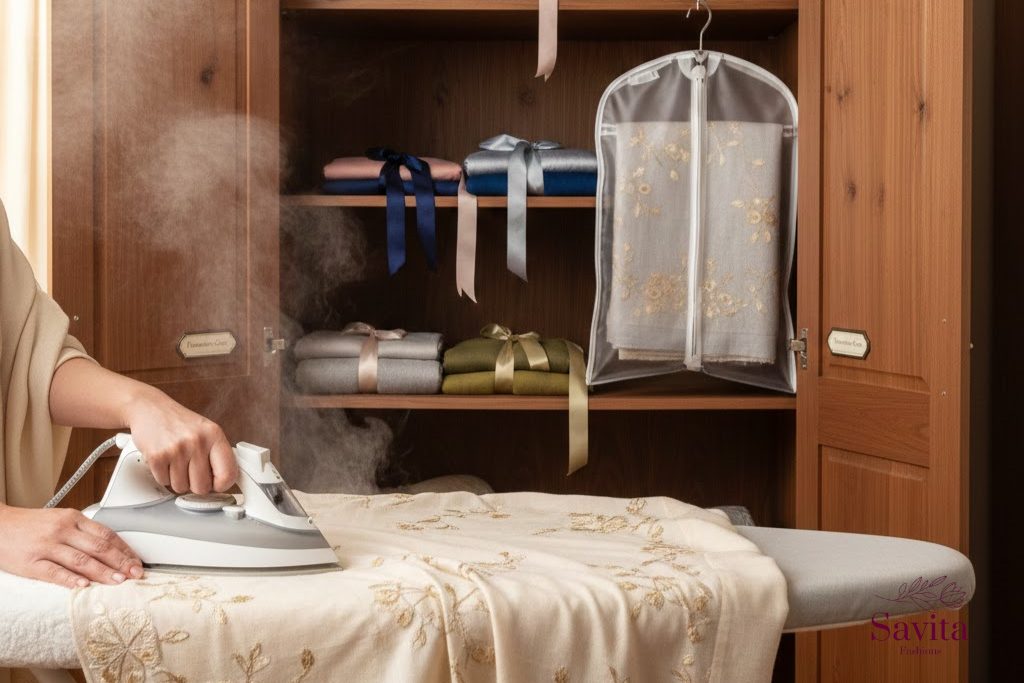
In the traditional Pashmina process, reducing heat exposure is vital for Pashmina care. Instead of direct ironing, it is highly recommended to use a steam iron from a safe distance or to place a thin cotton cloth between the iron and the shawl. Steam slowly and calmly frees the fibers of wrinkles, thus the shawl’s softness, drape, and overall elegance remain uninterrupted. The use of these delicate techniques prevents the occurrence of one of the most common and harmful Pashmina Care mistakes, thereby keeping both the artistry and natural loveliness of the fabric. What is more, by being considerate to Pashmina fibers’ fragile nature, you will be able to keep the shawl in perfect condition for many years to come.
Why Proper Heat Management Matters
Understanding the dangers linked with direct ironing will allow the owners to take up safer Pashmina care methods. Reducing the exposure to heat not only saves the shawl from the damage that can be seen but also keeps the hand-woven fabric as it is and the craftsmen of the old technique as skillful as before. Do not make this Pashmina care mistake; it is a must for anybody who would like their Pashmina to remain soft, luxurious, and classic forever.
Mistake #8: Ignoring Moth Protection
Moths not being able to cause damage on Pashmina is a very common yet costly mistake in Pashmina Care. It is the main reason for Pashmina giving such a bad image—Pashmina owners limit their attention to washing, ironing, and storage, and thus do not conserve their shawls ⎯ they lose them to insects. Moths as well as other fabric-eating insects are not just naturally attracted to animal fibers but also Pashmina, which consists of the fine undercoat of Changthangi goats, is particularly vulnerable to them.
The overlooking of moth protection may lead to even the most expensive and well-crafted shawls getting irreparably damaged through holes, weak fibers, and so on. The occurrence of moth population going up is usually not realized until large amount of damage has been done. Insect activity is not like dust or stains, it is a slow and hidden process, which leads to the risk being great but underestimated. Neglecting moth protection is a quiet but very serious in Pashmina care Mistake that can worsen the aesthetics and the strength of the fabric at the same time.
How Moths Target Handmade Pashmina
The fragile properties of Pashmina wool make it very appealing to insects. Moths are attracted to the fibers’ natural proteins and keep feeding on the wool—hence they leave little holes or sometimes fray the fabric. Handmade Pashmina with its complicated Kashmiri weaving is even more vulnerable because the delicate threads render these pests an easy access. Even a small bug-causing infestation can soon grow into a large one and the damage done in the process is often irreparable.
The wrong storage method greatly raises the risk of moth damage. Shawls made of Pashmina kept in dark, moist, or sealed-off places—especially in plastic bags or non-ventilated closets—are apt to be living places for moths as these conditions are highly conducive to their survival. Neglecting to check and safeguard your Pashmina regularly is one of the most beaten Pashmina Care Mistakes, yet it produces the most damaging long-term effects..
Safe Methods for Moth Protection
No matter what method you choose, they all give the same result: protecting Pashmina here and now even if the origin of the material is Kashmiri, which is well known for its exquisite craftsmanship. The moths will not have a chance. Still, they will not be able to smell the shawl since it will still be soft, fragrant, and delicate as before. One more thing to mention, air the shawls stored in the right way and rotate the ones that are used.
So, every time you check the shawls, make sure to look carefully for any signs of insects in order to treat them quickly, which, in turn, will be less costly for you than letting the problem grow to a bigger one. You can easily forget Pashmina Care Mistakes that keep on repeating through not incorporating moth protection to your routine as it is a major step.
Why Moth Protection Is Essential
A proper understanding of the damage that moths can cause to Pashmina indicates that thus it is necessary to practice Pashmina care pre-emptively. The neglect of moth deterrence not only endangers the appearance of holes and the loss of fibers but also reduces the quality and life span of handmade Pashmina. The natural preventative measures guarantee that the shawl will have the luxurious softness, the intricate weave, and the traditional elegance for generations, while at the same time, the Pashmina Care Mistakes that affects Pashmina the most is eliminated.
Mistake #9: Storing Pashmina While Damp
Storing Pashmina while still moist is an undervalued but very harmful Pashmina Care Mistake, which is a common practice among many Pashmina owners. These owners, attracted by the idea of putting away a recently worn or slightly cleaned shawl, may fold and put it away before the fabric is completely dry. Though this looks like a time-saving solution, even a little moisture can cause irreversible damage to the delicate fibers of the shawl if it is left inside.
This unintentional act is one of the most common ways that Pashmina period and decay that occur in households and collections across the globe. Pashmina is a natural fiber with very high absorbency, which implies that it retains moisture for a longer time than synthetic fabrics. The fiber will not be damaged but will instead support the growth of bacteria if the Pashmina is left moist. This is why it is necessary to know the importance of complete drying and thus avoid one of the most damaging Pashmina care mistakes.
Consequences of Damp Storage
One of the most immediate risks of storing damp Pashmina is fungal growth. Even minimal moisture can lead to the formation of mildew, mold, and other fungi that eat into the fibers. Once established, fungal damage is extremely difficult to remove and often irreversibly compromises both the softness and appearance of the shawl. This type of damage is a direct result of neglecting proper Pashmina care practices.
Damp storage also encourages unpleasant odors. Pashmina shawls exposed to moisture in closed storage develop musty smells that are challenging to remove. Over time, the fibers absorb these odors, reducing the overall appeal and luxury feel of the shawl. This problem is particularly common when shawls are stored in plastic or airtight containers, which trap moisture and exacerbate the effects of this Pashmina care mistake.
Another critical consequence is the weakening of fiber bonds. Moisture relaxes the fine, hand-spun fibers and disrupts the tightness of the traditional Kashmiri weave. This makes the fabric more prone to stretching, pilling, and fiber breakage. Once the fiber integrity is compromised, the shawl loses its characteristic softness and durability—an irreversible outcome of this frequently overlooked Pashmina care mistake.
How to Properly Store Pashmina
Every step in the traditional Pashmina process emphasizes dryness and airflow—from harvesting the fiber to spinning and weaving. Care practices at home must follow the same principles. Before storing, always ensure the shawl is fully dry, ideally air-dried in a well-ventilated space away from direct sunlight. Once dry, fold the shawl neatly and store it in breathable cotton or muslin covers to maintain both airflow and protection from dust or insects.
Adopting this preventive approach not only avoids the consequences of damp storage but also reinforces proper Pashmina Care Mistakes awareness, helping preserve the luxury, softness, and intricate craftsmanship of the shawl over time.
Why Avoiding Damp Storage Matters
Recognizing the hazards of storing damp Pashmina is key to long-term preservation. By prioritizing complete drying before storage, you prevent fungal growth, odor formation, and fiber weakening, all of which are common results of this Pashmina care mistake. Following these principles ensures that your Pashmina shawl remains soft, elegant, and durable, maintaining the legacy of the artisan work that created it.
Mistake #10: Ignoring Care Instructions from Authentic Brands
Disregarding care instructions from trusted Pashmina brands is a major yet often overlooked Pashmina Care Mistake. Many owners assume that generic fabric care advice applies to all shawls, regardless of their origin, or rely solely on home remedies. However, authentic Pashmina, especially handmade products from reputable brands like Savita Shawls, requires care practices that are tailored specifically to its fine fibers, delicate weave, and traditional craftsmanship. Ignoring brand-specific guidance risks irreversible damage and diminishes the luxury and longevity of your shawl.
Handmade Pashmina is not a standard woolen fabric—it is the result of meticulous hand-spinning and weaving by skilled artisans. Each piece carries unique fiber tension, dyeing methods, and weaving patterns that may react differently to washing, drying, and storage. Care instructions provided by authentic brands take these subtleties into account. Skipping or neglecting these instructions is one of the most damaging Pashmina Care Mistakes, as it exposes the shawl to methods that may weaken the fibers, distort the weave, or dull the natural sheen.
Why Trusted Brands’ Advice Matters
Brands like Savita Shawls uphold generations of Kashmiri Pashmina expertise, ensuring that each shawl meets strict standards of quality and authenticity. The care instructions they provide are specifically designed to maintain the softness, drape, and longevity of handmade Pashmina fibers. Generic advice, which might work for machine-made wool or cashmere, often does not apply to genuine Pashmina. Using standard detergents, storing improperly, or applying excessive heat can all violate the careful balance of the fabric, making this one of the most common yet preventable Pashmina care mistakes.
Following expert guidance ensures that every step—from cleaning and ironing to storage and moth protection—supports the shawl’s delicate fiber structure and handwoven patterns. This not only preserves the visual appeal and softness of the fabric but also respects the heritage and skill embedded in each handmade piece.
How Following Brand Instructions Protects Your Pashmina
Adhering to authentic Pashmina care instructions helps maintain the originality and luxury of the product. Whether it’s using pH-neutral cleansers, avoiding machine washing, storing in breathable fabrics, or minimizing heat exposure, brand-specific guidelines are designed to prevent common Pashmina Care Mistakes. They offer a reliable roadmap for preserving the texture, color, and elegance of your shawl while maximizing its lifespan.
By trusting and following the instructions of authentic brands, you also ensure that the shawl’s traditional craftsmanship is honored. This proactive approach safeguards your investment in luxury Pashmina and ensures that your shawl continues to reflect the artistry, heritage, and refinement for which it was created.
Why This Pashmina Care Mistake Should Be Avoided
Ignoring care instructions from trusted brands is a silent but significant Pashmina Care Mistake. Unlike other fabrics, handmade Pashmina demands informed and precise maintenance. By following expert guidance, you protect the shawl’s softness, longevity, and intricate handwoven structure, ensuring that it remains a timeless, luxurious, and cherished accessory for years to come.
Final Thoughts: Protecting Your Investment in Pashmina
Catching on and frantically steering clear of Pashmina Care Mistakes is a must for the ones who consider the fabric’s luxury, cultural significance, and sustainability along with its artisanal heritage. The Pashmina shawl is not just a piece of clothing but it is a proof of the Pashmina’s origin in the Himalayas, the skill of the craftsmen, and the timelessness of Kashmir’s traditional weaving. Not taking good care of it, not only a decay in its outer appearance but also a decay in the very core of the fiber through which decades of artisanship can be wiped away, takes place. To keep the Pashmina beautiful it needs to be; it will take a piece of the Pashmina’s upkeep and the gentle nature of the fabric to do that.
The whole care process of proper maintenance from Pashmina Care Mistakes washing, drying, storage, and protecting from heat, moths, and moisture to drying and so forth is very crucial. Making sure that the shawl receives the tailored care it deserves is possible by following the expert guidance of authentic brands like Savita Shawls. One of the most common mistakes in Pashmina care, overlooked instructions, results in fiber damage, fading, or distortion that is impossible to reverse.
Not only the shawl is protected, but Pashmina care also plans the cultural and ecological value with each piece. The real Pashmina is obtained from the hairy covering of the Himalayan Changthangi goats, it is hand-spun, and the wool is woven by hand—therefore, each shawl is a product that is not just sustainable but also supports the aging talent of the weaving. If you follow Pashmina Care Mistakes and Kind Maintenance Practices, you will be respectful of the tradition and at the same time your shawl will be ever luxurious, soft, and elegant.
In the end, time and care given to the right Pashmina care make every shawl a precious heirloom for lifetime. Putting yourself through the most common mistakes and then getting to know the right ways to care for your Pashmina will mean that you not only preserve the physical beauty of it but also its artistry, tradition, and heritage. Careful handling, mindful storage, and adherence to trusted advice will make your Pashmina a beloved possession, one that is capable of being passed down through generations, and which represents both luxury and timeless sophistication.
Related Products
Showing 1–9 of 805 results
-

Savita Shawls Royal Blue & Black Wool Natural Silk Box Pashmina Shawl for Women
Read more -

Savita Shawls Elegant Grey & Black Wool Natural Silk Box Pashmina Shawl for Women
Read more -

Beige & Charcoal Wool Natural Silk Box Design Pashmina Shawl for Women
Read more -

Yellow & Navy Wool Natural Silk Box Design Pashmina Shawl for Women
Read more -

Grey & Black Wool Natural Silk Box Design Pashmina Shawl for Women
Read more -

Red & Beige Wool Natural Silk Box Design Pashmina Shawl for Women
Read more -

Green & Blue Wool Natural Ombre Pashmina Shawl for Women
Read more -

Beige & Soft Pink Wool Natural Ombre Pashmina Shawl for Women
Read more -

Rust Orange & Mint Green Wool Natural Ombre Pashmina Shawl for Women
Read more