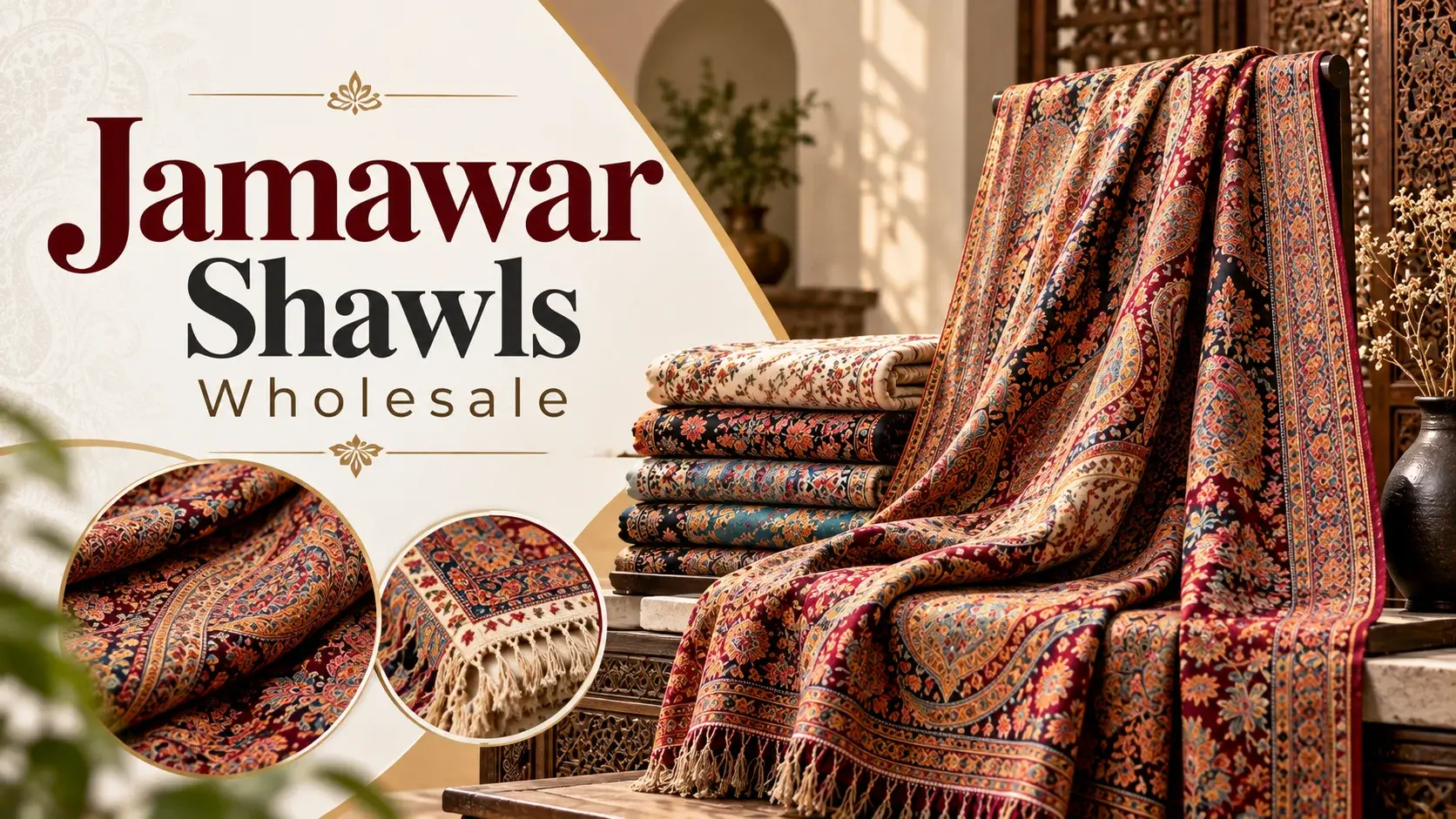
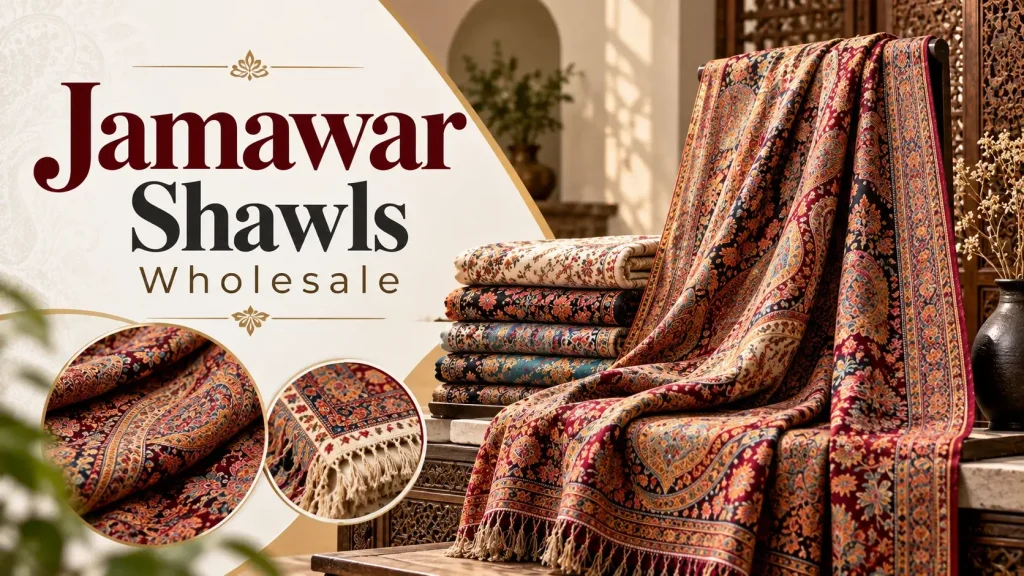
A Jamawar shawl is a densely patterned woven shawl, usually covered edge to edge in paisley and floral motifs. Jamawar shawls wholesale are now made mostly on jacquard looms in fine wool, wool-silk, silk or viscose, which gives retailers a rich, heritage-looking product at workable minimums and repeatable quality.
Key takeaways
- Jamawar describes the design and weave, not the fibre. The same pattern can be woven in wool, silk or viscose at very different prices.
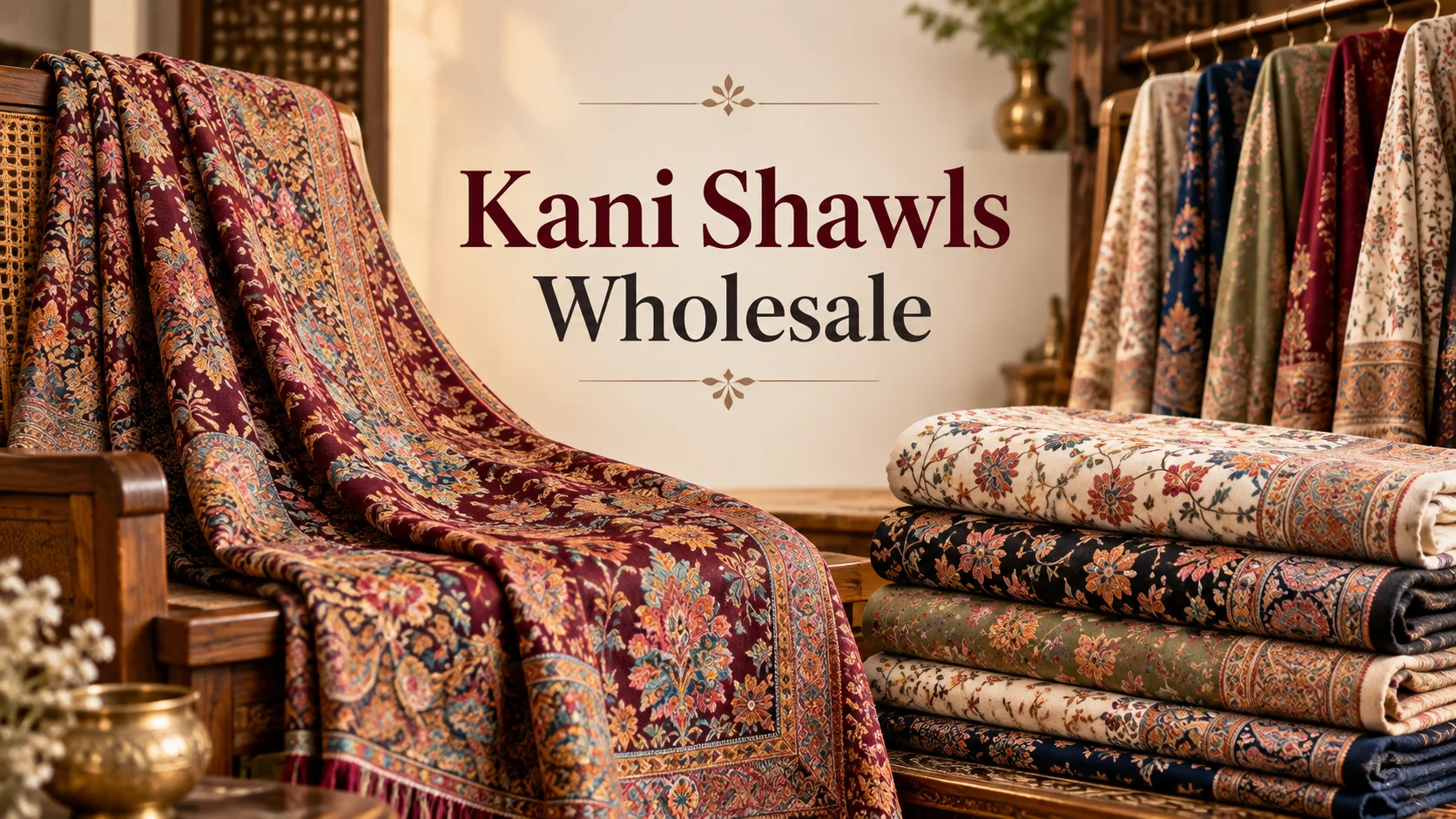
- Jamawar and Kani look related, but Jamawar is usually an all-over, multi-colour design with more sheen, while Kani is known for its tapestry-style bobbin weave.
- “Art silk” on a quote means viscose, not silk. Always ask for fibre percentages.
- Check the reverse side, colour fastness and an approved sample for every colourway before bulk production.
What is a Jamawar shawl?
A Jamawar shawl is a shawl in which a dense, multi-colour pattern is woven into the fabric across the whole surface. The name is commonly explained as jama, a robe, and war, a yard, because the cloth was first woven as yardage for robes worn at Mughal and Persian courts. Kashmir became its best known centre, and the paisley, called buta or boteh, became its signature motif.
Today the word is used in the trade for any all-over woven paisley or floral shawl. Hand-woven and hand-embroidered Jamawar still exists as a collector’s item, but almost all wholesale supply is loom woven. Our overview of Kashmiri weaving techniques explains where it sits among other Kashmiri crafts.
How is a Jamawar shawl woven?
Modern Jamawar is woven on a jacquard loom. The warp forms the ground, and several coloured weft yarns are lifted to the surface wherever the design needs them. Colours that are not showing travel along the back of the cloth as floats, which are later bound in or trimmed.
Three production routes are sold under the Jamawar name:
- Woven Jamawar: the pattern is built into the cloth on a jacquard loom. This is the standard wholesale product and the method used for jacquard stoles.
- Embroidered Jamawar: a plain shawl is covered with needlework, by hand or machine. See our embroidered shawls range.
- Printed Jamawar look: a Jamawar design is digitally printed on a plain base. It costs less but is not a woven Jamawar and should not be labelled as one.
Where is Jamawar made in India?
Wool and wool-blend Jamawar is woven largely in Punjab, around Amritsar and Ludhiana. Silk Jamawar is closely linked with the brocade looms of Varanasi, and hand-woven or hand-embroidered pieces still come from Kashmir. A manufacturer-exporter such as Savita Shawls develops the design, controls yarn and finishing, and ships the finished order from Delhi NCR.
Jamawar vs Kani shawls: what is the difference?
Both are patterned woven shawls with Kashmiri roots. The difference for a buyer lies in the look, the fibre and the price band.
| Factor | Jamawar | Kani |
|---|---|---|
| What the name refers to | An all-over design style | A bobbin weaving technique |
| Pattern layout | Edge to edge and dense | Borders, panels or all-over |
| Surface | Smooth, often with sheen | Matte, tapestry-like twill |
| Common fibres | Wool-silk, silk, fine wool, viscose | Pashmina, fine wool |
| Main use | Weddings, festive wear, gifting | Winter luxury and heritage ranges |
Many retailers stock both. Jamawar brings colour and sheen for occasion wear, and Kani shawls cover the classic winter buyer.
Which fibre should you choose for wholesale Jamawar shawls?
Fibre decides the price point, the drape and the season the shawl sells in.
| Fibre | Look and feel | Best for |
|---|---|---|
| Fine wool or merino | Warm, soft, matte | Winter ranges in cold markets |
| Wool-silk blend | Warm with a soft sheen | Premium boutiques and wedding wear |
| Pure silk | Bright colour, strong sheen, light | Festive and bridal collections |
| Viscose or modal | Smooth, light, silk-like | Gifting, warm climates, price-led retail |
| Pashmina or cashmere blend | Very soft, light, warm | Luxury stores |
For more detail on individual fibres, read our guides to merino wool shawls, wool-silk blend stoles and viscose stoles.
What affects the wholesale price of Jamawar shawls?
Five factors explain most of the gap between two Jamawar quotes.
- Fibre. Silk and pashmina blends cost several times more than viscose in the same design.
- Number of weft colours. A seven-colour Jamawar uses more yarn and weaves more slowly than a three-colour one.
- Weave density. More picks per inch give a sharper pattern and a heavier cloth. Our GSM and fabric weight guide shows how to specify weight.
- Design development. A new pattern needs a weave file and a sample run, which some mills charge for once.
- Finishing. Zari yarn, hand-knotted fringes, woven labels and gift boxes add to the base price.
What should buyers check before a bulk Jamawar order?
Check these seven points on the sample before you approve production.
- Production method. Confirm in writing that the shawl is woven, not printed or embroidered.
- Fibre percentages. “Art silk” means viscose. Ask for a composition certificate or test report for anything sold as silk, wool or pashmina.
- Reverse side. Long loose floats catch on jewellery. Ask for floats to be bound in or trimmed.
- Colour fastness. Jamawar places many strong colours side by side. Test for rubbing and washing, and ask about dye compliance if you sell in Europe. Our Oeko-Tex guide covers this.
- Size and weight. Common trade sizes are 100 x 200 cm for shawls and 70 x 200 cm for stoles. Fix size, GSM and fringe length.
- Sample per colourway. Approve each colour combination, because the same design reads differently in each. Here is how to request samples from a shawl manufacturer.
- Packing and paperwork. Agree labels, export packaging and the HSN code used on the invoice.
MOQ and lead time for Jamawar shawls at Savita Shawls
| Term | Savita Shawls standard |
|---|---|
| MOQ | 100 pieces per design, lower on some stock styles |
| Stock styles with your label | 10 to 15 working days |
| Custom woven designs | 45 to 60 working days after sample approval |
| Samples | Delivered internationally in 7 to 10 working days |
| Payment | 30 to 50 percent advance, balance before dispatch |
| Shipping | FOB, CIF or DDP with export documents |
Every order passes raw material, in-line and pre-shipment checks. You can read more about how Savita Shawls ensures quality.
Which Jamawar designs and colours should a retailer stock?
Start with the classics and add a small trend-led layer.
- Core colours: maroon, black, navy, bottle green and ivory grounds with multi-colour paisley are the traditional choices.
- Wedding tones: gold, wine and pastel grounds with zari suit bridal and groom wear, including men’s shawls.
- Formats: carry both shawls and stoles so customers can choose by price.
Our guides to shawl designs that sell fast and shawl trends for 2026 show what retailers are ordering now.
Where do Jamawar shawls sell best?
Jamawar is an occasion product. It sells strongest in three channels:
- Wedding and festive retail: paired with sherwanis, sarees and lehengas. See our wedding shawls range.
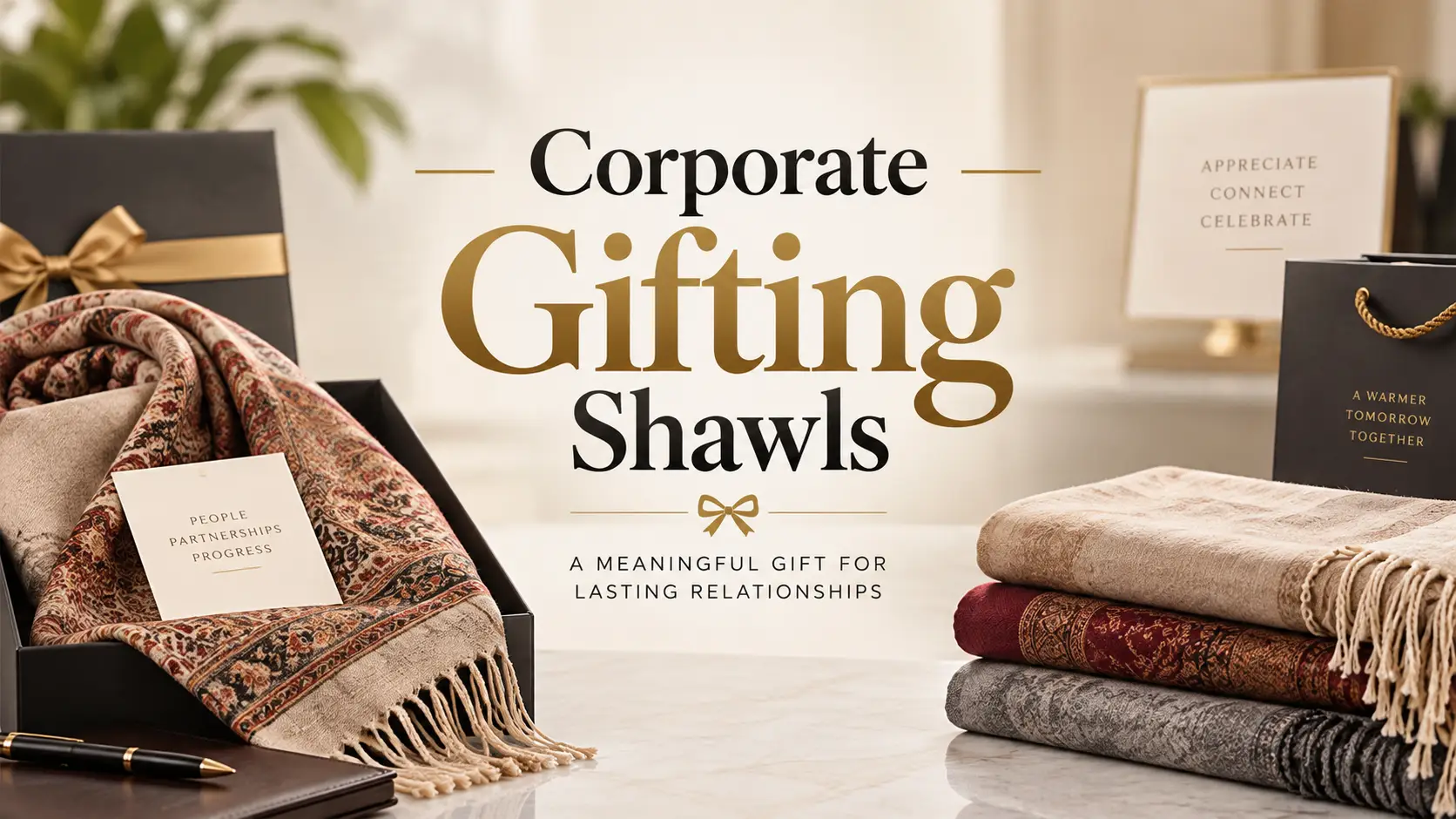
- Corporate and festive gifting: boxed Jamawar stoles work well as Diwali and year-end gifts. Read about corporate gifting shawls in bulk.
- Export boutiques: stores serving South Asian communities in the UK, the Gulf, North America and Australia.
Order Jamawar shawls wholesale from Savita Shawls
Savita Shawls has manufactured shawls and stoles in Gurgaon since 1984 and exports to more than 40 countries. View our Jamawar shawls collection, ask about private label manufacturing, or request a bulk quote with your fibre, size and quantity.
Frequently asked questions
What does Jamawar mean?
Jamawar is commonly explained as jama, meaning robe, and war, meaning yard. It first described patterned cloth woven as yardage for robes and now describes any shawl with a dense all-over woven design.
Is a Jamawar shawl the same as a pashmina shawl?
No. Jamawar is a design and weave style, while pashmina is a fibre. A Jamawar shawl can be woven in pashmina, but most wholesale Jamawar is wool, wool-silk, silk or viscose.
Is Jamawar handmade or machine made?
Most Jamawar sold wholesale is woven on jacquard looms. Hand-woven and hand-embroidered Jamawar is still made in small numbers and sold by the piece at luxury prices.
Which fabric is best for Jamawar shawls?
It depends on the market. Wool-silk suits premium wedding wear, fine wool suits cold climates, and viscose or modal suits gifting and price-led retail.
What is the minimum order for Jamawar shawls wholesale?
Savita Shawls starts at 100 pieces per design for custom woven Jamawar, with lower quantities available on some stock styles.
Can Jamawar shawls be made in custom designs and colours?
Yes. You can supply a design reference or artwork and choose the ground and weft colours. A pre-production sample is woven for approval before the bulk order starts.
How should Jamawar shawls be cared for?
Dry cleaning is the safest option for wool, silk and blended Jamawar. Store the shawl folded, away from damp, and keep it clear of rough jewellery that can pull the weave.