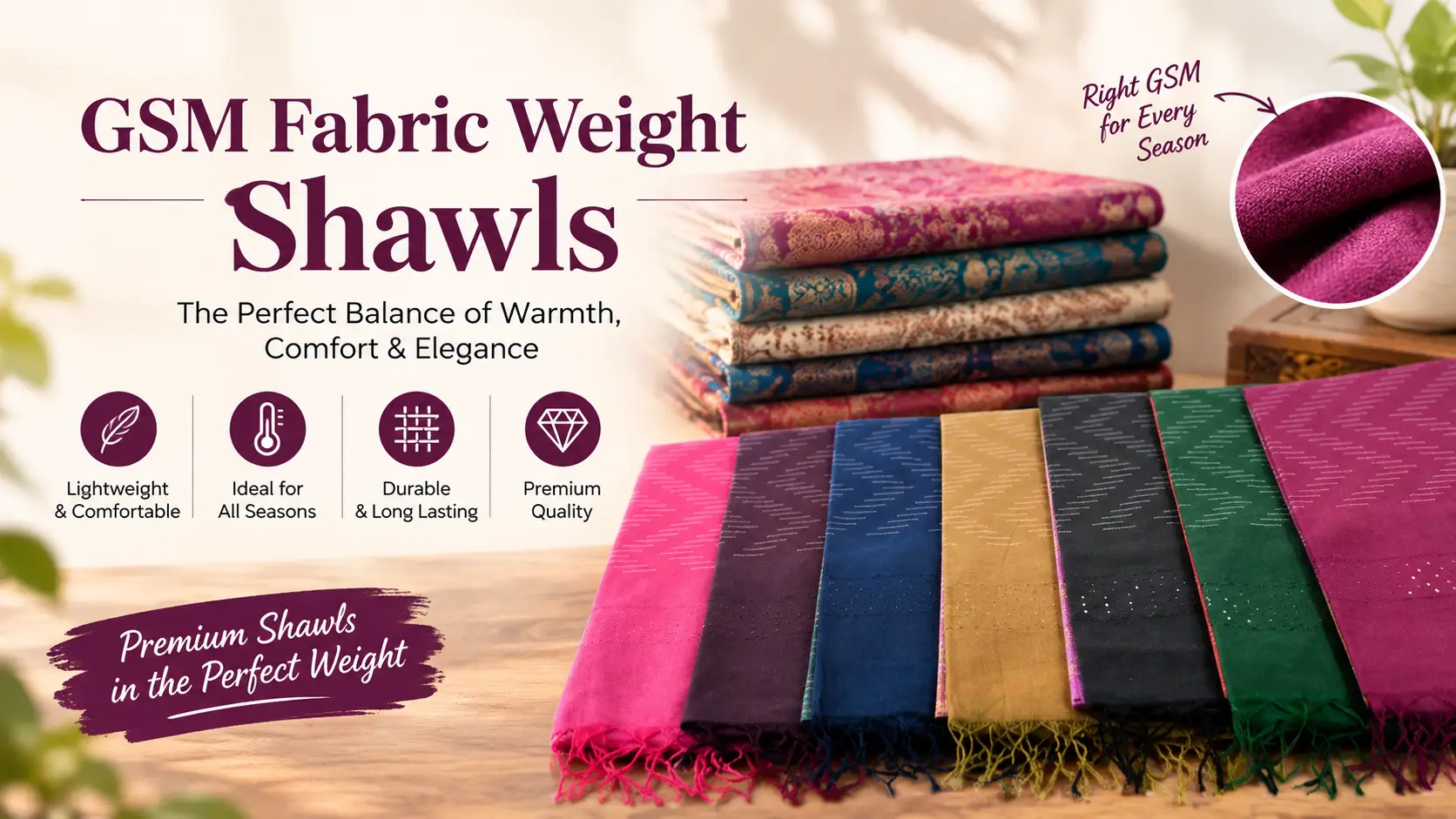
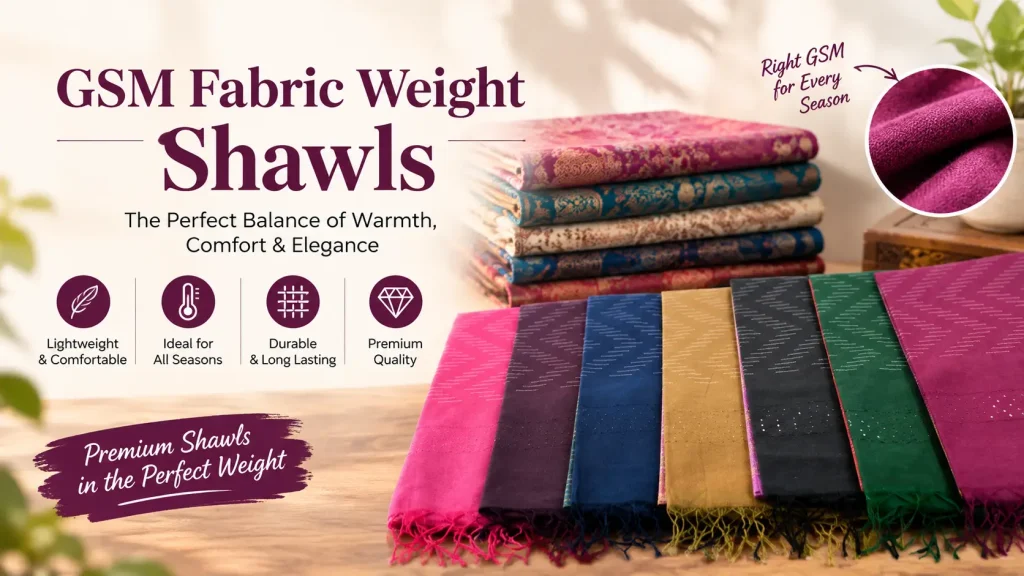
GSM (grams per square metre) measures a fabric’s weight and density, and it’s one of the most reliable specifications for comparing shawl quality and matching a product to the right season and use case. Lightweight shawls for warm-weather or year-round styling typically fall in the 70-120 GSM range, mid-weight options sit around 120-180 GSM, and heavier winter shawls often exceed 180-250+ GSM. Sourcing by GSM specification, rather than relying on a supplier’s subjective description of “light” or “heavy,” gives retail buyers a consistent way to compare products across suppliers and repeat orders.
Getting GSM wrong is a common, avoidable sourcing mistake. A shawl that’s too light for a winter collection or too heavy for a summer accessory line creates return and dissatisfaction issues that are easy to prevent with the right specification upfront.
What GSM Actually Measures
GSM stands for grams per square metre, a standard textile industry measurement of fabric weight and density. A higher GSM generally means:
- A denser, thicker weave
- More warmth retention, relevant for wool and Pashmina winter products
- More structure and drape weight, which affects how a shawl falls when worn
- Typically higher material cost, since more fibre is used per unit of fabric
A lower GSM generally means a lighter, more breathable fabric suited to warm-weather wear or year-round accessory styling rather than functional winter warmth.
GSM is not the same as fibre quality. A low-GSM Pashmina can still be extremely high quality and soft, while a high-GSM synthetic blend can be heavy without being particularly premium. GSM tells you about weight and density, not fibre origin or craftsmanship, which is why it should be considered alongside fibre type rather than as a standalone quality indicator.
GSM Ranges by Shawl Category
| GSM Range | Category | Typical Use Case |
|---|---|---|
| 70-120 GSM | Lightweight stoles and scarves | Year-round styling, warm climates, summer accessory lines |
| 120-180 GSM | Mid-weight shawls | Transitional seasons, versatile retail stock, most Pashmina blends |
| 180-250+ GSM | Heavyweight winter shawls | Cold-climate retail, functional warmth-focused winter collections |
These ranges vary somewhat by fibre type. A pure Pashmina shawl at 100 GSM can feel warmer than a wool-blend at the same weight due to fibre insulation properties, so GSM should always be considered alongside fabric composition rather than in isolation.
Matching GSM to Fabric Type
Different fibres carry different practical GSM ranges based on how they’re typically woven and used:
- Viscose and modal stoles: usually lighter weight, often in the 70-100 GSM range, prized for drape and breathability; see our guide to viscose stoles for sourcing details
- Silk stoles: similarly lightweight, typically 60-100 GSM, valued for sheen and softness rather than warmth; see our silk stoles manufacturer guide
- Cotton stoles: generally light to mid-weight, breathable and suited to warm climates; see our cotton stoles wholesale guide
- Pashmina and cashmere: variable, from very light (70-100 GSM) for summer-weight Pashmina to heavier (150-200+ GSM) for winter-focused products
- Wool and wool-blend shawls: typically the heaviest category, often 180-300+ GSM for functional winter warmth; see our woolen stoles bulk supplier guide
- Wool-silk blends: positioned as a mid-weight compromise between silk’s lightness and wool’s warmth; our comparison of wool-silk blend stoles vs. cashmere covers this trade-off in detail
Seasonal Sourcing Strategy Using GSM
Retail buyers planning seasonal collections should structure sourcing around GSM ranges rather than fabric type alone, since this ensures the finished catalogue actually performs for the intended season:
Summer and year-round accessory collections: prioritize 70-120 GSM viscose, silk, cotton, or lightweight Pashmina blends. See our guide to lightweight shawls for women for styling and sourcing angles specific to this range.
Transitional collections (spring/autumn): 120-180 GSM options offer versatility without the bulk of a full winter product, suitable for layering in moderate climates.
Winter and cold-climate collections: 180-250+ GSM wool, wool-blend, or heavier Pashmina products, prioritizing functional warmth. Our guide to winter Pashmina shawls covers this category specifically.
Why GSM Consistency Matters for Repeat Orders
Beyond initial product selection, GSM specification matters significantly for maintaining consistency across repeat bulk orders. Without a documented GSM specification, successive production runs (even from the same supplier) can drift slightly in weight due to yarn batch variation or weaving tension differences. This creates two problems for retail buyers:
- Customer-facing inconsistency, where repeat customers notice a “lighter” or “heavier” batch compared to a previous purchase
- Retail listing accuracy issues, if product descriptions specify a GSM or weight range that a later batch doesn’t match
Always request GSM specification in writing as part of your purchase order, and consider requesting a pre-shipment sample check against the agreed specification for large repeat orders, particularly when working with printed stoles or other high-volume product lines where batch consistency across a season matters most.
How to Verify GSM Before Placing a Bulk Order
- Request the GSM specification in writing as part of your product sheet or purchase order, not just a general “light,” “medium,” or “heavy” description
- Ask for a sample swatch and, where precision matters (private label or repeat retail lines), consider an independent lab test for GSM verification
- Compare GSM across suppliers for the same fabric type, since this is one of the more objective ways to compare quality and value between competing quotes
- Factor GSM into shipping cost calculations, since heavier fabric shipments (particularly for large winter wool orders) affect freight weight and cost more directly than buyers sometimes anticipate
GSM and Quality Control
GSM specification should be part of the broader quality control conversation with your supplier, alongside the checkpoints covered in our guide to the shawl manufacturing process. A supplier with a documented quality management system, as discussed in our guide to ISO certified shawl factories, is generally better positioned to maintain consistent GSM across production runs than one relying on informal, undocumented processes.
How Savita Shawls Documents Fabric Weight Specifications
Savita Shawls provides GSM specifications across its Pashmina, wool, viscose, silk, and cotton product lines, supporting accurate seasonal collection planning for retail and wholesale buyers. Browse our summer scarves manufacturer and winter scarves manufacturer categories to explore products organized by seasonal weight positioning.
Frequently Asked Questions
What GSM is considered lightweight for a shawl or stole?
Lightweight typically falls in the 70-120 GSM range, suitable for year-round accessory styling and warm-climate retail collections. Fabrics like viscose, silk, and lightweight Pashmina commonly fall in this range.
What GSM is best for a winter-focused shawl collection?
Winter shawls intended for functional warmth generally start around 180 GSM and can exceed 250 GSM for heavier wool and wool-blend products, though pure Pashmina can provide warmth at somewhat lower GSM due to the fibre’s natural insulation properties.
Does higher GSM always mean better quality?
No. GSM measures weight and density, not fibre quality or craftsmanship. A lightweight, low-GSM pure Pashmina shawl can be considerably higher quality than a heavier synthetic-blend product at a higher GSM.
Can GSM vary between production batches from the same supplier?
Yes, without a clearly documented specification and consistent quality control, GSM can drift slightly between batches due to yarn or weaving variation. Requesting a written GSM specification and periodic sample verification helps manage this for repeat orders.
How does GSM affect shipping costs for bulk orders?
Heavier fabrics (higher GSM) increase shipment weight, which directly affects freight costs, particularly for large wool or heavyweight winter shawl orders shipped by air or sea freight.
Should I choose GSM based on fabric type or season first?
Season should generally guide your target GSM range first, since that determines the functional requirement (warmth vs. breathability), and fabric type selection follows from there based on which fibre best delivers that weight and feel at your target price point.
Planning a seasonal collection and need help specifying the right fabric weight? Get a wholesale quote from Savita Shawls and request GSM specifications across our product range.