I’ve been manufacturing and exporting stoles and scarves from our Gurgaon facility since 1984, and the single question I get most from serious buyers isn’t about colour or print – it’s about fabric. Specifically: what do I stock if I want a stole that looks and feels premium, sells through at a healthy margin, and that I can reorder next season without the piece changing on me?
For a large share of retail and private-label ranges, the answer is a wool-silk blend stole, not cashmere. This guide lays out exactly why, where cashmere still earns its place, what the fabric costs to land, and how to spec an order so you get what you actually paid for.
What is a wool-silk blend stole?
A wool-silk blend stole is a stole woven from a mix of wool and silk, most commonly in an 85% wool / 15% silk ratio. The wool delivers warmth, body and structure; the silk adds drape, a soft sheen and a smoother hand-feel. The result is a fabric that reads as premium without the cost or fragility of pure cashmere.
A few clean facts worth knowing before you compare anything:
- Wool fineness is measured in microns. Merino grades typically run from about 15 microns (superfine) to around 24 microns (medium), and finer wool feels softer against the skin.
- Cashmere fibre is finer still, generally around 14–19 microns, which is why it feels light for its warmth.
- Silk is not measured in microns but in momme (weight) and denier (filament thickness); its role in a blend is drape and lustre, not warmth.
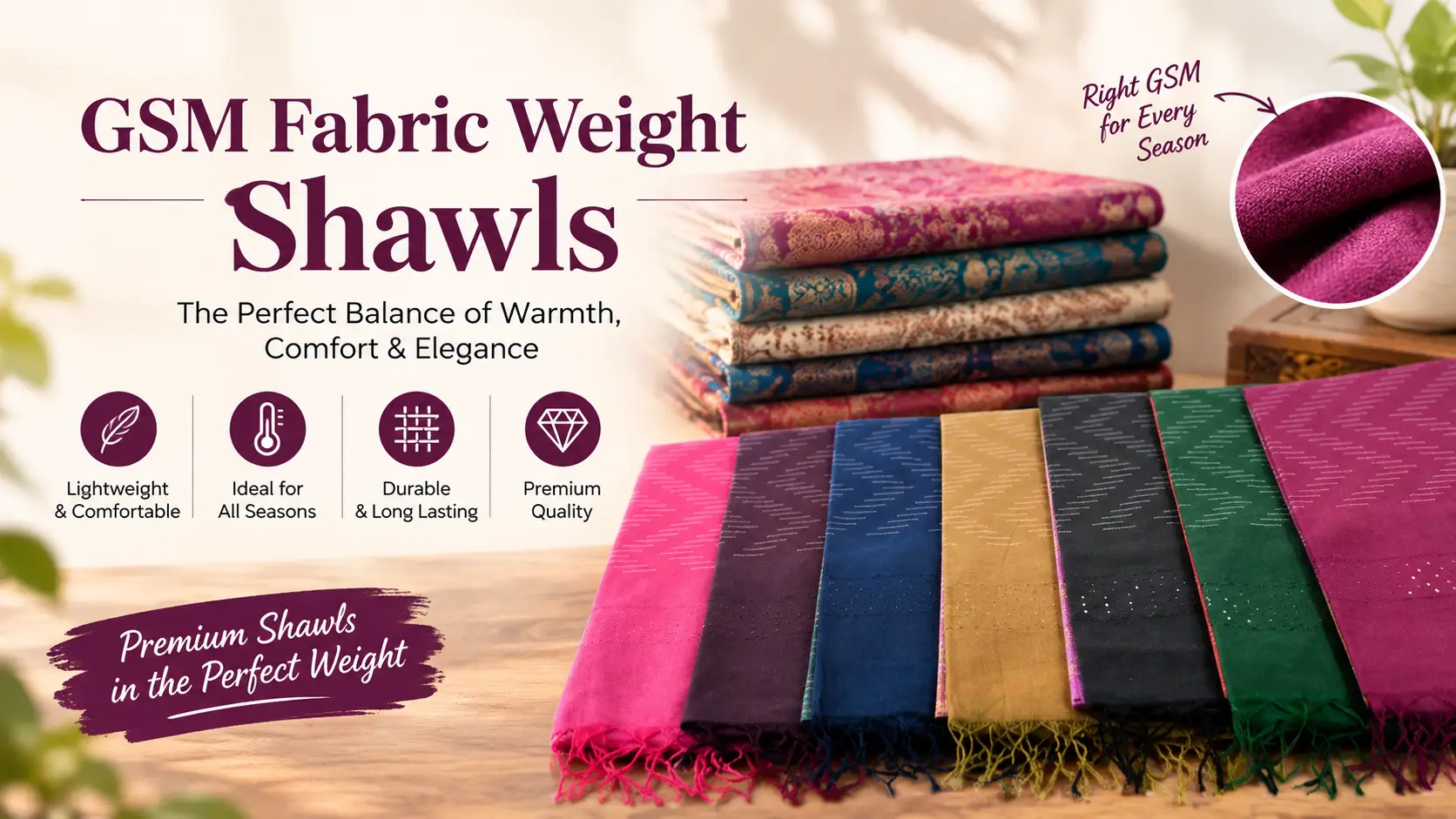
- Stole weight is measured in GSM (grams per square metre). Lightweight, drapey stoles commonly sit in the lower GSM range and heavier, warmer ones higher; ours run at 150 GSM.
- A stole and a shawl are not the same width. Stoles are typically narrower (often around 70 cm wide), shawls wider. Our fine wool stoles are 70×200 cms in size.
Wool-silk vs cashmere vs pure wool: how do they compare?
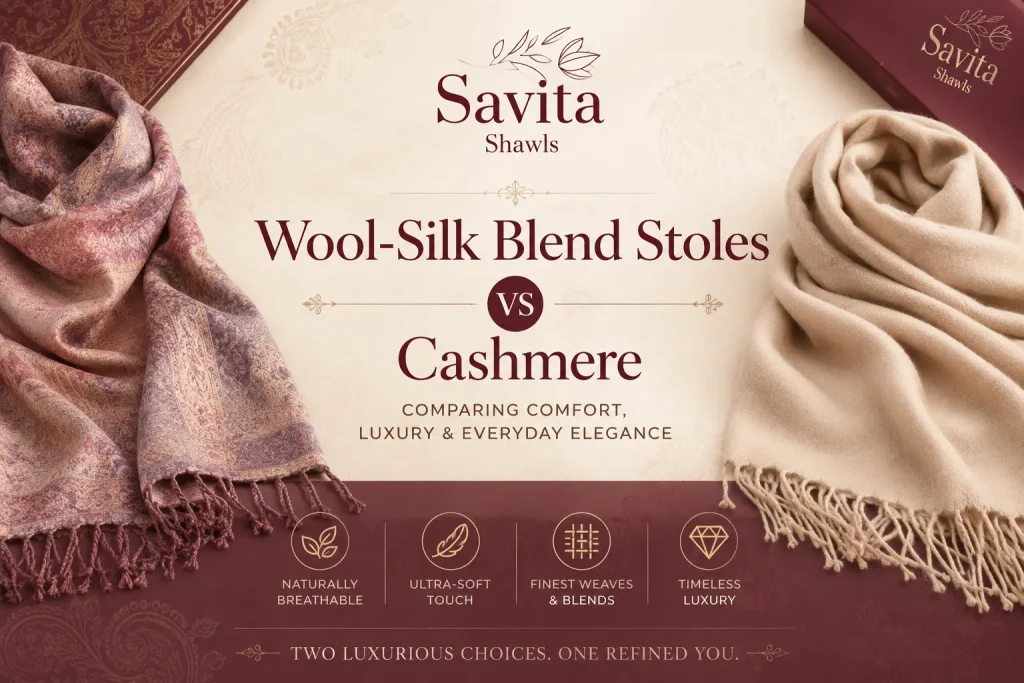
When a buyer comes to me for a “premium wool stole,” they’re almost always weighing three options: pure wool, a wool-silk blend (our fine wool is 85% wool / 15% silk), and cashmere. Each behaves differently on the shop floor and on your margin sheet.
| Pure wool | Wool-silk blend (85/15) | Cashmere | |
|---|---|---|---|
| Warmth | High | High | High (lightest for the warmth) |
| Drape & sheen | Matte, structured | Soft drape, subtle sheen | Very soft, fluid |
| Hand-feel | Can feel dry/coarse | Smooth, refined | Plushest |
| Durability for retail | Strong | Strong | Delicate, pills more easily |
| Piece-to-piece consistency | High (machine-woven) | High (machine-woven) | Variable; fibre-supply dependent |
| Retail margin headroom | Good | Strong | Tight (high cost in) |
| Best for | Everyday warm stoles | Premium look at an accessible cost | Top-tier luxury positioning |
The table is the short version. Here’s what sits underneath it.
What does the silk actually do in an 85/15 blend?
Silk is the reason a wool-silk stole reads as “premium” rather than “warm but plain.” Three things happen when you blend 15% silk into a wool stole.
Drape
The cloth falls and folds instead of standing stiff, which is what gives a stole that expensive, fluid look over the shoulder. Drape is the first thing a customer notices when they pick a stole off the rack and let it hang.
Sheen
Silk adds a subtle lustre that catches light, so colours look richer and woven or printed patterns look sharper than they do on matte pure wool. The same dye lot simply reads more expensive on a wool-silk ground.
Hand-feel
Silk takes the dry edge off wool, so the stole feels smooth against the neck — the test every buyer’s end customer runs without thinking, by rubbing the fabric between two fingers.
The wool, meanwhile, is still doing the heavy lifting: warmth, body, and the structure that lets a stole hold its shape. At 85% it stays a genuine wool product, not a silk one. That balance — wool’s warmth and structure, silk’s drape and sheen — is why the 85/15 ratio has become a workhorse premium fabric in our fine wool stole collection (85% wool / 15% silk), and why it outsells our pure-wool lines for buyers who want a step up without stepping into cashmere money.
When is cashmere worth it — and when does it hurt your margins?
I won’t pretend cashmere isn’t special. If your positioning is genuinely top-of-market luxury and your customer expects to pay for it, cashmere belongs in your range. But the trade-offs are real, and they fall on the buyer.
Where cashmere wins
Cashmere fibre is finer than sheep’s wool, generally around 14–19 microns, which is why it feels lighter and softer for the same warmth. For a flagship luxury SKU where the customer is paying a premium and expects the plushest possible hand, nothing else quite matches it.
Where cashmere quietly costs you
Cashmere is expensive to buy in, which compresses your retail margin or pushes your shelf price past what your customer will pay. It’s more delicate — cashmere pills more readily, so you field more returns and complaints from end customers who expected an heirloom and got bobbling after a few wears. And cashmere supply and price swing with the raw-fibre market, so the cost and even the exact hand of your reorder can shift season to season.
For a buyer building a stockable, reorderable accessory range, that last point matters most. You want the stole you reorder in spring to be the same stole your customers bought in autumn. A wool-silk blend gives you that stability; cashmere often doesn’t. If you want the fibres set side by side, see our breakdown of pashmina vs cashmere vs wool vs acrylic.
Why does machine-woven matter for wholesale buyers?
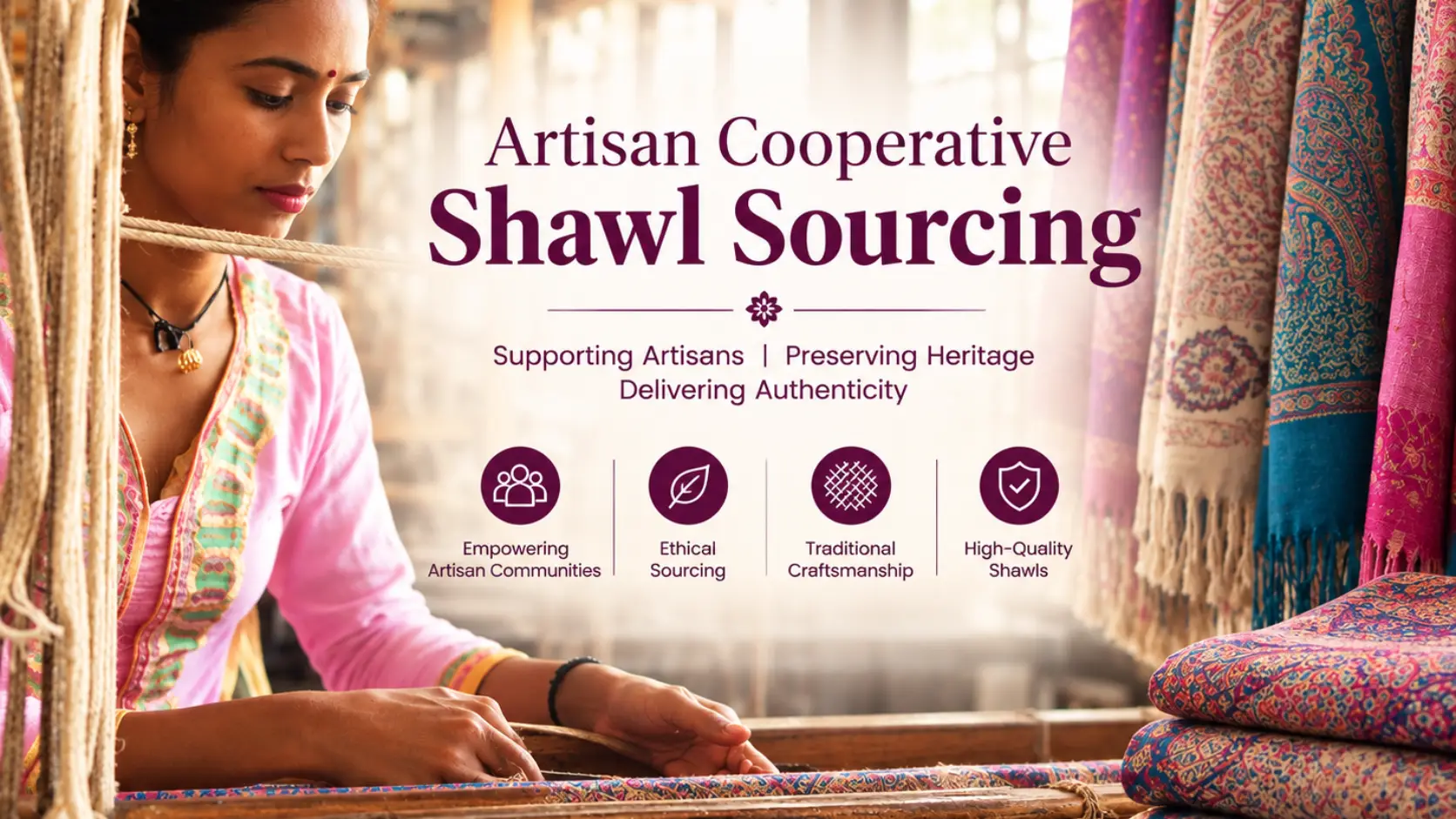
Every stole we make is machine-woven, and I want to be straight about what that means, because it’s central to why these stoles work for wholesale.
Machine weaving means piece-to-piece consistency. When you order 200 wool-silk stoles, all 200 come out the same weight, the same size, the same hand. Reorder next season and you get the same product again. For retail, where every SKU has to match its photo and its last delivery, that repeatability is worth more than the romance of a one-of-a-kind handwoven piece – because a one-of-a-kind piece is, by definition, one you can’t reorder.
Machine production also means volume capacity and faster lead times, so you can stock to a buying calendar instead of waiting on artisan throughput, and a lower, more predictable cost that leaves real margin headroom at retail. None of that requires overstating what the product is. It’s a fine wool-silk stole, woven for consistency — and for most buyers, that’s the point.
If you want the full picture on sourcing decisions like MOQ, sampling and reorders, I’ve laid it out in our guide to buying wholesale shawls for retailers.
What do wool-silk stoles cost to land?
Your shelf margin is decided long before the stole reaches your store – at the point you calculate landed cost. Don’t compare a wool-silk quote to a cashmere quote on unit price alone; compare them landed, in your currency, at your door.
Landed cost on an imported stole order is built from these components:
- Unit price – the per-piece wholesale price at your order quantity. Price breaks improve as you cross MOQ thresholds; our stock MOQ is 25 pieces, with better pricing at higher volumes.
- Freight – air for speed and small quantities, sea for cost on larger orders. Sea is cheaper per piece but adds weeks.
- Import duty – varies by destination country and HS code; confirm the rate for woven wool/silk scarves and stoles in your market.
- Clearance, handling and last-mile – customs brokerage, port handling and inland delivery.
- Sampling and freight on samples – a small upfront cost that prevents an expensive bulk mistake.
Here’s the practical point most exporters won’t tell you: because a wool-silk blend buys in well below cashmere, its landed cost leaves materially more retail margin at the same shelf price — or lets you hit a sharper shelf price at the same margin. That margin headroom is the quiet reason wool-silk outsells cashmere across a lot of the ranges I supply. For more on setting retail prices off your landed cost, see our guide to pricing shawls for retail.
How do you verify fibre content when stock arrives?
State this clearly in your PO and check it on delivery — it protects both your margin and your labelling claims in regulated markets.
- Ask for a fibre-content declaration in writing (e.g. 85% wool / 15% silk) tied to the order, not a generic spec sheet.
- Request lab test certification where your market requires verified content for labelling; an accredited textile lab can confirm the blend.
- Run a burn test on a swatch as a quick in-house indicator: wool and silk are protein fibres that smell of burning hair and leave a crushable ash, while synthetics melt into a hard bead. It’s an indicator, not a substitute for lab certification.
- Confirm care and certification labelling — fibre-content labelling rules and certifications such as REACH-compliant differ by destination; agree who supplies compliant labels before production.
Doing this once, properly, removes the single most common dispute in textile importing.
How should you spec a wool-silk stole order?
Most disappointing orders aren’t bad manufacturing; they’re vague specs. Before you place a wool-silk stole order with anyone, lock these down in writing:
- Fibre content – confirmed in writing (e.g. 85% wool / 15% silk).
- GSM / weight – 150 GSM, this drives whether the stole reads light-and-drapey or substantial-and-warm.
- Finished size – 70×200 cms: stole, not shawl, dimensions if a stole is what you’re selling.
- Weave / construction – plain, twill or jacquard, and whether pattern is woven-in or printed.
- Colour range & dye-lot policy – how close repeat colours must match across reorders.
- Finishing – fringe type (twisted, knotted, cut), edge finish, softening wash.
- MOQ & price breaks – our stock MOQ is 25 pieces; confirm price at your real order quantity.
- Lead time – 15 days for stock vs custom.
- Certifications – ask for REACH-Compliant if you’re importing into a regulated market.
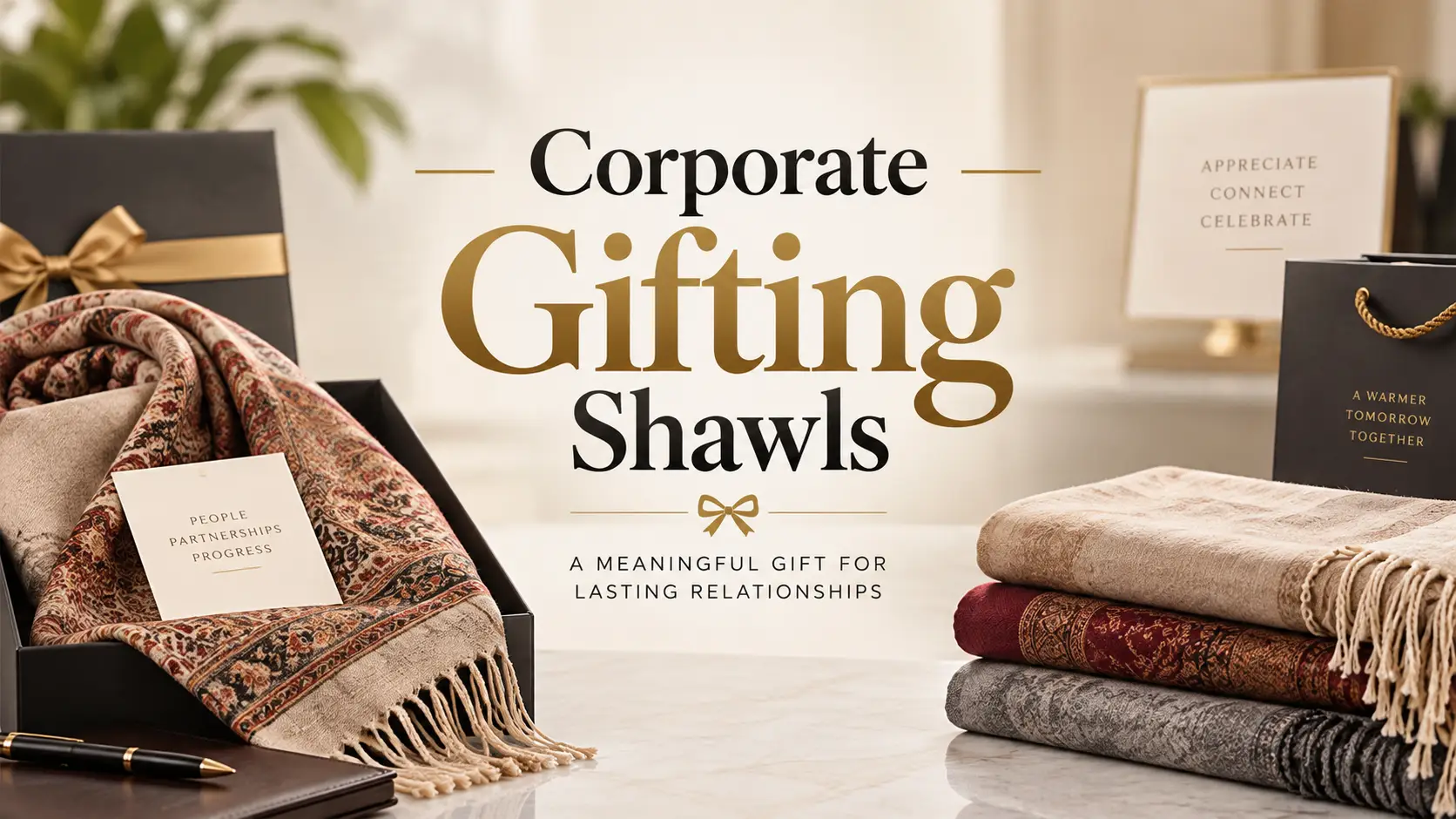
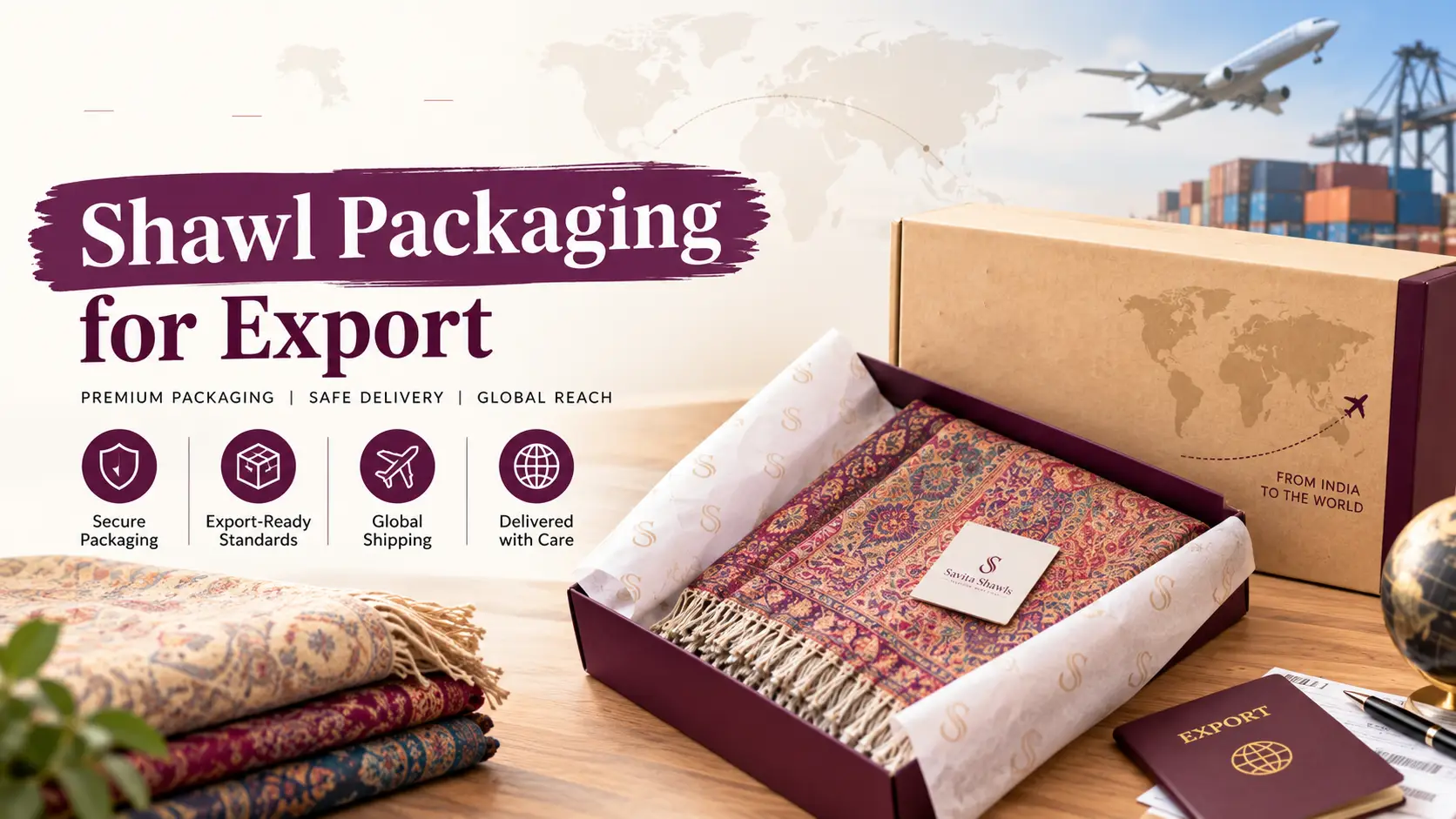
- Private-label options – woven labels, branded packaging, custom hangtags if you’re building your own range.
Run that list, and you remove almost every reason an order arrives wrong.
Should you stock wool-silk or modal?
Not every range wants warmth. If you’re stocking for spring/summer or for warmer climates, a modal stole is often the better call — modal drapes beautifully, feels cool and silky, and sits at a friendly price point for high-turn accessory walls. Think of it this way: wool-silk is your premium autumn/winter fabric, and modal is your fluid, year-round one. Many of our buyers stock both. You can see the range in our modal scarves and stoles collection.
When should you place your wool-silk order?
One practical point exporters rarely mention. Wool-silk stoles are an autumn/winter product, and wholesale buyers source three to six months ahead of the selling season. The buyers who get the best colours, the best price breaks and the cleanest lead times are the ones who place wool-silk orders in spring and early summer, while they’re planning their AW range — not in the rush of late autumn when production is already booked. If fine wool stoles are anchoring your winter accessory wall, get your sampling done, and you can order year-round.
The bottom line
For most wholesale buyers building a premium-but-sellable stole range, an 85/15 wool-silk blend is the sweet spot: the warmth and structure of wool, the drape and sheen of silk, machine-woven for the consistency and reorder reliability that retail actually depends on — at a wholesale cost that leaves you real margin. Cashmere is the right call only when your positioning is genuinely top-of-market and your customer is paying for it.
If you’d like to judge the fabric the way buyers actually do — by feel — the fastest next step is to request a swatch card and a wholesale quote. Hold the 85/15 blend in your hand, check the weight and the hand against your range, and we’ll quote at your real order quantity.
Frequently Asked Question
What is a wool-silk blend stole?
A wool-silk blend stole is a stole woven from a mix of wool and silk, most commonly 85% wool and 15% silk. The wool provides warmth and structure while the silk adds drape, a subtle sheen and a smoother hand-feel, giving a premium look at a more accessible price than cashmere.
Is a wool-silk blend warmer than cashmere?
Cashmere is the lightest fabric for a given level of warmth because its fibre is finer than standard wool, typically around 14 to 19 microns. A wool-silk blend is comparably warm but heavier and more durable, and it costs significantly less to buy in at wholesale, which is why many retailers prefer it for stockable ranges.
What is the minimum order quantity for wool-silk stoles?
Our stock MOQ for fine wool (85% wool / 15% silk) stoles is 25 pieces. Custom designs and private-label runs may carry a different minimum; confirm pricing at your actual order quantity.
Are machine-woven stoles lower quality than handwoven ones?
No, they are built for a different purpose. Machine weaving delivers piece-to-piece consistency, reliable reorders, larger volume capacity and faster lead times, all of which matter more to a wholesale buyer stocking repeatable SKUs than the one-of-a-kind variability of handwoven pieces.
How do I verify the fibre content of a wool-silk stole?
Request a written fibre-content declaration tied to your order, ask for accredited lab certification where your market requires it for labelling, and run a burn test on a swatch as a quick indicator: wool and silk smell of burning hair and leave crushable ash, while synthetics melt into a hard bead.
Wool-silk or modal — which should I stock?
Stock wool-silk stoles for premium autumn/winter ranges where warmth and a luxe hand matter, and modal stoles for lighter, fluid, year-round or warm-climate ranges at a friendlier price point. Many buyers carry both to cover different seasons and price tiers.
Can I order wool-silk stoles under my own private label?
Yes. We offer private-label and OEM production, including woven labels, custom hangtags and branded packaging, so you can build your own wool-silk stole range. Request a swatch card and quote to start.