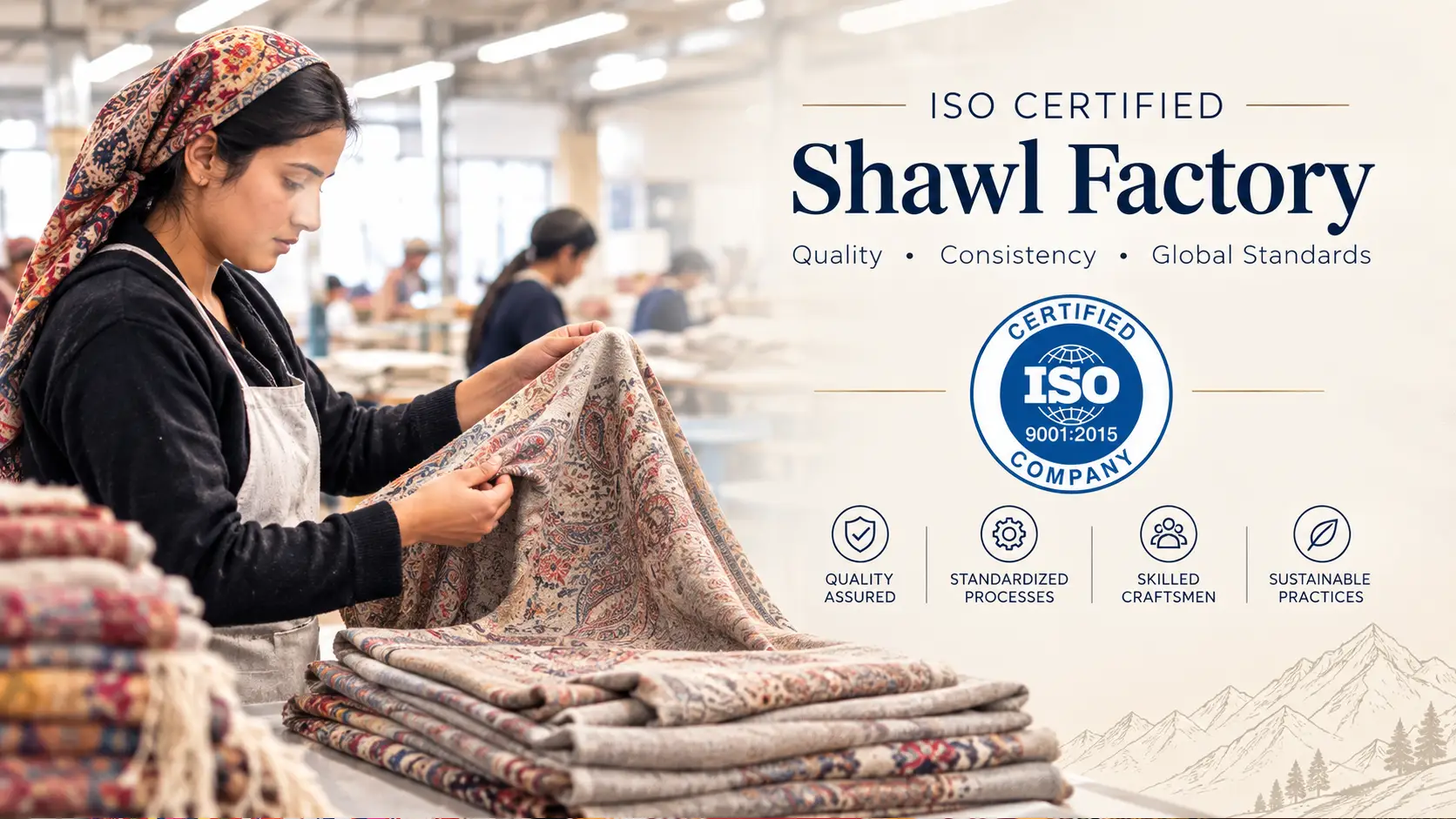
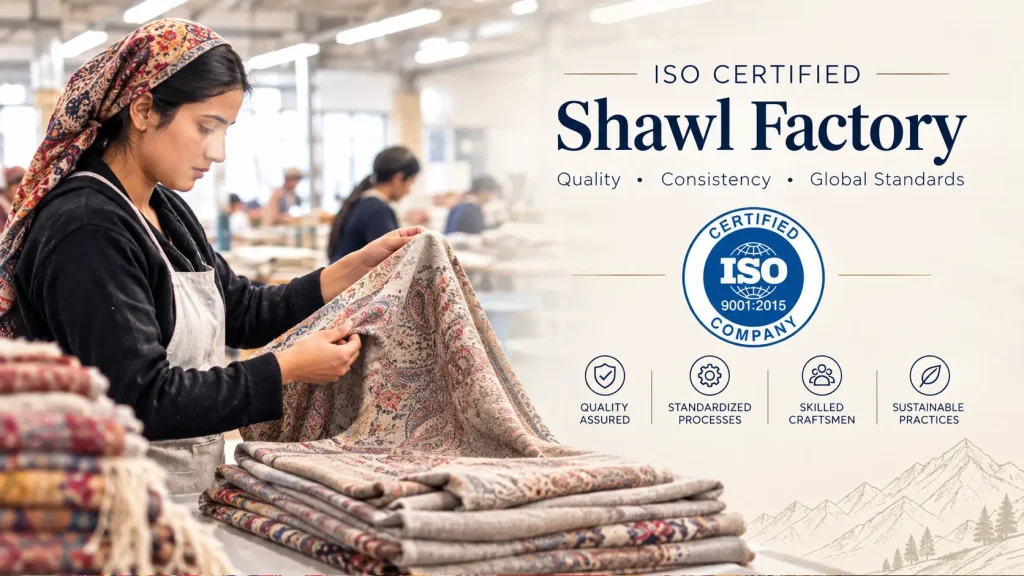
An ISO certified shawl factory follows documented, independently audited processes for quality management, production consistency, and defect control. For B2B buyers, this translates into fewer batch-to-batch inconsistencies, clearer accountability when something goes wrong, and stronger compliance documentation for customs, retail partners, and end customers who ask about sourcing standards.
Certification alone doesn’t guarantee a perfect product every time, but it does mean a factory has a repeatable system in place rather than relying on informal, person-dependent quality control. That distinction matters more as your order volumes grow.
What ISO Certification Actually Means for a Shawl Factory
ISO (International Organization for Standardization) certifications are third-party audited standards that confirm a business follows a defined, documented process for a specific area of operation. The most relevant certifications in the shawl and textile manufacturing space include:
- ISO 9001 (Quality Management Systems): confirms a factory has documented processes for production planning, defect tracking, and corrective action, and is audited periodically to maintain the certification
- ISO 14001 (Environmental Management): relevant for buyers with sustainability requirements, covering waste, water, and dyeing chemical management
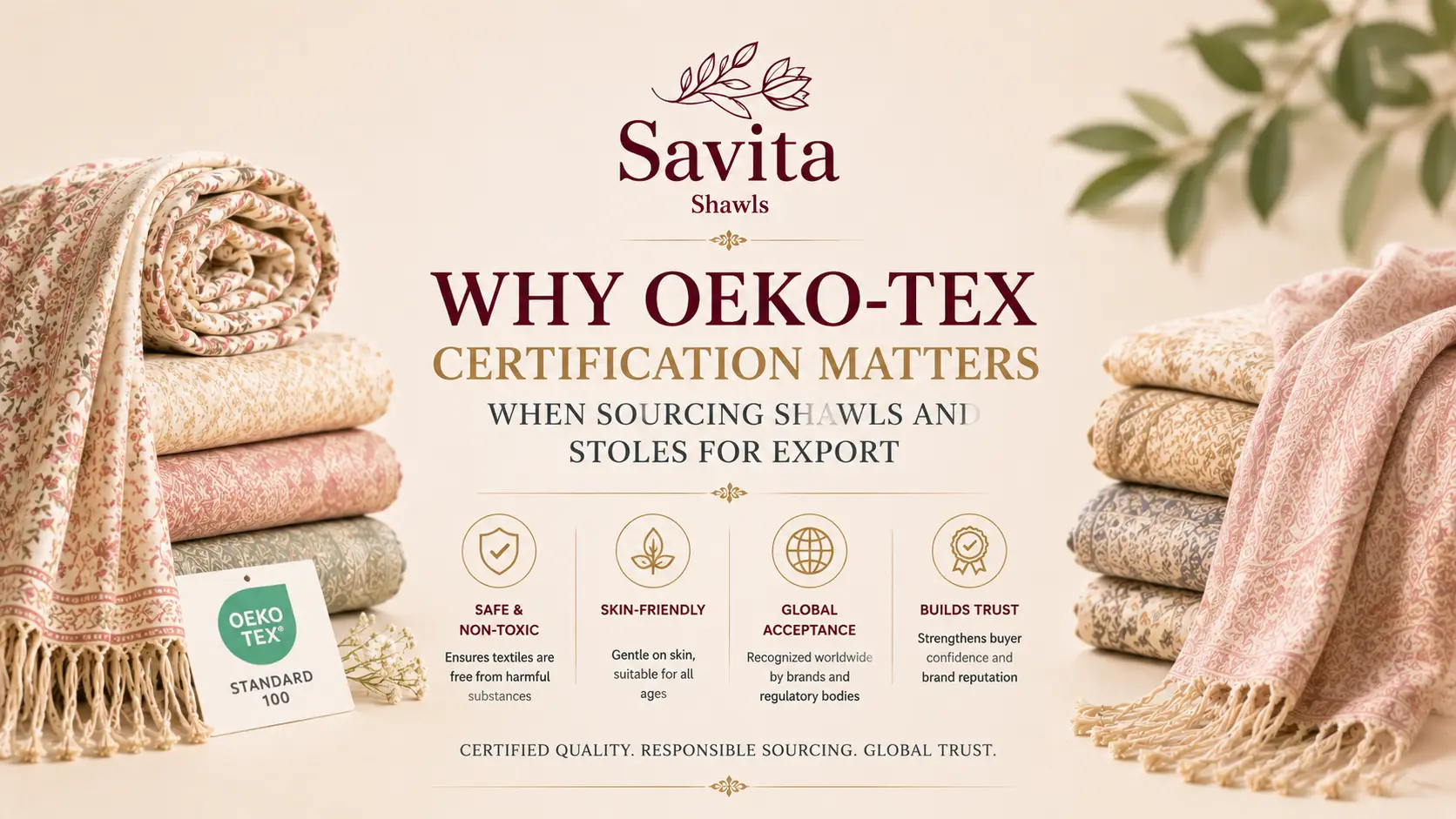
- OEKO-TEX Standard 100: not an ISO standard technically, but a widely recognized textile-specific certification confirming a fabric is tested for harmful substances, often requested by EU and US retail buyers
- SA8000 or similar social compliance certifications: cover labour practices and working conditions, increasingly requested by corporate and retail buyers with ethical sourcing policies
None of these certifications directly certify “the shawl is good quality.” What they certify is that the factory has a system for consistently producing to a defined standard, and that the system is independently verified rather than self-reported.
Why This Matters More as Order Volume Increases
A small trial order of 50-100 pieces is manageable even with an informal quality process, since a buyer can inspect the entire batch by hand. The risk profile changes completely once you’re placing repeat orders in the thousands of units, across multiple SKUs, colours, and dye lots.
At that scale, buyers need:
- Consistency across production runs, not just within a single batch
- Traceable accountability when a defect rate spikes, so the root cause can be identified and fixed
- Documentation that can be shared with your own retail partners, private label clients, or customs authorities
This is exactly what a documented quality management system is designed to provide. It’s the same underlying discipline covered in our guide to the shawl manufacturing process and quality control checkpoints, applied at a factory-wide, audited level rather than a single production run.
A Practical Factory Audit Checklist for Buyers
Whether you’re evaluating a new supplier or reviewing an existing one, use this checklist during due diligence:
- Ask for the actual certification documents, not just a logo on a website. Certifications should list the certifying body, scope, and expiry date.
- Verify the certification is current. ISO certifications require periodic re-audits; an expired certificate is effectively no certificate.
- Ask what the certification scope covers. Some factories certify only part of their operation (e.g., dyeing) rather than the full production chain.
- Request defect rate data from recent production runs, which a certified factory should be tracking as part of its QMS.
- Ask about corrective action processes. A mature system has a documented process for what happens when a defect is found, not just a promise to “be more careful.”
- Check for third-party audit reports, which some manufacturers can share (sometimes redacted) as evidence of an active, ongoing certification rather than a one-time achievement.
- Cross-reference with export documentation. For international orders, ask how HSN codes and export paperwork are handled; see our guide on the HSN code for shawls and stoles for what should appear on your invoices.
How Certification Reduces Specific Categories of Buyer Risk
Quality Risk
A documented QMS reduces the frequency of avoidable defects like inconsistent dyeing, incorrect dimensions, or weaving flaws slipping through to shipment, because inspection checkpoints are built into the process rather than dependent on one supervisor’s diligence.
Compliance Risk
Retail buyers, especially those selling into the EU, US, or through major marketplaces, are increasingly asked to demonstrate supply chain compliance. Working with a certified factory gives you documentation to pass along, rather than having to explain an informal sourcing relationship if audited.
Financial Risk
Defective bulk shipments are expensive to remediate, whether through returns, discounting, or re-manufacturing. The cost of working with a certified factory (often a modest premium over uncertified suppliers) is frequently lower than the cost of managing a bad batch after the fact.
Relationship Risk
When something does go wrong, and it occasionally will even with the best suppliers, a certified factory with documented processes is generally easier to work with on resolution, since the conversation is grounded in a shared quality standard rather than a dispute over subjective judgment calls.
ISO Certification vs. Other Trust Signals
Certification is one input among several, not a replacement for basic supplier vetting. It should be considered alongside:
- Years in business and export history
- Sample quality and pre-production approval process, discussed in our manufacturing process guide
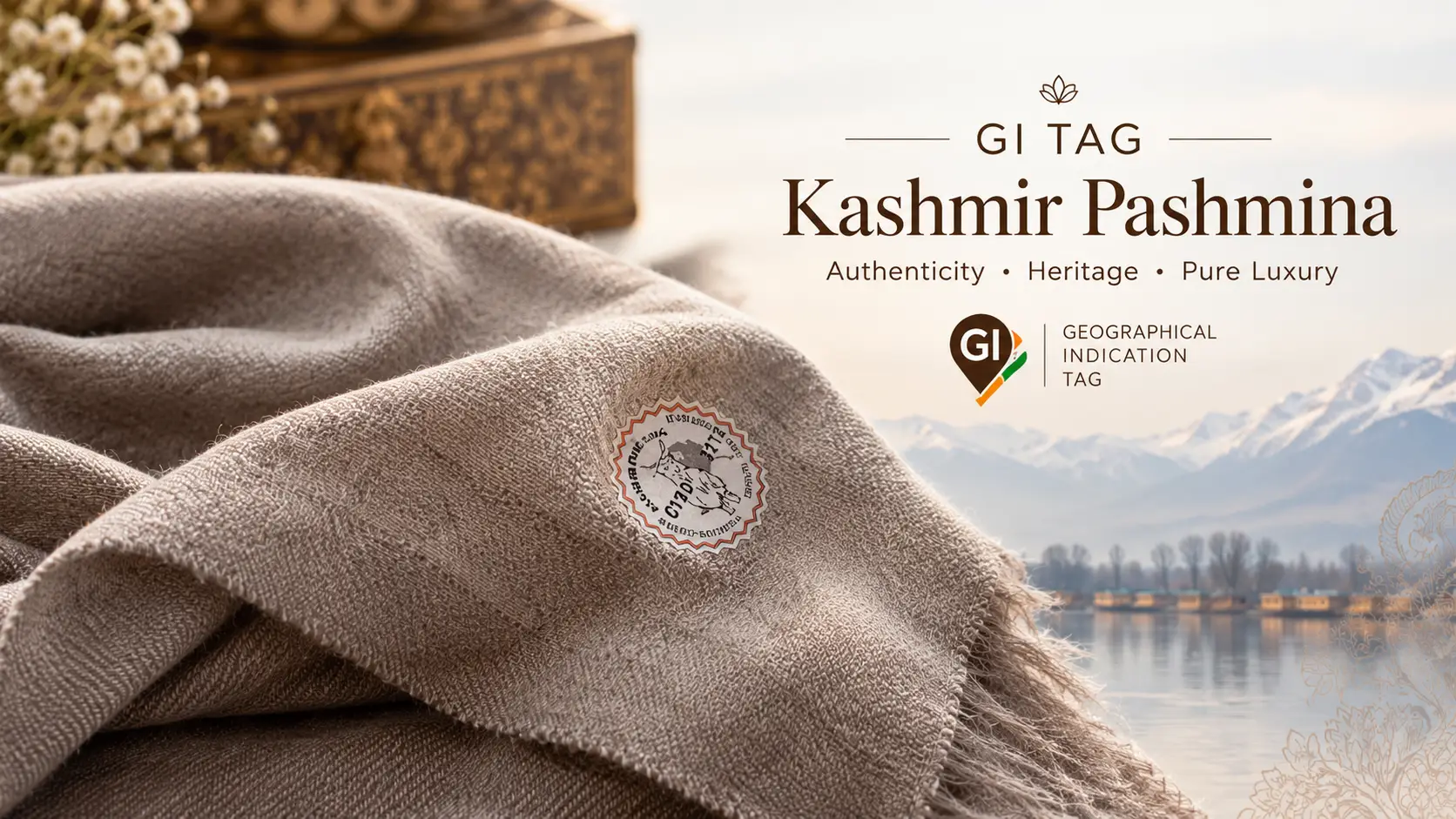
- GI certification, where relevant, for authenticity claims on Pashmina specifically; see our breakdown of the GI tag for Kashmir Pashmina
- Trade references from other B2B buyers
- Clarity on shipping terms, since a well-certified factory with unclear export terms can still create friction; our guide to FOB vs. CIF for textile exports covers this separately
A factory that scores well across all of these is a considerably lower-risk long-term partner than one relying on certification alone as a marketing claim.
How Savita Shawls Approaches Quality and Compliance
Savita Shawls maintains documented quality processes across its production lines, covering Pashmina, cashmere, Kani, Jamawar, and embroidered shawls, with export documentation prepared for international B2B buyers. Read more on our quality assurance approach, or review our broader wholesale shawl and stole buyer’s guide for what to expect when placing a bulk order. You can also browse our Pashmina shawls manufacturer and stole manufacturer categories for current wholesale-ready stock.
Frequently Asked Questions
What is the most relevant ISO certification for a shawl manufacturer?
ISO 9001, covering quality management systems, is the most broadly relevant certification, since it verifies documented processes for production consistency and defect control across the full manufacturing operation.
Does ISO certification guarantee zero defects?
No. It guarantees a documented, audited process for managing quality and corrective action, which meaningfully reduces defect frequency and improves accountability, but it does not eliminate all risk of manufacturing defects.
How can I verify a factory’s certification is genuine and current?
Request the actual certificate showing the certifying body, scope of certification, and expiry date, and where possible, verify with the certifying body directly rather than relying solely on documents provided by the factory.
Is OEKO-TEX certification the same as ISO certification?
No. OEKO-TEX Standard 100 is a textile-specific certification testing for harmful substances in the finished fabric, while ISO certifications (such as ISO 9001) cover broader quality management processes across the factory’s operations.
Should I avoid suppliers without any certification?
Not necessarily, particularly for smaller trial orders where you can inspect the full batch directly. For larger, repeat, or export-bound orders, certification becomes a more important risk-reduction factor and is worth prioritizing during supplier selection.
Does certification affect pricing?
Certified factories often carry a modest cost premium reflecting the investment in documented processes and audits, but this is frequently offset by lower defect rates and reduced dispute costs over the life of a buying relationship.
Sourcing from a certified, export-ready factory for your next bulk order? Get a wholesale quote from Savita Shawls and request our current quality and compliance documentation.