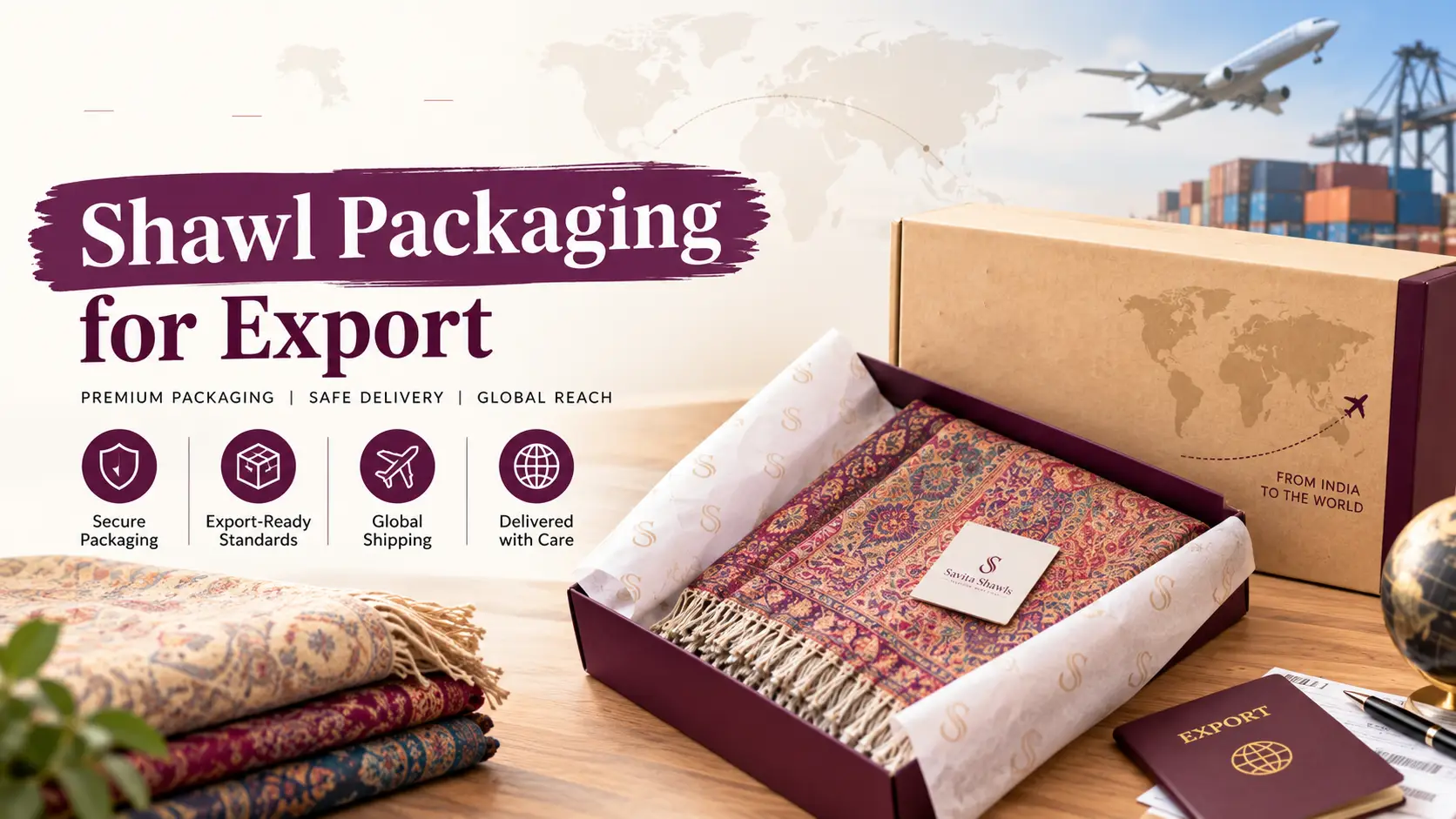
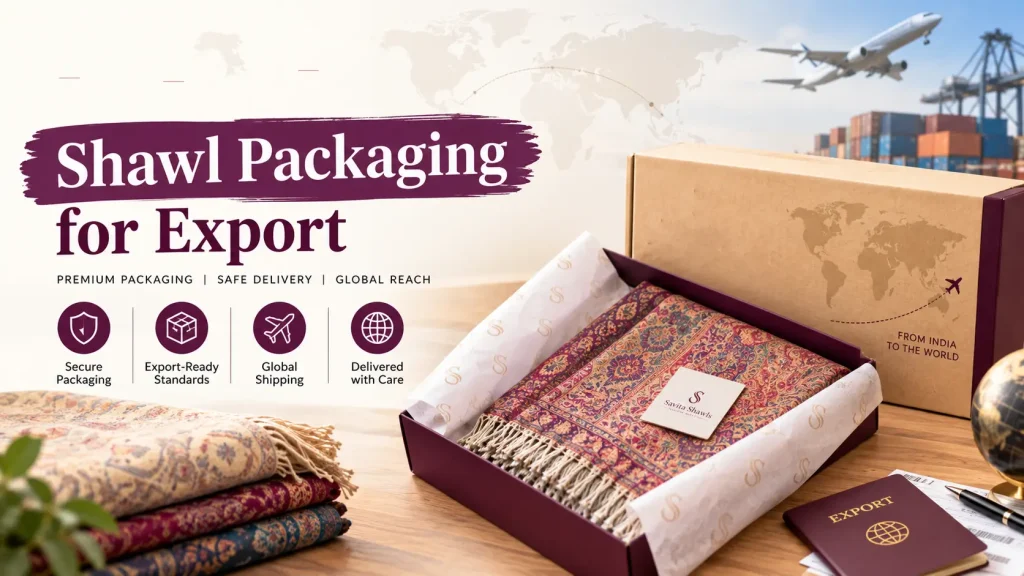
Export-ready packaging protects shawls from moisture, dust, and transit damage across long international shipping routes, while also meeting the labeling and documentation requirements customs authorities expect. For B2B buyers, packaging decisions directly affect damage claims, customs clearance speed, and how retail-ready the product is once it reaches a warehouse or store shelf. Treating packaging as an afterthought is one of the most common, and most avoidable, causes of costly disputes in bulk shawl sourcing.
Packaging that works fine for a domestic wholesale shipment often isn’t sufficient for a container that spends weeks at sea, crosses multiple customs checkpoints, and sits in humid port storage before reaching its destination.
What Export-Ready Packaging Actually Needs to Do
Good export packaging for shawls serves four distinct functions, and suppliers who only optimize for one or two of them create risk for the buyer:
- Protect the product from moisture, dust, pests, and physical damage during long transit and storage periods
- Support accurate customs clearance through correct labeling, HSN codes, and country-of-origin documentation
- Preserve product presentation so items arrive retail-ready rather than needing to be re-pressed, re-folded, or repackaged on arrival
- Enable efficient handling at every stage: factory packing, freight forwarding, customs inspection, and final warehouse receiving
Moisture and Pest Protection
Fabric shipments, particularly natural fibres like wool, Pashmina, and cashmere, are vulnerable to moisture damage and pest activity (moths, in particular) during transit and storage. Standard export practice includes:
- Individual poly bags for each shawl, sealed to limit moisture exposure
- Silica gel or moisture-absorbing sachets included within larger cartons for humid shipping routes
- Pest-deterrent treatment or packaging materials, particularly important for wool and Pashmina shipments held in warehouse storage for extended periods
- Water-resistant outer cartons, especially for sea freight where containers can experience condensation cycles during temperature changes
Buyers shipping to humid destination markets, or via longer sea freight routes, should confirm these measures are standard practice with their supplier rather than assuming basic poly bagging is sufficient.
Labeling and Customs Documentation
Correct labeling isn’t just a packaging nicety, it’s a customs compliance requirement. Export cartons and product labels typically need to include:
- HSN (Harmonized System Nomenclature) codes, which determine duty rates and customs classification; see our guide to the HSN code for shawls and stoles for what should appear on your documentation
- Country of origin marking, required by most importing countries and increasingly scrutinized for textile shipments specifically
- Fibre content labeling, particularly important for Pashmina and wool products where misrepresentation can trigger regulatory issues in destination markets
- Care instructions, which some retail buyers require as a condition of purchase, particularly for private label products headed to end consumers
- Carton-level shipping marks, including weight, quantity, and destination details used by freight forwarders and customs brokers
Errors or omissions here don’t just create compliance risk, they can delay customs clearance and add unplanned storage or demurrage costs at the port of entry. If you’re managing the shipping terms yourself, this pairs directly with the decisions covered in our guide to FOB vs. CIF for textile exports.
Retail-Ready vs. Bulk-Ready Packaging
Not every buyer needs the same packaging standard. It’s worth distinguishing between:
- Bulk-ready packaging: cartons designed for efficient freight handling and storage, where individual product presentation matters less because the buyer will repackage or re-tag on arrival
- Retail-ready packaging: individual product packaging (branded boxes, printed tags, folded presentation) designed so the product can go directly to a retail shelf or end customer with minimal additional handling
Retail-ready packaging adds cost and production lead time but saves significant labour and handling time on the receiving end, which matters most for buyers with tight retail launch timelines or drop-shipping models where products ship directly to end customers.
Branded Packaging Options for Corporate and Private Label Buyers
For buyers building a private label brand or running corporate gifting programmes, packaging becomes part of the product experience itself. Common options include:
- Custom printed boxes or rigid gift boxes, often used for premium Pashmina or corporate gifting lines; see our guide on corporate gifting shawls in bulk for how packaging fits into a broader gifting strategy
- Branded tissue paper and tags, a lower-cost way to add brand presence without the lead time of custom box printing
- Fabric or cotton pouches, popular for premium retail positioning and increasingly requested for sustainability-conscious brands
- Woven or embroidered brand labels sewn directly into the shawl, which survive longer than printed tags and add a premium touch for private label lines
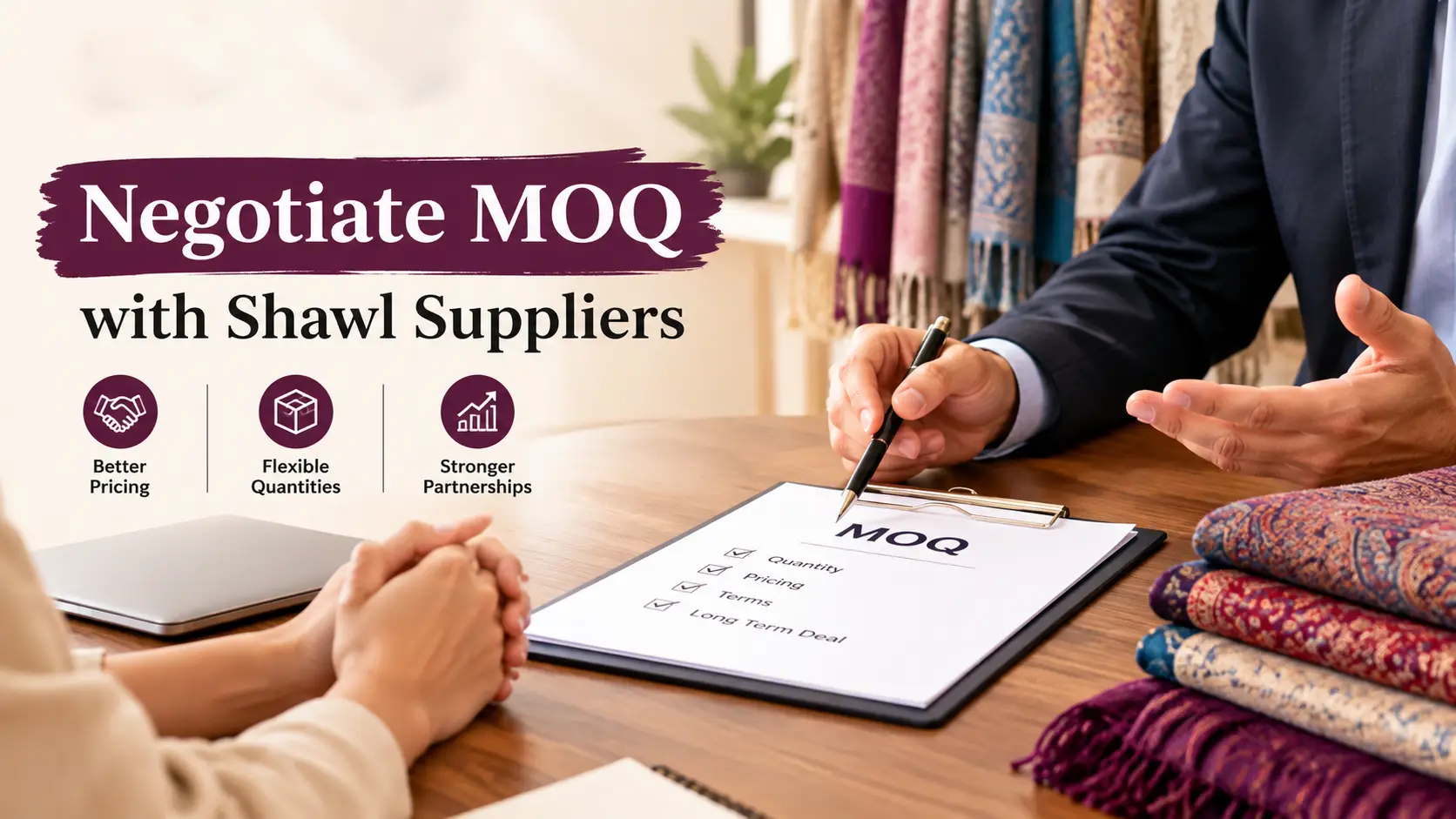
Custom packaging typically carries its own minimum order quantity, separate from the shawl MOQ itself. If you’re planning a private label or branded order, factor this into your MOQ negotiation as covered in our guide to negotiating MOQ with shawl suppliers.
Sustainability Considerations in Export Packaging
Increasingly, retail buyers in the EU, US, and other markets are asking suppliers about packaging sustainability, including:
- Recyclable or biodegradable poly bag alternatives
- FSC-certified cardboard for outer cartons
- Reduced plastic use in individual product packaging
- Minimal, right-sized cartons to reduce shipping volume and associated emissions
While these requests add modest cost, they’re increasingly a condition of doing business with larger retail and corporate buyers who have their own sustainability commitments to report against.
A Packaging Checklist for Bulk Export Orders
Before confirming a bulk export order, confirm the following with your supplier:
- Individual product protection: poly bagging, moisture protection, pest deterrence
- Correct HSN codes and country-of-origin labeling on both product tags and outer cartons
- Fibre content accuracy, particularly for Pashmina, cashmere, and wool products
- Carton specifications: weight limits, stacking strength, and water resistance appropriate to your shipping route
- Branded packaging lead times and MOQs, if applicable to your order
- Retail-ready vs. bulk-ready packaging decision, based on your receiving and fulfilment setup
- Sustainability documentation, if required by your retail partners or internal policies
How Packaging Choices Affect Your Broader Export Strategy
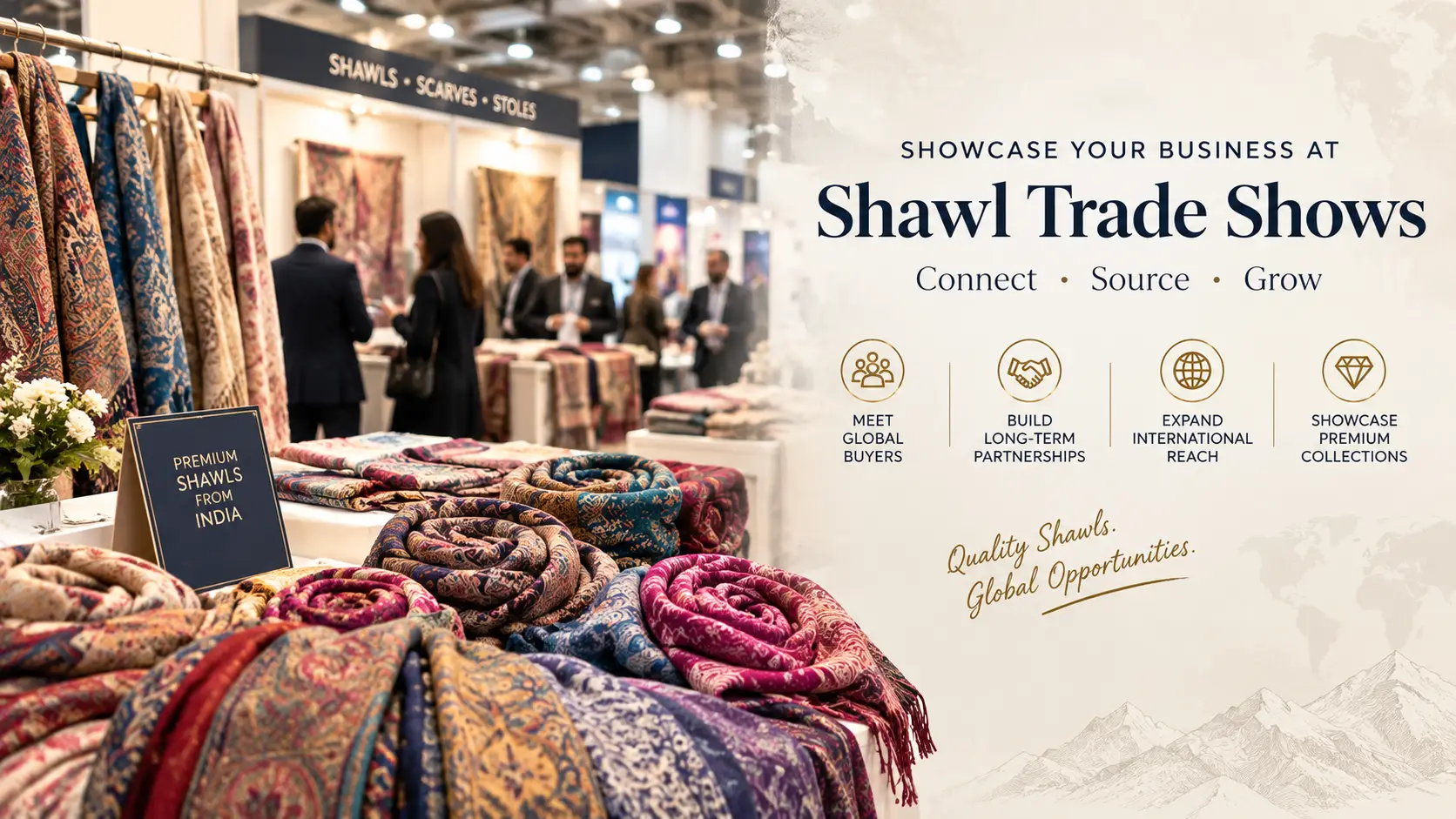
Packaging decisions connect directly to other parts of your sourcing and export planning. A supplier experienced in the broader Indian shawl export market and responding to global shawl demand trends will typically have export packaging processes already refined for common destination markets, which reduces the amount of custom guidance a buyer needs to provide from scratch.
How Savita Shawls Handles Export Packaging
Savita Shawls prepares export shipments with moisture-protective individual packaging, accurate HSN and origin labeling, and branded packaging options for corporate and private label buyers. Read more about our export experience via the textile export company overview, or explore the corporate gift shawls manufacturer category for gift-ready packaging examples.
Frequently Asked Questions
What packaging is standard for bulk Pashmina shawl exports? Standard practice includes individual poly bagging with moisture protection, outer cartons rated for the shipping route (sea or air freight), and correct HSN and origin labeling. Additional pest-deterrent measures are common for natural fibre shipments in humid climates or long transit routes.
Does export packaging affect customs clearance time? Yes. Missing or incorrect HSN codes, country-of-origin labeling, or fibre content declarations are common causes of customs delays, which can result in unplanned storage or demurrage costs at the port of entry.
What is the difference between retail-ready and bulk-ready packaging? Retail-ready packaging is designed so products can go directly to a shelf or end customer with minimal handling, while bulk-ready packaging focuses on efficient freight handling and storage, with the buyer handling repackaging or tagging on arrival.
Can I request custom branded packaging for a private label order? Yes, most manufacturers offer custom boxes, tags, and labels for private label and corporate orders, though these typically carry their own minimum order quantity separate from the base product MOQ.
Is sustainable packaging available for export shawl orders? Many manufacturers can accommodate recyclable poly bag alternatives, FSC-certified cardboard, and reduced-plastic packaging on request, particularly for buyers whose retail partners require sustainability documentation.
Who is responsible for packaging costs in an export order, the buyer or the supplier? This depends on the agreed shipping terms (FOB, CIF, or other Incoterms) and should be clarified explicitly in your purchase agreement, since packaging costs, particularly for custom branded packaging, are sometimes billed separately from the base product price.
Planning an export order and want to confirm packaging standards upfront? Get a wholesale quote from Savita Shawls and ask about packaging options for your shipping route.