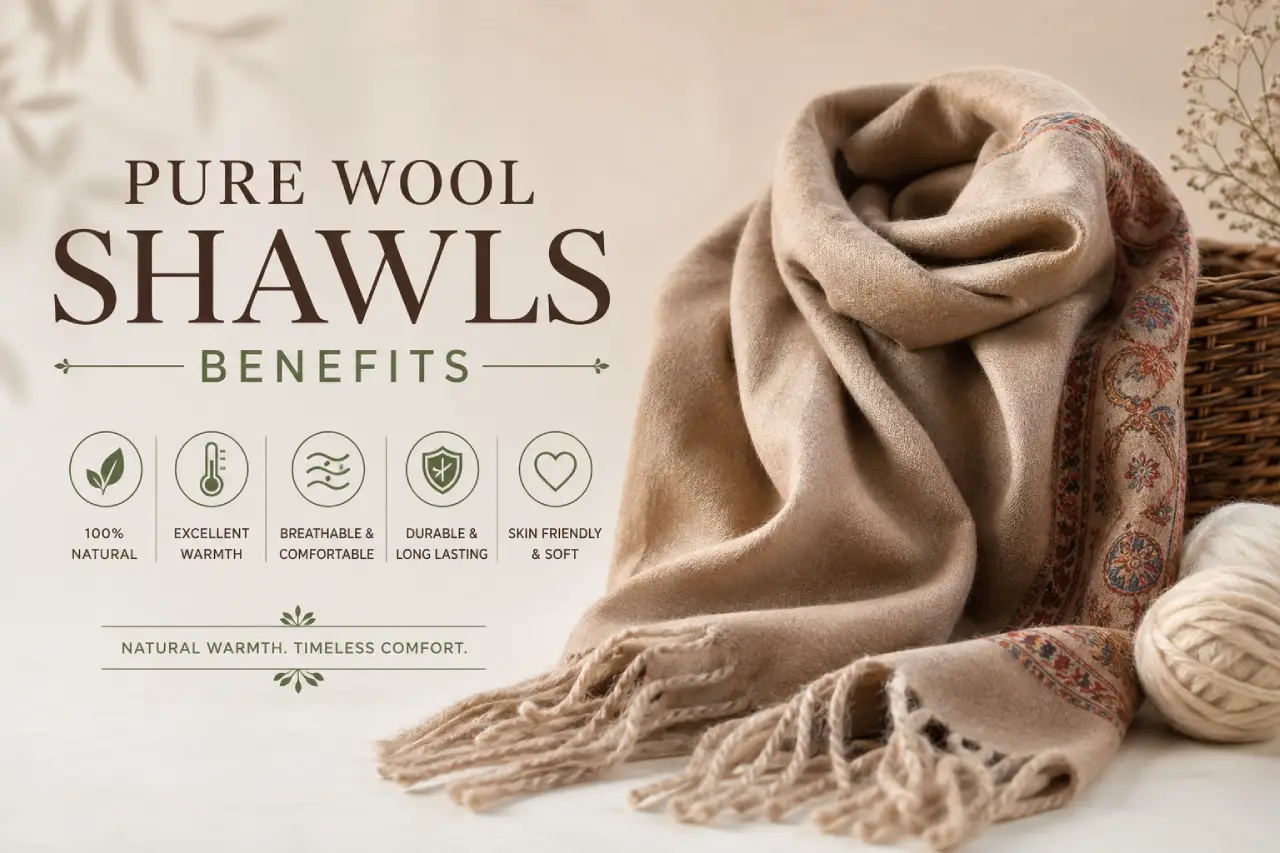

Pashmina has been a symbol for ages of great elegance, exceptionally luxurious quality, and incomparable artistry. With the changing times, Pashmina Fashion Trends not only continue adapting but also staying in decades-old traditions. Pashmina has transformed into a global style and soft, sustainable, and heritage appealing that is not just a winter necessity but a year-round fashion statement of such impact that it continues to be the main topic in global fashion discussions this season.
The list ranges from runway-inspired styling to rejuvenation of the Pashmina weaving practice, from minimalistic design to providing luxurious experiences through the works of Savita Shawls and other similar brands, this blog highlights the most significant Pashmina Fashion Trends that one should pay attention to this year. Furthermore, we will dive into the world of handcrafted Pashmina, the art of Kashmiri craftsmanship, and the detailed Pashmina process that renders every item one-of-a-kind.
Understanding the Rise of Pashmina Fashion Trends in Modern Style
The rapid evolution of Pashmina Fashion Trends in today’s fashion is not a coincidence—it is a clear indication of a worldwide change in the way people look at luxury, fashion, and sustainability. The consumers of the present are turning their backs on the fast fashion and disposable trends and are, instead, selecting the ones that have longevity, emotional value, and cultural depth. Pashmina Fashion Trends are the brightest of stars in the evolving world of fashion as they are the perfect mix of heritage craftsmanship and modern elegance. Modern also prefer slow fashion, ethical luxury, and artisanal value.
This has been the case for some time now, which in turn has brought traditional textiles back into the limelight, with Pashmina being one of the most sought-after luxury fabrics. The narrative, authenticity, and workmanship behind Pashmina resonate strongly with consumers who appreciate honesty and tradition. Hence, the Pashmina Fashion Trends are influencing the wardrobes of fashion capitals around the world, from the runways to the everyday luxurious attires. The traditional Pashmina weaving, which is an ancient art that has its roots in Kashmiri craftsmanship, is the mainstay of this movement.
Each Pashmina piece is a representation of hundreds of years of expertise, perseverance, and cultural heritage. Genuine Pashmina, on the other hand, is subjected to a very careful Pashmina process that guarantees the ultimate in softness, durability, and beauty. This authenticity has been a major driving factor behind the Pashmina Fashion Trends gaining popularity among both the designers and the conscious consumers.
The exceptional versatility of Pashmina is among the reasons that have led to the continual rise in the popularity of Pashmina Fashion Trends. Pashmina is a fabric that is lightweight yet warm, breathable yet insulating, hence it can easily adapt to a changing climate. This singular characteristic has enabled Pashmina to metamorphose from a winter must-have into a fashion statement for all seasons.
Nowadays, Pashmina shawls, wraps, and stoles are worn in various styles during all seasons, which consequently fortifies their position in the realm of modern luxury fashion. The more people are made aware of handmade Pashmina, the more fashionable people are going to be and the less they are going to be imitating; and that is one of the reasons they prefer to be original. In fact, consumers are now able to tell the difference between genuine Pashmina and artificial blends, which in turn leads to more acknowledging of Kashmir’s skill and the underlying artistry. This rising awareness has given Pashmina Fashion Trends a boost and they are now seen as a mark of sophistication, ethical luxury and respect for culture.
Why Pashmina Is Dominating Fashion This Year
The supremacy of Pashmina Fashion Trends in this year owes to a set of interrelated factors that not only are very much in tune with but also exemplify the not so new fashion values of the day. Pashmina is a modern luxury material that fulfills a whole list of requirements from sustainability to heritage storytelling.
Key Factors Driving Pashmina Fashion Trends
- Growing appreciation for Kashmiri craftsmanship
International buyers are increasingly recognizing the talented craftsmen who make every Pashmina by hand. This gratitude for Kashmir’s master skills has raised Pashmina to the status of a cultural treasure rather than merely an accessory, thereby reinforcing its impact on the recent Pashmina Fashion Trends. - Increased demand for sustainable and handmade textiles
Sustainability has already become a must in the world of fashion. The Pashmina that is woven by hand and made with organic materials and ethical methods is in complete harmony with the values of the earth-friendly fashion. So, the demand for Pashmina Fashion Trends in high-end markets has received a great deal of support.. - Versatility of Pashmina across seasons
The versatility of Pashmina is one of the most powerful factors contributing to Pashmina Fashion Trends success. Pashmina can be worn in a variety of ways – as shawls, wraps, stoles, or layering pieces – thus being appropriate for winter, spring, and even cool summer nighttime. - Influence of heritage luxury brands like Savita Shawls
Savita Shawls and other well-known brands are responsible for promoting the original Pashmina around the world. These companies are changing the way contemporary people see the Pashmina fashion by mixing the traditional aesthetic with the modern styling. - Global recognition of the authentic Pashmina process
The consumers have been capable of distinguishing authentic Pashmina due to the increased awareness of the entire Pashmina process starting from the sourcing of the finest fibers to hand weaving. This acknowledgment has not only reinforced the trust but also contributed to the rapid rise of Pashmina Fashion Trends.
Trend 1: Revival of Traditional Pashmina Weaving Techniques
This year one of the most important and powerful Pashmina Fashion Trends that gives a great influence is the traditional Pashmina weaving techniques that have been greatly revived. Fast production and machine-made textiles have almost complete control of the fashion world but the latter is now enjoying the return to authenticity that is quite meaningful. Kashmiri artisans are resurrecting very old handloom techniques that were once threatened with extinction caused by the influx of cheaper imitations.
The trend of traditional weaving that has come back is what has made Pashmina Fashion Trends the hotspot of luxury that is inspired by the heritage. The resurrection of ancient Pashmina weaving is however not merely a matter of style but rather a cultural revival. Each and every handmade Pashmina shawl or stole goes through a process that is very time-consuming and that requires great skill, patience, and also passing down of knowledge from one generation to the other. On the contrary to the products made in factories, these pieces have little differences in texture and weave, thereby making each one of the creations a unique. This uniqueness has become the main feature of modern Pashmina Fashion Trends where the emphasis is on individuality not the opposite of it.
Now, the fashion-conscious crows are actively looking for shawls and stoles with handwoven textures that are clearly visible instead of machine-perfect finishes. The slight defects in the making of Pashmina have been recognized; hence, they are now termed as authenticity markers. This change in attitude has noticeably increased the demand for such Pashmina weaves among today’s luxury consumers who are very much into the artisanal aspect of the product.
Another major factor contributing to this trend is the increasing consciousness about the different aspects of the fashion industry especially, the ethical side. Traditional Pashmina weaving totally conforms to the slow fashion concept, which strongly advocates for the environment. The sustainability, artisan welfare and the conscious production practices are the key points of the slow fashion concept. As consumers get more aware of the locations and methods of garment manufacturing, Pashmina Fashion Trends based on craftsmanship and heritage are becoming more and more relevant globally.
Trend 2: Handmade Pashmina as a Symbol of Luxury Fashion
Luxury fashion is definitely going through a very significant change and the main character of this change is definitely the handmade Pashmina. This year, one of the biggest Pashmina Fashion Trends has been the emergence of handmade Pashmina as a very strong icon of individuality, exclusivity, and taste. More and more people who are very selective in their choices are turning their backs on mass-produced luxury and are looking for pieces that machines cannot make. This movement has embraced handmade Pashmina with both hands and it has become a pillar of luxury fashion for the now and the future.
What differentiates handmade Pashmina in the current Pashmina Fashion Trends is the wide range of craftsmanship that is involved. A single piece is produced through the entire traditional Pashmina process that starts with the selecting of the very fine fibers and goes on with hand spinning, dyeing, and finally the very careful weaving. The cumulation of all these steps can sometimes take weeks or even months which is actually a representation of the patience, skill, and transfer of knowledge from one generation to another that Kashmiri artisans practice. The time-consuming nature of this process contributes to the rarity and therefore the value of handmade Pashmina.
Handmade Pashmina shawls, unlike their machine-made counterparts, have a special identity. The weaves, textures, and finishes give an individual look—these are not defects, but signs of being genuine. Moreover, these peculiarities fit very well with the main idea of the modern Pashmina Fashion Trends, where rarity is appreciated and personal statement is very important. Getting a handmade Pashmina is not merely about the looks but also possessing a historical tale intertwined with art and skill.
One more reason handmade Pashmina remains the king of current Pashmina Fashion Trends is its emotional and cultural value. Each very piece has the history of Kashmir’s skilled labor’s going back for centuries, and it is a reflection of the living tradition that adjusts to modern life but stills remains very strong. Today’s luxury consumers regard this bond to the past and the present as a very important factor in their reason for buying. Thus, they consider handmade Pashmina to be a worthy investment in both fashion and heritage.
Trend 3: Minimalist Designs with Heritage Influence
Minimalism is radically influencing the modern Pashmina fashion trends, but it would be wrong to consider this movement as plain or sterile. To the contrary, the minimalist Pashmina designs of today draw from cultural depth and the influence of heritage. Instead of turning to heavy embroidery or ornate embellishments, this year’s Pashmina fashion trends favor light patterns, stark edges, and intricate details that let the great beauty of Pashmina weaving become the spotlight.
This trend of going for a minimalist style corresponds to a larger shift in the luxury fashion world where less noticeable but classy elegance is preferred over lavish decoration. The fabric of the weave, its texture, and colors that blend well together are the parameters on which the minimalist Pashmina elevates the artisanship of each item. The softness, fluidity, and surface of genuine Pashmina are, in fact, taken to the front and praised rather than kept in the background, thus reiterating the point that minimalism has become a major component of the present-day Pashmina fashion cycles.
Furthermore, the taking of heritage influence through this minimalist way is still very much alive. The likes of Savita Shawls are making the most of the situation by wisely fusing up-to-date looks with traditional pictorials derived from Kashmiri art. Though these pictorials are sometimes drastically changed, they still remain visible in the form of very fine edges, ghostly patterns, and color plays. The outcome is Pashmina which is not only contemporary, adaptable, and luxurious but also undeniably tied to Kashmiri artisanship and cultural heritage.
One more factor contributing to the ascent of minimalism in the Pashmina fashion trends is the adaptability of these designs that have inherited the heritage. These creations can easily be worn as everyday clothes one minute and in a formal setting the next, thus making them perfect for modern lifestyles. The chic crowd loves Pashmina items that come loaded with versatility but at the same time, do not lose their real character, hence, the allure keeps on getting stronger.
Trend 4: Storytelling Through Kashmiri Craftsmanship
One of the most emotionally led Pashmina Fashion Trends that is currently influencing the luxury market is the increased demand for storytelling through Kashmiri craftsmanship. The modern-day consumers are not just contented with the possession of a lovely product; rather, they desire to know its source, its route and the people who made it. This demand for clarity and significance has given Kashmiri craftsmanship an exclusive position in the narrative of current Pashmina Fashion Trends.
The designers and heritage brands have now commenced a change from the marketing of products only to story-led luxury. The real Pashmina is not only being marketed as a fashion accessory but also as a cultural object molded by age-old practices. While talking about the artisans, weaving communities and the villages of Kashmir, the brands are enriching the Pashmina Fashion Trends with the emotions that will allow the consumers to have a deeper connection with what they wear. The Pashmina process itself is the core of this storytelling movement.
The journey of the Pashmina covers from the gathering of the finest fibers to spinning by hand, dyeing with naturals, and weaving in a painstaking manner—every step has its own tale. By making this journey visible, the brands are affirming the authenticity and worth of handmade Pashmina. This openness has turned into an identifying trait of the trust-based Pashmina Fashion Trends, particularly among the discerning luxury buyers.
The art of storytelling proves to be a major factor in distinguishing the genuine Pashmina from the counterfeit mass-produced ones. The consumers who are made aware of the hard work, artistry and time that go into making each piece are likely to prefer originality to price. Thus, the Kashmiri craftsmanship is no longer just an ingredient in the background—it has actually become the essence of the present-day Pashmina Fashion Trends.
Trend 5: Ethical and Sustainable Pashmina Fashion Trends
Sustainability is no longer an optional aspect of luxury—it has turned into a fundamental value. One of the strongest Pashmina Fashion Trends that has impacted greatly this year is the heavy inclination towards the use of ethical and sustainable practices. The contemporary consumer is constantly becoming more and more cognizant of the ecological and social implications of his/her/their fashion selections, and his/her/their awareness has even altered the production, promotion, and valuation of luxury textiles.
Thus, ethicality has become the movement behind contemporary Pashmina Fashion Trends. The original Pashmina is authentic and handmade and is thereby sustainable by its very nature. Traditional Pashmina production differs from industrial textile production in that it relies on very little mechanization and extremely low-energy methods. The processes of hand-spinning, hand-weaving, and natural dyeing not only lessen the environmental impact but also keep the quality of the fiber intact.
This environment-conscious practice has made Pashmina a standard in the industry for sustainability-driven Pashmina Fashion Trends. Another key factor that propels sustainable Pashmina Fashion Trends is the use of ethical sourcing. The collection of Pashmina fibers is done in a responsible manner, taking animal welfare and the environment into consideration. Add to that the handloom-based Pashmina weaving and you will find that this ethical framework is very much in line with the slow fashion principle and the guarantee of sustainability over a long period. For luxury buyers who are mindful of their purchases, these practices not only fortify the cause of Pashmina as a truly responsible fashion choice but also give it more depth and credibility.
Ethical Pashmina Fashion Trends are not limited to the environment but also deal with social sustainability issues intensely. Good pay, safe work environment, and long-term support for the artisan communities are some of the characteristics that come with the production of authentic Pashmina. By wearing Pashmina that is produced ethically, the consumers are in a way helping to preserve Kashmir’s artistry and uplift the artisans for generations.
Trend 6: Pashmina as a Year-Round Fashion Accessory
The significant change in the Pashmina Fashion Trends that molding today’s skimming is nothing but the turnover of Pashmina from a seasonal winter essential to a versatile and chic year-round accessory. Pashmina now has a universal acceptance in all seasons and varieties of weather, and this is primarily reflecting in changing styles and use of luxury textiles. This change has turned Pashmina stoles, the lightest and handcrafted ones, into everyday wardrobe essentials and has firmly planted them in the current Pashmina Fashion Trends.
The secret behind its year-round attractiveness is the authentic Pashmina’s natural characteristics. It is exceptionally breathable and yet insulating, and therefore, handmade Pashmina becomes very comfortable during hot days and nights and also when the weather outside is very chilly and indoors very warm air-conditioning. So the Pashmina Fashion Trends are now focusing on designing items that are seasonless and that provide comfort and elegance all through the year.
There is a group of fashion influencers and stylists who have been instrumental in making this trend a widespread practice. By matching Pashmina with all kinds of dresses, ethnic ensembles, office wear, and casual outfits, they are proving the unparalleled versatility of Pashmina. The aesthetic choices they make not only show the flexibility of the authentic Pashmina weaving but also increase its acceptance around the world and make it attractive to different fashion tastes. The influencer-based visibility has indeed greatly reinforced the Pashmina’s position in the world Pashmina Fashion Trends.
Besides the merging of seasons, one more factor influencing the latter is the concept of fusion fashion. Mixing modern silhouettes with heritage, contemporary wardrobes are gradually coming to terms with Pashmina’s presence in the blending process. Pashmina is able to take the role of cultural and modern aesthetics’ connector, whether it is used to cover a contemporary outfit or styled with traditional attire.
Trend 7: Signature Collections by Heritage Brands Like Savita Shawls
Heritage brands are among the major forces of contemporary Pashmina Fashion Trends, and Savita Shawls is one of them—a symbol of authenticity, craftsmanship, and cultural values. As mass production increasingly dominates the market, luxury brands based on heritage are bringing Pashmina back to its source while still making it compatible with the global fashion trends.
The synergy of tradition and modernity has put Savita Shawls among the main trendsetters in the ever-changing Pashmina Fashion Trends. What is it that sets Savita Shawls apart from the current Pashmina Fashion Trends—the company’s unswerving commitment to the old Pashmina weaving techniques? Each product is made with the traditional methods that respect the artistry and the time of the Kashmiri craftsmen. The brand, therefore, by giving priority to the handmade process rather than machine production, provides a shawl that truly shows the characteristics of craftsmanship, exclusivity, and longevity—qualities that are at the core of the premium Pashmina Fashion Trends.
Transparency and ethics, in addition to being the brand’s core values, are the main factors through which Savita Shawls managed to gain such a big influence in the trends. The brand goes above and beyond the normal marketing by revealing the Pashmina which gives a detailed breakdown of fiber sourcing, hand-spinning, weaving, and finishing. This transparency and open communication create a strong bond of trust that is in perfect harmony with the luxury market’s demand for ethical products.
With the lessening of secretiveness, the market of Pashmina Fashion luxury has already been determined, and Savita Shawls has emerged as the leader of this new fashion consciousness by its virtues and being responsible. The design philosophy of the brand is another factor, the same as the previous one. The brand Savita Shawls has managed to combine two together with the help of a powerful and skillful designer that has made its collections not only the best ones but also the most loved by the fashionistic kinds. Not only the origins of the designs have a direct link with the craftsmen of Kashmir but also the designs of today’s world, hence the products are regarded as versatile and there is an easily opening path to success in the international market. This is also why Savita Shawls can be seen as a strong influencer in the matter of today’s Pashmina Fashion Trends.
Trend 8: Customization and Limited-Edition Pashmina Pieces
One of the major aspects that influenced the shaping of modern luxury has been the exclusivity, and it has a critical influence on the Pashmina Fashion Trends of today. The current consumers do not want just easy-to-find creations anymore; they want the Pashmina ones that are customized and limited-edition hand-made ones in which their personality, lifestyle, and taste are shown off. This struggle for distinction has pushed customization to the forefront of changing Pashmina Fashion Trends.
The customization enables the Pashmina to not only rely on the traditional retail but also to offer the more personal, customer-oriented experience. Clients are taking a big part in the making process; they are choosing the unique color combinations, ordering the one-off weaving patterns, and so on. The partnering method not only increases the bond but also affirms the cultural meaning of the old Pashmina weaving. Every custom piece tells a story that matches perfectly with the storytelling aspect that is a driving force of the modern Pashmina Fashion Trends.
Limited-edition Pashmina collections, as a result, strengthen the rarity of the product and therefore the exclusivity. Ranging from a few hundred to a few thousand pieces, these collections not only give a nod to the artisanal skill but also to the integrity of the handmade processes by preserving them. By curtailing its production, the brand not only upholds the worth of the real Pashmina but also sidesteps the whole mass manufacturing’s easily turned out and cheapened products floodgate.
This luxury managed in such a way has become the hallmark of the Extreme Pashmina Fashion Trends, especially with the very choosy enlightened world buyers. The recognition of artisan mastery is what lays at the very core of the trend. Through the custom and limited-edition designs, the Kashmiri artisans are allowed creative liberty to exhibit their skills, techniques, and tradition motifs. This artisan-led innovation is not only respect for the Kashmiri craftsmanship but also making customization a fashion trend that couples with Pashmina’s cultural aspect within the contemporary Pashmina Fashion Trends.
The Role of the Pashmina Process in Defining Fashion Quality
The heart of luxury in contemporary Pashmina Fashion Trends is the Pashmina process integrity. The whole Pashmina process is a blend of quality features – softness, warmth, durability, and drape. Besides, the raw fiber to finished shawl, the Pashmina process is the most tiring and least Pashmina process the world can offer. The Pashmina process is the one and only process that the Pashmina process is the one and only vendor for contemporary Pashmina Fashion Trends.
The Pashmina process consists of carefully controlling the quality of the Pashmina by determining authorized Pashmina, Pashmina imitated, and always prepared for a Pashmina eclipse or less. Once upon a time, the world was divided into different kinds of Pashmina, namely the entire process of making Pashmina through volition,er meeting objectives, spinning, and the like. The best part of it is that the process of spinning is so elegant that it has become a major selling point in the fashion market that values authenticity, craftsmanship, and the ethical aspect of the producer. Thus, the knowledge of the Pashmina process raises the value of the handmade Pashmina and at the same time reinforces its top market position in the continually evolving Pashmina Fashion Trends.
The Pashmina process can be described as the opposite of fast fashion and more like a slow luxury process in the luxury segment. It highlights accuracy over rapidity and creativity over mechanization. By holding onto this process, the Kashmir valley artisans make their mark on each piece and every shawl has its own soul which is also very unique and, in that case, no machine-made shawl can come close to that. The dedication to the Pashmina process is one of the main reasons why the original Pashmina still holds the Pashmina Fashion Trends quality standards worldwide.
Conclusion: Embracing the Future of Pashmina Fashion Trends
The Pashmina Fashion Trends of this year were indicative of the powerful transformation in the world of fashion—the one where the old and the new come together. It will be the case that no matter how these trends change over time, Pashmina will always be in demand as a luxury item due to its undeniable quality. If we talk about the period of Pashmina Fashion Trends, they are not momentary whims; they are a revival of genuineness, the art of craftsmanship and of being a conscious consumer. At the forefront of this year’s Pashmina Fashion Trends is their linkage to the past, which is a very strong factor.
The Pashmina consists of such delicate fabric that only a few can work with it. The process of producing one piece takes not only a huge amount of skill and patience but also the transfer of knowledge from the elders in the family to the younger generations. Simplistic patterns inspired by the past, the customization of the coennial garments and limited-edition creations, or the year-round styling versatility are ways Pashmina has remained relevant while also paying homage to its roots. This very point of co-existence is why Pashmina Fashion Trends are so appealing to the modern and very selective consumers.
Sustainability, the new luxury fashion trend, gives Pashmina the status of a naturally ethical choice. Pashmina’s traditional process—eco-friendly fiber, hand-spinning and weaving, and finishing—works in favor of the environment and ultimately collects articians’ income. Through the understanding and appreciation of the Pashmina process, consumers are able to feel closer to the read Pashmina in terms of quality, thermal retaining power, and emotional value than to machine-made products.
This awareness leads to a further strengthening of the responsible Pashmina Fashion Trends’ foundation. A time period for Pashmina Fashion Trends that speaks of preserving and innovation at the same time is coming up. Heritage branding, storytelling by the artisans, and the choice of luxury that is conscious will keep Pashmina rising through the ranks in the global fashion arena. The selection of real Pashmina that has been made using traditional methods not only is you adopting a fashion trend but also is you participating in the preservation of a living legacy—the Kashmiri craftsmanship—which needs to be recognized, revered, and celebrated throughout the world at the highest levels.
Fashion industry has notatic Pashmina as a symbol of elegance, authenticity, and timeless luxury in the midst of the quick-changing fashion world. Pashmina Fashion Trends are to be accepted as a meaning-giving fashion—where each shawl has its own story, every weaving brings forth heritage, and every choice aids in supporting a craftsmanship that extends beyond time.
Related Products
Showing 793–801 of 807 results
-
WHITE VALENTINO LACE SHAWLS MANUFACTURER
Read more -
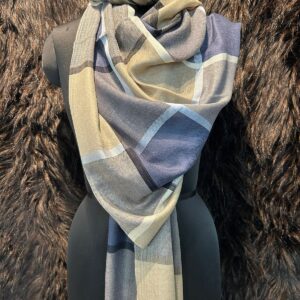
BEIGE SILK BOX SILK SCARVES MANUFACTURER
Read more -
BLUE SILK BOX SILK SCARVES MANUFACTURER
Read more -
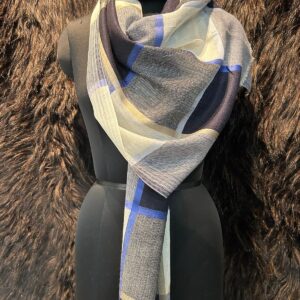
CREAM SILK BOX SILK SCARVES MANUFACTURER
Read more -
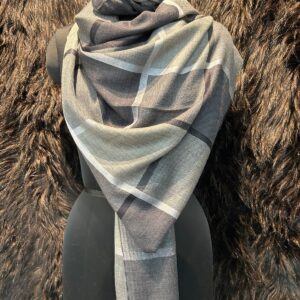
GREY SILK BOX SILK SCARVES MANUFACTURER
Read more -
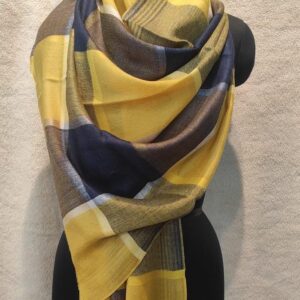
YELLOW SILK BOX SILK SCARVES MANUFACTURER
Read more -
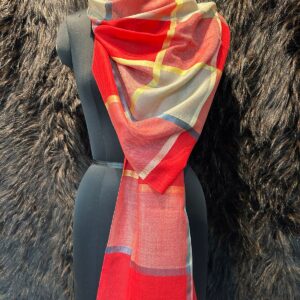
RED SILK BOX SILK SCARVES MANUFACTURER
Read more -
Light Grey Diamond Weave Pashmina Shawls & Scarves Manufacturer
Read more -
Dark Grey Diamond Weave Pashmina Shawls & Scarves Manufacturer
Read more