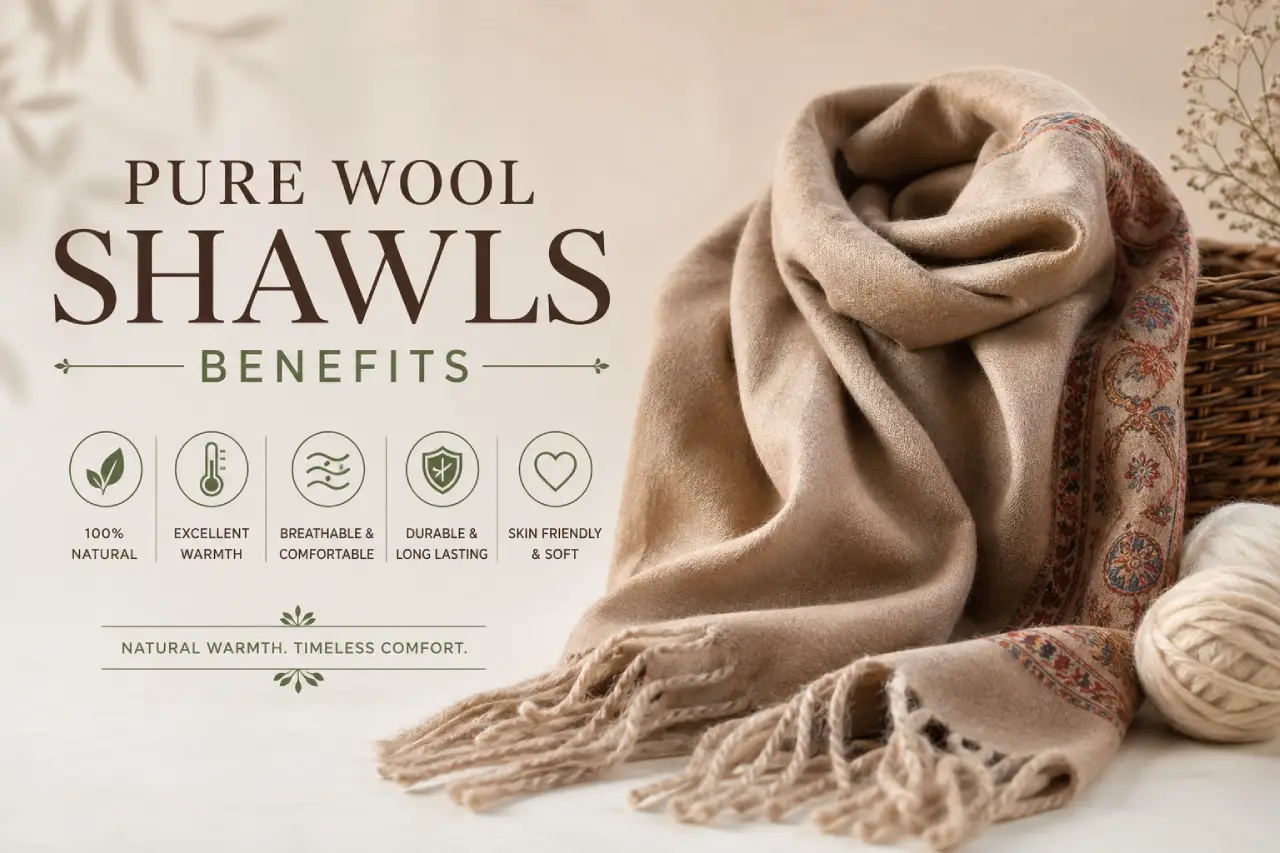

It is imperative for every retailer, boutique owner or any other fashion house in the accessories and textile industry to have in-depth knowledge of the types of shawls available. None of these shawls sit in the class of the most widely bought apparel as they have differences in plain region, ethnicity, ages, or prices. In Paris, a fashionista might wrap herself in a hand woven luxury pashmina, while in Mumbai, a girl is in a wedding wearing a light shawl with a pattern on it, and in Canada, the same person has the biggest knotted thick outer wrap for the winter and not the thin hayi as it is called in India. These examples of the global shawl market illustrate how many different types of shawls are available, each serving a different purpose.
This market width is what exactly makes the shawl segment rich in profit for vendors. Whatever your company’s position, target market or pricing policy, there are certain types of shawls that will sell well in their specific context. However, incorrect categories of shawls or less availability of certain categories translates into wasted sales, missing customers, and failure to maximize one of the best accessible and profitable areas of fashion retail.
The global shawls and wraps market has been on an upward trajectory for some time now. The consumer has grown much larger because of different factors: the trend to buy more expensive fashion accessories in the developed markets, the hippie and eco fashion of buying, the trend of giving gifts every time in the work places as well as in social places, and the worthier the creative and cultural cloth for Gen Y and Z. These are all excellent concepts and they help raise the market worth of a product like shawl in retail.
This handbook covers all the important aspects of yunohata and its varieties – materials, structure, prices, consumers, and supply chain issues – for the benefit of the retailers and the hostlers and the boutique proprietors who wish to enhance their profits and hence their holding power.
Why Understanding Types of Shawls Is Important for Retailers
Retailers with a clear understanding and appreciation of the different types of shawls always have an edge over those who treat all shawls alike. It has something to do with the fact that the range of types of shawls that you have in your shop is a statement of your store’s position, the clientele that you intend to serve, and the degree to which you can provide high quality and selection without unsustainable cut-throat pricing.
The reason why a merchant might want to put in effort and time to learn about types of shawls is profit margin. There are types of shawls that sell at low prices but also low margins. Low and high quality are common examples. For example, a retailer selling only those made of inferior quality synthetic material may sell many units but for a lower profit margin per unit as all these products are similar to what is mass produced and therefore sell for a very low price. On the other hand, a retailer who appreciates and sells such items as hen or pashmina, Kashmiri embroidered, fine wool, or designer shawls of different types will have an opportunity to sell the items at a very high price, make a higher profit per sale as well as target a richer and more loyal consumer cohort.
Understanding the various types of shawls and their applications allows more ingenious purchasing especially adjusted to new season and current trends. Not every type of shawls is in demand equally during different seasons. Winter season creates the highest demand for woolen and thick cashmere shawls. Optimally lightweight designed with prints or cotton scarves are in high demand during spring and summer. The embroidered and decorative kinds of shawls experience a shift in demand during the gifting season, in the wedding seasons as well as during cultural events. A retailer expecting such seasonal fluctuations in retail behavior could ascertain the proportion of stock to bear in each period so that they do not overdo it and eventually suffer losses by the end of a season.
For any retailers buying goods from either of wholesalers or companies they work with to produce the goods – mostly any retailer that is looking into kashmiri shawls wholesale or Indian crafties in particular – understanding what kinds of shawls are there and their value of these types leads to and supports better and more assured purchases by them. It keeps the buyer from paying too much for inferior items that are wrongly marketed as premium shawl types and assures the buyer that his or her wholesale money will translate to good retail price and margin figures.
In the end awareness of types of shawls is awareness of your customer. It helps you match the product with the expectation, craft interesting product presentations, train more efficient sales representatives, and create that selection of shawls that would be worth visiting a particular store in one’s vicinity for.
Overview of Different Types of Shawls in the Market
It’s hard to believe how many types of shawls the global market for shawls has—there’s the fibre used, how it is constructed, how it is decorated, what culture it relates to, and the price range they are sold in.
Speaking of fibres, the main types of shawls are usually differentiated along the following lines: pashmina (the ultimate cashmere quality fiber from the Changthangi goat), cashmere (excellent quality hair of goats, mostly from Mongolia or China), wool (including merino, lambswool, and normal wool), silk, cotton, linen, and man-made fabrics (acrylic, polyester, modal and viscose). All the fibres mentioned produce shawls that exhibit unique physical characteristics – e.g. softness, warmth, heaviness, drapability or breathability – each of which is indispensable for a target season or a target retail price level.
The various types of shawls at the production stage are overwhelmingly in two: hand-woven and machine-made categories. Kashmir’s depiction of shawl handicraft within the different categories of hand-woven shawls is the most vivid since it holds the highest prices and the immaculate designs. Making use of machines in manufacturing these types of shawls enhances impeccable consistency, upscaling possibilities and reduces further the costs per unit to enable decades old traditions to fit mass market and institutional retail outlets.
Considering the purpose of these types of shawls based on who they are targeted at, there is room for simple solid-coloured and printed or block-printed dresses that can be further decorated with decorative embellishments and stitches such as in Sozni, Aari and better still, Kani embroidered shawls, other design enhancements include hook used in slope art commonly referred to as, pattern-edged or tapestry or jacquard, dying batik and tie-dying scarves and dupattas and double-sided woven pieces among other techniques. All- these design possibilities fit a certain class of clientele in specific situations.
Learning the complete taxonomy of all the different types of shawls helps merchants to build a range of products that comprise the main pricing levels, seasonal requirements and patterns of demand in their particular store set up, as well as targeting the right customers for that market.
Kashmiri Shawls Wholesale: A Must-Have Category
Kashmiri shawls are one of the most prestigious shawls and are most sought after in the retail market due to their exclusivity. For shawl sellers building a niche market that either positions itself as premium or as a heritage collector, acquiring kashmiri shawls at wholesale prices is a necessity — which reveals the inner circle of handmade products adorned with rich textiles at reasonable wholesale rates.
It is known and can be confirmed that Kashmir has always been and still is the center of production of unique and very expensive shawls for centuries. Evolving an unprecedented shawl weaving tradition, from beginning of the 21st century there have been developed different types of shawls, which can be unequivocally said to be unparalleled anywhere in the globe, owing to the nature of the fiber, artistry used in making the shawls and their aesthetic content. Some of the common categories of shawls from Kashmir are sozni shawl, aari shawl, kani shawl, and pashmina shawl which comes in varying thicknesses and weaves.
The art of Sozni involves using the needle to make the smallest possible stitches with a thick metalling. The final product may not resemble an embroidered fabric as the embroidery may appear to be woven into the fabric. Such fine works of art are usually retailed between $200 to $1500 and are wholesaled between $50 to $300.
Kani kashmiri shawls are illustrations of exquisite craftsmanship of Kashmir. Wool is weaved on the loom where every colour thread is fixed for specific areas and directions which show geometric and floral motifs. A single Kani shawl takes about six to twelve months to complete and costs a minimum of $500 and can go up to $5,000 or more for the premium ones. The finely made Kani kashmiri shawls are referred to as magnificently efficient tools for those catering to affluent consumers or premium gift markets.
There are several practical issues to be considered by retailers who improve their kashmiri shawls wholesale sourcing. These include checking the credibility of the assumed kashmiri origin (check for the Kashmir Pashmina identity mark), fiber content confirmation by testing the samples in a laboratory and procedures for inspecting the quality of the goods that have been received. The prices offered by genuine manufacturers for Kashmiri shawls wholesale is bound to cover the price of the craftsmen’s labor and raw materials — any prices touted for authentic types of shawls, be it Kashmiri should be scrutinized thoroughly.
Authentic kashmiri shawls are one of the most highly divorced markup available to any retailer in the world. This is due to the price that can be purchased retail of the kashmiri shawls from the retailer. The synergy of excellence of craftsmanship, valorisation of culture and, perhaps most importantly, luminous narration creates a retail deal that is very hard to compete with.
Pashmina Shawls as Premium Types of Shawls
The apex of shawl industry pyramid is dominated by none other than the prized pashmina shawls. Pashminas are considered as must-have among those customers who are on the top of the fashion pyramid and are willing to pay the price for luxury shawls, making it a vital range for any retailer in this mid-premium to the luxury fashion market.
People who own true pashmina know that it comes from the Pashm’ fur of the Changthangi goats that inhabit the Changthang plains of Ladakh, India. One of the softest and lightest types of shawls ever made as the diameter measures as low as 12-16 microns, the pashm which is walla soft Poncho overall makes more warmer than many of its types. A regular-sized pure pashmina shawl weighs in between 200-250 grams, yet can provide warmth equal to a bulky woolen shawl. This remarkable ratio of warmth to weight is one of the key sensory factors of attraction and also is the reason why most consumers are driven to buy.
Various types of shawls are priced differently depending on the different degree of purity of the fibre, complexity of the weave and decoration. Standard or simple, plain colored pashmina shawls are the most affordable ones which retail in certain market segments between $100 to $300. Pashminas, which are embroidered with Sozni or Aari on top or needlework instead of the fabric itself, cost anywhere from three hundred dollars to over a thousand dollars, while some styles would cost even more. Pashminas that are crafted in Kani and have a beautiful embroidery on them, and are most sought amongst women, are available for a price that ranges from one thousand dollars and rises to five thousand dollars upwards.
For merchants who deal with pashmina types of shawls, the main challenge is dealing with the amicable authenticity or lack of it dilemma. This is due to availability of “pashmina-labelled” products, which contain no or very little Pashm fibre. They rather have blends of viscose, acrylic or low quality wool which provides the aesthetic of pashmina for far less. Shops that carry because they didn’t know any better or knew and ignored the fact that the pashmina types of shawls that they stocked were not genuine risk facing charges of false advertising. More importantly, they destroy the credibility of the upscale retail business which is based only on the trust of the customers.
Retailers grape types of shawls made with pashmina want source material more berkable rather than less berkable and more reduced. They typically request the certificate that is issued by the laboratory confirming the presence of pashmina and ensuring us of a certain range of microns what exists, and ASE includes GITAG registration in the package about Kashmiri originated pashmina. This causes the retailer to what may be described as either seeking to protect its reputation or to protect the positions from which they may be sued, while at the same time still managing not to subsidise the production of extremely high cost and completely ridiculous types of shawls trade.
Wool Shawls vs Cashmere Shawl: Key Differences
A comparison between a wool shawl and one made of cashmere is a distinction of practical importance for most retailers to grasp and communicate, clearly, to their customers. Though both are natural shawl fibers that tend to have a strong appeal to customers, both types of shawls are very different in terms of fiber characteristics, market price positioning, as well as the nature of the consumer that they appeal to.
Woolen shawls knitted from fabrics such as merino wool, lambswool, Shetland wool or more common wool are among the most accepted types of shawls made from natural fiber materials and appreciated in markets all over the world. The popularity of wool is largely attributed to its versatility as a fabric − warm, strong and naturally resistant to moisture with the possibility of getting it at different qualities and costs. Normal wool shawls incorporate coarse fibrous wool which can be warm however not very pleasant on the skin and thus such wool can only be used in shawls that have outerwear designs.
The price of a shawl made of cashmere is usually much higher than one made of regular wool. Cashmere is mostly collected from undercoats of goats bred in the regions of Mongolia, China, and the Indian Himalayas. With faibr diameters being as narrow as 15 – 19 microns, cashmere is light wool far better than most as the types of shawls they make are relatively softer, lighter and warmer Weight wise than the shawl wool. While a wool shawl and a cashmere shawl of the same size will have the same weight for the warmth they give, the cashmere shawl will weigh much less, only 60 to 70%.
There is a wool versus cashmere shawl retail pricing comparison where there is substantial difference in pricing. The price range of high-quality woolen shawls is $40-150 per piece. Special high-quality merino wool types of shawls cost 80-200. Cashmere wrap pieces are in a $120-$600 price range and when it comes to ultrafine pure cashmere types of shawls, they cost more than eight hundred dollars. It should be noted that the pricing difference is not only because of the quality of the fibers. It is due to the fact that in all aspects of wool processing, cashmere fibre is way more expensive than wool.
Considering retailers, the issue of the wool versus the cashmere scarf is not an exclusive wool or cashmere debate. It is more of a question of positioning and profiling their customers. For example, a shop that is aimed at a functional ‘everyday low price’ customer, who looks for ‘warmth’ and ‘heaviness of wear’ in a product, will most likely come to the conclusion that merino wool and other wool types of shawls offer the best quality, price and sell through performance. On the other hand, should a shop target a ‘stylish’ and ‘high five’ client who looks to appreciate the best in fibers, then the offer of cashmere scarves should be one of the crucial categories. Most of the well doing retailers have both kinds of shawls, the wool and the cashmere providing a logical quality ladder to the customers from the low price range up to the desired top range of services.
Designer Shawls and Their Growing Demand
Shape and form in modern fashion now allow differentiation among plain weaves with the recent development of designer shawls; these represent the existing robust and growing shawls sector preferred in different sections of the international markets. This is attributed to the evolving perspectives and handling of shawls by the consumers, as many do not consider them just wardrobe additions but out and out fashion talk. This has resulted in a high preference for the shopping practice of bearing and owning distinct designer shawls due to the social stratification of consumerism.
Several subdivisions of designer shawls exist. Types of shawls which are associated with premium pricing because of the brand equity, underlying materials based on them and the intensity of craftsmanship are available from some of the oldest luxury brands such as Hermès, Loro Piana, Johnston of Elgin and Brora. Those that cost $300 to $3,000 or more and are ‘premium’ designer shawls which people buy because they believe that the quality of a shawl cannot exist without a corresponding brand name.
Design shayls and the contemporary style of shawls — especially the ones made by the skilled artisans in India, Nepal, and the Himalayan region — are highly on demand. The reason is mass produced luxury goods are not able to meet the emerging desire of the premium consumer who prefers accessories which are different, produced with fairness and respect for culture. These design shawls usually cost between $150 and $800 and they are bought by women who belong to the premium segment but with also values driven tendencies.
In the market of retail and designer boutiques, tailored and exclusive curation of the designer shawls offers a strategic opportunity to the offspring of the industry rather than a disadvantage. The enterprising range of retailers is working towards making designer shawls only accessible from them within their market area as they look to partner with artisan designers and independent labels rather than filling shelves with appropriate types of shawls, which every other retailer’s shop has. This tactic includes elements of both driving more foot traffic, as well as enhancing Brand Equity that would allow for charging of premium prices, and above all, building an exceptional retail brand which consumers seek and choose, and come back to again and again.
The emergence of social media, and Instagram, as well as Pinterest in particular, have quickened, and greatly, consumer knowledge and demand for designer shawls. Once such visually attractive types of shawls are photographed and maintained attractively on the social networks, they cause consumer craziness which explains retailing of the commodity at its full price. For retail store managers buffs who put money on crisp designer shawls’ pictures and social networks’ narratives, the investment in marketing will at most be less than any other product.
Embroidered Types of Shawls for High-End Buyers
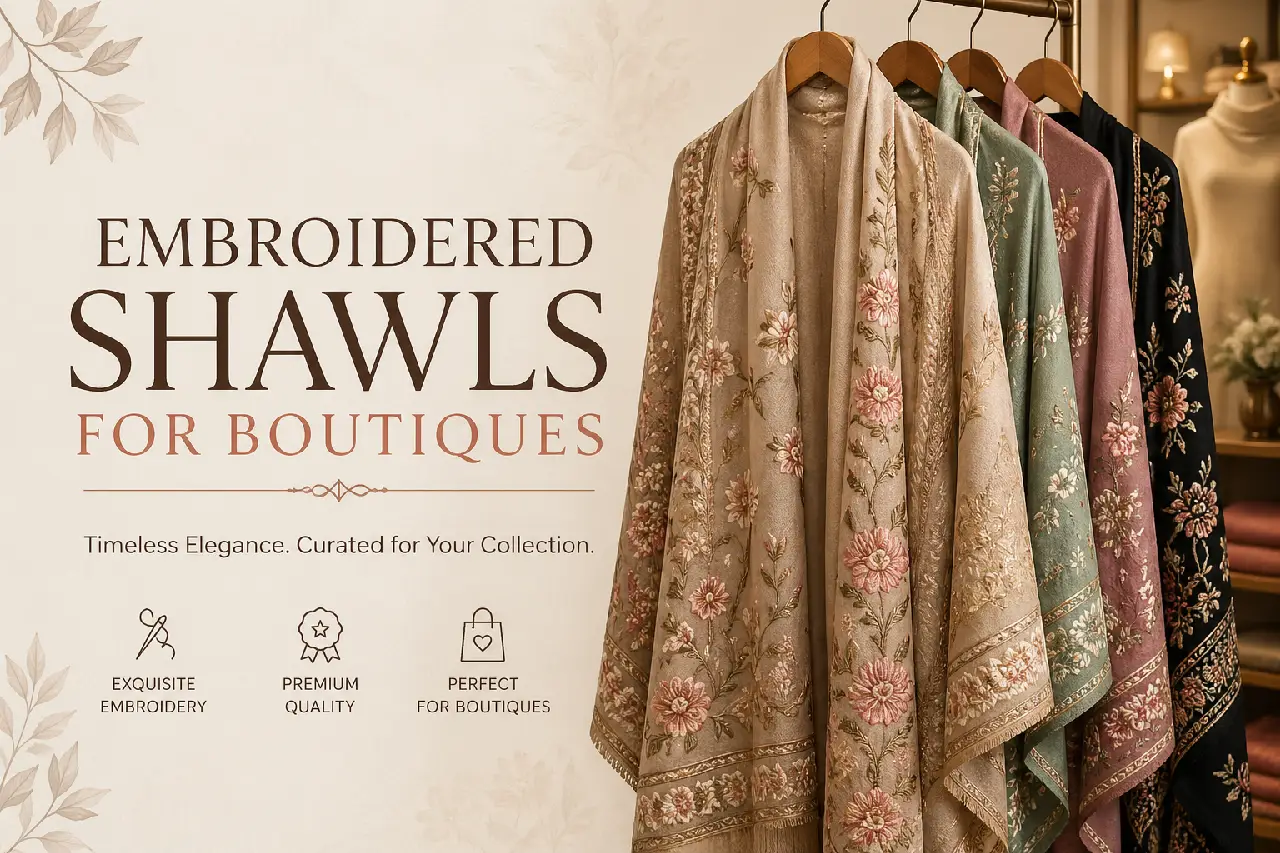
There is no doubt that embroidered shawls are among the most sought-after in the high-end shawl segment. They are made with the finest natural fibers, which are embellished with skilled artisan embroidery, making them stunningly beautiful and highly valuable, and legions of consumers who have the ability to or believe in splurging on such products.
The very best of the embroidered types of shawls come from Kashmir where there are three main embroidery styles. Sozni embroidery, however, with its tiny needle, strives to create fine borders of flowers and paisleys on plain pashmina or wool fabric. This, in turn, would make the workmanship so intense that the professional Sozni engravers would have to spend as six months in a single shawl. Such types of shawls are known to be extremely extravagant and surprised few are the collectors and members of the upper echelon who purchase these from as low as $300 upwards to even well over $2,000.
Unlike Sozni, Aari needle leads to decoration of raised patterns on the surface. The decoration techniques on such Aari embroidered types of shawls are very dramatic as they are full of bright shades and complex patterns to the delight of any fashionista. The prices vary. Mostly they can be found in the range of $150 – $800, which is the entry level range for luxury embroidered shawls.
Even if kani types of shawls are actually woven items and not embroidered items, the embroidered types of shawls are often found in the same place together with many types of shawls as can be seen in the visual designs and pricing structures. As was observed earlier, Kani shawls are the high end of the Sahwari shawl manufacture history. They are the most elaborated and expensive.
For every business dealing in embroidered types of shawls, they come in handy in so many ways. The cost of production for these types of products is high, meaning that there’s a good profit margin at every shawl sold. Also, they are aesthetically appealing, rich in quality, and well-packed hence making them appropriate for gift-giving on events like Diwali, Eid, Xmas, Rubaa Day, or even bridal ceremonies. Most importantly, they serve as a distinct advertising enhancement product: a craftsman’s shop showing table displays of exquisite embroidered types of shawls says in an obvious manner that the shop is care about quality, history, and craft.
Printed and Patterned Types of Shawls
Various types of shawls, whether plain printed or decorated, are among the most in-demand and adaptable clusters of merchandise within the shawl industry around the world. From the young to the elderly, from those who want style on a budget to those who pay high prices, a printed piece of this or that type of shawl is a basic category of ordering clothes in almost any location (small or big).
The first category includes block-printed Rajasthani shawls. This category of shawls enjoys distinctive and most intimate cultures. Block printers in Jaipur, Bagru and Sanganer manually print many types of shawls using hand-chiseled wooden blocks and natural and chemical dyes. Simple repetitive geometry, floral, unique colour schemes are achieved in such designs. Such types of shawls cost between $30 to $150, and this is quite a comfortable price range for those people who understand the craze and attraction to crafted objects and ethical styles.
Apart from printed shawls, which have gained immense popularity amongst fashionable middle-aged as well as the young market, there is screen-printed and digitally printed types of shawls which comprises a huge chunk of sales. Digitally printed types of shawls are done mostly on silk, modal, viscous, or polyester and can accommodate any form of design as offered by abstract prints of art, photographs, custom printed fashion brand designs and so on. This is because of the speed of manufacture, cheap cost of production and a host of designs which make it a favored product among retailers who want to keep up with the trends. Generally, these resemble a price range of twenty dollars to one hundred and twenty dollars.
Jacquard patterns are woven on power looms, and the power looms, which have been used for many years now, make fabrics with built-in patterns that look woven but these are not. Such types of shawls generally have auspicious or ethnic designs often geometric or medallions or even heritage patterns and are sold for a price range from $40 to $200 according to the type of material used or complexity of interweaving.
For commercial purposes, printed and patterned shawls are of great importance to many retailers. They have the ability to adapt to seasonal color and trend variations with ease, which implies that retailers do not have to make major improvements in revamping their product lines. Adorning themselves for internet-based shopping and social sites like Facebook is also perfectly done by such shawls, which make them elicit too many clicks and purchases. Furthermore, they attract a large number of customers ranging from the fashionable generation of millennials to those who still embrace the culture of ethnicity in fashion.
Seasonal Types of Shawls for Winter and Festive Demand
It is very critical for one to know how to navigate through periods easily correlated to different types of shawls. This is for purposes of smart retail purchase decisions, proper control of stock take, as well as enhancement of volume sales at any time of the current year.
Shawls such as heavy pashmina, cashmere, merino wool and double layer, belonging to the winter types of shawls, are the highest season item of all shawl and apparel brands. The main season for warm and luxury types of shawls in the northern hemisphere begins suddenly in October and ends in February due to the weather conditions and the high concentration of gifts during Christmas and New Year holidays. Winter types of shawls must be ordered and delivered far ahead of the season by the middle of September otherwise there will be insufficiency of these items when the demand is the highest.
The demand for festive and gifting seasons such as Christmas, Diwali, Eid, and New Year is at its peak, and alas this is also the season when the most premium and decorated types of shawls are also in demand in the various markets all at the same time. Targeting a four to six week window, retailers can generate amazing revenue by putting together a differentiating festival shawls collection sold to customers with premium gift able packaging, priced between $50 to even $500 because such shawls are present. As far as mohair fiscal sourcing of Kashmiri shawls goes for festive purposes, this should be established by either the end of July or the beginning of August in order to even attempt to meet production and delivery schedules.
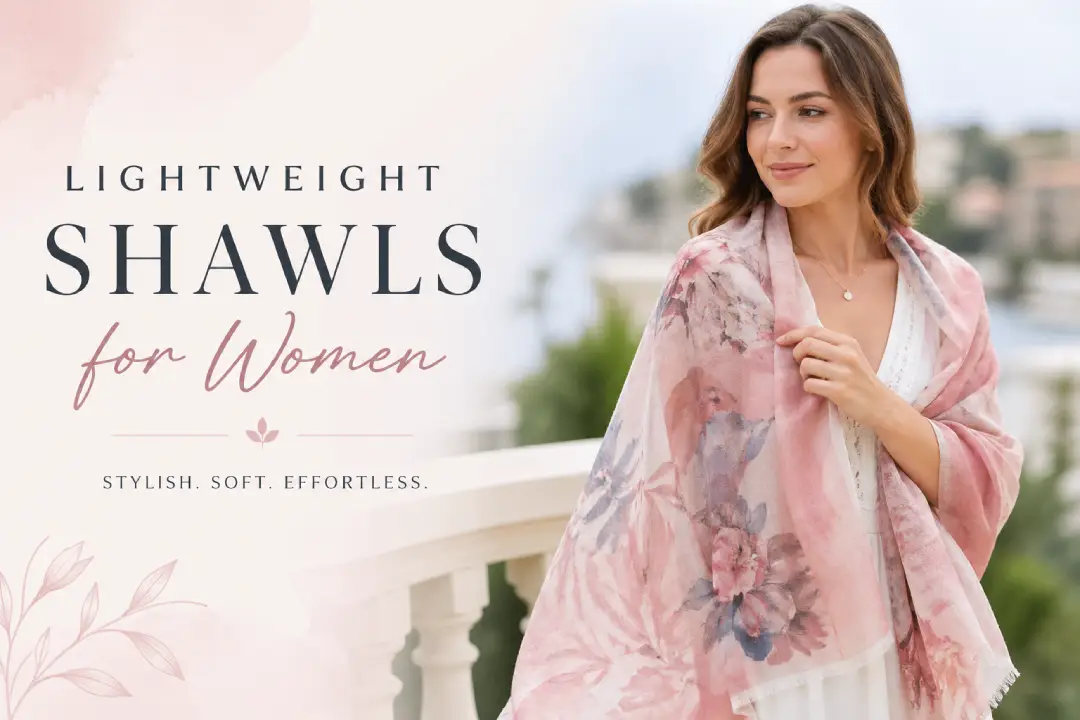
Spring and summer wraps — lightweight cotton, linen, silk, and printed viscose designs — cater to a different but equally significant consumer need: a lightweight cover for the body which can be used in air conditioned indoors, warm outdoors, a beach or for other occasions. Such types of shawls have a price range of $25-$150 and repeat the same level of demand every year from April to August. Stores that only stock winter types of shawls for winters tend to unnecessarily leave out a large portion of annual shawl revenue.
Occasion and bridal wraps – which include silk, silk-blend, and heavily embroidered styles – are in demand throughout the year, with peaks during wedding season (depending on market) and major cultural events. Such types of shawls are priced in the range of $80-$800 and above, and they mainly serve the niche, and highly demand customers, who are more than willing to foster such luxury when the occasions are right.
Affordable Types of Shawls for Mass Market Retailers
There isn’t added value in all retails to charge premium prices. Mass market retailers, department stores, online stores, as well as fashion brands turn to affordable types of shawls, which are those that enable high sales volumes, attract the attention of new shoppers, and act as cheap starting points into the world of purchasing shawls.
In most cases, synthetic or semi synthetic fibres such as acrylic, polyester, modal, viscose, and cotton-based acrylic blends are used. The latter is considerably much cheaper than the traditional raw materials and such fabrics can be woven at very high speed industrial plants that allow costing pieces at prices lower than 30 dollars without compromising the gross profit.
Globally, the greatest number of shawls sold are the cheap acrylic ones. The lightweight, washable, and fade resistant materials that exist with an infinite number of colors and designs, these types of shawls are perfect for the customers who wish to wear such a modern shawl which does not need any extra care and is even cheap to buy. They retail in a range of $8 to $2 and are quite popular and can be found and bought in stores and friends along with gifts promotions.
Warding types of shawls, in contrast to acrylic, are a level higher in drapery, softness, and resilience and they keep the price point of these two categories quite low. Model is a fabric made from the wood pulp of beech trees and is a silky shiny and adequately breathable one. And they cost about $20-$60 for such modal types of shawls, attracting people who seek posher stuff that does not have to come with a price usually attached to natural fabrics.
Certainly, majority of the mass-market retailers would agree that any business complex that stocks affordable types of shawls will only sell if: a retailer is quick to keep abreast with trends (upgrading the colour, the pattern and the style in line with the latest fashion more often than not), averted to the low-quality principle (lending emphasis on cost control without going below the minimum specified as quality), and the art of presenting displays (creating the appearance of affordable types of shawls which is more about style and value than cheapness). Retailers who manage to achieve all three appropriately always have very good sell-through rates in low price types of shawls and good profits.
Luxury Types of Shawls for Premium Customers
The market for shawls offers its pinnacle in luxurious categories, since the synthesis of craft, scarcity of materials, and the skill of the artisan are personsified in luxury-types shawls. Stores catering to wealthy clientele who are very particular about the quality in goods offered understand that this extent of shawl is not a product but rather one that speaks volumes about the calibre of the outlet itself.
What lends prestige to these types of shawls is their high-quality fibres, superb art of execution, the rarity in their number and a particular design. From authentic pashmina, highest grades of cashmere, Kani weaved Kashmiri to hand drawn and embroidered heritage shawls such luxury types of shawls range in retail between $500 and $5000 or more.
Vicuña’s luxury retains its beautiful grandeur in fashion, especially in a very feminine way. Those seem to stand in contrast knows itself very beautifully how they even hold shawls that are made of very kind of fiber. Wild vicuña of the Andes in South America is the only source of the fine and rare animal thread that is used in the textile industry. As delicate in diameter to perhaps 10, as little as fine and no more than 13 microns—that softly to touch and to handle is what a standard vicuña creates. The prices of vicuña types of shawls range from 3 thousand to 20 thousand dollars, and include some of the most exclusive accessories around the world. Few shops in the world sell vicuña shawls and this is what makes them special to anyone who sells them.
Instead of seeking cheap, inferior imitations just to make a profit, such an opportunity is compulsory for prestige retailers and high street shops as kashmiri shawls wholesale sourcing offers handwoven and hand embroidered types of shawl sweaters that will outsmart even the best name European luxury brands in terms of product and beauty but will offer significantly higher margins for the retailer due to supply chain networks within the indigenous manufacturer from more foreign trade partners of India Respondents.
It is necessary for fine types of shawls to also have a special marketing strategy. The presentation has to be single-item, each item being given enough space and context for the quality to be seen and experienced. Concise information about the product — where the fibre is from, who the artisan is, how it is made, and whether it is certified or not — can be provided either in print, where sales staff are trained to do so, or in an entertaining digital format with the help of QR code. It is such an understanding of the product that elevates the purchasing of fine shawls into something beyond a transaction.
How to Choose the Right Types of Shawls for Your Store
The decision about the best variety of types of shawls to have in your shop calls for an evaluated decision making process that considers the profile of the customer, the pricing strategy, the buying season and the margins.
Start Any types of shawl selection first in relation with the core customer. Here, who is she/he/they? How do they perceive the purpose of a shawl, i.e, warmth, smoothness, elegance, tradition, eco-friendliness or affordability? When do they need shawls, Fuarsiema or any other reasons to wear shawls be gifted or worn? The response dictates what types of shawls must be stocked. A women’s boutique appealing to fashion conscious, green living thirty-somethings will have a very different assortment
Latest demographic, updated supply chain within the brand- each of them, or none of them for the departments may stocked. A store which serves female tourists as a souvenir gift shop will have a very different range of shawls from a departmental store catering to the all-purpose crowd.
Proceed thereafter to analyze the pricing structure of your products. Ideal wraps collection and organisation will always consist of at least three major pricing divisions: entry-level (inexpensive, mass-market shawls-made to pump volume), mid-range (the majority of your sales, the volumes offering the most advantageous value to price ratio) and mid-premium (gorgeous and expensive shawls defining the upper-end of your shop and the most profitable). If all three levels are not employed, there will either be unintentional disclusion of potential customers or the highest possible spending customers will not be appropriately taken advantage of.
Match your shawl selections with your buying season. Ensure delivery of the winter types of shawls by September, the festive descriptive of service and other descriptions of woman shawls by October, and the spring – summer collection by March. Also, allow some time for the wholesale kashmiri shawls and hand-loomed types of shawls as such types need longer lead time than machine-made shawls.
Assess all kinds of shawls and their effect on your expected margin levels. Work out your item’s landed costs per piece — product charges, transportation, taxes, and warehousing, inclusive. And calculate your proposition’s retail rate, being realistic. As such, each category of shawl in your catalogue must meet the gross margins that meet the store’s requirements. Do not allow stocking of the low yielding types of shawls that move their numbers up, yet distort their entire category’s economics.
Conclude the activities and end with one, which is to refine. There are no commercially successful shawls ranges which are made up of different types of shawls without any rhyme or reason – all these products always fit one collection with the complementity in terms of colors, image, and market positioning. Such a collection helps to increase the value of each item in the collection to the consumer and makes it more enjoyable to the customer.
Common Mistakes When Selecting Types of Shawls
Shawl shopping can have as many know-hows as many errors and avoiding these latter ones is equally as economically significant.
Some of those errors include the same range of actions: obliviousness to existing solution s to the relevant issues, overstocking and losing customers among others.
The second is avoid stocking only one type of shawls. If the shop sells only pashmina, then the customer who came to the shop looking for cheaper alternatives is desired away. If some store sells only printed shawls, they will not satisfy the rich and premium customer who is after warmth and luxury of the shawl. Overall, a range of different types of shawls is necessary for purposes of increasing sales and satisfaction of customers.
The importance of fibre content cannot be disregarded. There is an inherent risk in engaging in the sale of types of shawls, which are inaccurately labelled — promotional offers with synthetic fabrics that are described as natural fiber, promotional offers with blends that are marked as ‘pure pashmina’ or ‘pure cashmere’. In such cases, the enforcement laws of labeling of textiles in most markets, especially the European Union, USA as well as UK will leave no room for such Traders as consumers may merely voice affiliation. Never fail to obtain accurate fibre content documentation from suppliers with appropriate labels for every product.
Stockpiling types of shawls which are not fast moving is a mistake of inventory control that causes accumulation of excess stock and in effect increased markdowns. Keep track of sell-throughs under different product type, color and pricing categories. If there exist some types of shawls that do not make it in the market, purchase lesser volumes or cut the range instead of putting money in some goods which customers are not fond of.
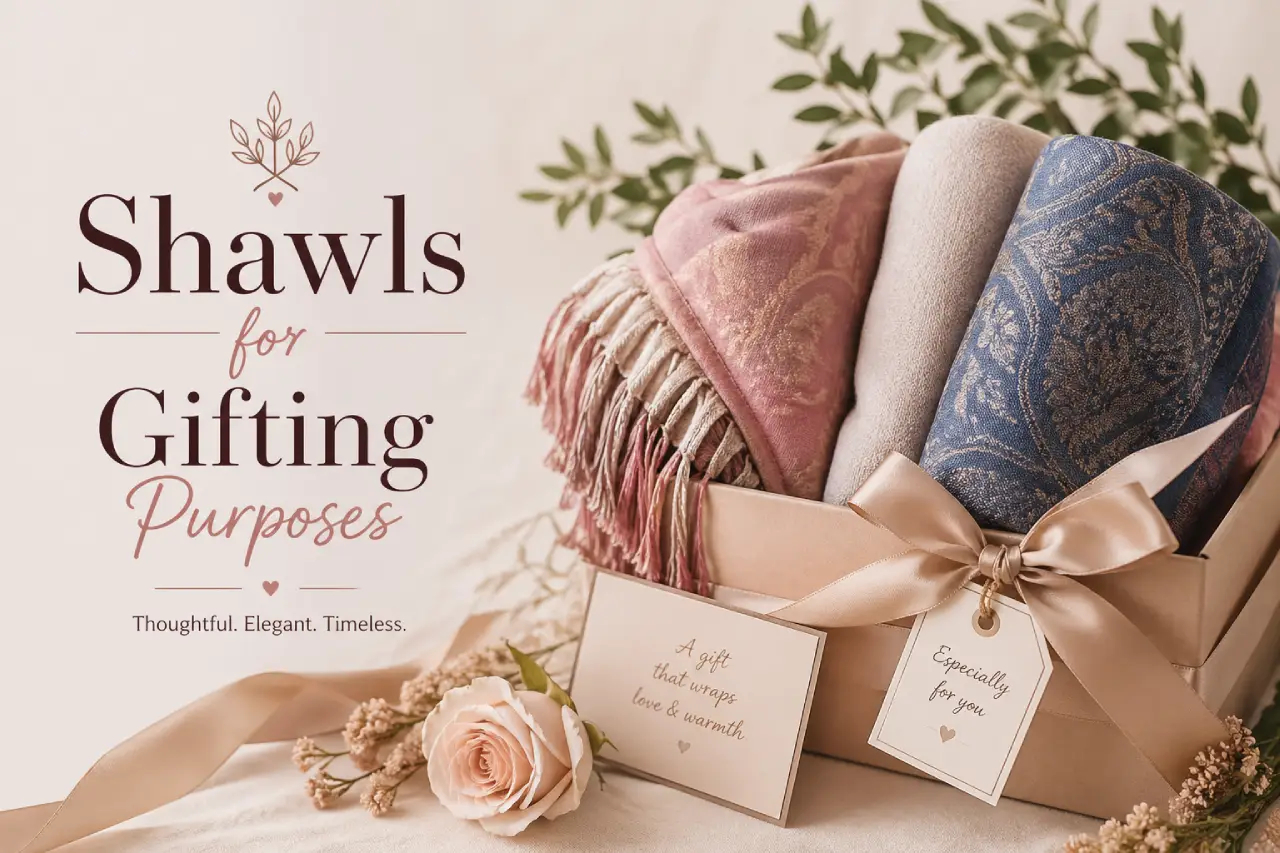
If you focus on precise details, many businesses, incorrectly aim at saving packaging and presentation aspects of the premium types of shawls. The thing is that they will not feel any different from other commodity products if only the premium types of shawls will be provided in a plain polybag. Providing your premium shawl range with good quality boxes, wrapping paper, tapes, and branded packaging will enhance the customer satisfaction as well as the willingness to pay for such products and the tendency of any customer to buy the product as a present.
This situation describes a limitation of the sales process as staff members are not aware of the various types of shawls in stock. Customers, who ask about the difference between a pashmina shawl and a cashmere one, how Kani shawls are made or a distinction of quality of a wool shawl versus a cashmere shawl, are lost to the business. Provide the employees with relevant, practical training on a regular basis. This also includes simple reading materials that aim at enhancing the conversion and revenues.
Future Trends in Types of Shawls
The marketing of shawls is disorganized and volatile. It is based almost entirely on variations in consumer tastes, production methods, and the availability of new routes of trade. There is great importance in developing future prospects for the wide range of shawls being sold as this enables manufacturers and retailers to be proactive in introducing their products instead of being reactive.
While other aspects are likely to stagnate over time, there are certain areas that feature sustainable and ethical types of shawls. This is the fastest-growing section of the shawl market, and it seems to be here to stay for quite a while. All across the board, from the most expensive luxury types of shawls to the least expensive ones, consumers now demand to know where their types of shawls originate, how the women who produced them are treated, and what degree of environmental degradation has codespensed. Any retailer intended to grow their shawl range underscored by ethically produced and fair trade types of shawls shall be certain to thrive.
There is a resurgence of interest in natural dying techniques. Global warm colours alongside characteristic rounded feminine contours and the newly emerging ‘green chartreuse’ palette that portray warm colonial plantations. These naturally coloured types of shawls are prices that are prohibitive and offers tremendous opportunities in telling business stories.
Genderless types of shawls are also becoming commercially plausible due to fashion gastroscopy where the segregation of clothing and accessories by gender becomes irrelevant. Capes, ponchos Draping, clasping shawls in non-genderized colour boards and A type of kilin wave shawls expand more into customers beyond the typical categories where these types of religious shawls are directed. Selling in a gender neutral way types of shawls provides an upper hand to the sellers where the opportunities of customers is higher.
The emergence of personalized and customized designs presents a new business opportunity especially for a luxurious range of shawls. People tend to prefer paying more especially in situations where the shawls are presented as a gift targeting personalized shawls which incorporate custom monogrammes, unusual color schemes, or particular pattern designs. The retailing of personalised shawls has so much potential to expand and thrive as long as the retailers are able to source for wholesale kashmiri shawls and avail of customisation facilities.
Digital commerce incorporation is contributing to changing the way types of shawls are seen, evaluated and bought. New technologies such as augmented reality try-ons, social commerce and AI stylized recommendations are employed in the shawl segment increasing the number of sales and helping retailers reach even the top of the pyramid global shoppers for types of shawls which earlier required the consumers to experience the goods in touch and feel.
Conclusion: Best Types of Shawls Every Retailer Should Stock
It is purely subjective and mainly dependent on what section of the market you want to be in as a retailer, the customers and the market that one wishes to target or serve, how you want the brand to be perceived and where you want to sit ambitiously in the industry. Shawls are available in the markets around the world in many different kinds of fabrics, shapes and colors and styles and even cultural customs, and those retailers who take the trouble to keep abreast with such types of shawls and cater to them selectively will be the ones who will be able to create a profitable and sustained business.
A detailed selection of shawls is always essayed and composed by a professional seller comprised of those that include a variety of types of shawls made of high-quality natural materials, such as the traditional pashmina, cashmere and fine wool shawls, which gives the collection and the retailer an Ul ceiling and high profit margins; medium – range colorful and printed types of shawls or those having decorative elements for the highest consumption tier; and cheap synthetic types of shawls or those composed of a blend of two or more materials, which allows for the capturing of segments of the population that are price sensitive. Such a strategy helps generate the highest amount of sales from all users and they are easily upgraded from cheap to expensive.
Buying Kashmiri shawls in bulk at discount wholesale prices of the premium segment is also a must for most of the retail players and the market. There are no compromises on real and genuine Kashmiri types of shawls, their quality, craftsmanship from centuries old traditions and ability to cushion profit margins, and the geographical indication supported history is among the best retail discourses in luxury fashion accessory brands.
The types of shawls, which you have today in your stock, will determine your store’s reputation in a number of seasons to follow. Select wisely, source carefully, show attractively, and know how to sell – and the shawls category will bring you one of the highest and most loyal customer margins across your entire assortment.
Related Products
Showing 253–261 of 807 results
-

Chashme Bulbul Shawls – Exquisite Traditional Shawls by Savita Shawls
Read more -

Chashme Bulbul Stoles – Traditional Elegance by Savita Shawls
Read more -

Moonlight Stoles – Elegant & Luxurious Winter Wraps
Read more -

MOONLIGHT SHAWLS – Elegant Luxury Shawls by Savita Shawls
Read more -
Beige and White Natural Check Pattern Pashmina Shawls
Read more -
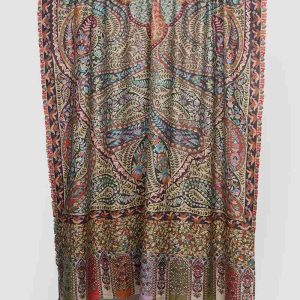
Wool Kalamkari Embroidery Pashmina Shawls Green
Rated 4.86 out of 5Read more -

RICH BLACK NEW SELF ZARI LADIES DESIGNER SHAWLS MANUFACTURER
Read more -
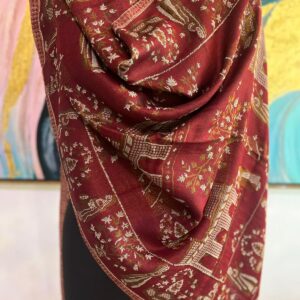
RICH MAROON NEW SELF ZARI LADIES DESIGNER SHAWLS MANUFACTURER
Read more -
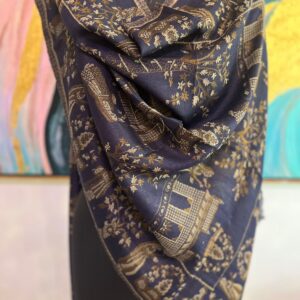
NAVY BLUE NEW SELF ZARI LADIES DESIGNER SHAWLS MANUFACTURER
Read more