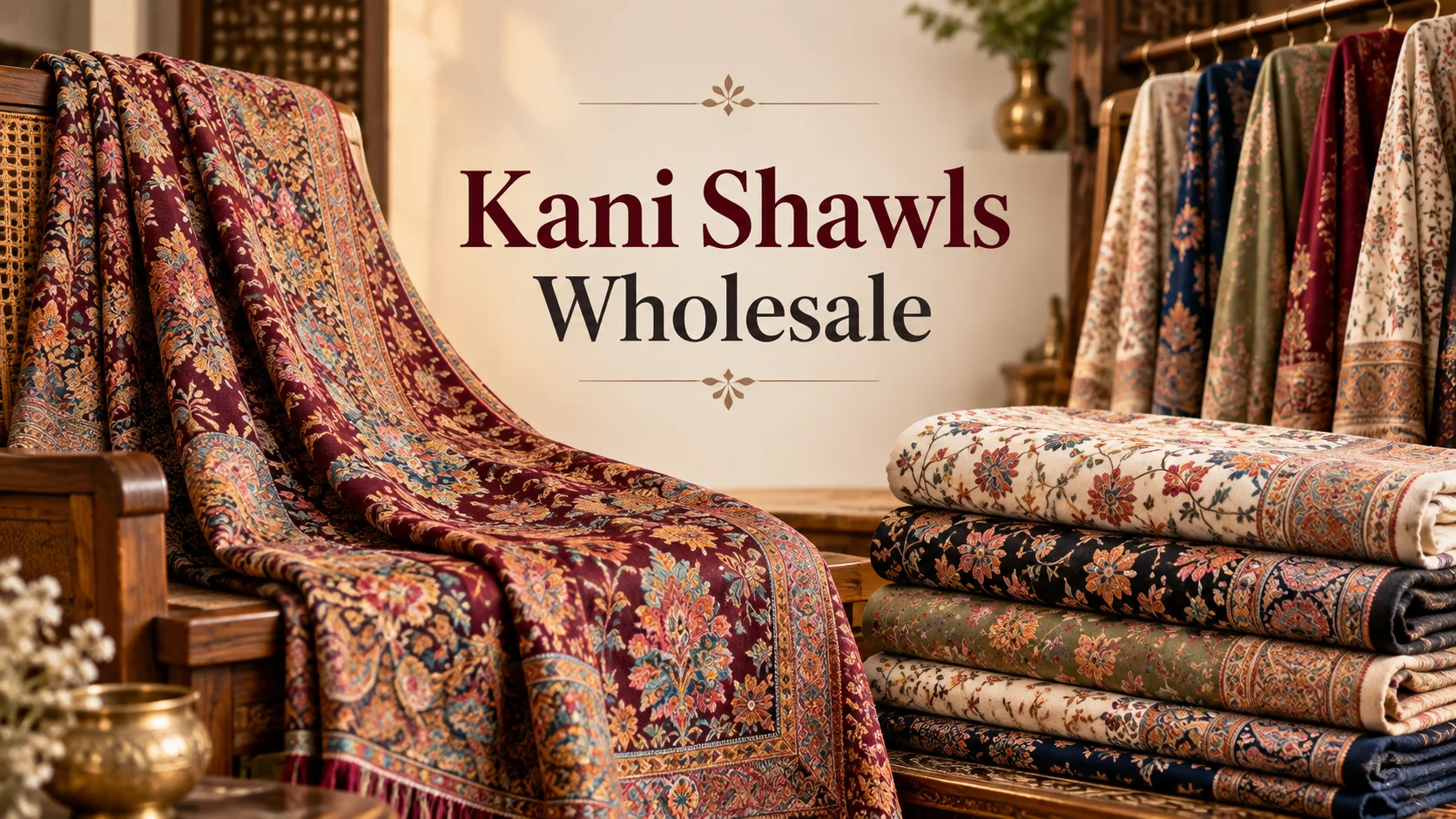
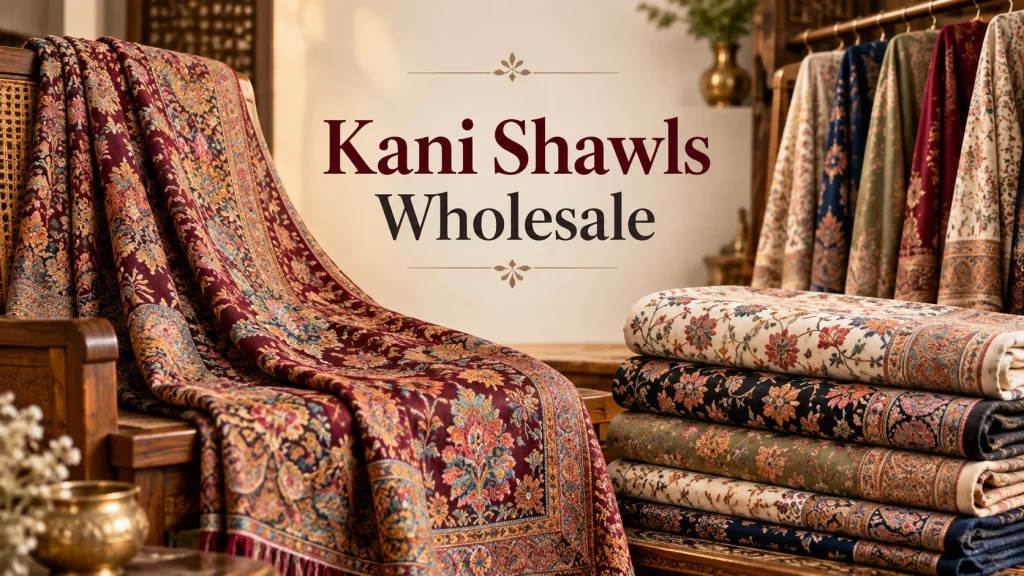
Kani shawls wholesale falls into two categories. Hand Kani is woven in Kashmir with small wooden bobbins on pashmina or fine wool, takes months per piece and sells as a luxury item. Loom Kani recreates the same paisley and floral patterns on jacquard looms in wool, modal or viscose blends, at prices and volumes that suit retail.
Key takeaways
- Hand Kani is a GI-registered Kashmiri craft. Loom Kani is a jacquard-woven design category. Both are legitimate products when they are labelled correctly.
- The reverse side separates them fastest. Hand Kani shows a near mirror of the front, while loom Kani shows cut or floating threads behind the motifs.
- Weave method, fibre and pattern coverage set most of the price.
- Before paying an advance, fix fibre composition, size, GSM and an approved sample in writing.
What is a Kani shawl?
A Kani shawl is a Kashmiri shawl whose pattern is woven into the cloth itself instead of being embroidered or printed on top. The name comes from the kani, a small eyeless wooden bobbin. A weaver works dozens of these bobbins across the warp, one for each colour, and follows a written colour code called the talim.
The craft is tied to Kanihama, a village in Kashmir’s Budgam district, and the Kani shawl holds a Geographical Indication registration in India. That registration protects the hand process, in the same way the GI tag for Kashmir pashmina protects hand-spun pashmina. Our guide to Kashmiri weaving techniques covers how Kani differs from sozni and aari embroidery.
Hand Kani vs loom Kani: what is the difference?
Hand Kani is woven by one or two artisans on a handloom with wooden bobbins. Loom Kani is woven on a jacquard loom that reproduces Kani-style motifs at production speed. The table below sets out what that means for a buyer.
| Factor | Hand Kani | Loom Kani |
|---|---|---|
| How it is made | Handloom, kani bobbins, talim script | Jacquard loom, programmed pattern |
| Usual fibres | Pashmina, fine wool | Fine wool, merino, modal, viscose, silk blends |
| Time per piece | Several months to more than a year | Hours on the loom, plus finishing |
| Reverse side | Close mirror of the front, small colour joins | Floating or clipped threads behind motifs |
| Consistency | Each piece differs slightly | Identical across a production run |
| Typical order | Single pieces or very small lots | 100 pieces per design and upward |
| Best fit | Luxury boutiques, bridal, collectors | Boutiques, department stores, gifting, online retail |
Loom Kani is largely produced in Punjab’s weaving centres such as Amritsar and Ludhiana, as well as in Kashmir. It shares its construction with jacquard stoles and sits close to Jamawar shawls in look. Neither category is a fake. The problem arises only when a loom piece is sold as hand Kani, the same labelling risk described in our comparison of handwoven and machine-made pashmina.
Which fibres are used for wholesale Kani shawls?
Fibre choice decides who the shawl is for. Kani in pashmina or a pashmina blend suits premium winter ranges, and our pashmina shawls category shows the base qualities available. Fine wool and merino give warmth and a clear pattern at a mid price, which makes them the usual choice for boutiques. Modal and viscose blends produce a lighter, smoother shawl for milder climates and gifting. For pashmina pricing and margins, see our guide to wholesale pashmina shawls.
What decides the wholesale price of Kani shawls?
Weave method, fibre and pattern coverage set most of the price of a Kani shawl. Colour count, size and finishing adjust it.
- Weave method. Hand Kani carries months of skilled labour, so a single piece can cost many times more than a loom-woven shawl of the same size and fibre.
- Fibre. Pure pashmina and cashmere sit at the top, followed by fine merino wool, wool-silk blends, modal and viscose. Fibre fineness matters as much as fibre name.
- Pattern coverage. An all-over (jaal) design uses more yarn and loom time than a shawl with a patterned border and plain centre.
- Colours and yarn count. Each extra weft colour and each step up in yarn fineness adds cost.
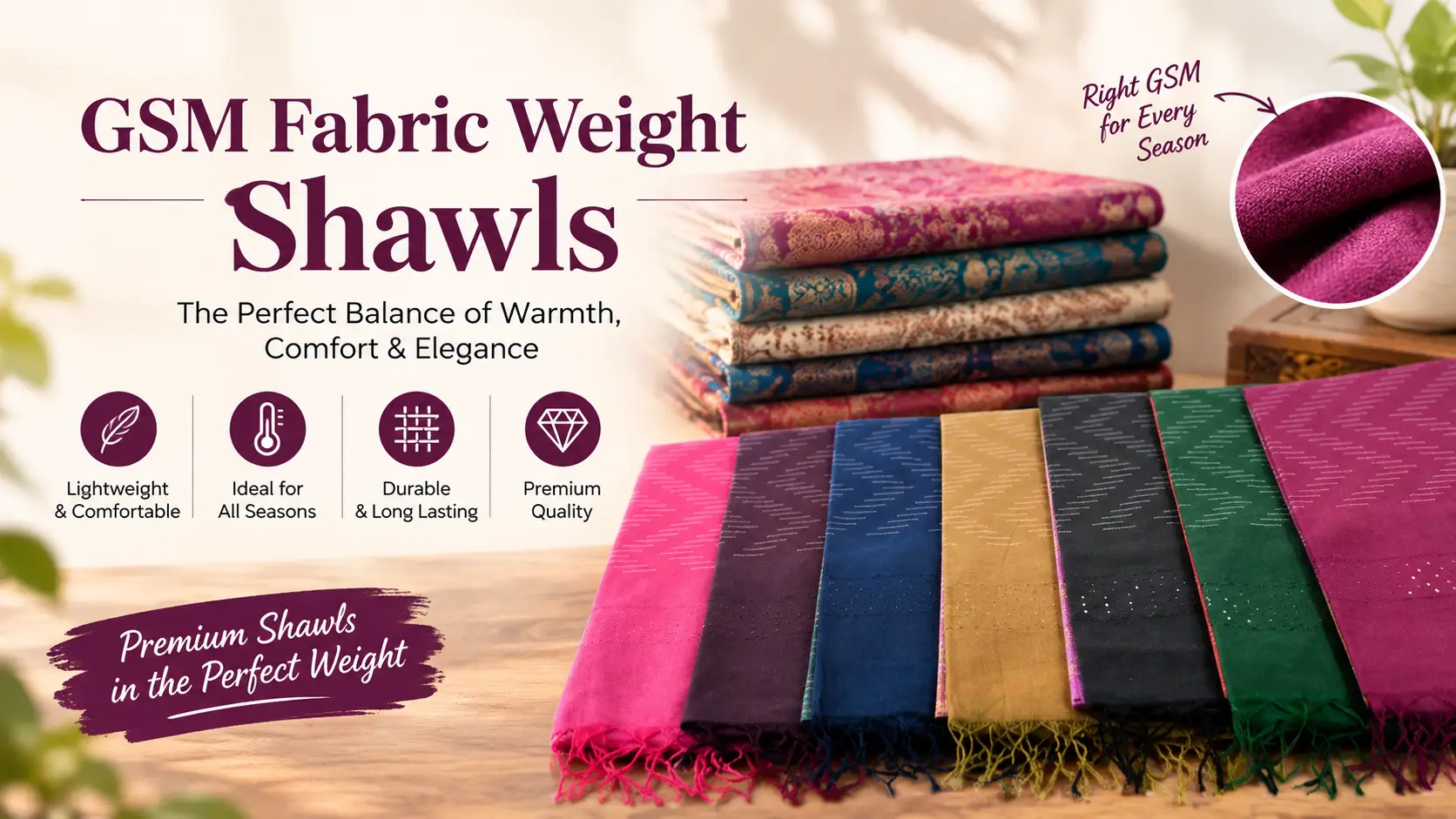
- Size and weight. A 100 x 200 cm shawl costs more than a 70 x 200 cm stole in the same quality. Our guide to GSM and fabric weight explains how to specify weight.
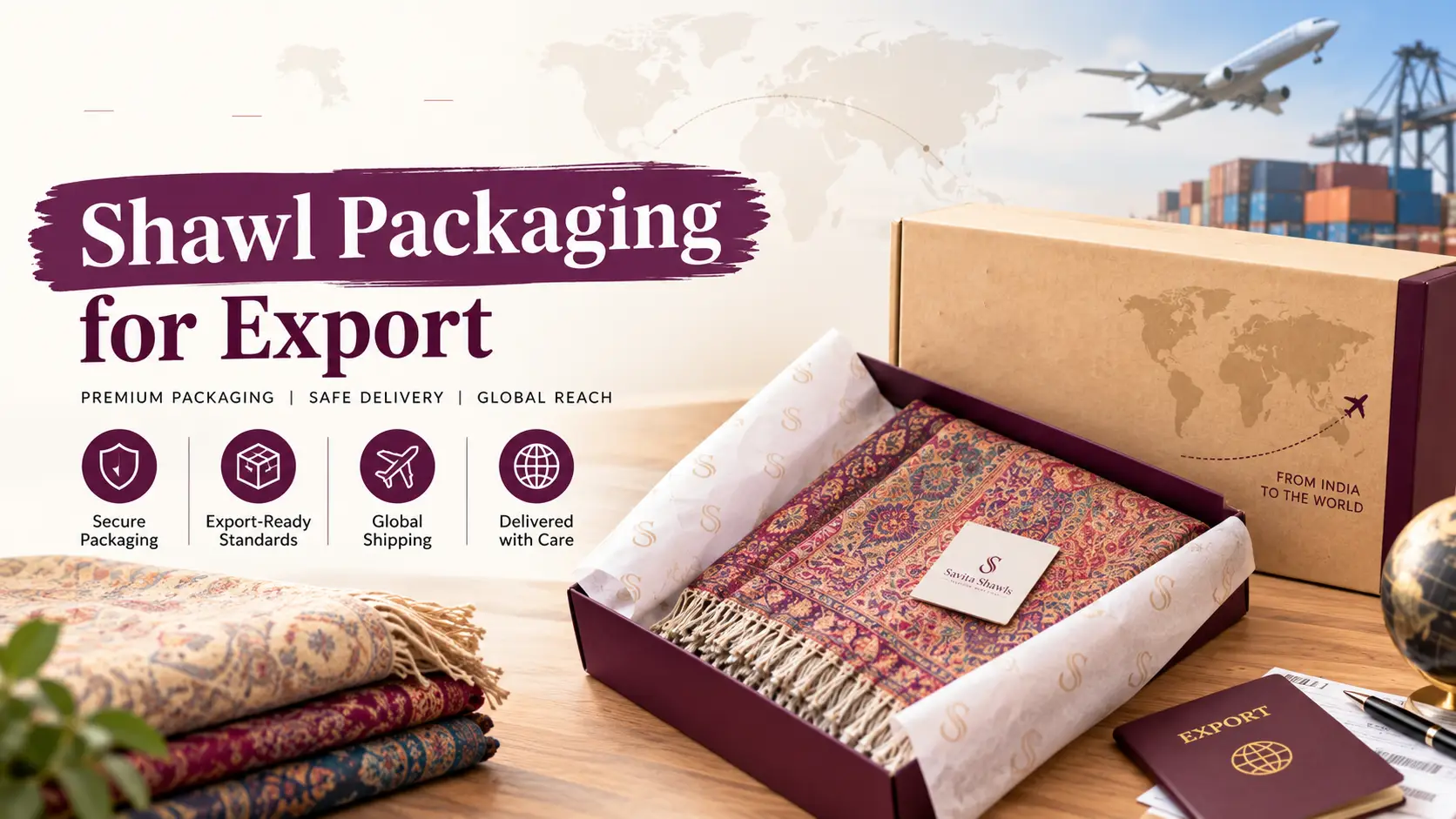
- Finishing and branding. Zari borders, fringing, woven labels and gift boxes are priced on top of the base shawl.
Because of this range, ask every supplier to quote the same specification. A quote without fibre percentages, size and GSM cannot be compared with another. For margin planning, see how to price shawls for retail.
What should buyers verify before ordering Kani shawls in bulk?
Verify seven points before you pay an advance.
- Weave claim. Ask in writing whether the goods are hand Kani or loom Kani. Turn a sample over and check the reverse.
- Fibre composition. Request a composition certificate or a lab test report. The checks in how to identify real pashmina apply to Kani woven in pashmina too.
- GI and craft claims. If a supplier quotes hand Kani, ask for the GI label or authorised-user details for those pieces.
- Specification sheet. Fix size, GSM, colour count, fringe type and label placement.
- Approved sample. Order a sample in your chosen colourway and keep it as the reference for the bulk lot. Here is how to request samples from a shawl manufacturer.
- Colour fastness and labelling. Check rub and wash fastness on dark grounds, and confirm fibre content labels meet the care label requirements of your market.
- Commercial terms. Agree MOQ, lead time, payment stages and the Incoterm. Our FOB vs CIF guide explains the shipping options.
MOQ, lead time and samples for loom Kani orders
Loom Kani is a custom woven product, so it follows jacquard timelines. At Savita Shawls, the standard terms are:
| Term | Savita Shawls standard |
|---|---|
| MOQ | 100 pieces per design, lower on some stock styles |
| Sampling | Pre-production sample before bulk, delivered internationally in 7 to 10 working days |
| Production | 45 to 60 working days for custom woven designs after sample approval |
| Quality control | Three stages: raw material, in-line and pre-shipment |
| Payment | 30 to 50 percent advance, balance before dispatch |
| Shipping | FOB, CIF or DDP with full export documentation |
If you need a smaller first order, read our notes on negotiating MOQ with shawl suppliers. Brands that want their own designs and labels can use our private label shawl manufacturing service.
Which Kani shawls should a retailer stock?
Match the Kani type to your price point and customer.
- Luxury and bridal stores: a small number of hand Kani pieces in pashmina, sold with their GI paperwork, alongside loom Kani in pashmina blends.
- Boutiques and department stores: loom Kani in fine wool or wool-silk, in four to six colourways per design.
- Gifting and online retail: loom Kani stoles in modal or viscose blends, where a lower price and lighter weight help stock move faster.
Source Kani shawls wholesale from Savita Shawls
Savita Shawls has manufactured shawls and stoles in Gurgaon since 1984 and exports to more than 40 countries. Browse our Kani shawls collection and Kashmiri shawls, then request a bulk quote with your fibre, size and quantity. We reply with pricing and sample options within 24 to 48 hours.
Frequently asked questions
What is the difference between a Kani shawl and a pashmina shawl?
Kani describes how the pattern is woven. Pashmina describes the fibre. A Kani shawl can be woven in pashmina, fine wool or a blend, and a pashmina shawl can be plain, embroidered or Kani woven.
Is loom Kani a fake Kani shawl?
No. Loom Kani is a jacquard-woven shawl in a Kani-style design, and it is a legitimate product when sold under that description. It becomes a misrepresentation only when it is labelled or priced as hand Kani.
How can I tell hand Kani from loom Kani?
Check the reverse side first. Hand Kani shows the pattern almost as clearly on the back, with small ridges where colours join. Loom Kani shows loose or trimmed threads behind the motifs, and every piece in the lot is identical.
What is the minimum order for Kani shawls wholesale?
Savita Shawls starts at 100 pieces per design for custom woven Kani, with lower quantities on some stock styles. Hand Kani is usually sold by the piece because of its production time.
How long does a wholesale Kani shawl order take?
Custom loom Kani takes 45 to 60 working days after sample approval. Hand Kani takes from several months to more than a year per shawl, so it cannot be scheduled like a bulk order.
Can Kani shawls be made with my own design and label?
Yes. Loom Kani suits private label work. You share a design reference or artwork, the weave pattern is developed, and a pre-production sample is approved before bulk weaving with your woven label and packaging.