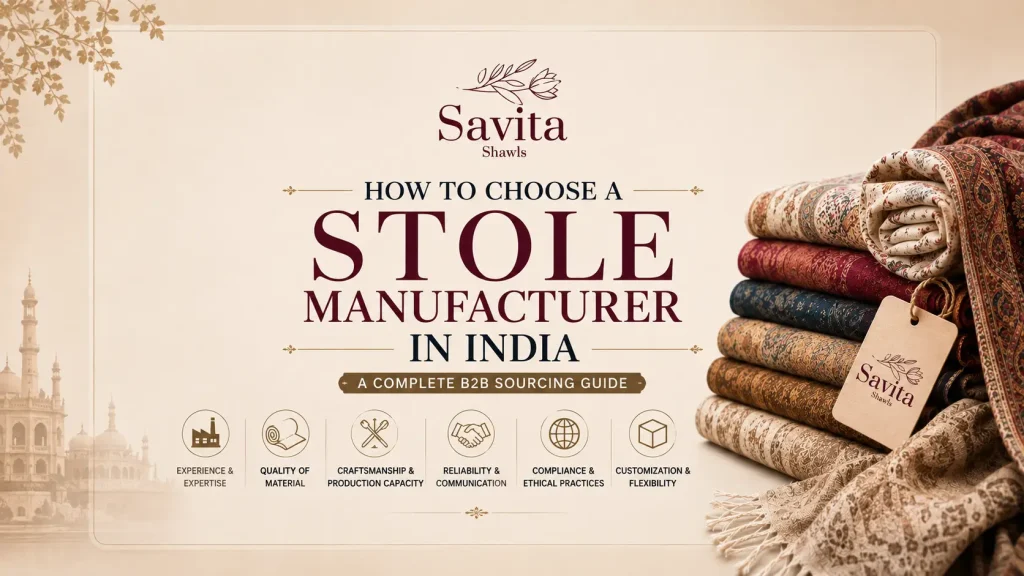
Search any Indian trade directory for a stole manufacturer India buyers can rely on and you will get four thousand listings before you finish your coffee. Most of them are not manufacturers. They are traders working out of a market office, buying finished stock from a weaving unit in Ludhiana or Amritsar and adding twenty percent before it reaches you. Nothing illegal about that, but you are paying for a middle layer that adds no value to your order and cannot fix a quality problem when one appears. Choosing the right stole manufacturer India side of that divide decides your margin, your quality and your delivery dates. This guide covers what separates the two, and what to check before your money leaves the account.
What separates a stole manufacturer India buyers trust from a trading house
A manufacturer owns looms, dyeing capacity and finishing equipment. A trading house owns a phone. The practical difference shows up when you ask for something slightly outside the standard range: a manufacturer quotes you a price and a lead time, a trader goes quiet for three days and comes back with excuses.
Four questions sort one from the other quickly. Ask how many looms they run and of what type. Ask whether dyeing is in house or jobbed out. Ask for a photograph of a production floor with today’s date on a whiteboard in frame. Ask what happens to a batch that fails inspection. A working stole manufacturer in India answers all four without hesitation because these are ordinary questions about their own building. A trader will answer two of them, deflect the third, and offer to send you samples instead.
The GST and IEC numbers are worth verifying too. The Import Export Code can be checked on the DGFT portal and GST registration on the official GST portal, both in under a minute. Any stole manufacturer India buyers are considering should hand over both numbers without being asked twice, and a supplier who will not share them is telling you something. If you are still deciding between buying direct from a factory or through a distributor, the wholesale stole buying process sets out the trade-offs in detail.
Stole fabrics every stole manufacturer India offers
Stole pricing follows fibre before anything else. Viscose and polyester sit at the bottom, cotton and modal in the middle, wool and silk above that, and pashmina and cashmere at the top. The gap between the cheapest and dearest fibre in the same size and finish can be a factor of ten.
Viscose stoles move in enormous volume across India and the Gulf because they drape well, take colour brightly and cost very little. They also pill after moderate wear, which matters if your retail customer expects two seasons out of the product. Polyester is cheaper again and more durable, but it does not breathe and the hand feel gives it away immediately in a shop.
Cotton stoles and linen work for spring and summer ranges and for markets where natural fibre content is part of the sell. Modal sits between viscose and cotton, softer than either, and holds printed colour well, which is why it dominates lightweight summer stoles. Fine wool and merino carry autumn and winter ranges in Europe and North America.
At the top of the range, silk stoles serve evening, bridal and gifting programmes, while pashmina stoles and cashmere stole grades supply luxury boutique retail. These three carry the highest margins and the highest risk of misrepresentation, so fibre documentation matters more here than anywhere else in the range.
Then there is the blend question. A supplier quoting you 70/30 wool silk should be able to produce a fibre composition report. If they cannot, treat the stated ratio as marketing rather than specification, and price accordingly.
Reading GSM, size and finish on a stole specification
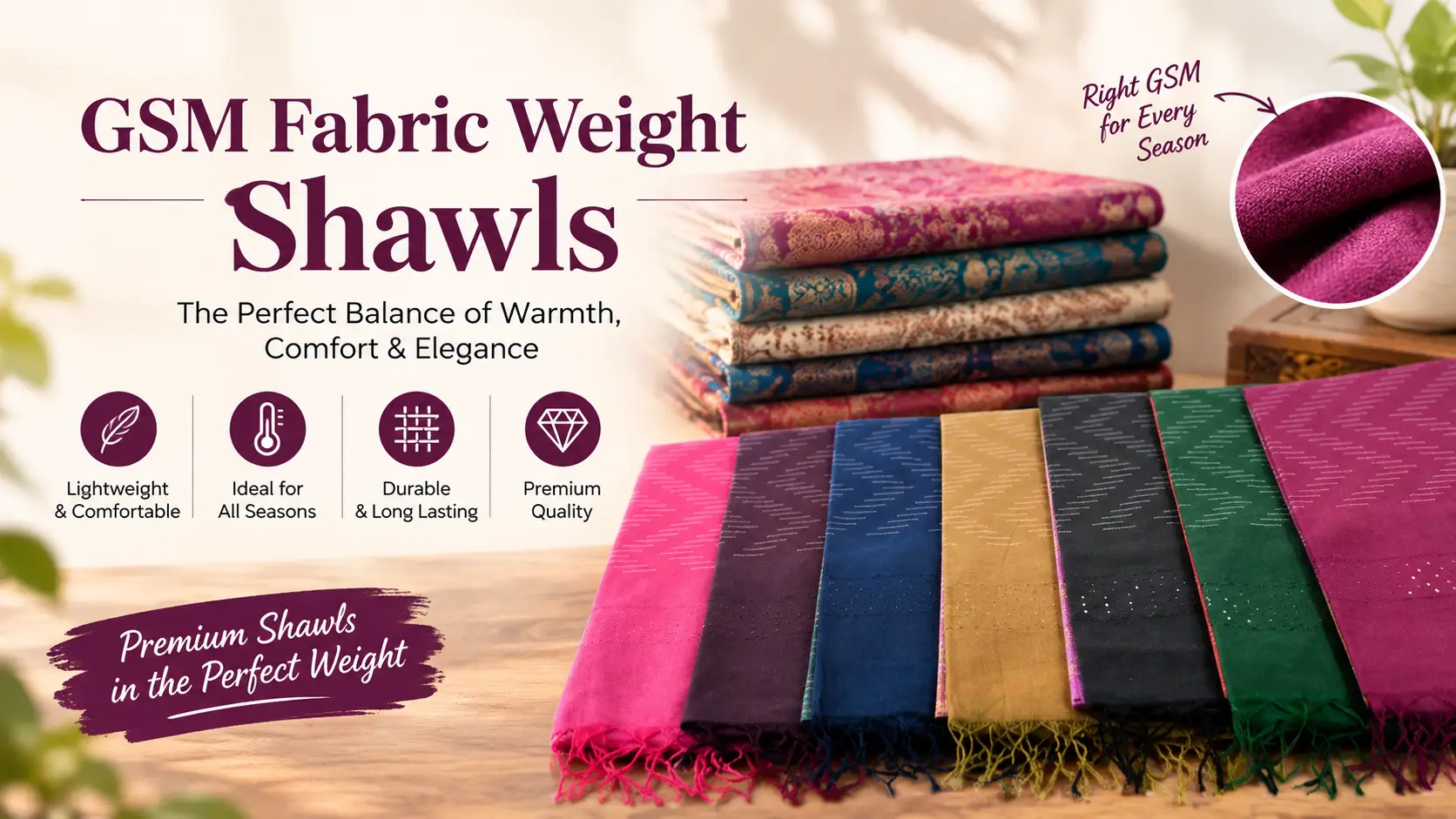
GSM is grams per square metre, and it tells you the weight and therefore the warmth and drape of the fabric. A summer viscose stole runs 90 to 130 GSM. A fine wool winter stole runs 180 to 250 GSM. A difference of 20 GSM between your sample and your bulk delivery is visible and detectable by hand, so specify it in writing.
Standard Indian stole dimensions are 70 by 200 centimetres, with 55 by 180 and 30 by 150 also common depending on whether the piece is sold as a stole or a scarf. Confirm whether the quoted size includes or excludes the fringe, because a 200 centimetre stole with 10 centimetre fringes at each end is a different product from one measuring 200 centimetres to the fringe.
Finish covers the edge treatment: hand knotted fringe, twisted fringe, rolled hem, or a plain overlocked edge. Hand knotting adds labour cost and lead time. It also adds visible craft value on the shelf, so the decision is commercial rather than technical.
What actually drives your per piece price
Five variables move the number: fibre composition, GSM, embellishment, order quantity and customisation. Fibre is the largest single factor. Embellishment is the most variable, because hand embroidery is priced by artisan hours and can easily exceed the cost of the base cloth.
Quantity works the way you expect, but the curve is flatter than most first time buyers assume. Moving from 100 to 500 pieces of the same design gives you a meaningful reduction. Moving from 500 to 5,000 gives you far less than proportionally more, because the yarn and labour cost does not compress much further. If a supplier promises dramatic savings at ten times the volume, ask which input they intend to downgrade.
Customisation costs sit mostly in setup rather than per piece. A custom woven design carries loom setup cost and a longer development cycle. Printed stole production carries artwork and colour proofing cost instead. Both are one time charges that amortise across the run, which is why custom programmes make more sense at 500 pieces than at 100.
MOQ, sampling and lead times from a stole manufacturer India
Minimum order quantity in the Indian stole trade usually starts around 100 pieces per design for stock styles and rises to 200 for custom work. Be careful with quoted minimums. A supplier who advertises an MOQ of 25 and then finds reasons to need 300 once you are committed is a common enough pattern that it is worth testing early with a small trial order.
Sampling is where you find out who you are dealing with. A pre production sample is a physical piece made to your specification before bulk starts, and no serious bulk order should proceed without one. Expect to pay for samples at a higher per piece rate, and expect that cost credited back against the bulk order. Five to seven business days for catalogue samples is normal. Two to three weeks for a custom developed sample is normal. Anyone promising a custom woven sample in 48 hours is sending you something off the shelf. The mechanics of requesting samples from a manufacturer are worth understanding before you make first contact.
Lead times track complexity. Stock styles with your own label take around two weeks. Digitally printed custom work runs three to five weeks. Hand embroidered work runs six weeks or more, and traditional woven techniques longer still. Build these into your buying calendar rather than discovering them in October.
Branding and private label options
Private label means the finished product carries your brand and no trace of the factory that made it. In practice this covers woven inner labels, printed care labels in your destination language, hangtags with your artwork, barcode and SKU labelling, and packaging in your specification.
Woven labels look and feel considerably more premium than printed ones and cost slightly more. For anything positioned above entry level retail, take the woven label. Care labels are not optional in most export markets, and getting the language and fibre content wrong is a customs problem rather than a cosmetic one.
Colour matching deserves attention. Supply Pantone references and insist on a lab dip, which is a small dyed swatch produced for your written approval before bulk dyeing starts. Approving a lab dip takes two days. Rejecting five thousand pieces because the navy came out too purple takes considerably longer. Buyers building a full custom stole development programme, or running a private label shawls and scarves range across several products, should lock colour standards once and reference them on every subsequent order.
Quality control your stole manufacturer India should run
Inspect at three points, not one. Raw material inspection catches fibre and yarn problems before they are woven into five thousand pieces. In line checks during weaving, dyeing and finishing catch drift while it is still correctable. Pre shipment inspection catches everything else while the goods are still in India and still the supplier’s problem.
What to check specifically: fibre composition against the order specification, GSM against the approved sample, dimensional accuracy including fringe length, colourfastness under wash and light exposure, and consistency of shade across the batch. Shade variation between cartons is the single most common complaint in bulk stole orders and it comes from dyeing in separate lots.
For orders above a few thousand pieces, a third party inspection agency costs a few hundred dollars and is worth it on a first order with a new supplier. After two or three clean deliveries you can reasonably stop.
Export documentation and shipping terms
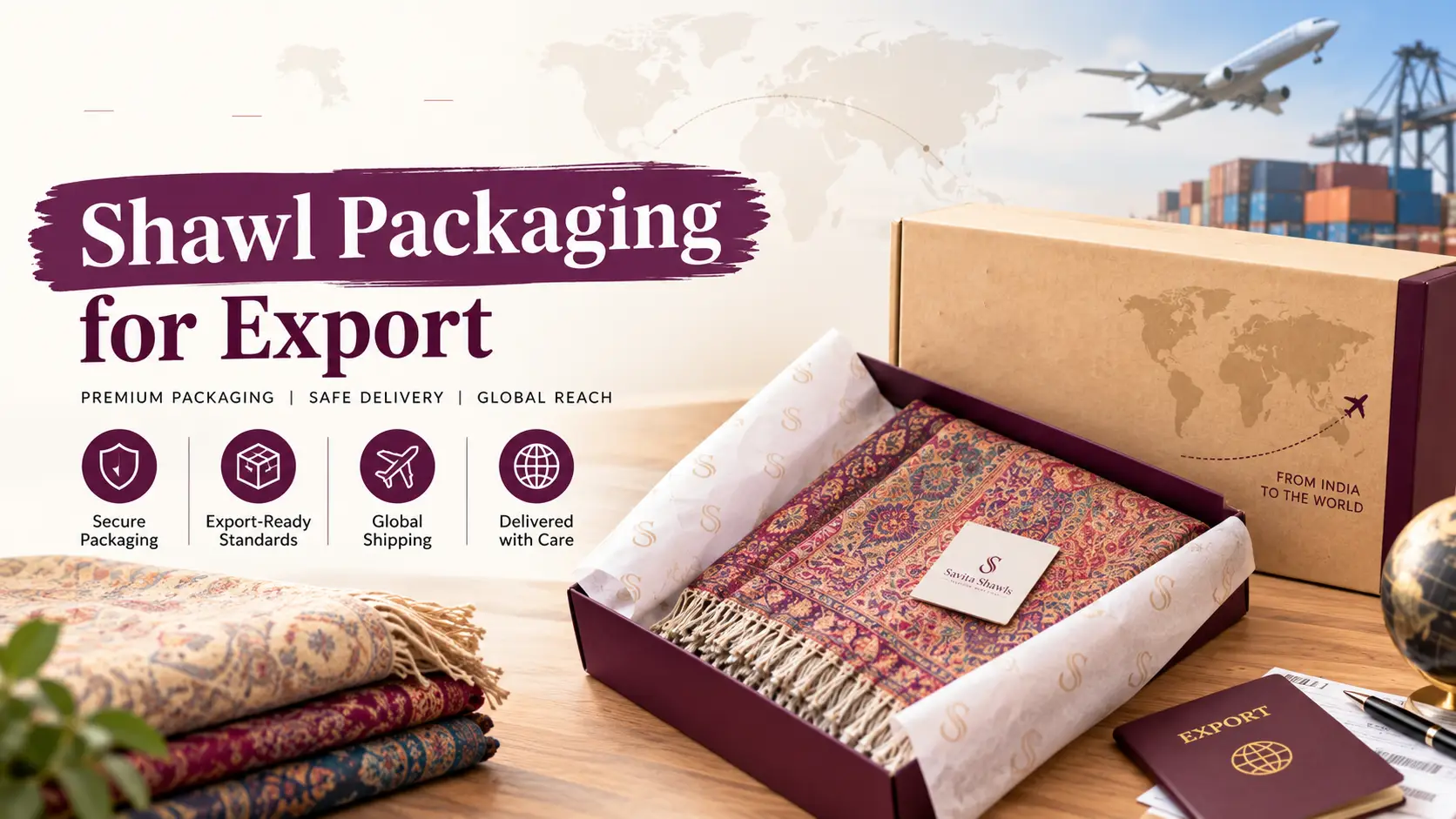
An Indian exporter should provide a commercial invoice, packing list, bill of lading or airway bill, certificate of origin and GST invoice as standard, with a pre shipment inspection certificate on request. Missing paperwork holds goods at your port at your cost, so confirm the document set before dispatch rather than after. The full compliance picture for stole exporters in India covers registrations, inspections and market specific requirements in more depth.
Choose your Incoterm deliberately. FOB means the supplier delivers to the Indian port and you arrange freight from there, which suits buyers with their own forwarder. CIF means the supplier arranges and pays shipping and insurance to your port. DDP means the supplier handles everything including duty, which costs more but removes the learning curve for a first time importer. The cost comparison between FOB and CIF pricing usually decides this for buyers placing their second or third order.
Mistakes buyers make with a new stole manufacturer India
Ordering bulk without a physical sample is the expensive one. Photographs do not communicate hand feel, and hand feel is most of what a stole is.
Others worth avoiding: accepting a verbal MOQ without written confirmation, approving colour from a screen instead of a lab dip, leaving fringe length unspecified, assuming the sample fabric lot will be the bulk fabric lot, and paying a hundred percent in advance to a supplier you have never worked with. Standard terms are part advance and part before shipment, and a supplier insisting on full payment upfront on a first order is asking you to carry all of the risk.
Product terminology causes more confusion than it should. Buyers regularly order a stole and expect shawl dimensions, or list a scarf on their site with a stole photograph. The difference between a shawl, stole and scarf comes down to width, length and intended drape, and getting it wrong creates returns you could have avoided at the purchase order stage.
One more: buying purely on price. The cheapest quote in a set of six usually indicates a downgraded fibre or a skipped finishing stage, and you will find out which one when the goods land.
Savita Shawls as a stole manufacturer India buyers work with
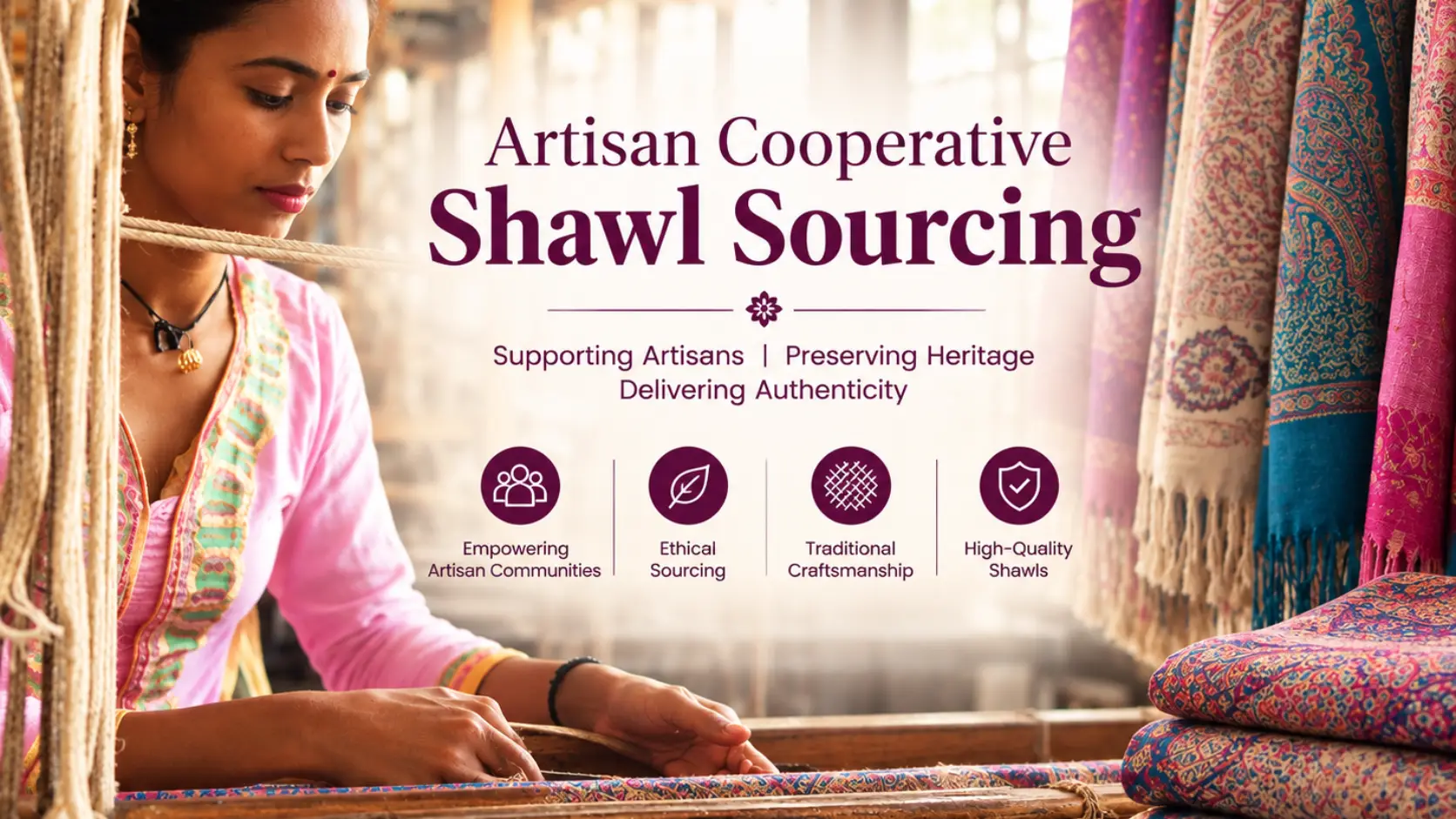
Savita Fashions LLP, trading as Savita Shawls, has worked as a stole manufacturer India buyers have sourced from since 1984, producing stoles, shawls and scarves from Gurgaon, Haryana since 1984 and exports to more than 20 countries including the UK, USA, UAE, Germany, France, Australia and Japan. The company is GST registered under 06AFPFS3876N1Z0, holds IEC AFPFS3876N, and is registered with FIEO and AEPC.
The working terms are straightforward. MOQ is 100 pieces per stock design and 200 pieces per custom or OEM design, with corporate gifting orders accepted from 50 pieces with branding. Samples dispatch within 5 to 7 business days and the sample cost is credited against the bulk order. Production runs 10 to 15 working days for stock styles with your label, 20 to 25 for custom printed work, 30 to 40 for custom embroidery and 45 to 60 for custom woven designs including jacquard and kani.
The full stole manufacturing range covers viscose, modal, cotton, linen, silk, fine wool, pashmina and cashmere along with blends. Winter buyers generally start with fine wool stole styles. For woven texture without added print or embroidery cost, self jacquard stole designs are the usual starting point.
Quality control runs in three stages: raw material inspection before production, in line checks during weaving, dyeing and finishing, and a final pre shipment inspection. Shipping is available on FOB, CIF or DDP terms. Payment is 30 to 50 percent advance with the balance before shipment, with letters of credit and 30 day terms available to established repeat buyers.
Here is the ordering sequence from first contact to delivery:
- Send your requirement with product type, fabric, quantity and any branding needs.
- Receive a quote with FOB or CIF pricing, confirmed lead time and payment terms.
- Approve the pre production sample, and the lab dip if you are using custom colours.
- Confirm the purchase order and pay the advance to release production.
- Production runs with quality checks at each stage.
- Pay the balance, goods dispatch with the full export document set.
Buyers placing a first international order will find the wholesale buying guide covers the sourcing terminology in more detail.
Frequently asked questions
What is the minimum order quantity from a stole manufacturer India?
Most Indian stole manufacturers set minimums between 100 and 300 pieces per design. Savita Shawls works to 100 pieces per stock design and 200 pieces per custom or OEM design, with corporate gifting orders accepted from 50 pieces with branding applied. Confirm any minimum quoted by a stole manufacturer India in writing before sampling, because verbally quoted low minimums are frequently revised upward once an order is in progress.
How long does bulk stole production take?
Lead times depend entirely on the level of customisation. Stock styles carrying your own label take 10 to 15 working days. Custom printed stoles take 20 to 25 working days. Custom embroidered work takes 30 to 40 working days. Custom woven designs including jacquard and kani take 45 to 60 working days. All timelines start after sample approval and receipt of the advance payment.
Can I get stoles made under my own brand?
Yes. Private label and OEM manufacturing covers woven inner labels, printed care labels in your destination market language, custom hangtags, barcode and SKU labelling, and branded packaging, with no reference to the manufacturer on the finished product. Savita Shawls provides an NDA on request before you share design artwork or brand assets.
How do I verify that a stole supplier is a real manufacturer?
Check the GST and IEC registration numbers on the relevant Indian government portals, both of which take about a minute. Ask directly how many looms are operated, whether dyeing is done in house, and request a dated photograph or video walkthrough of the production floor. A working stole manufacturer India answers these without hesitation. A trading intermediary usually deflects.
What fabrics are used for wholesale stoles?
Common stole fabrics are viscose, polyester, cotton, linen, modal, silk, fine wool, merino, lambswool, bamboo, pashmina and cashmere, plus blends of these. Viscose and polyester serve high volume fashion retail, cotton and modal suit summer ranges, fine wool covers autumn and winter, and pashmina and cashmere serve luxury boutique retail at the top of the market.
Do stole suppliers India provide samples before bulk orders?
Established stole suppliers India offer paid samples with the cost credited against a confirmed bulk order. Catalogue samples typically dispatch within 5 to 7 business days. Custom developed samples take two to three weeks because artwork, colour approval and a lab dip are involved. No bulk order should proceed without a physical pre production sample in your hands.
What export documents come with an Indian stole shipment?
A standard export shipment from India includes a commercial invoice, packing list, bill of lading or airway bill, certificate of origin, GST invoice and shipping bill. A pre shipment inspection certificate and insurance certificate are available on request. Confirm which documents your destination customs authority requires before dispatch, since missing paperwork causes delays at your own cost.
What payment terms are standard for a bulk stole manufacturer order?
Standard terms across the Indian trade are 30 to 50 percent advance to release production with the balance payable before shipment. Established repeat buyers can usually access letter of credit arrangements or 30 day credit terms. Wire transfer, letter of credit, PayPal for smaller amounts and Western Union are commonly accepted. Full payment in advance on a first order is not standard practice.
Ready to source
Send your requirement with the fabric, quantity, size and any branding details, and Savita Shawls, a stole manufacturer India buyers have used factory direct since 1984, will come back with pricing, lead time and sample availability. Samples dispatch within 5 to 7 business days and the cost is credited against your bulk order, so the cost of finding out whether the quality suits your market is low. Start with a bulk stole quote request, or write to sales@savitashawls.com or call +91 7696677766.