
There are two major areas that people are engaging in the textile industry without considering starting the business from zero; the shawl wholesale business is one of those areas. Such a business presents immense possibilities that are worth pursuing even when aiming to be a small scale player, and also in the event of coming up with a totally new product that has very high barriers to entry for the reasons that will take very long time explanation.
Amongst all the textiles that are used to make people warm, a shawl is the most common and still most worn fashionable and especially useful to a female commodity such as a shawl has no party lines as the love for it does not recognize geographical location, weather, ethnic group or generation. Grenadine shawl made of pashmina is a coveted accessory for the woman in fashion in places such as London or NewYork. It could be a woolen wrap kind of shawl for keeping warm in Central Asia and Eastern Europe or it may be a lighter printed shawl for women in South or Southeast Asian countries; knitting has a varying technique and the potential of marketing such knitwear varies as well.
Shawl and wrap accessories have grown to become a multi-billion dollar global market, and it shows no signs of slowing down. The growth in the sector has been attributed to the increase of disposable incomes in the financially growing markets, and in the development of financially advanced markets, to the luxury brands fashion items, and also the increase in cross-border e-commerce where shawls from India and other manufacturing hubs anywhere in the world are made available to customers by sawing the need for suppliers.
At the center of the industry is the shawl wholesale business. It entails purchasing shawls from manufacturers at such high economies of scale, and retailing them at a mark-up price to fashion boutiques, shops, online sellers, fashion houses, government procurement, and corporates among others which yields high returns and is sustainable.
This details dossiers on how to start a shawl wholesale business from scratch covering the following topics: market assessment, surveying suppliers, strategic pricing, distribution channels and scaling the business over time.
Why Shawl Wholesale Business Is a Profitable Opportunity
Profitability of a shawl wholesale business has been maintained as has been explained for several factors that permit others to be sent or choose simple textile order developments instead of those other reasons.
To begin with, shawls are sold around the world, making the market for them a true and complete market. This is where the difference between categorization of some fashionable items such as these which are susceptible to trends and are geographically located, and many others which are not comes to play. Even though these are worn all year round, any well managed shawl wholesale business will never focus on only one market, one season, or one consumer behavior. This ensures that the business is not affected in negative ways from one sector only.
Firstly, the competitive edge that shawl wholesale businesses enjoy due to the relatively low cost of production in India is quite breathtaking. India’s most prominent centers of shawl manufacturing include but not limited to Kashmir, Ludhiana, Amritsar, Jaipur and Varanasi. The cost of producing an item in India contrary to their western counterpart has remarkably been cheaper hence creating a gap that renders the shawl wholesale business feasible. For instance, an Indian-based manufacturer may produce a pashmina shawl and sell it in bulk within the price range of $3010 80 dollars. Such a product, however, may be sold for about $150 to approximately $400 in the European North American, among other markets. This translates to a markup cost-3-5 times the aforementioned purchase price.
Thirdly, there is the advantage on the business side. The range of shawls is impressive for any customer – from the cheapest acrylic wraps costing $5 to the finest embroidered pashmina pieces retailing at over $5,000. The implication of this is that the shawl wholesale business may be operated even at the lowest levels of capital, the narrowest markets or the shortest margins. The business model can be extended to the extent of adding lines and growing the store gradually, which of course involves an increase in investment.
Fourth, the growth of the international e-commerce market has effectively opened up such a business to a wide audience in countries other than ‘the home market’ of a company. Practically speaking, nowadays, a company like Alibaba or IndiaMART or Amazon Business, combine the benefits of retail with wholesale. And any wholesale buyers can be sourced from different continents without participating in, or sponsoring, expensive exhibitions or facing the requirement to set up many showrooms. A shawl wholesale business, which is primarily digital in its operation, may satisfy the needs of customers located in thirty different countries using a single warehouse only.
When you add low costs of production, potential high cost of retail, high level of demand, variety of products, and internet based sale system, many are the factors that make the shawl wholesale business such an attractive textile venture among new to experienced entrepreneurs.
Understanding the Shawl Wholesale Business Model
Prior to commencing the wholesaling of shawls, it is pertinent to grasp the fundamental mechanics of the wholesale business model, including its application in this case the shawl and textile industry.
For shawl wholesale business, you are a provider of the supply chain between the manufacturers and the end retailers or buyers. Basically, shawls are bought in bulk from manufacturers or shawl suppliers in India, and other shawl production places in the world, stocked, and later sold to retailers, boutiques, e-commerce sellers, fashion brands, and corporate buyers — usually with a price margin of 30 to 80 percent over the landed cost.
Your dominance as a shawl wholesale business is made up of four factors: economies of scale (abatement in unit costs via bulk purchases), assortment of products (maintaining an array trusted by retail customers), efficiency of logistics (quick and stable execution of orders), market intelligence (understanding and accessing what sells where and at how much).
The structure and operation of shawl wholesale business is mainly based on two types. The first type is stock-and-sell wholesale where the stocks are bought on anticipation, stored and sales are made from the available stock. This one involves pre-operational costs as well as benefits like expediency and confidence to the customers. The second type is indent wholesale where cash is not paid upfront but the sale is contingent on retail orders. This one does not involve a lot of cash expenses at the beginning, however, the supply chain is rougher and their waiting period is longer.
The best shawl wholesale businesses, for the most part, work in a combination of the two aforementioned models. They keep inventories of the most common items for orders that need to be filled out immediately but expect their customers to make indent orders for special pieces and collections that are seasonal or made according to order.
The crucial element that has to be examined in order to be able to run a shawl business successfully is the costs or rather the various components thereof. The total landed cost of each and every item will include many other costs apart from the manufacturer’s invoice, namely there shall be freight and shipping (both local and international), customs and import taxes and any storage or handling fees or costs of inspection and certification. Your gross margin would hence be your selling price less that aggregated landed cost you just came up with. Most Shawl wholesale businesses strive for gross margins between 35% – 60%.
Market Research for Shawl Wholesale Business
A thorough analysis of the market is indispensable for every shawl wholesale business. Entrepreneurs contemplating investment in stock as well as establishing relationships with suppliers, need to have basic grounding in marketing with enough empirical evidence on how best to serve the market as well as identify the competitors and consider the possible product gaps that need to be filled aligned with the goals of the company.
Conducting market analysis first deals with the description of the potential retail customer to be targeted. What is the focus of your sales activity? Is it more to sell to independent boutique stores or lifestyle store chains? What about online stores which sell fashion? Or, is it more towards corporate gifts, hotels and restaurants or ethnic clothing stores? The product requirement of each category of customers is different in terms of product type, pricing, the frequency of orders and the services provided. This implies that it is the particular category that determines how the shawl wholesale business should be put up.
Understand the market dynamics by carrying out a survey of the competitors. Who is already selling shawls wholesale in your target market? What is their product offering? What is the range of prices within which they operate? What is the lowest quantity one can order from them? By identifying vacant positions within the current competition – price points that are not covered, categories of products that are not sold, or levels of service that are not satisfactory – it is easy to carve out a unique and profitable space in the shawl wholesale business.
Study the impossibility of a shortage of the product in the places you intend to sell the shawls in. There are tools for this purpose, that is: Google Trends and best-selling product lists on Amazon and Etsy, social media monitoring systems (Instagram, Pinterest, TikTok). All these will give a clear picture of the particular shawl styles, colors, fabrics, or pricing that is attracting real customers. Such an assessment of the target market will be the supporting factor in the choice of product for selling in the beginning and, at the same time, in avoiding expensive storage of the products due to hypothetical assumptions.
Look through and determine which trade occurrences and channels are pertinent in respect to the operated shawl wholesale business. Among the key venues in which such observations among others can be made include trade fairs such as Première Vision (Paris), Magic Las Vegas, Pure London, India International Trade fair etc. here manufacturers of shawls from India and other countries as well as retail customers all can be found for possible businesses. In so far as the B2B websites, the likes of IndiaMART, Alibaba and Tradeindia come in handy, to seek out, among other things, production levels and focal indicators such as prices.
Eventually, your business ought to have its financial assumptions grounded in market inquiry. Projections on the attainable levels of sales, average’ values of orders and percentage of gross margins that will be realized are made – conservative though – and subjected to testing with the data in the real market that has been understood. Any shawl wholesale business that is carefully and well researched has higher chances of succeeding than that which runs the business with beliefs in favorable scenarios.
Choosing the Right Shawl Supplier India for Your Business
Choosing a shawl supplier from India is not an option but a necessity when you plan to establish a reputable shawl wholesale business. The finest quality shawls — mostly pashmina and Kashmiri designer shawls — come from India but there are also plenty of woollen, cotton, silk and synthetic shawls made all over the country as well.
Major regions where one can find shawl suppliers in India include Kashmir (pashmina, Kani and embroidered shawls), Punjab’s Ludhiana and Amritsar (woollen & acrylic shawls), Varanasi (silk & brocade shawls), Jaipur in Rajasthan (block printed & bandhani sheets) and West Bengal’s Kolkata (muslin & jamdani). Such specialization, based on distinct region, means different kinds of products with different qualities and price levels being produced. Your product strategy for shawl wholesale business should correctly correspond with the right regional shawl suppliers India.
If a potential shawl supplier is from India, there is a systematic process involved in evaluating the prospective partners. The first thing is to examine the quality and the consistency of products: samples should be taken from the entire product range that the company wishes to sell and compare the results with the price at which the company wants to sell the products and the quality standard it seeks to achieve. Production capability is also assessed: the procurement team should establish that the supplier is able to fulfil the buyer’s order quantity at reasonable lead times. Minimum order size: in particular, when establishing the shawl wholesale business, the level of supply in terms of the amount of money available in the business and the inventory level must be positively correlated so there must be concerns with the minimum amount that the suppliers are willing to supply.
In today’s business environment, one can say that certifications and compliance have become an equally important criterion for selecting shawl supplier India. If your aim is to sell to any stringent market in regard to the importations – mostly EU and North America – then, it is expected that your supplier should provide the sample of the product’s compliance with safety standards, fiber content guarantee and, where applicable – fair trade certification. Ordering compliance documents in beforehand saves the shawl wholesale business from experiencing any unnecessary regulatory complications regarding shipments.
The terms of payment and business credibility are just as crucial. An experienced shawl supplier India will have no problem in providing open price lists, invoice at regular intervals, and, business rational payment terms – usually 30% – 50% down payment with the remainder for collection upon presentation of shipping documents. Avoid working with suppliers who ask for a full payment as first installment, zeker unlockeren when you are placing your initial orders.
Maintain good contacts with shawl supplier India by placing orders in bulk and discussing problems openly. Shawl wholesale business works best where the supplier-buyer relation is long lasting rather than transactional in nature. Suppliers who have faith in your business give you precedence in peak production seasons, provide you favorable pricing for bulk orders and work together in developing unique products and designs for your business.
Types of Shawls to Sell in Your Shawl Wholesale Business
Choice of products is a significant concern in any strategy for a shawl wholesale business. Moreover, in the shawls segment, there exists a bewilderingly large collection of products — to choose the right combination that will suit the respective target market, financial situation, and the constantly changing margins – one needs to be meticulous.
Pashmina shawls provide the highest quality level in the shawl wholesale sector. Derived from the region of Kashmir, pure pashmina shawls can be sold at around tag of $30 minimum to $300 nominal even higher in bulk, depending on the level of fiber wool, built fabric, and design work. Their retail prices in high-end markets start from $150 and can go up to over $2,000. For shawl wholesale retailers that operate in upscale boutiques, high fashion department stores or exclusive presents, the obvious product to stock is pashmina shawls.
The woollen shawls are the backbone of a mid-range shawl wholesale business. These are preferably manufactured in the cities such as Ludhiana, Amritsar, and the Himachal Pradesh mountains and valleys. Low cost shawls cost between $8 and $40 in wholesales and $30 and $120 in retailers. As this range falls into the majority of fashion, lifestyle and targeting middle customers, this is often an attractive product for boutiques. The woollen shawls have a very tough good all-year round market in cold zones like Europe, North America, Russia and even Central Asia.
The comparatively less priced, printed and block-printed Rajasthani shawls are however an exquisite and qualitative form of textile which serves the purpose of a shawl wholesale business. In terms of wholesale, these items have a range of $5-20 and in terms of retail, the range goes from $20-80 which are quite feasible in volume. They are they tend to be very popular in lifestyle giftshops, tourist shops and traditional fashion boutiques.
Silk and silk-blend stoles manufactured in Varanasi are exquisite and sophisticated formal accessories that compete for top positions in the bridal, occasion wear, and ultra-premium gifting sectors. They are priced between $20 to $100 for wholesale and $80 to $400 for retail. The shawl wholesale business that caters to bridal shops, occasion wear outlets, or luxury gifting firms is likely to find Varanasi silk shawls a very profitable and popular merchandise range.
Eco-friendly and organic shawls such as the naturally colored, GOTS compliant, and fair trade certified ones are becoming some of the most requested products in the premium range of shawl wholesale business division. Their price is 20% to 40% higher than the usual products and they also appeal to the growing niche of ethical fashion consumers.
In a shawl wholesale business, the approach to constructing a range of products is often within two, three of the mentioned categories, which means that the company can serve various types of retail customers, still managing to keep the coherent strategy and supply chain simplicity.
Investment and Cost Breakdown for Shawl Wholesale Business
In order to design an effective and realistic business plan, it is vital to understand how much money it would take to create a wholesale shawl business. Most importantly, a shawl wholesale business can be bootstrapped, a home-based operation most of the time, or it can require a fully fledged warehouse. All of these scenarios will depend on your customer base as well as your aspirations for expansion.
For a shoe string budget, starting and operating a shawl wholesale business at home or even in a small office will need an initial capital investment of between USD 5,000 and USD 20,000. This is used for the acquisition of starting inventory (which is the largest expenditure item), storage or even a simple warehouse, creation of a website, cost for digital marketing, incorporation and registration of the company as well as legal, and the working capital for the first few months-three to seven months of the business. At a scale like this, the shawl wholesale business is focused on fulfilling the local or the regional retailers’ orders or sell also to online B2B networks.
Initial capital range distribution for a given shawl wholesale business designed for a medium-sized customer base (with an own warehouse, more extensive range of products, and active sales) begins from $20000 and rarely exceeds $75000. It helps to allow for an initial purchase of products in several variations concentrated in one place, including hiring professional sellers and performance managers, and carrying out sponsored ad campaigns. This level is feasible if one understands trade within single retailer reach excluding the major retailers.
For such a shawl wholesale business which has to cater to the whole nation or beyond within a given period and its range of shawls, inventory and sales are expanded fully – a sum of seven thousand five thousand dollars should be available or even two hundred fifty thousand dollars.
The expenditure is proportional at many stages, in which all costs are split in the following manner: costs for purchase of inventory are typically made at initial investment (most often 50% to 65%) whereas costs for logistics and warehousing are within 10% and 20%; costs for marketing and sales 10% to 15% range between; and for legal, administrative and operational overheads these usually increase to 5% and 10% and for unforeseen working capital the remainder is reserved.
If you are procuring shawls from India, take into account all associated lands costs including the Ex-Works (FW) cost, the Indian port freight charges, the exports documents, the ocean freights or air freights, the destination port charges, the customs duties which are primarily between 10% and 20% for textiles to the EU and North America, the last mile delivery charges to your warehouse and the quality control inspection expenses if any. A prudent shawl wholesale business accounts for every single SKU in relation to decades, by the landed cost calculation and in its outlook.
Pricing Strategy in Shawl Wholesale Business
The most crucial element in any shawl wholesale business is the discipline of marketing’s four Ps, particularly pricing. This is because if the price is set too high the buyers are lost to other producers. On the other hand, if the price is set too low, then there will be lower profit margins and a very weak advantage in business growth. Pricing strategy needs to be simultaneously competitive, workable and coherent with one’s product positioning.
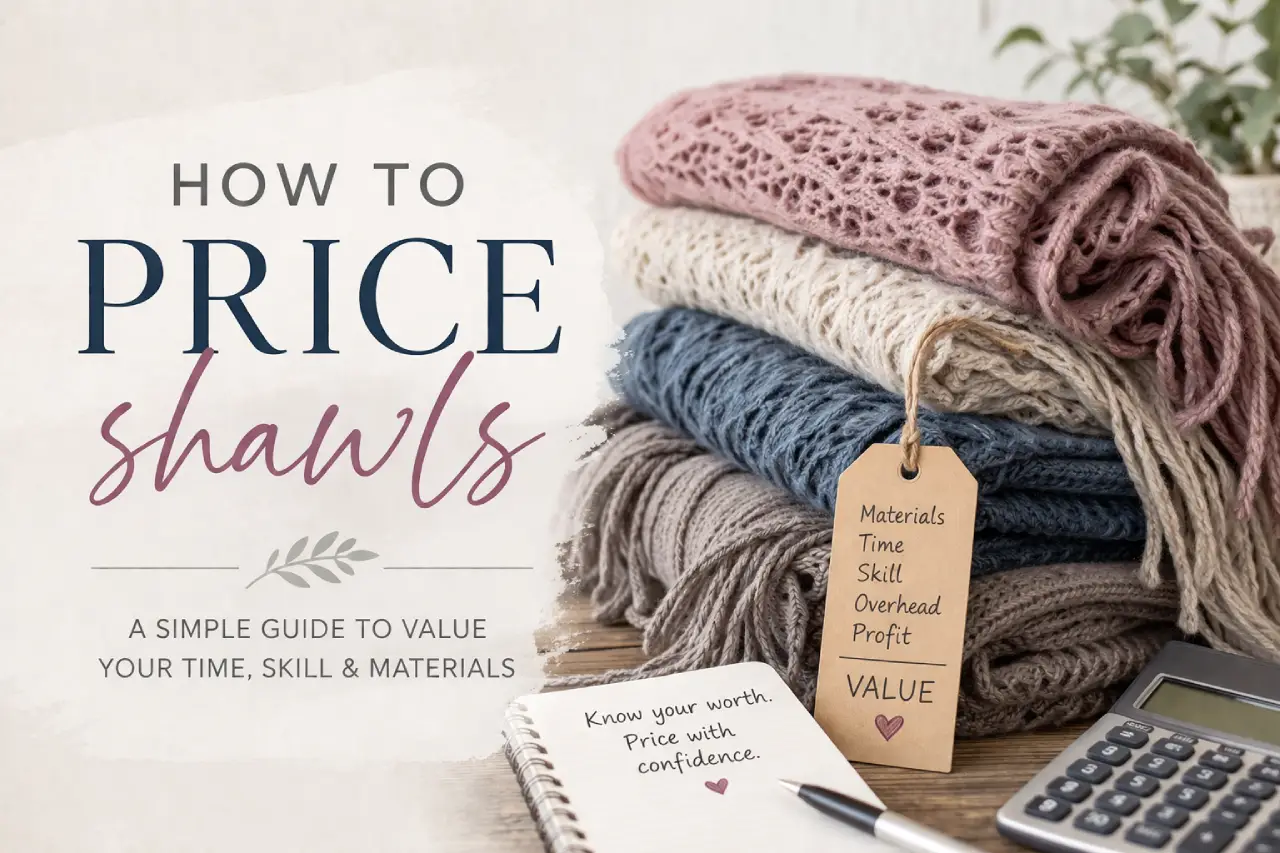
The conventional method of calculating the price of products in a shawl wholesale business is known as the cost – plus technique: in that the total unit cost of each piece is determined, and to this cost is added a certain percentage of profit required and a wholesale selling price is found. For instance, if the shawl wholesale business caters for the high end of the market, the producers will target gross margins between 50% and 65%. When it comes to mid-end shawls, the target is 35% to 50%. These markups must cover your production expenses (premises, wages, promotion, delivery expenses, etc.) and still allow for a positive income.
A volume based pricing policy is considered essential element that supports syringa stripe sale planning. For instance, it is more sustainable to offer discounts for bigger quantities rather than regular orders to those retails — since it maximizes the units’ costs and stabilizes stock levels. Consider the following scheme for tiered pricing aimed at wholesale of shawls: base price is the price applicable to the quantity of the order of 50-100 shawls, below this price by 8% for the order quantity of 101-300 shawls, below this price by 15% for 301-500 units, below this price by 20% for the order of more than 500 pieces.
Most importantly is seasonal or discount price related to the shawl wholesale business schedule. Concentrate promotional prices around the periods when the retailers’ ordering patterns are heightened – summer respectively when stores are opening their spring/summer fashion lines (January to March), and winter respectively when stores are opening their autumn/winter fashion lines (June to August) – so as to ensure pre-ordering and stock squeezing by retailers.
Do not position your products for price wars within the premium shawl wholesale business segment. Price is only one factor that determines the purchasing decision of a premium pashmina and other luxurious shawls. The quality of the product, dependability of the supplier, minimum orders, payment schedules, and many others including customer care may — and normally do — matter more. The price war in the premium shawl wholesale business alone ensures suffering from margins without any possibility of improvements and only serves to place the concern as that of supplying commodities.
Setting Up Your Shawl Distribution Business
Creating a strong mid-scalability includes creating a feasible distribution strategy for logistics firms concerns the shawl wholesale business. Humongous forms of the mentioned components will not necessarily ensure any prosperity.
The routes to market of your shaul business will be perfect from nowhere another way, unlike assembling, which can harm the very survival of the entity and sanctions prolonged storage of shawls for obvious reasons. Shawls inflamation beginning from storage is also an issue; club the products folded or rolled giving no room for hanging; store in a clean dust-free environment, free of moisture and away from sun rays. The more fashionable a pashmina shawl is, it is recommended to store parts of it in cedar sachets or other goods against moths. The inside layout of the warehouse should be segmented according to types of products and codes in order to be efficient while picking among several products.
When you are in the process of setting up a shawl wholesale business, invest in a digital system of inventory control right away. There are various inventory management platforms like Zoho Inventory, TradeGecko or Cin7, which cloud-storage based interfaces, enabling one to manage stock levels dynamically, again control purchase orders from suppliers from India, generate fulfillment documents, as well as synchronize with an e-commerce or a B2B order processing system. Proper inventory control is a deterrent of expensive errors like stockouts or excessive stocks.
The sequence of events in your order processing activity – from placing a customer’s order to the moment of its delivery – must be more than fast but also accurate. In a shawl distribution setting, where service is within borders – aim for 24 to 48 hours dispatch lead time after an order is made. In the case of international orders, ensure you have prepared all relevant documents for export (commercial invoice, packing list, certificate of origin and other certification required) correctly and in a timely manner to ensure that they clear customs efficiently.
It is very important to have partnerships with the shipping companies for a successful distribution of the shawls. Try to communicate with two or three couriers and establish the best rates that can be obtained from them for the use of couriers, one or two expensive express services DHL, FedEx, UPS and maritime shipping for international deliveries of bulky cargo. The shipping cost of a health design that jigs wide size shawls is reduced by strategic use of freight, thus helping the business to manage its cost of operations and remain competitive.
The returns Mgt aspect of the shawl wholesale business is often neglected and yet critical. The same applies to the implementation of a flexible, equitable and reasonable returns process. Wholesalers usually follow the standard practice of a 7 to 14 days window for inspection and acceptance of defective products. Effective return management helps in maintaining good relations with the clients besides reducing the effect of such events on the stocks and revenue.
Finding Customers for Your Shawl Wholesale Business
Client growth is akin to oil in a machine; it helps to make the shawl wholesale business run. Customer acquisition strategies within a wholesale business model adopt various ways to reach out to potential customers, improve visibility on different platforms, join B2B forums, and build referral pipelines.
It is inevitable that the largest segment of customers of shawl wholesale business is the independent boutique and lifestyle retailers. One can locate the desired retailers within one’s geographical region by using local directories of retailers, Google maps location finder, google map images search specifically for a particular area and membership lists of retailer’s societies. The accessing of this hypothesis region is the best way of customer acquisition for this segment by means of direct contact– study product samples first or write a letter with professional words and photos.
The vast amount of customers which are reachable online, as well as through B2B channels, is beneficial to a shawl wholesale business when conducted at large scale. For example, there are platforms like Faire, Ankorstore, NuOrder which allow wholesalers to get in touch directly with a multitude of independent retailers within the UK, Europe and North-America. Alibaba and IndiaMART are pivotal platforms for engaging buyers on a wholesale scale globally. In such cases, a single well-optimized profile on each of these platforms will generate a lot of interested parties for your shawl wholesale business.
Exhibitions provide the most profitable way of acquiring customers in a growth phase for any shawl wholesale business. Some of these Events inclusive of Pure London, Scoop International, NY NOW, and the India International Trade Fair see numerous attendees, thereby, are more useful. Put out your show booth in the most professional manner and make sure the product looks appealing, wholesale prices are affordable, and ensure placing of simple ordering process information so as to maximize order generation and channel the shawl wholesale business to buyers who visit the booth and eventually become regular customers.
Corporate and institutional customers might be more lucrative for shawl wholesale business but often they are ignored. Shawls are a valued commodity in numerous sectors and companies, such as in corporate gifting solutions, high-end hotel amenity purchases, business class providers in airlines, and wellness and spa stores. engaging institutional buying teams in such companies – through a dignified approach where presenting product catalogs, prices, and quality proof come out polished; can well cause an increase in repeat bulk orders for the shawl wholesale business.
Referral networks are perhaps the most cost-effective yet efficient customer acquisition methodologies for an existing shawl wholesale business. One satisfied retail client is worth dozens of referrals. Don’t get conversation averse, but instead talk to your top customers and ask them to introduce you to your potential clients. Incentivize the old relationships with rewards like customers’ accounts credits and or discounts on next purchase orders. Brand advocacy through word-of-mouth is also one of the few elements of customer growth in B2B textile markets.
Online vs Offline Shawl Wholesale Business Strategies
Deciding on whether to pursue an online or an offline go-to-market strategy, or the perfect combination of both is one of the most practically significant factors for your shawl wholesale business.
Conducting a shawl wholesale business online has certain undebatable pros. More reduced cost base: without showroom premises or huge salesforce, expenses are much lower. International penetration: an optimized site of a shawl wholesale business and b2b platforms allow to target buyers from many nations in a single go. Decision making on the basis of data: online platforms have several layers of customer insights, product engagement and sales conversion which is destructive for the offline system.
Creating a successful online business for the purpose of selling shawls involves making a few investments and in this case, it calls for a professionally designed website. The website should be well optimized with regards to the shingles shawl business. Details about the types of shingles shawls available, commodities levels, prices, as well in terms of acquisition of the shingles shawls. All such options must be incorporated in the digital catalog of wholesale customers so that the users can take the necessary action without involving the sales officers. Rather it will work in making the purchase process for the client simpler and friendlier. One of the most important aspects of a shawl wholesale business is SEO. Any business will want to come first and frequently for specific keywords in the search engines. Such as for a ‘shawl wholesale business’, ‘shawl supplier India’, and ‘pashmina wholesale’. There will always be a steady stream of inbound queries from serious customers.
An offline shawl wholesale business in the distribution of shawls — with a sales force operating from a luxo physical showroom and field sales persons and firms leverage both stabs and trade shows — has its own unique benefits, all equally useful. Direct contact with a product: as a rule, those who purchase high-grade shawls prefer to hold the products in their hands, see them and feel even before placing an order for wholesale. In this respect, such a physical showroom plays an innovative role – and accelerates enquiry to order conversion. Building relationships: in-person, selling leads to a closer and stickier buyer relationship than digital selling by itself.
The most effective shawl wholesale business model, to date, is an integrated strategy combining online and offline tools. The ability of the website and other business to business platforms is to take care of inbound leads generation as well as product discovery and re-ordering where necessary. While the showroom and the field team focuses on major account developments, new product launches and management of relationships. On the other hand, it is trade shows that give the business, even if for a short period of time, the opportunity to achieve brand exposure and acquire new clients. Such a combination allows for an extensive customer base and high quality interaction with the customers.
Marketing Strategies for Shawl Wholesale Business Growth
Smart marketing functions as the growth machine for any shawl wholesale business. Business relies heavily on the endorsement and establishment of trade linkages among parties; nevertheless, the modern-day shawl wholesale business relies on a well structured and coherent marketing strategy that incorporates an objective that promotes, seeks and fills a consistent whirlwind of growth in revenues.
In a round-up of the most beneficial marketing approaches to a shawl wholesale business , content marketing earns the foremost position. To produce top-notch foremost forward-looking product marketing content working in a company, for example, product reviews, help in writing sourcing guides, forecasts, guide on how to pick buyers, SEO websites’ content writing for product copies. Being a website about shawl wholesale business which has a blog section running up to two or four new articles each month can build up sufficient organic traffic in six to twelve months when it is maintained and this is factual.
The success of shawl wholesale business on the internet depends largely on the rules of digital marketing . Such rules contain proper factory setting of each website for exporting search engine .
They include target key phrases like ; business of selling shawls in bulk , shawl manufacturers in India , kamusal vizyonu ile textile ticareti gibi islerin fikirleri , distribution of was able marketing business and content of the site as properly as product pages and blog posts .
In this regard, the focus is on local SEO which is meant for places like ‘shawl wholesaler in _____’ and this local search strategy is effective especially when dealing with a shawl wholesale business that operates in the locality of the market.
Shawl wholesale business marketing is supported by a significant extent of social media marketing especially when it comes to LinkedIn while in B2B relationship marketing and Instagram as its visual storytelling. The head of procurement, buyers, or sourcing of fashion brands have to be directly sought for and LinkedIn has such opportunities. Instagram helps on another level, creating brand awareness and product attractions among them key consumers who affect what will retailers’ shelves in the end. In addition to this whilst targeting such consumers for a premium shawl wholesale business high quality pictures of your product portfolio is not something that can be negotiated out.
One of the most economical upsell and retention methods in a shawl wholesale business is email marketing. In order to remind the customers of your shawl wholesale business and their availability, thereby increasing reorders a respectively, periodic newsletters with the update on the products launched, offers coming up in future, trends in the business, and the latest updates about the company are sent to them. These efforts include aka email series for first-time buyer customer warm-up and retention through active post-sales communication.
Attending and sponsoring industry focused initiatives such as textile trade shows, fashion week showrooms and exhibitions are advantageous for the brand image and increase the networking base for an emerging shawl wholesale business. Have a cost – benefit analysis approach to the event by looking at the volume and the quality of the buyers likely to attend vis-à-vis the participation cost.
Common Mistakes to Avoid in Shawl Wholesale Business
One of the smoothest routes solution must be drafted out of learning how to avoid frustration since unnecessary and commonplace mistakes are present within the shawl wholesale business for beginners.
These so-called ‘red flags’ include over-investing in pieces from the multiple companies they target or the business processes and more so the channels so much that the first few objectives which are establishing contact with the target customers and verifying the need and market for the specific product line is not achieved. Inside in new shawl wholesale business and notably how managers handle orders is a propylene friend. Most entrepreneurs take advantage of affordable prices that they have been offered by shawl suppliers from India, purchasing a lot of capital goods even before such details as establishing of relationship with the retailers or other forms of market validation of the targeted product are concerned. Some people know what it means when you have so much money tied even before you begin the operations, more so even before you make any early revenues, some operational issues pinch you hard from having enough excess, warehouse sustenance and saving for operating expenses. Always try small but well tested and calculated orders and adapt to increase the inventory as the demand of the baited item(s) increases crossborrow.’
Another regular error is the selection of an India based shawl supplier based on cost. The least expensive supplier is almost never the most competent business associate. Substandard suppliers with minimal cost associated with production cause failures with customers when there is discrepancy in quality, late deliveries, or lack of communication that tarnishes the image of the shawl wholesale business to such an extent that the expense reduction per unit is compounded detrimental.
Ignoring the management of cash flows poses an inherent threat for several shawl wholesale businesses. The conventional ways of conducting business on a wholesale basis indicate – covering the invoices of vendors 30 to 90 days in advance of producing the invoices for the retail customers is a cash flow trap that can limit expansion or even worse hazard the survival of the business. Simulate the cash flow position very thoroughly before ahead proceeding with the shawl wholesale business and have cash at hand that is adequate to three months running expenses as a minimum.
Underselling your products is a rookie mistake, but it is one that comes with real danger. There are plenty of new entrants in the shawl wholesale business who make the mistake of lowering the price to attract as many customers as possible in the shortest time period without bothering to incorporate all the costs entailed. Even when variables such as landed costs, operating costs, and desired profit margin are taken care of correctly, the final minimum feasible price tends to be slightly, if not significantly, more than what one thought at first. Make sure you are pricing from a full cost-plus process, as opposed to wishing that the market position would allow some marks.
Avoid inconsistent product quality between orders, which forces buyers in the retail sector to expire relationships with a shawl wholesale business and buy their stock from another one. Check the quality of every single shipment received from each of the shawl supplier India counterparts, starting with the fibre, through the weave, to the colour, and including the finish. This way, any quality problems are detected before the product reaches your clients, which helps in maintaining good relations with your customers.
Scaling Your Shawl Wholesale Business Successfully
As your shawl wholesale business progresses and reaches a stage of stabilized revenues, demonstrates a product-market fit and a network of retail customers that are loyal, it only changes orientation to a strategic one. Scaling is not done by exerting oneself – there is need for people, systems and markets.
The very first area of concern in the process of scaling up the shawl wholesale business is improving the relationship with suppliers as well as the production capability of the company. As inbound orders increase, it is crucial to establish contracts with your primary shawl supplier India partners, involving minimum volume levels to enable priority access to production resources, special prices, and designated managers. Always have at least two to three alternate suppliers that compliment each other. Inward dependency is avoidable and room for more products exists.
Expanding business by geographical areas is one of the greatest growth strategies for any working shawl wholesale business model. Especially when you develop a lot of retailers in-house, you can sell the same catalogue + price points in the same business model even further in the nearest geographical location with minimum additional capital. Wholesale business of premium shawls with sources in India triumphs in many markets: UK, Germany, Australia, UAE and Japan.
Introducing new product lines next to the shawls is a reasonable and cost-effective method of growth. Stoles, scarves, wraps, blanket throws and matching fabric products are all sold to the same buyer profile and can be procured from the same Indian shawl manufacturers. Extending your range of products helps to lift average order sizes, lowers the acquisition cost per customer and makes you more valuable to the retail customer.
Increasing your shawl wholesale business operations is possible only with the formation of an exclusive sales team that goes beyond the extent of the founder’s contacts. Employ reps experienced in marketing textiles with their own existing clientele network for the identified outlets. Create a compensation model with a fixed pay structure and variable commissions which will correspond to sales growth. Such an effective and informed sales force would enhance efforts to increase the shawl wholesale business turnover at a pace that founder-driven selling couldn’t afford.
At one point the shawl wholesale business growing overwhelming will require more funding to technology – ERP solutions and automated reorders for users, B2B ecommerce and even customer relationship management tools, and more. The processes that are inefficient to manage 500 orders in a month are manual methods carried out in conversions of 50 orders a month. The cost of technology aimed at expansion and scaling up is quickly recouped by the savings in cost and minimization of errors and enhanced customer service.
Export Capabilities and International Shipping Process
It is crucial to be able to promote the goods abroad not less than organization’s capability to produce them qualitatively. While making analysis, the successful pashmina shall exporter should be checked for logistics provisions as much as regarding production.
Professional Indian main pashm india pashmina shawl manufacturer in India was working with the well-known freight forwarders for transhipments both via aircraft and maritime transport. Air cargo is the preferred option for smaller or urgent consignments as transit from Delhi or Mumbai takes three to seven days to any major world destination. For high volume orders, however, speed is not an issue but a reducing cost is, sea shipment is done from JNPT Port (Mumbai) or Chennai Port takes two to six weeks depending on the destination.
Experienced pashmina shawl manufacturer in India struggles to export documentation because it is an important operational area he can add legitimate value. Commercial Invoice, Packing List, Bill of Lading/Airway Bill, Certificate of Origin, Shipping Bill and any country specifics including EUR. 1 form for European markets tariff concession.
The European Union is one of the largest trading partners of India GSP program and it allows India to have lesser duty on importing textile products with Correct GSP. Confirm that GSP reporting and issuance of such documentation is standard practice for your manufacturer to do – custom made GSP documentation is very useful.
The first Incoterm that most buyers in the world want to deal with for such orders is FOB Indian port especially for buyers outside the Basmo trusts geography as the producer still supplies the goods to the port safe and clears Indian customs.
Future Opportunities in Shawl Wholesale Business
The field of shawl wholesale business is undergoing a valuable transformation and there are those who are in line with the present position for the next level of development.
The key structural opportunity that is transforming the textile industry within all categories including shawls can be summarized in words – ethics and sustainability. More and more consumers and retailers require sustainability certificates, like when manufacturing it by fair trade principles, organic, use of natural dyes or the cotton itself and other raw materials, and transparent supply chains. Currently, any shawl wholesale business that incorporates sustainability into its sourcing strategy, is able to create a competitive edge for itself, ready to respond in five to ten years when these pressures come.
Burgeoning businesses that compass the concept of distributing DTC adds a new dimension along which auction houses of shawls, to be more specific, such as traditional wholesale shawls operators can continue expanding. Incorporating direct-to-consumer e-commerce alongside B2B strategies is also accomplished by a large number of wholesale operators, who are able to gain additional retail profit margins from some of their products while satisfying the demand and sustaining the core customer base in wholesale. This business model is also literate in enhancing the development of the business by adding other favorable opportunities.
Shawls businesses performing on wholesale and very patient to maximize profits that come from established shawl supplier India channels can take advantage of private label and individual design services. This is because, more and more traders and even fashion houses are opting for unique own brand products as opposed to mass produced catalog items wholesale. Shawl wholesale business, which goes a step further by giving new design color and private labeling serves as the only differentiation tool, which comes at a probable price and generates a lot of very loyal customers over a quite a long period of time.
The purpose of the gifts and wellness market should be to offer comfort for premium shawl wholesale business. It is common knowledge that luxury hotels, spas, airlines, and even companies often initiate gifting programs where they accumulate a lot of shawls. These institutional buyers include high average order values, provide reliable repeat current customers and help foster strategic branding for a shawl wholesale business and merchant who are willing to put in the efforts of tackling these outwardly objectives.
Innovative ideas related to business in the textile sector — for example, online wholesale hubs, retail subscription for wholesale, virtual showroom for buyers and much more are rethinking the already standard principle of a shawl wholesale business. Entrepreneurs who will implement these digital innovation practices will grow faster than their competitors relying solely on the wholesale channel.
Conclusion: Building a Successful Shawl Wholesale Business
Selling shawls in wholesale quantities is a lucrative, promising, very popular and franchisable business model in the textile sector. Conduct thorough marketing studies, find shawl supplier India providers that have exclusive collections, craft products with great attention to design, offer reasonable prices, map the market more efficiently, and develop the market by adding more channels for the supplied product base and you will have no problems making good returns with a shawl wholesale business even in its very first year.
The entrepreneurs who build the most successful shawl wholesale businesses are those who combine commercial discipline with genuine product knowledge and supplier relationships. They initiative that the basic foundation of an effective shawl scattering business is trust — and this can be the wholesaler’s customers’ trust in the products or the shawl supplier India partners’ trust in the purchasing opportunities.
A shawl wholesale business is known for rewarding its agents for patience, consistency, and a strategic approach. It is not one of those businesses where a person all of a sudden turns successful – but it is one where there is a busines advantage that keeps on building up. Every excellent piece produced and delivered without delay increases the trust of the customers. Every relationship with a supplier made closer gives the leverage of discounts and better products. Every new territory explored proffers additional financial opportunities. Every dollar spent on advertising and the brand helps to create awareness and attract queries that eventually lowers customer acquisition cost.
There is a world market for shawls—homogenization of incomes, speech in fashion, upbuilding of add-ons, and the burst of conscious fashion—followed the rise in demand for shawls. India’s supply facilities are the best by any standard. Entry barriers are a lot lower than almost any field within clothing business. There is tremendous margin potential.
Related Products
Showing 55–63 of 807 results
-

Beige Multicolor Wool Kani Weave Pashmina Shawl for Women
Read more -

Maroon Multicolor Wool Kani Weave Pashmina Shawl for Women
Read more -

Black Multicolor Wool Kani Design Pashmina Shawl for Women
Read more -
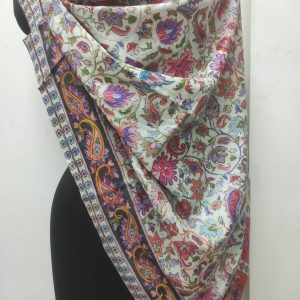
Ivory Multi-Color Wool Kalamkari Embroidery Pashmina Shawl for Women
Read more -
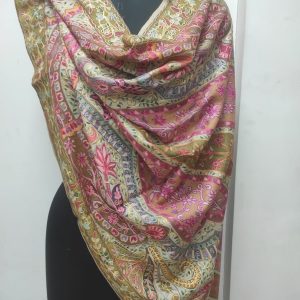
Golden Pink Wool Kalamkari Embroidery Pashmina Shawl for Women
Read more -
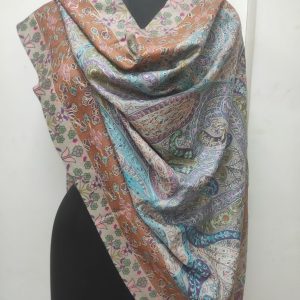
Brown & Blue Wool Kalamkari Embroidery Pashmina Shawls for Women
Read more -

Golden Multicolor Wool Kalamkari Embroidery Pashmina Shawls for Women
Read more -

Beige Multicolor Wool Kalamkari Embroidery Pashmina Shawls for Women
Read more -
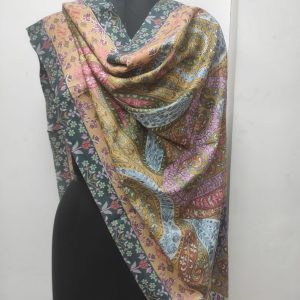
Multicolor Wool Kalamkari Embroidery Pashmina Shawls for Women
Read more