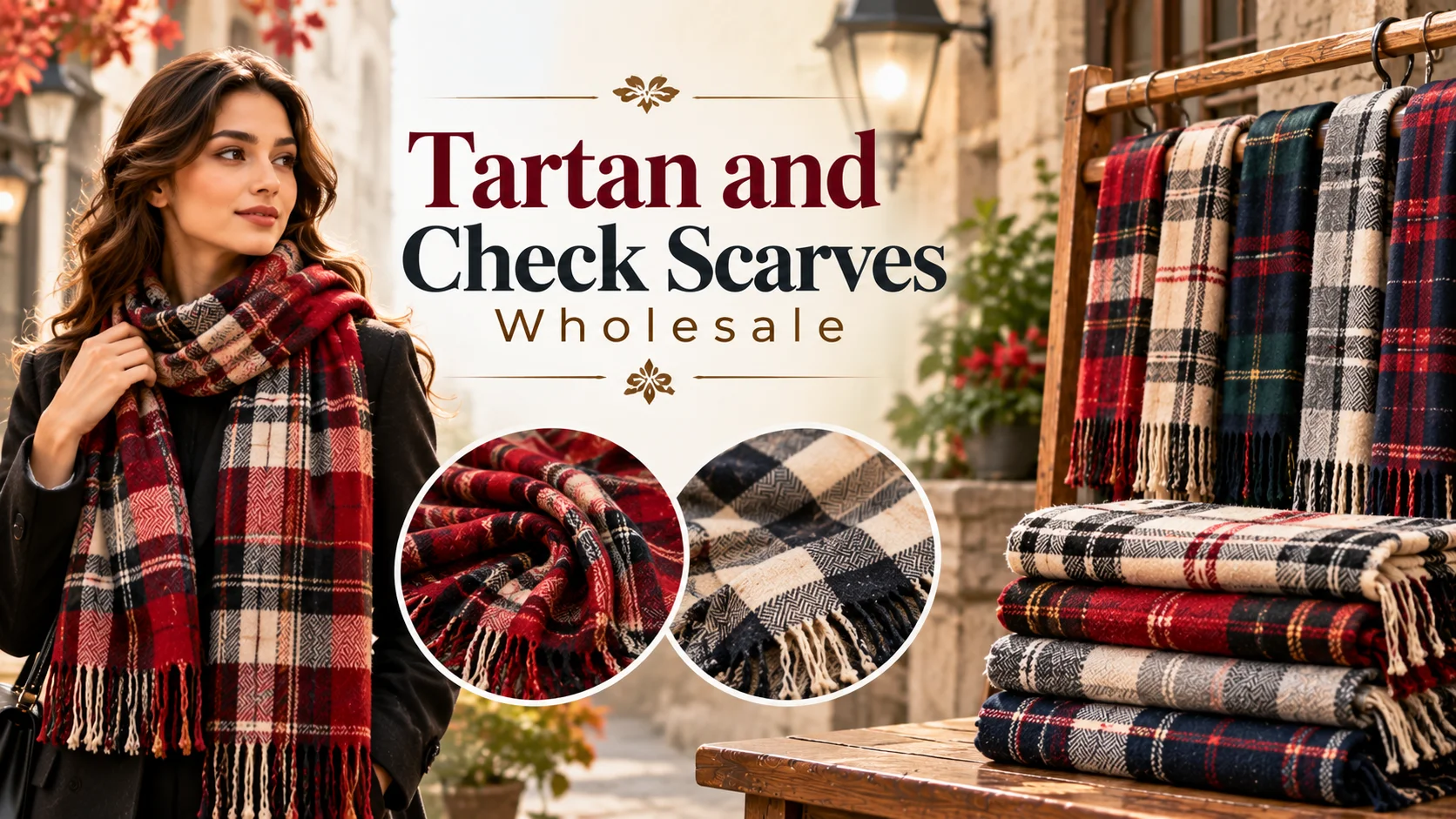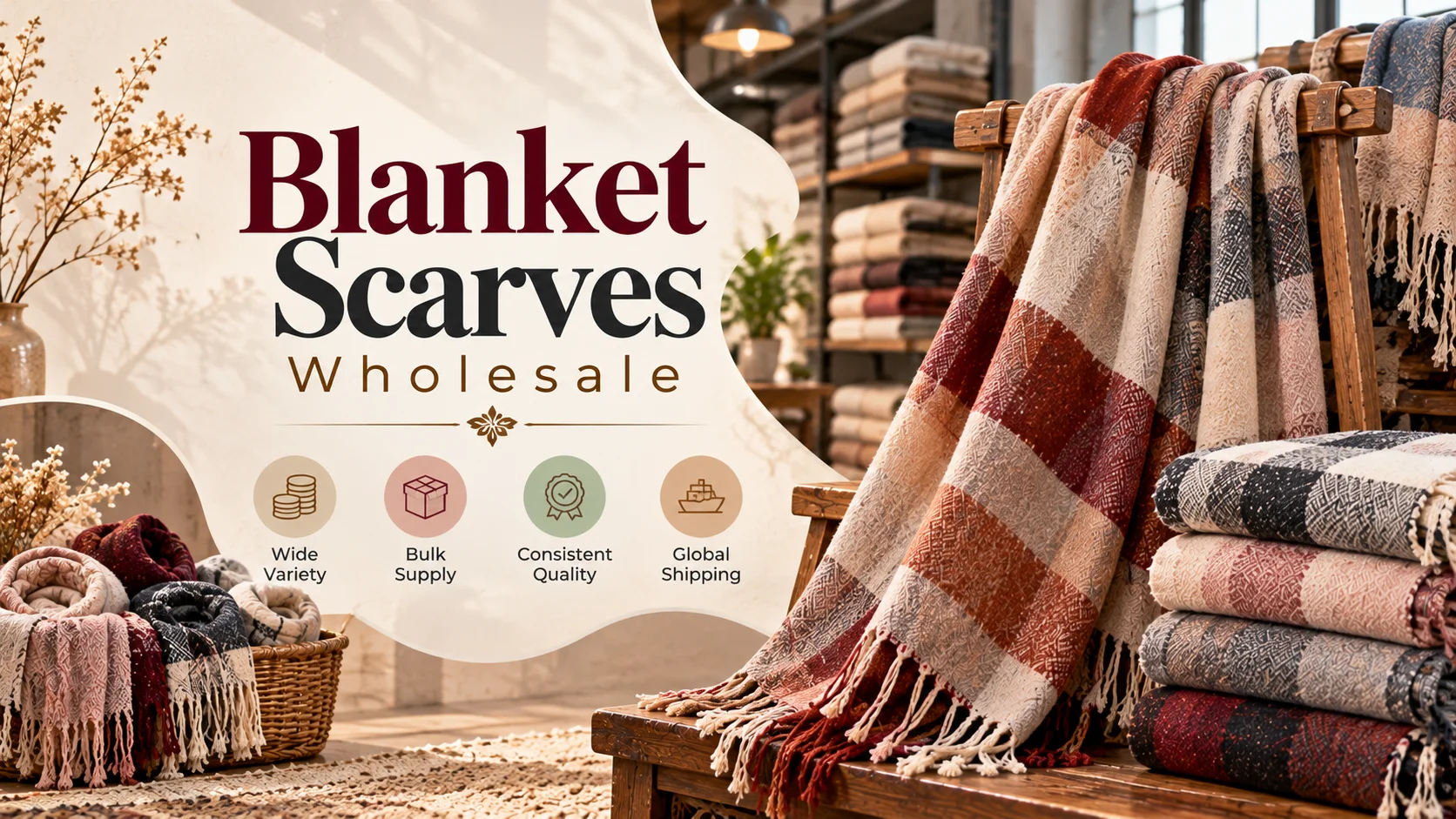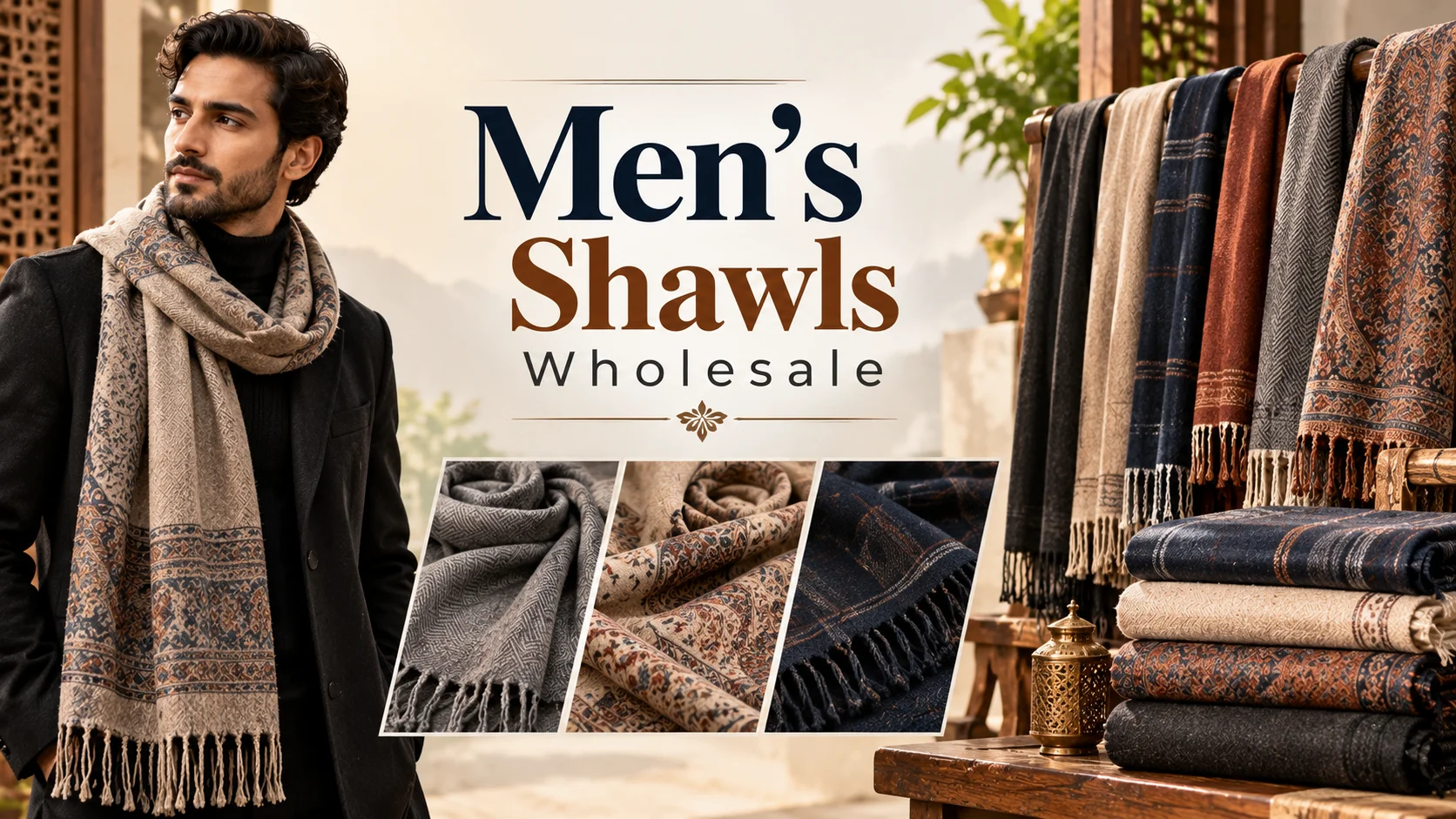
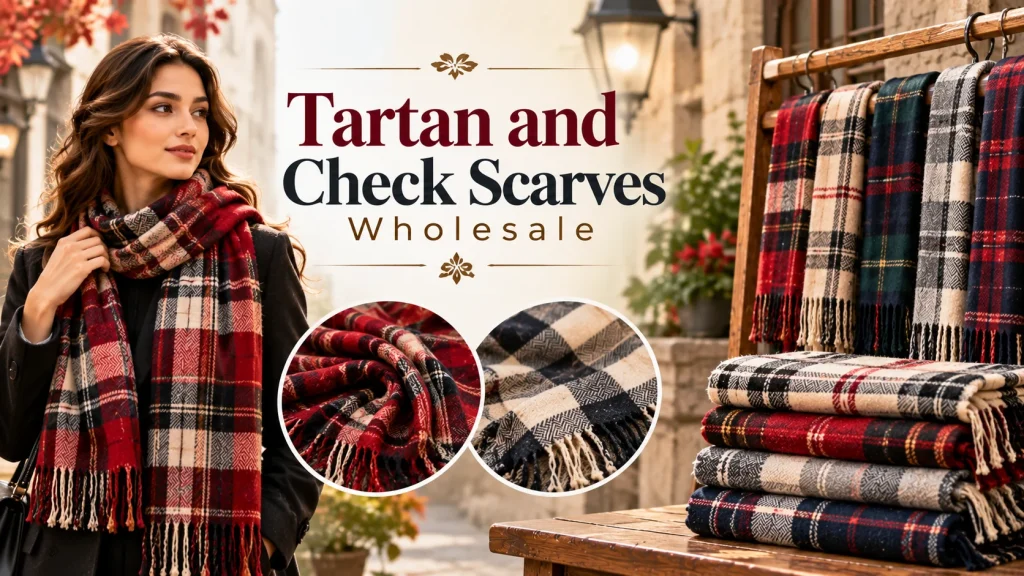
Tartan and check scarves are among the most reliable winter sellers because the patterns never fully go out of fashion. For tartan scarves wholesale, the main choice is between yarn-dyed checks, where the pattern is woven from coloured yarns, and printed checks, which cost less but look flatter. Wool, merino and cashmere blends suit premium ranges, while acrylic and viscose cover price-led and lighter styles.
Key takeaways
- Yarn-dyed checks look the same on both sides and keep their colour. Printed checks are cheaper but show a paler reverse.
- Tartan is a specific check with a repeating sett of crossing stripes. Plaid and check are broader trade terms.
- Avoid copying a fashion house’s signature check, which may be a registered trademark. Use a traditional or original pattern.
- Custom yarn colours need extra lead time, because the yarn is dyed before weaving starts.
Tartan vs plaid vs check: what is the difference?
The three words are often used as if they mean the same thing, but buyers and suppliers use them differently.
- Tartan is a pattern of horizontal and vertical stripes in several colours that cross at right angles. The same stripe sequence, called the sett, runs in both the warp and the weft, and it is usually woven in a twill.
- Plaid is the common North American word for tartan-style patterns. In Scotland, a plaid is also the large blanket-like garment worn over the shoulder.
- Check is the broadest term. It covers any pattern of squares, from tiny gingham to large windowpane.
When you brief a supplier, describe the pattern by name, sett size and colours rather than relying on one of these words alone.
Which check patterns sell best on scarves?
| Pattern | What it looks like | Best for |
|---|---|---|
| Classic tartan | Multi-colour crossing stripes, medium to large sett | Winter scarves, heritage and gift ranges |
| Buffalo check | Large two-colour blocks, often red and black | Casual and outdoor ranges |
| Glen check | Small checks forming larger boxes | Menswear, office wear |
| Houndstooth | Broken checks with pointed shapes | Smart and classic ranges |
| Windowpane | Thin lines forming large squares on a plain ground | Minimal and modern ranges |
| Gingham and Madras | Small, light checks in cotton | Summer scarves and stoles |
Madras checks take their name from Madras, now Chennai, where light yarn-dyed cotton checks have been woven for export for generations. They make a good summer partner to winter tartans. Our cotton stoles guide covers lighter fabrics.
Yarn-dyed or printed checks: which should you buy?
| Factor | Yarn-dyed woven | Printed |
|---|---|---|
| How the pattern is made | Coloured yarns woven into the check | Check printed on a plain fabric |
| Reverse side | Same pattern as the front | Paler or blank |
| Colour over time | Holds well | Can fade or rub at the surface |
| Detail | Crisp, slight texture | Very sharp, any design possible |
| Cost | Higher | Lower |
| Lead time | Longer, especially with custom yarn colours | Shorter |
Yarn-dyed checks are the better choice for wool, premium and reversible-feel scarves. Printed checks suit fashion pieces in viscose or polyester where price and speed matter more. Our guides to printed stoles and jacquard stoles explain both routes in more detail.
Which fibres work best for tartan scarves?
- Lambswool and pure wool: the classic tartan fibre, warm with a slightly textured hand.
- Merino wool: softer and finer, suiting premium ranges that sit against the neck. See our merino wool shawls guide.
- Cashmere and cashmere blends: the luxury end, with a soft, brushed finish.
- Acrylic and wool-acrylic: soft, affordable and easy care, the base of most high-street tartan scarves.
- Viscose and cotton: lightweight checks for spring, summer and warm-climate markets.
Browse our fine wool stoles and check and stripe stoles for current designs.
Who buys tartan scarves wholesale?
- Department stores and fashion chains: acrylic and wool-blend tartans in classic colourways, often under their own label.
- Menswear stores: glen checks, houndstooth and muted tartans in lambswool or merino.
- Heritage and tourist shops: traditional tartans sold as souvenirs and gifts.
- Online retailers: a tight range of best-selling colourways with strong product photography.
- Gifting and event buyers: custom tartans in brand colours.
Our fringed and tassel scarves and our scarf manufacturer guide show the wider options for these buyers.
Can you order a custom tartan?
Yes. A custom tartan is built from your chosen colours and stripe widths, then woven to order. It is a strong option for private label ranges, corporate gifts and event merchandise. Our article on corporate gifting shawls in bulk shows how branded textiles are used.
Keep two points in mind:
- Trademarked checks. Some fashion houses have registered their signature checks as trademarks. Copying or closely imitating one can lead to seized goods and legal claims. Ask for an original design or a traditional tartan.
- Registered tartans. Scotland keeps an official register of tartans, and some designs are restricted to clans, families or organisations. If you plan to name a tartan in your marketing, check its status first.
What affects the price of tartan scarves?
- Fibre. Cashmere and merino cost far more than acrylic or viscose.
- Yarn-dyed or printed. Yarn dyeing and weaving cost more than printing on a plain base.
- Number of colours. Each extra colour in the sett adds yarn preparation and loom setup.
- Finishing. Brushing, fringe twisting and edge finishing add cost but lift perceived value.
- Size. A blanket-size tartan uses far more yarn than a narrow scarf. Our guide to GSM and fabric weight helps you fix weight.
What should buyers check before a bulk order?
- Pattern alignment. Stripes should run straight and meet evenly at the edges and fringe.
- Sett size. Measure the repeat on the sample. A sett that is too large for the scarf width leaves the pattern looking cut off.
- Colour match. Compare each colour in the check against your approved references. Yarn lots can vary slightly.
- Reverse side. On printed checks, decide whether a pale reverse is acceptable for your price point.
- Pilling and shedding. Rub the sample firmly, especially on brushed and acrylic qualities.
- Fringe. Check that fringe colour follows the stripe sequence and is evenly twisted.
- Labelling. Confirm fibre content and care instructions meet the care label requirements of your market.
Here is how to request samples from a shawl manufacturer so you can approve each colourway before bulk.
How should you plan a tartan scarf order?
Start with three or four proven colourways, such as red and green, navy and green, camel and black, and grey and charcoal. Add one or two seasonal colourways from current shawl trends. Place custom yarn-dyed orders early, because yarn must be dyed and checked before weaving starts.
MOQ and lead time at Savita Shawls
| Term | Savita Shawls standard |
|---|---|
| MOQ | 100 pieces per design, lower on some stock styles |
| Stock styles with your label | 10 to 15 working days |
| Custom woven designs | 45 to 60 working days after sample approval |
| Custom printed designs | 20 to 25 working days after sample approval |
| Samples | Delivered internationally in 7 to 10 working days |
| Shipping | FOB, CIF or DDP with export documents |
If you need a smaller first order, read our tips on negotiating MOQ with suppliers.
Order tartan and check scarves from Savita Shawls
Savita Shawls has manufactured scarves, stoles and shawls in Gurgaon since 1984 and exports to more than 40 countries. Explore our winter scarves, ask about private label manufacturing, or request a bulk quote with your pattern, fibre, colours and quantity.
Frequently asked questions
What is the difference between tartan and plaid?
Tartan is a specific pattern of crossing coloured stripes repeated in a sett. Plaid is the North American word for tartan-style patterns, and in Scotland it also means a large shoulder blanket.
What does sett mean in a tartan?
The sett is the full sequence of coloured stripes that repeats across the fabric. It runs the same way in the warp and the weft, and its size decides how large the checks look on the finished scarf.
Are yarn-dyed tartan scarves better than printed ones?
For durability and appearance, yes. Yarn-dyed scarves show the pattern on both sides and hold their colour. Printed scarves cost less and suit fashion ranges with a shorter life.
Can I order a tartan scarf in my own colours?
Yes. A custom tartan can be woven from your chosen colours and stripe widths. Allow extra lead time for yarn dyeing, and use an original or traditional pattern.
Which fibre is best for tartan scarves?
Lambswool and merino are the classic choices for warmth and texture. Cashmere blends suit luxury ranges, and acrylic suits price-led retail.
Is it legal to sell scarves with a famous brand’s check pattern?
Not without permission. Several fashion brands have registered their checks as trademarks, and copies can be seized or challenged. Choose an original or traditional design.
What is the minimum order for tartan scarves wholesale?
Savita Shawls starts at 100 pieces per design, with lower quantities on some stock styles.