Here’s a scenario every boutique owner knows too well. You’ve sourced a beautiful collection of shawls — genuine Pashmina, fine Merino wool, embroidered cashmere — and they look extraordinary on your shelves. But when you sit down to price them, doubt creeps in. Price too low, and you’re leaving serious margin on the table while accidentally signaling that your product isn’t as premium as it actually is. Price too high without the right context, and customers hesitate, compare, and walk away.
Knowing how to price shawls correctly is one of the most commercially consequential skills a boutique owner or fashion buyer can develop. It affects your revenue, your brand perception, your sell-through rate, and ultimately your ability to build a sustainable, profitable accessories business.
This guide is written specifically for B2B buyers, boutique retailers, and fashion brand owners who want a clear, practical framework for how to price shawls — from understanding your cost foundation to positioning your collection for maximum perceived value and margin.
Let’s work through it properly.
How to Price Shawls — Start With a Solid Cost Foundation
Before you think about what your customers will pay, you need to understand precisely what you’ve paid to get the product to your shelf. This is the foundation of how to price shawls correctly — and it’s where most boutique buyers make their first mistake.
The total landed cost of a shawl is not just the wholesale price you paid your manufacturer. It includes every cost between the factory floor and the customer’s hands. If you’re pricing based only on unit cost, you’re almost certainly underpricing — and eroding margins that should be going directly to your bottom line.
How to Price Shawls — Calculating Your True Landed Cost
To understand how to price shawls accurately, you need to account for all of the following in your cost calculation:
Wholesale unit cost — the factory-direct or distributor price per shawl
Shipping and freight charges — international freight, last-mile delivery, courier costs
Import duties and customs charges — varies by country and product category
Insurance and handling — particularly relevant for premium embroidered or Pashmina shawls
Storage and warehousing costs — your holding cost per unit based on average stock duration
Packaging materials — tissue paper, boxes, swing tags, ribbon, branded packaging
Staff time — the cost of receiving, sorting, tagging, and displaying stock
When you add all of these together, you have your true cost per unit — and that is the number from which how to price shawls should always begin. For boutique retailers sourcing from India, a useful rule of thumb is to add 20–35% to your wholesale unit cost to arrive at your fully loaded landed cost, depending on your shipping terms and import duties.
How to Price Shawls — Margin vs Markup: Know the Difference
This is one of the most common points of confusion in retail pricing strategy — and getting it wrong dramatically affects how to price shawls for sustainable profitability.
Markup is calculated on cost. If your landed cost is £40 and you add a 100% markup, you sell at £80. Your gross profit is £40.
Margin is calculated on the selling price. That same £80 sale with a £40 cost gives you a 50% gross margin — not 100%.
For boutique retail, gross margins of 50–65% are generally considered healthy for fashion accessories. Premium categories like hand-embroidered Pashmina or Cashmere shawls can and should command margins at the higher end of this range — and in some cases, well above it — because the perceived value justifies a significant price premium over cost.
Understanding this distinction is central to how to price shawls in a way that builds a genuinely profitable business rather than just a busy one.
How to Price Shawls by Category — A Tier-by-Tier Framework
One of the most practical approaches to how to price shawls for boutique retail is to think in clear product tiers — each with its own cost profile, target customer, and pricing logic. Here’s how that framework typically looks.
How to Price Shawls — Entry-Level Premium Tier
This tier covers your accessible luxury shawls — fine wool plains, check and stripe patterns, wool-silk blend wraps, and lightly embellished pieces. These are your volume drivers: the products that sell consistently throughout the season, attract new customers into your boutique, and generate steady cash flow.
For how to price shawls in this tier, a 2.5x to 3x multiple on your landed cost is typically appropriate. If your fully loaded landed cost is £25 per shawl, your retail price should sit between £62 and £75. This maintains a healthy margin while keeping the product accessible to customers who are discovering your boutique for the first time.
This tier should represent 40–50% of your total shawl inventory. They’re your everyday bestsellers — the pieces that keep the doors open while your premium tier builds your reputation.
How to Price Shawls — Mid-Range Luxury Tier
This is where your fine Merino wool shawls, wool-silk blends with more intricate patterns, Lambswool reversible styles, and lightly embroidered pieces sit. These are your brand-building products — pieces that communicate genuine quality and move the conversation from “what does this cost?” to “which design do I love most?”
For how to price shawls in this tier, a 3x to 4x multiple on landed cost is the right range. A shawl with a £40 landed cost should retail between £120 and £160. The price signals quality — and in premium fashion accessories, price itself is a quality signal. Underpricing a genuinely good shawl communicates less confidence in the product than the product deserves.
How to Price Shawls — Premium and Ultra-Luxury Tier
This tier is where your handwoven Pashmina, Aari-embroidered Cashmere, Zardozi metalwork pieces, and Kani woven shawls live. These are your highest-margin, highest-prestige products — the pieces customers come to your boutique specifically to find, and that drive your reputation as a destination for genuine luxury accessories.
For how to price shawls in this category, the multiplier logic starts to matter less than perceived value positioning. A hand-embroidered Pashmina shawl with a landed cost of £80 could legitimately retail anywhere from £280 to £500 or beyond — depending on the specificity of the embroidery, the provenance story, and how well you’ve communicated the craftsmanship behind the piece.
This is where knowing how to price shawls intersects with how to tell the story of your shawls. The price and the narrative must work together — and when they do, margin in this tier is exceptional.
How to Price Shawls — The Psychology of Luxury Pricing
Understanding retail pricing strategy in fashion means understanding that customers don’t process premium prices the way economists assume. In the luxury accessories space, price is not just a number — it’s a signal. And knowing how to use that signal correctly is a critical part of how to price shawls for boutique success.
How to Price Shawls Using Price as a Quality Signal
In premium fashion retail, a higher price often increases perceived desirability rather than reducing it. This is particularly true for categories like hand-embroidered Pashmina and Cashmere shawls, where many customers don’t have a strong independent reference point for what things “should” cost — and so use the price itself as a proxy for quality.
This means that when you’re thinking about how to price shawls in your premium tier, deliberately low pricing can actually hurt sales. Customers who are considering spending £300 on a Cashmere shawl may walk past a similar piece priced at £95 — assuming it can’t possibly be the real thing at that price.
How to Price Shawls — Odd Pricing and Price Architecture
Odd pricing — ending prices in .99, .95, or .90 — works well for volume-driving entry-level products. But for your premium embroidered or Pashmina shawls, round number pricing (£280, £350, £450) feels more aligned with luxury positioning. Understanding how to price shawls by tier means using different pricing psychology for different product levels within the same boutique.
Price architecture also matters. Having clear, distinct price points across your tiers — say, £65–£90 for entry, £120–£180 for mid-range, and £280–£500 for premium — creates an intuitive value ladder that customers navigate naturally. When everything is priced similarly, the collection loses definition and customers struggle to understand what they’re choosing between.
How to Price Shawls — Anchoring With Your Premium Pieces
One of the most effective retail pricing strategy techniques is anchoring — displaying your highest-priced pieces prominently so that your mid-range products feel accessible by comparison. A customer who picks up a £450 hand-embroidered Cashmere shawl and then sees a beautiful £160 Merino wool reversible next to it often experiences the £160 piece as excellent value. They weren’t planning to spend that much — but relative to the anchor, it feels reasonable.
This is a powerful dimension of how to price shawls for boutique environments — and it’s one of the reasons why stocking a genuine ultra-luxury tier, even if you sell fewer of those pieces, meaningfully improves the commercial performance of your entire collection.
How to Price Shawls — Factoring in the Source Quality
Here’s something that experienced boutique buyers understand intuitively: how to price shawls is inseparable from where you source them. The quality of your manufacturer determines your cost foundation, your product consistency, and ultimately the story you can authentically tell to justify your retail price.
Sourcing from a direct manufacturer — rather than a distributor or trading company — gives you the cleanest possible cost foundation. Factory-direct pricing removes multiple layers of intermediary markup, which means you either achieve better margins at the same retail price or price more competitively while maintaining healthy profitability.
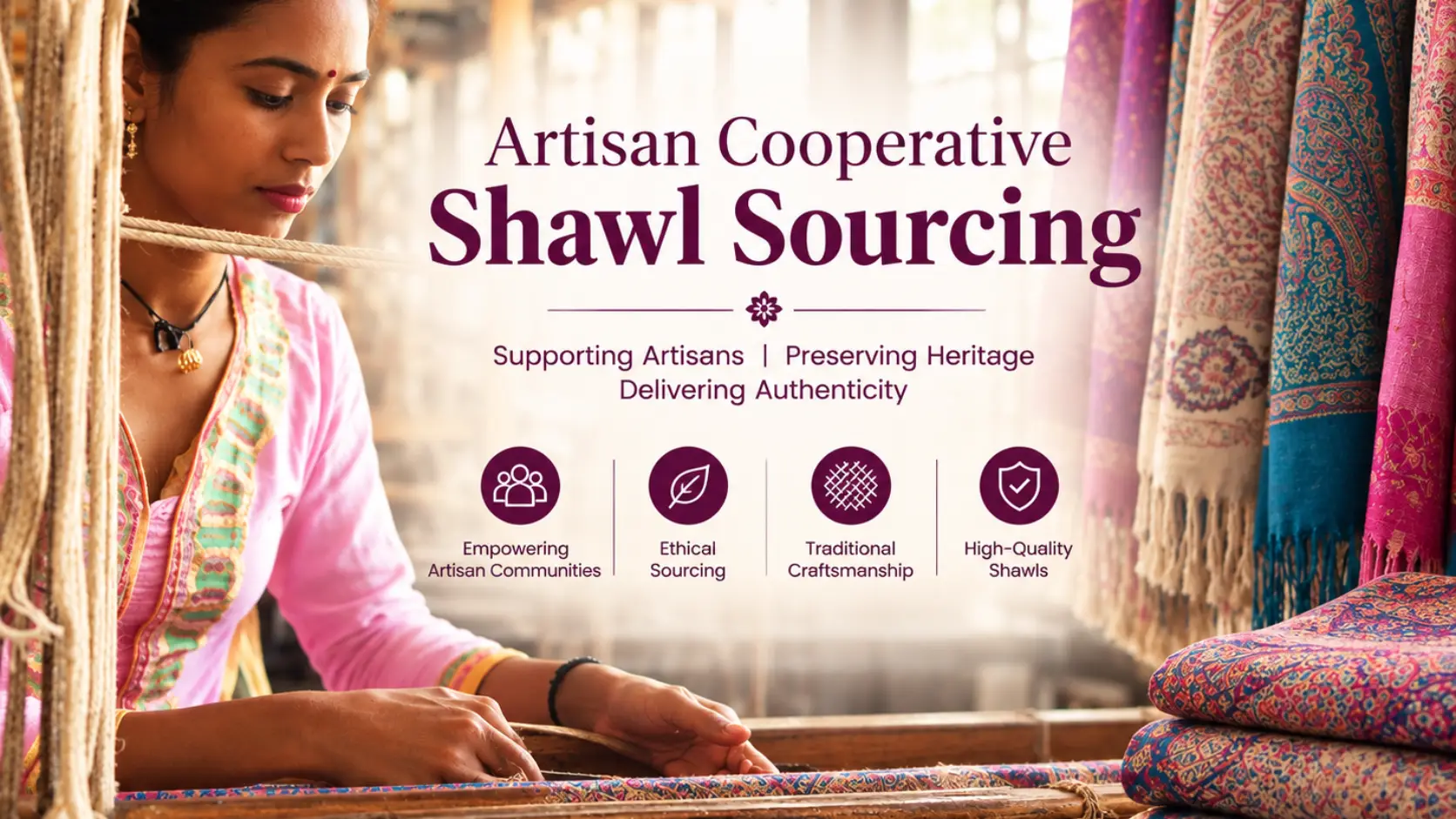
Savita Shawls, established in 1984 and headquartered in Gurgaon, Haryana with manufacturing roots in Amritsar, works directly with boutiques, fashion brands, and wholesale importers worldwide — providing factory-direct pricing on the full range of wool, Pashmina, Cashmere, and embroidered shawls. As a fully equipped bulk shawls supplier, their direct supply model is precisely what gives boutique buyers the cost foundation to price shawls correctly and profitably.
For boutiques sourcing authentic handwoven pieces, explore the complete pashmina shawls collection — available in bulk and custom configurations with the kind of quality documentation that supports premium retail pricing with confidence.
How to Price Shawls — Communicating Value to Make the Price Stick
Knowing how to price shawls is only half the equation. The other half is communicating the value that justifies that price — in your store environment, your product descriptions, your staff training, and your social media content.
How to Price Shawls and Sell That Price With Provenance
Every Pashmina or Cashmere shawl has a story — where the fiber came from, how it was woven, what craft tradition it represents. The cashmere goat, native to the high-altitude regions of the Himalayas and Central Asia, produces one of the world’s rarest and finest natural fibers — a fact that carries genuine weight with premium customers when communicated clearly.
Your in-store signage, swing tags, and staff training should all be equipped to tell this story. When a customer understands that the shawl they’re holding was woven by skilled artisans in Kashmir using fiber combed from Himalayan goats at altitudes above 4,000 meters, the price stops being an obstacle and becomes a validation.
How to Price Shawls — Staff Training as a Pricing Tool
Your retail staff are your most powerful pricing allies — or your biggest pricing liability. A team member who can confidently explain the difference between Pashmina and regular wool, describe the Aari embroidery technique, and articulate why this particular shawl represents exceptional value at its price point is worth considerably more to your margin than any display or signage strategy.
Building fiber knowledge and craft heritage into your staff training is one of the most underutilized but commercially effective approaches to how to price shawls for boutique success.
How to Price Shawls — Using Packaging as a Value Amplifier
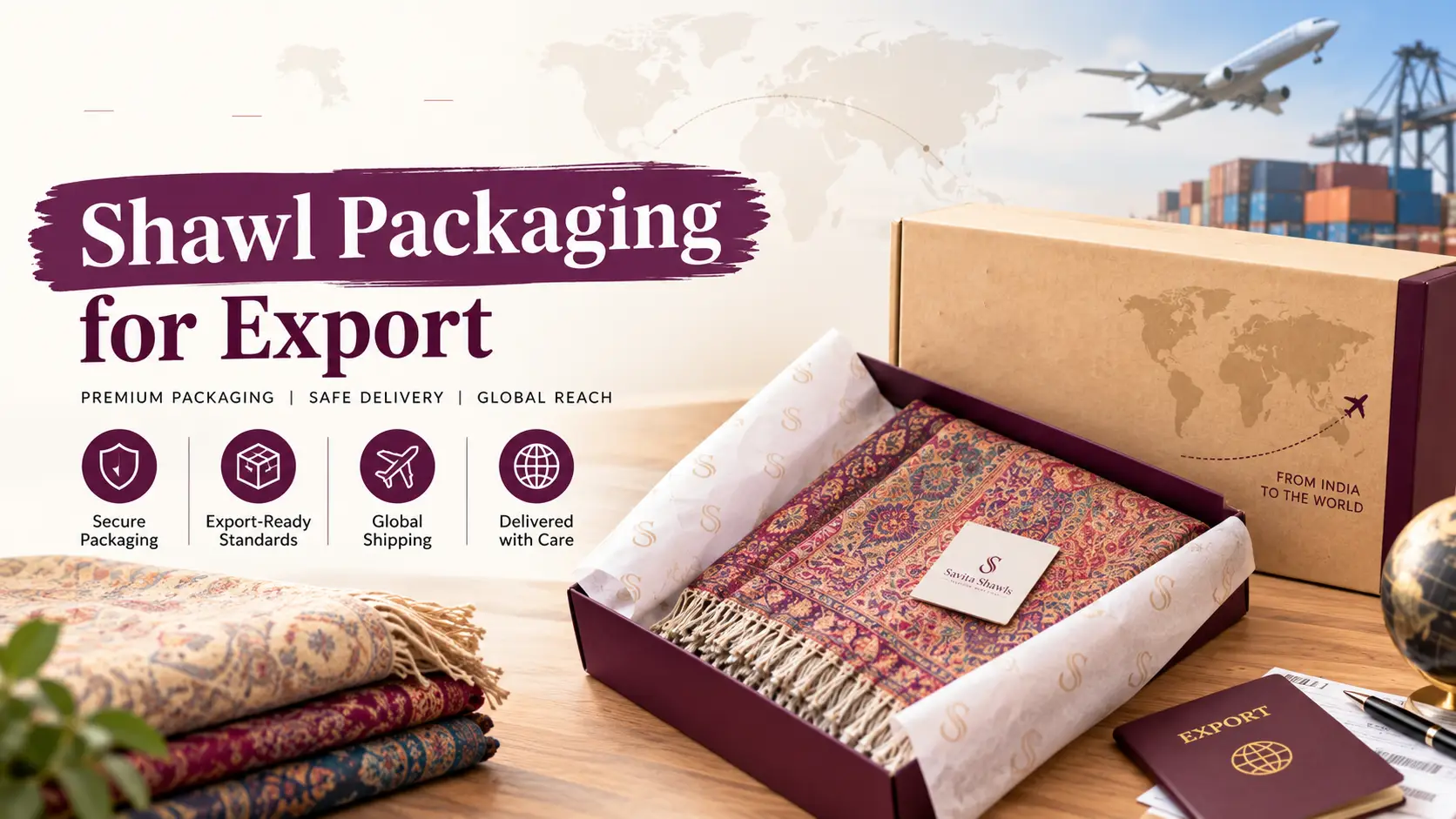
Premium packaging doesn’t just protect the product — it amplifies perceived value and makes the price feel more appropriate. A hand-embroidered Cashmere shawl presented in a ribbon-tied box with a branded swing tag and tissue paper commands a higher price — and achieves it more easily — than the identical shawl folded on a standard retail shelf.
If you’re working with a manufacturer who offers custom packaging as part of their private-label service, use it. As a trusted custom scarf manufacturer, Savita Shawls provides full branding and packaging options for boutique buyers — giving your collection the presentation that supports and justifies premium pricing at every level.
How to Price Shawls — Seasonal Pricing, Promotions, and Markdowns
Even the most beautifully curated boutique shawl collection will occasionally require markdown management. Building a smart approach to seasonal pricing and promotion is part of a complete understanding of how to price shawls for long-term retail profitability.
The golden rule: never plan a markdown you couldn’t afford to take from the beginning. If your initial markup didn’t account for a potential end-of-season reduction, the markdown comes directly out of profit — not revenue.
For premium embroidered shawls and handwoven Pashmina, the better strategy is controlled scarcity rather than discounting. Limited quantities, seasonal exclusives, and pre-order availability for your best customers maintain price integrity while creating urgency that drives full-price sales.
For your entry and mid-tier shawls, a modest end-of-season promotion — presented as a “collection close-out” rather than a sale — clears residual stock without training customers to wait for discounts before buying.
How to Price Shawls — Buying in Bulk to Protect Your Pricing Power
One of the most effective structural decisions you can make about how to price shawls for sustainable boutique profitability is to buy in volume from a direct manufacturer. The unit cost reduction from bulk buying is significant — and that reduction gives you options that small-quantity buyers simply don’t have.
You can price more competitively while maintaining the same margin. You can invest more in premium packaging and display without eroding profitability. You can build a seasonal buffer stock that protects you from stock-outs during peak selling periods without paying rush-order premiums.
Working with a direct shawl manufacturer in India like Savita Shawls, boutique buyers gain access to factory-direct bulk pricing across the full range — from fine wool plains and reversible styles to hand-embroidered Pashmina and custom private-label collections.
The cost foundation that bulk buying creates is the single most powerful tool available to boutique retailers who are serious about understanding how to price shawls for both competitiveness and profitability.
Conclusion — How to Price Shawls Is How You Build a Profitable Boutique
Pricing is not guesswork. It’s not what feels comfortable, and it’s not what your competitors are charging minus 10%. Knowing how to price shawls correctly — with a clear cost foundation, tier-based logic, luxury pricing psychology, and value communication built into every element of your retail environment — is the difference between a boutique that survives and one that genuinely thrives.
The most successful boutique shawl collections are built on three aligned pillars: exceptional product quality sourced directly from skilled manufacturers, intelligent pricing that reflects and reinforces that quality, and confident value communication that makes every price point feel entirely justified.
Savita Shawls gives boutique buyers and fashion brands the first pillar — exceptional product at factory-direct pricing — across the full spectrum from accessible premium wool shawls to ultra-luxury hand-embroidered Pashmina and Cashmere.
📞 Visit savitashawls.com today to request your wholesale catalogue, explore pricing tiers, and discover how a direct manufacturing partnership gives you the cost foundation to price shawls profitably, confidently, and competitively — every season.