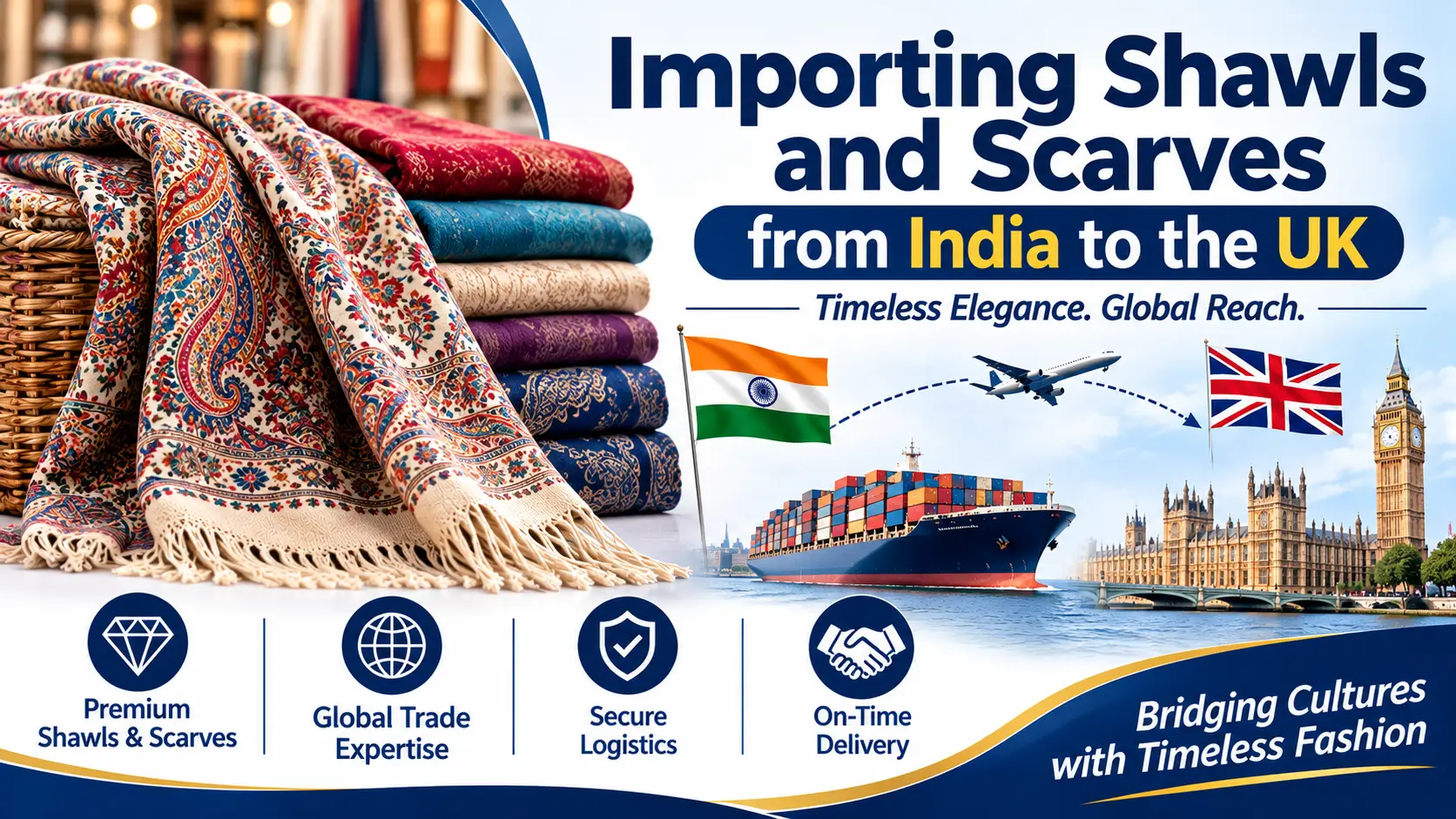
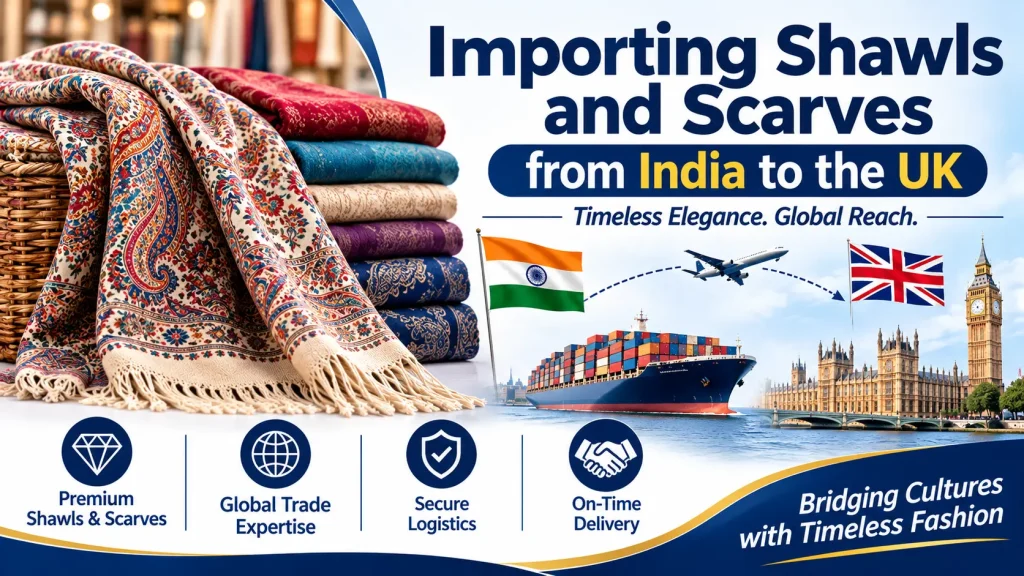
Since 15 July 2026, UK buyers who import shawls from India to the UK can claim zero import duty under the India-UK Comprehensive Economic and Trade Agreement (CETA), as long as the goods meet the agreement’s rules of origin and you hold proof of origin. Without that proof, the standard UK tariff applies (up to 12% on textiles). You still pay 20% import VAT, which VAT-registered businesses normally recover.
For years, UK import duty on scarves and shawls from India was a fixed cost buyers had to price in. The India-UK textile trade picture changed when CETA came into force, but the benefit is not automatic. This guide explains how the duty-free route works, what UK import VAT does to your cash flow, what a landed cost looks like, and how long delivery takes when you source from an Indian manufacturer.
Trade rules change, and the product-specific origin rule for your exact shawl matters. Confirm your commodity code and origin position with a UK customs agent before you place a large order.
Key facts at a glance
- The India-UK CETA entered into force on 15 July 2026.
- It gives duty-free access to the UK for most Indian goods, including textiles and clothing across 1,143 tariff lines that previously paid duty of up to 12%.
- The preference is not automatic. Goods must qualify as Indian origin and you need valid proof of origin.
- Import VAT of 20% still applies. VAT-registered importers can usually reclaim it.
- You need a UK EORI number to import commercially, and customs declarations are made through the UK’s Customs Declaration Service.
- Labelling rules still apply: UK textile regulations require fibre composition on the label.
How the India-UK CETA changes the cost of importing shawls
Before CETA, woven shawls, scarves and mufflers from India paid the standard UK Global Tariff, which on many textile lines reached 12%. Under CETA, qualifying Indian textiles enter at 0%. For a retailer or wholesaler, that moves your margin immediately: on a £20,000 shipment, the duty saved can be well over £2,000.
Two conditions apply before you can enjoy it:
- The goods must be originating. A shawl has to meet the CETA product-specific rule for its commodity code. In simple terms, the rules look at where the fibre, yarn or fabric came from and how much processing happened in India. A shawl woven in India from Indian yarn is a different case from one made from imported fabric, so ask your supplier to confirm origin in writing.
- You must hold proof of origin. For imports into the UK, CETA recognises three forms: an origin declaration completed by the exporter or producer, a certificate of origin from an issuing authority, or the importer’s own knowledge that the goods are originating. Most buyers ask the Indian manufacturer for the origin declaration to keep the paperwork simple.
If you do not claim the preference when the goods are cleared, ask your customs agent about making a retrospective claim. Rules on time limits apply, so do not leave it open.
UK import duty on scarves: with and without CETA
| Situation | Duty on woven shawls and scarves |
|---|---|
| Qualifying goods with valid proof of origin under CETA | 0% |
| Goods that do not meet the rules of origin or lack proof | Standard UK Global Tariff rate for the commodity code (up to 12% on textiles) |
Your commodity code decides the rate. Woven shawls, scarves and mufflers sit in heading 6214, and knitted or crocheted scarves sit in heading 6117. Fibre content then decides the subheading. Use the UK Trade Tariff to look up your exact ten-digit code, and check that it appears in the CETA concession list.
UK import VAT: what you pay and what you can reclaim
Import VAT is charged at the standard rate of 20% on the customs value of the goods, plus any duty, plus freight and insurance costs to the UK. Three points matter for cash flow:
- VAT-registered businesses can usually recover import VAT through their VAT return.
- Postponed VAT accounting lets a VAT-registered importer declare and reclaim import VAT on the same return, so you do not pay it up front at the border. Ask your agent to set it up.
- Duty is added to the VAT base. That is why a duty-free shipment also has a lower VAT bill.
Landed cost example: £20,000 shipment of shawls from India to the UK
The example below compares a CETA claim against paying the standard rate. It assumes a goods value of £20,000 on FOB terms, £1,200 for freight and insurance to the UK, and a worst-case duty rate of 12% for the non-preference column.
| Cost item | With CETA proof of origin | Without preference (12% example) |
|---|---|---|
| Goods value (FOB) | £20,000 | £20,000 |
| Freight and insurance to the UK | £1,200 | £1,200 |
| Customs value | £21,200 | £21,200 |
| Import duty | £0 | £2,544 |
| Import VAT at 20% | £4,240 | £4,749 |
| Duty plus VAT paid at the border | £4,240 | £7,293 |
| Duty cost that cannot be recovered | £0 | £2,544 |
The VAT is recoverable for a VAT-registered buyer, but the duty is a real cost. That £2,544 is the difference that proof of origin protects. Add the broker fee, port charges and delivery to your warehouse when you plan prices. Our guide to MOQ negotiation with shawl suppliers shows how to spread fixed costs across enough pieces.
Delivery times: how long does it take to import shawls from India to the UK?
Timing depends on mode, routing and season, so treat these as planning ranges.
| Stage | Typical timing |
|---|---|
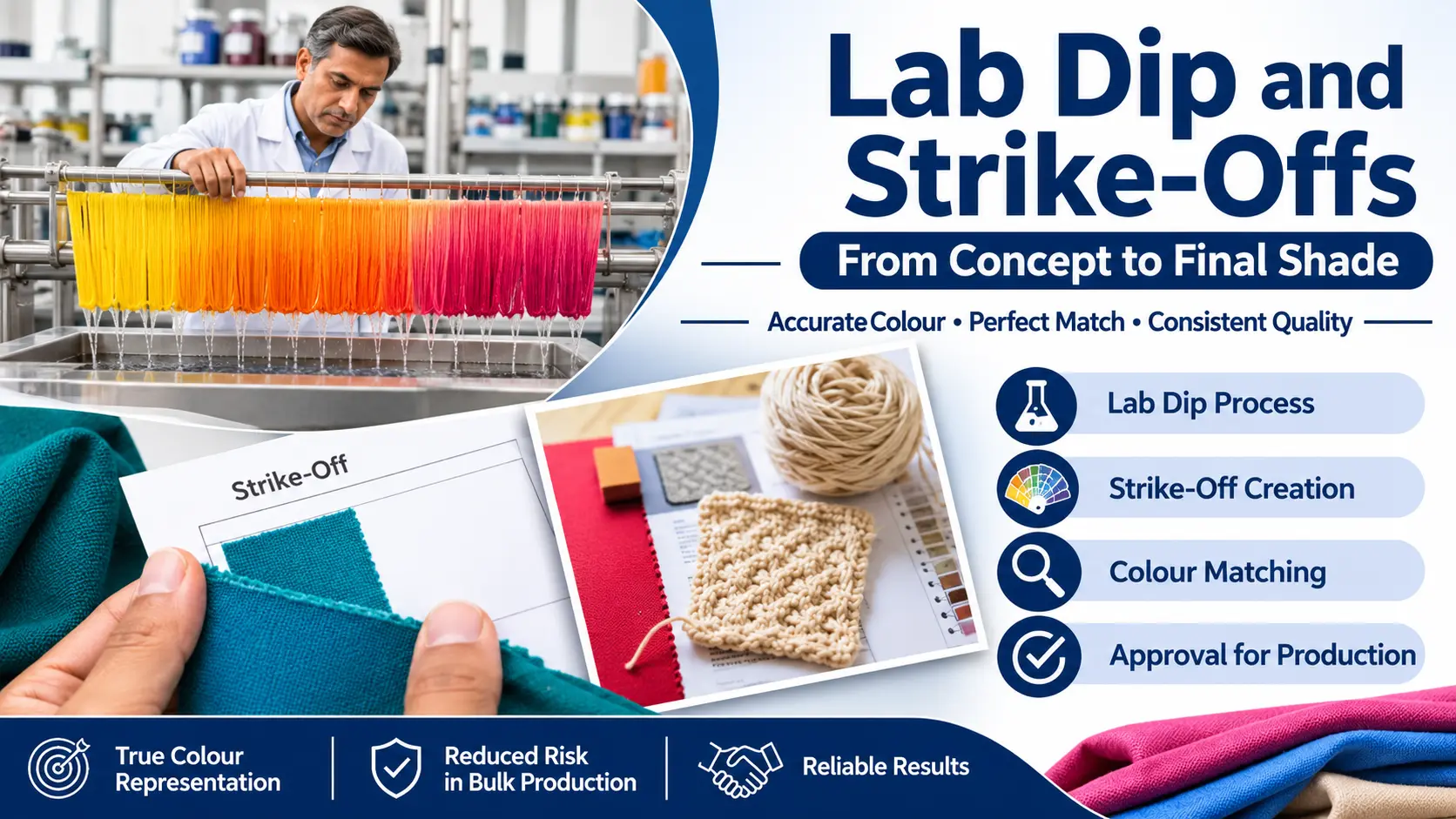
| Sampling and colour approval | One to three weeks |
| Bulk production | Several weeks, depending on quantity and design |
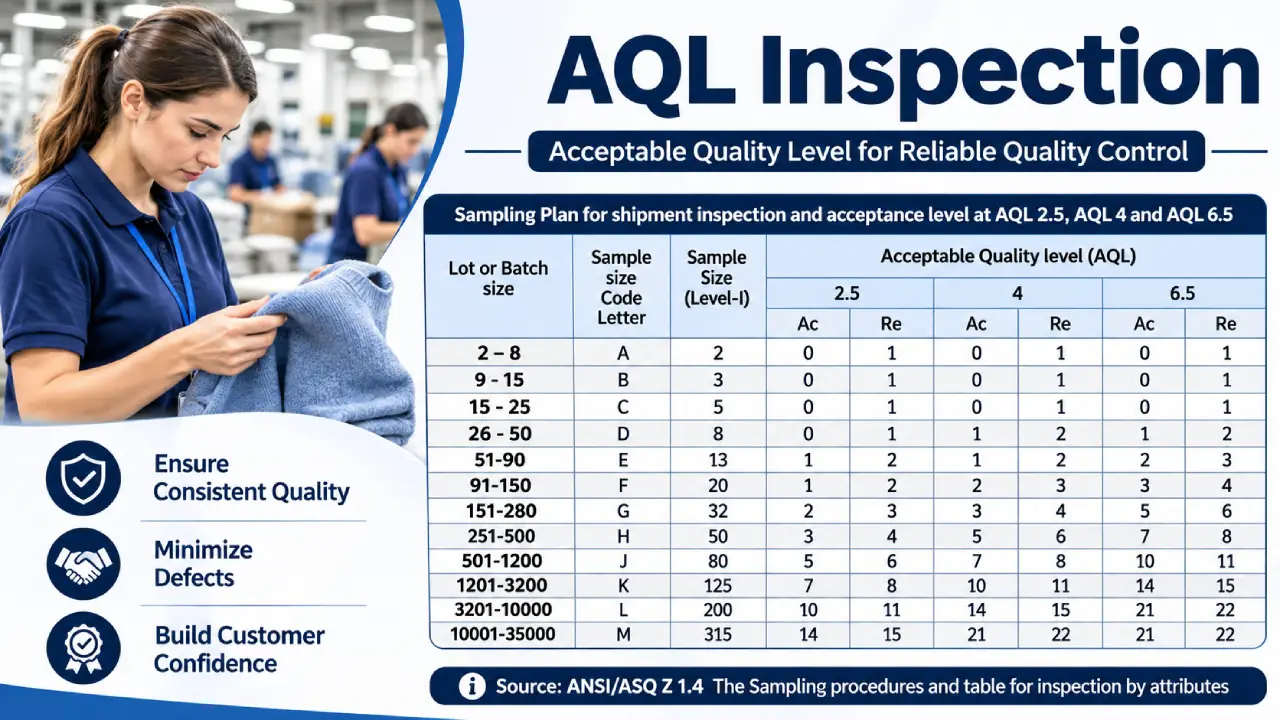
| Pre-shipment inspection | A few days |
| Ocean freight (Indian port to UK port) | Roughly four to six weeks, depending on routing |
| Air freight | A few days to about a week door to door |
| UK customs clearance and delivery | A few days |
Colour approval and inspection are the stages where time is saved or lost. Our guides to lab dips and strike-offs and AQL and pre-shipment inspection explain how to run them without delaying the shipment.
Step-by-step: importing shawls from India to the UK
- Register for an EORI number (starting with GB) if you do not already have one.
- Choose your supplier and agree specifications, fibre content and packing. Read how to choose the right shawl manufacturer.
- Confirm the commodity code and whether it is covered by CETA.
- Ask the supplier for origin evidence and the proof of origin you will use to claim 0% duty.
- Approve samples, colours and quality terms before bulk production.
- Agree the Incoterm (FOB, CIF or DDP) and book freight.
- Appoint a customs agent to submit the import declaration, claim the preference and set up postponed VAT accounting.
- Clear customs, pay any duty and VAT, and arrange delivery.
Documents you will need
- Commercial invoice with full goods description, fibre content, quantity, unit price and country of origin
- Packing list
- Bill of lading (sea) or air waybill (air)
- Proof of origin for the CETA preference
- Your EORI number and, if applicable, a VAT number
- Customs declaration submitted through the UK’s Customs Declaration Service, usually by your agent
UK labelling and product rules for shawls and scarves
- Fibre composition: UK textile labelling rules require the fibre content to be shown on the label, using the correct generic names and percentages. Our guide to care label requirements for textile exports covers label content in more detail.
- Care instructions are not a legal requirement in the UK, but retailers expect them.
- Product safety: goods sold to consumers must meet general product safety rules, and chemical rules apply to dyes and finishes. If your customers ask for certified low-chemical production, see our page on OEKO-TEX certified shawl suppliers.
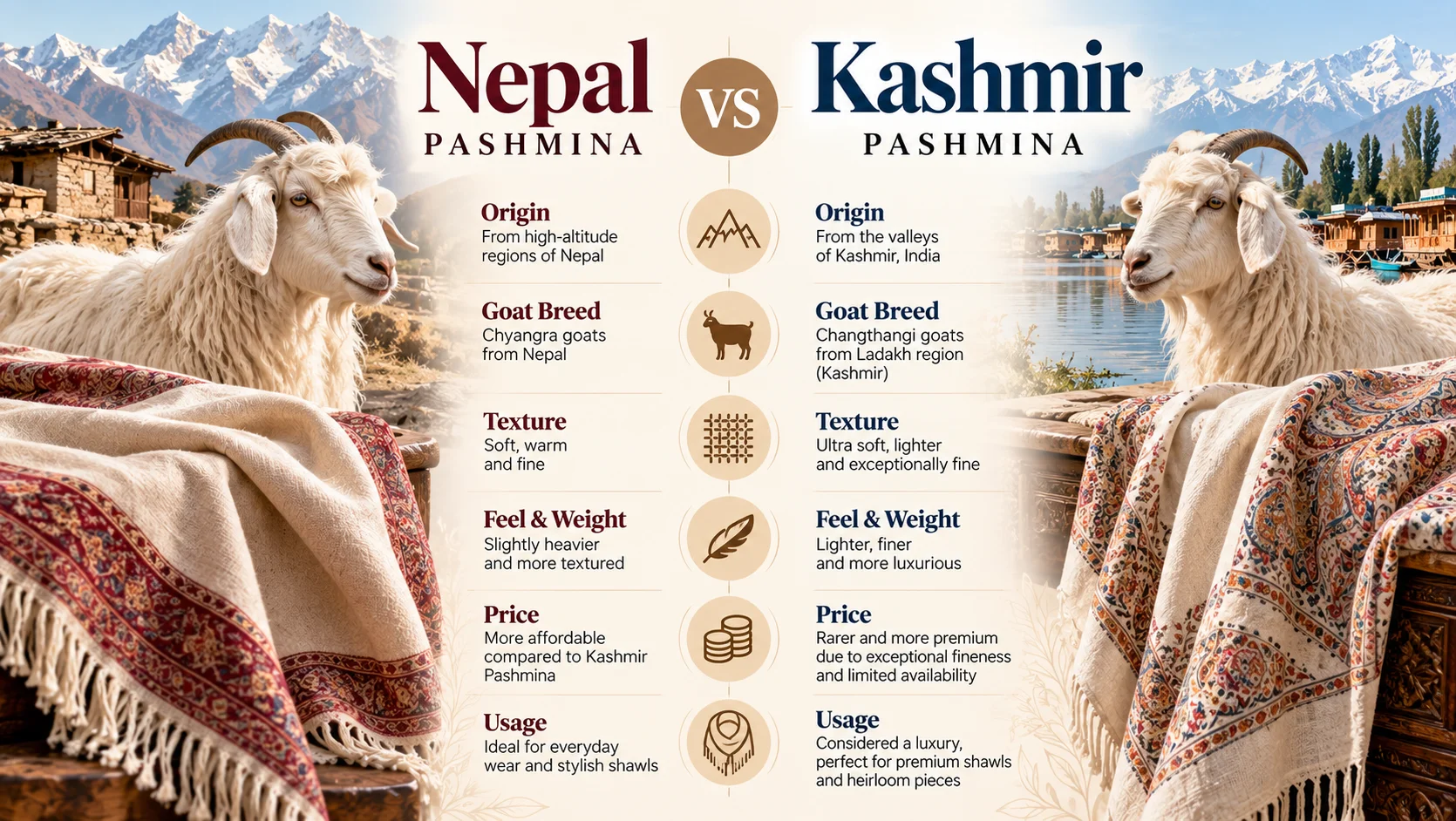
- Wool and cashmere claims: if you label a product as cashmere or pashmina, you should hold test evidence that the fibre matches the claim. Our guide to handwoven vs machine made pashmina explains why this matters.
Tips for UK buyers sourcing shawls from India
- Ask for the origin declaration before you pay a deposit, not after the goods have shipped.
- Order by fibre and weave, not just by price. The commodity code and origin position change with the material.
- Pack well. Damaged cartons cost you far more than the saving from cheaper packing. See our notes on shawl packaging for export.
- Start with a trial order to test the process, timings and paperwork, then scale.
- If you also import into other markets, compare the rules in our guide to importing shawls from India to the USA.
Frequently asked questions
Is there import duty on shawls from India to the UK?
Not for qualifying goods since 15 July 2026. Under the India-UK CETA, originating Indian shawls and scarves can enter the UK at 0% duty if you hold proof of origin. Without it, the standard UK tariff applies, which can be up to 12% on textiles.
Do I still pay VAT on shawls imported from India?
Yes. Import VAT at 20% is charged on the customs value plus any duty and freight. VAT-registered businesses can usually reclaim it, and postponed VAT accounting avoids paying it up front.
What proof of origin do I need under the India-UK CETA?
You can use an origin declaration from the exporter or producer, a certificate of origin from an issuing authority, or your own knowledge that the goods are originating. Most UK buyers ask the Indian manufacturer for the origin declaration.
Do all Indian shawls qualify for zero duty?
No. The goods must meet the product-specific rule of origin for their commodity code, so it matters where the fibre, yarn and fabric came from. Ask your supplier to confirm the origin position in writing.
Do I need an EORI number to import shawls into the UK?
Yes, a GB EORI number is needed to import goods commercially into the UK. Your customs agent can help you register if you do not have one.
How long does shipping shawls from India to the UK take?
Ocean freight usually takes around four to six weeks port to port, and air freight takes from a few days to about a week. Add production, inspection and customs clearance time to the total.
Can I import samples from India to the UK?
Yes, but samples are still goods and need a customs declaration, a correct commodity code and a value. Duty and VAT may apply unless a relief is available, so ask your courier or agent.
Source shawls and scarves for the UK market
If you want to import shawls from India to the UK, work with a supplier who can document origin, quality and compliance from the first order. Savita Shawls supplies international buyers as a shawl manufacturer in India. You can read our page for shawl manufacturers serving London and the UK, browse our wholesale shawls supplier range, or explore private label shawl manufacturing and custom shawl orders for your own brand. When you are ready, request a quote or use the contact page.