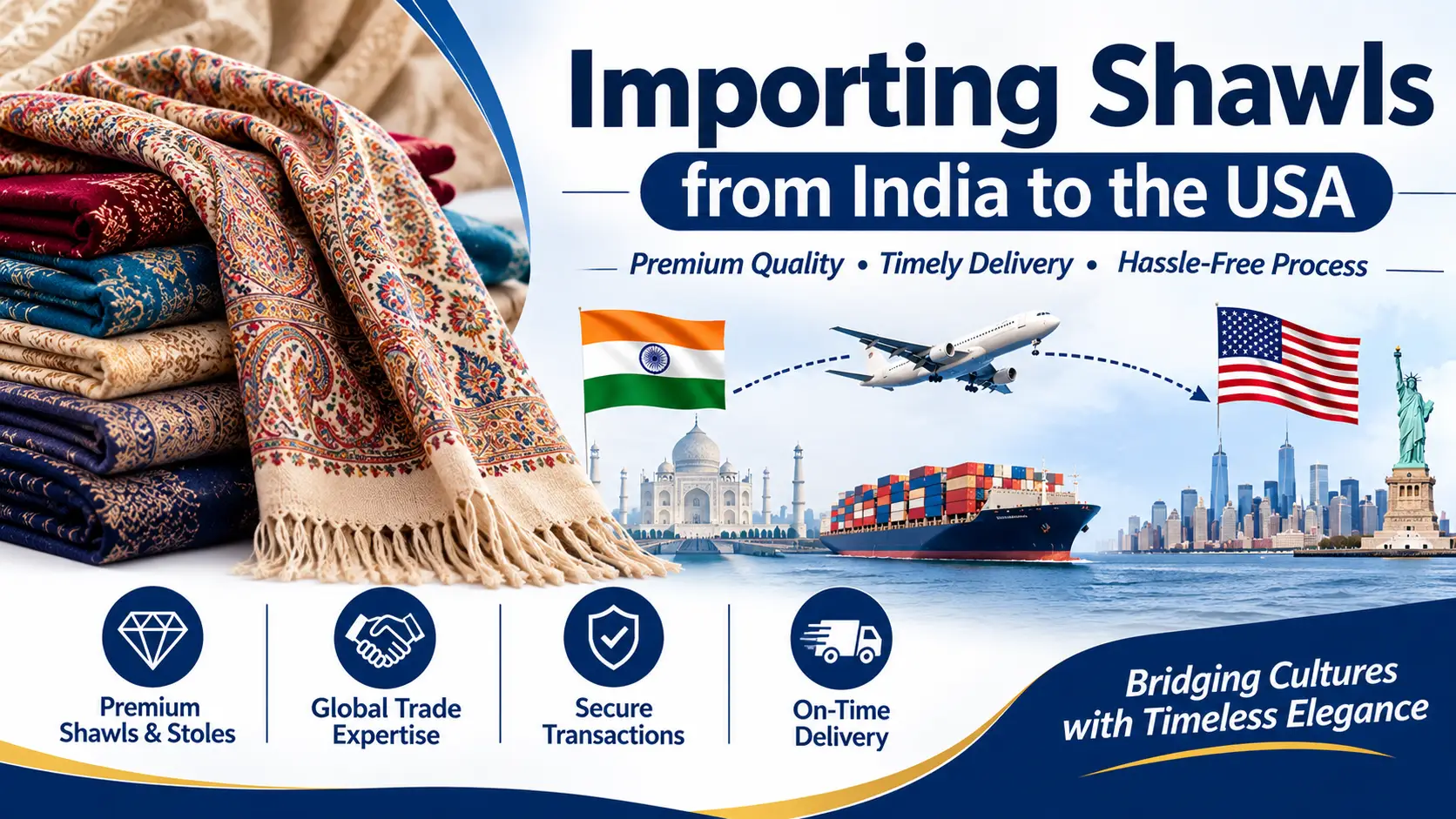
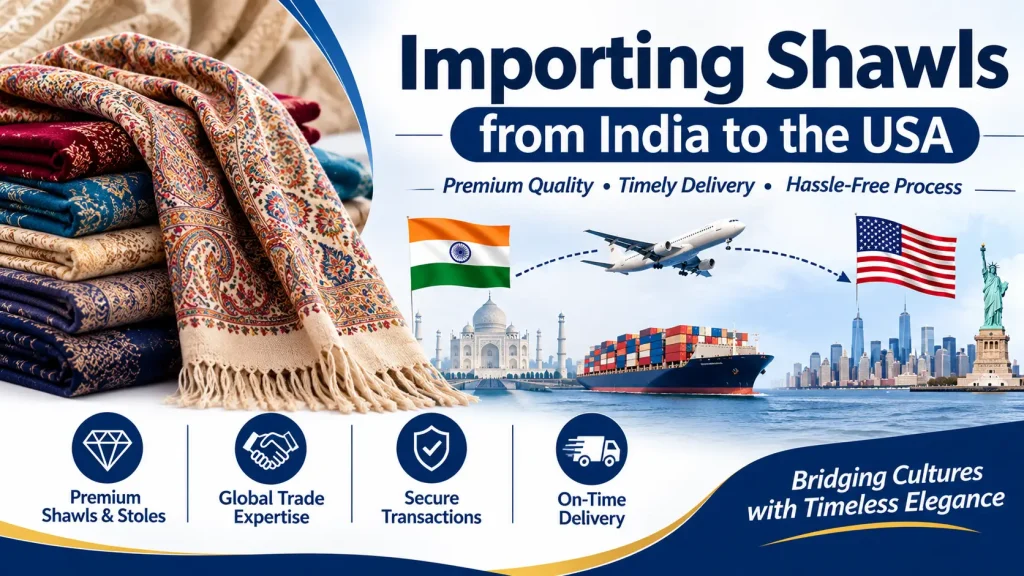
To import shawls from India to the USA, classify the goods under HTS code 6214 (woven shawls, scarves and mufflers), pay the general duty for the fibre (roughly 5% to 11% for most wool, viscose and cotton shawls), and add the extra 10% Section 301 tariff that applies to most Indian goods since 24 July 2026. You also need a customs bond, a commercial invoice, correct fibre and origin labels, and an Importer Security Filing for ocean freight.
Tariff rules between the two countries have changed several times in the past year, and old blog posts still quote rates that no longer apply. This guide explains the current picture for US customs duty on scarves and shawls, how HTS code 6214 works, how to work out landed cost, and what paperwork to prepare when you work with an Indian shawl supplier for USA orders.
Tariff rates change often. Treat the figures here as a planning guide and confirm the final rate for your product with a licensed US customs broker before you place an order.
Key facts at a glance
- Woven shawls, scarves, mufflers and stoles are classified under HTS heading 6214. Knitted or crocheted scarves go under heading 6117 instead.
- The general (MFN) duty depends on fibre: silk is close to free, wool is about 6.7%, viscose and other artificial fibres about 5.3%, and cotton and other textile materials about 11.3%.
- Most goods from India also pay an additional 10% Section 301 duty, in force since 24 July 2026.
- India has no free trade agreement with the USA and does not get preferential duty rates, so the general rate applies.
- Customs value is normally the price paid on an FOB basis, so duty is calculated before ocean or air freight.
- You will also pay a Merchandise Processing Fee (about 0.35% of value, with a minimum and a maximum) and, for ocean freight, a small Harbor Maintenance Fee.
How to import shawls from India to the USA: the main steps
Here is the process in order, from first quote to delivery:
- Choose your supplier and agree the specification. See our guide on how to choose the right shawl manufacturer.
- Confirm the HTS code and expected duty with your customs broker before you commit to a price.
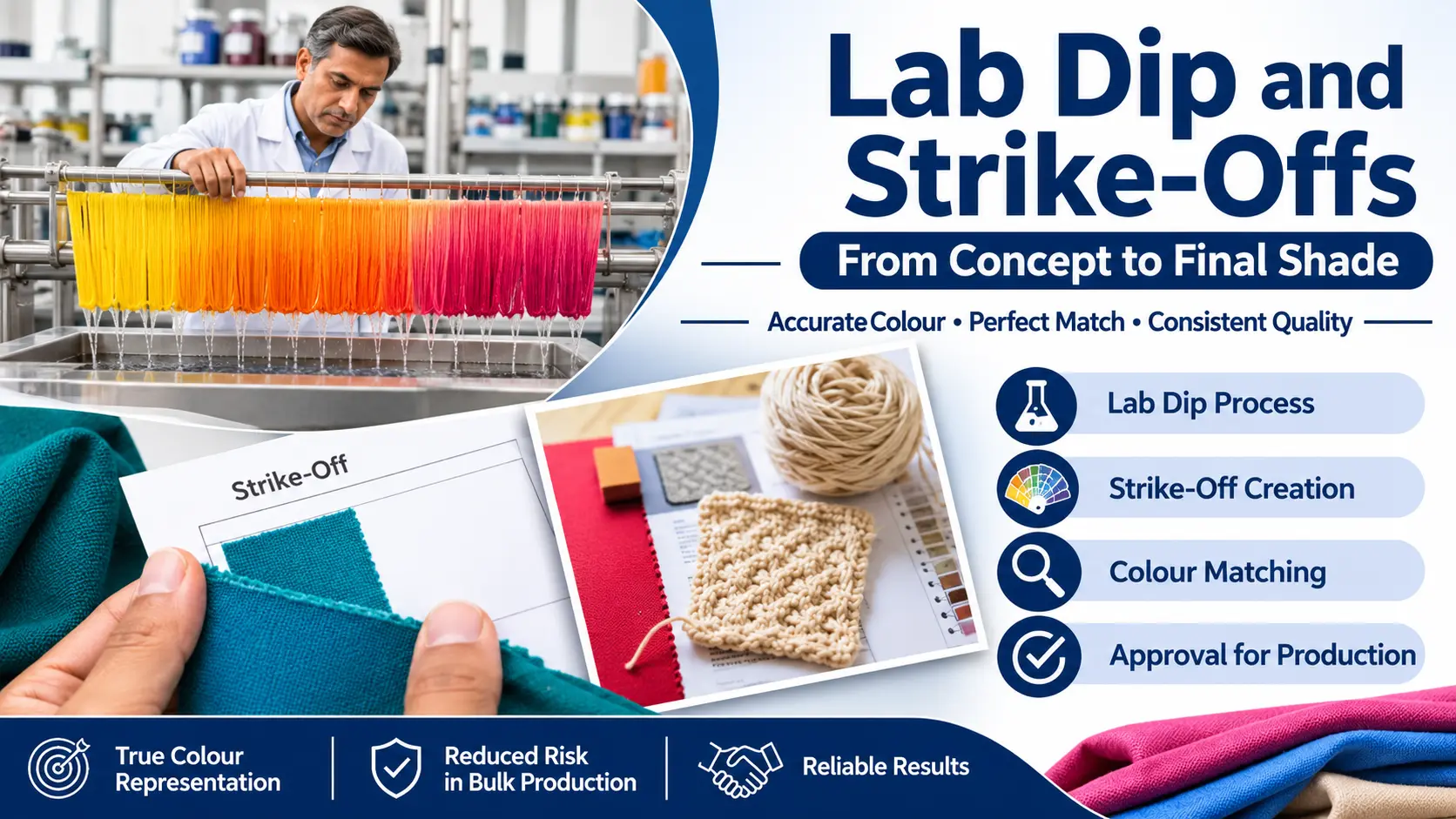
- Approve samples and colours. Our guide to lab dips and strike-offs explains how to lock in colour before bulk production.
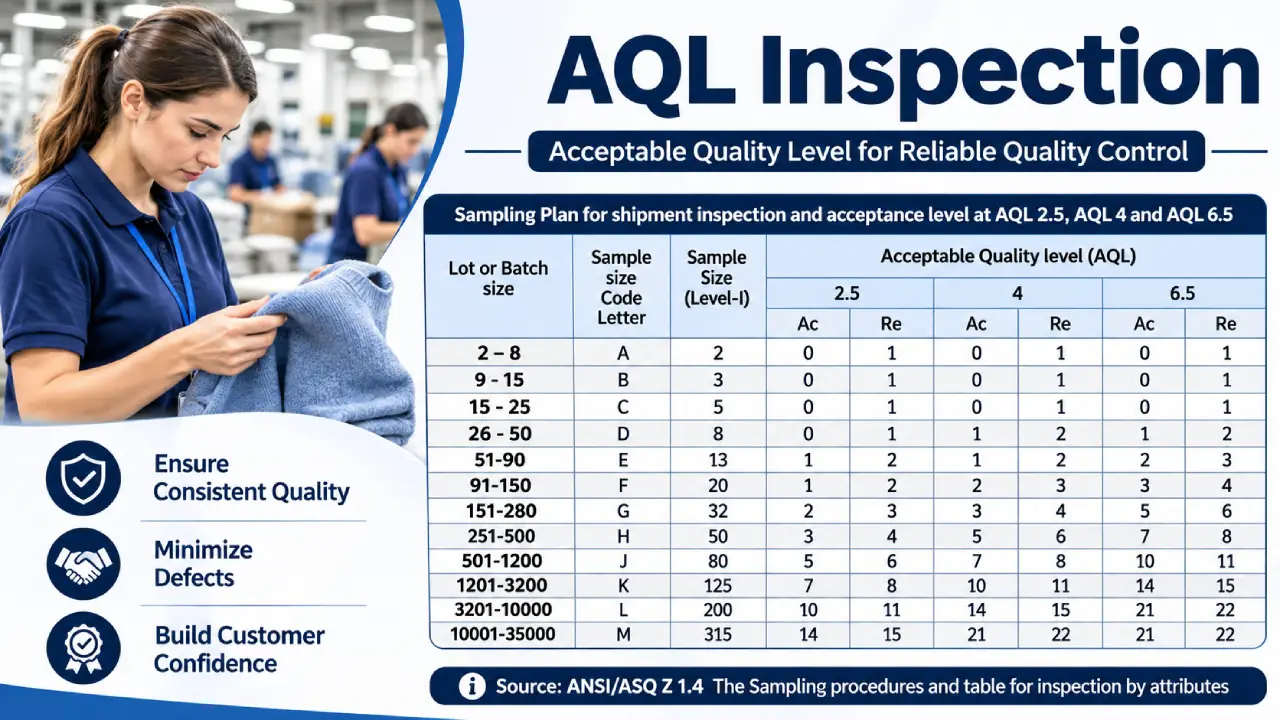
- Set quality terms and inspect before shipment. Read about AQL and pre-shipment inspection.
- Agree the Incoterm and book freight.
- File the Importer Security Filing (for ocean cargo) and prepare the entry with your broker.
- Clear customs, pay duty and take delivery.
HTS code 6214: how shawls and scarves are classified
HTS code 6214 covers “shawls, scarves, mufflers, mantillas, veils and the like” that are woven, which means not knitted or crocheted. The subheading depends on the main fibre in the product:
| HTS subheading | Product | General duty (approximate) |
|---|---|---|
| 6214.10 | Silk or silk waste | Free to about 1.2%, depending on silk content |
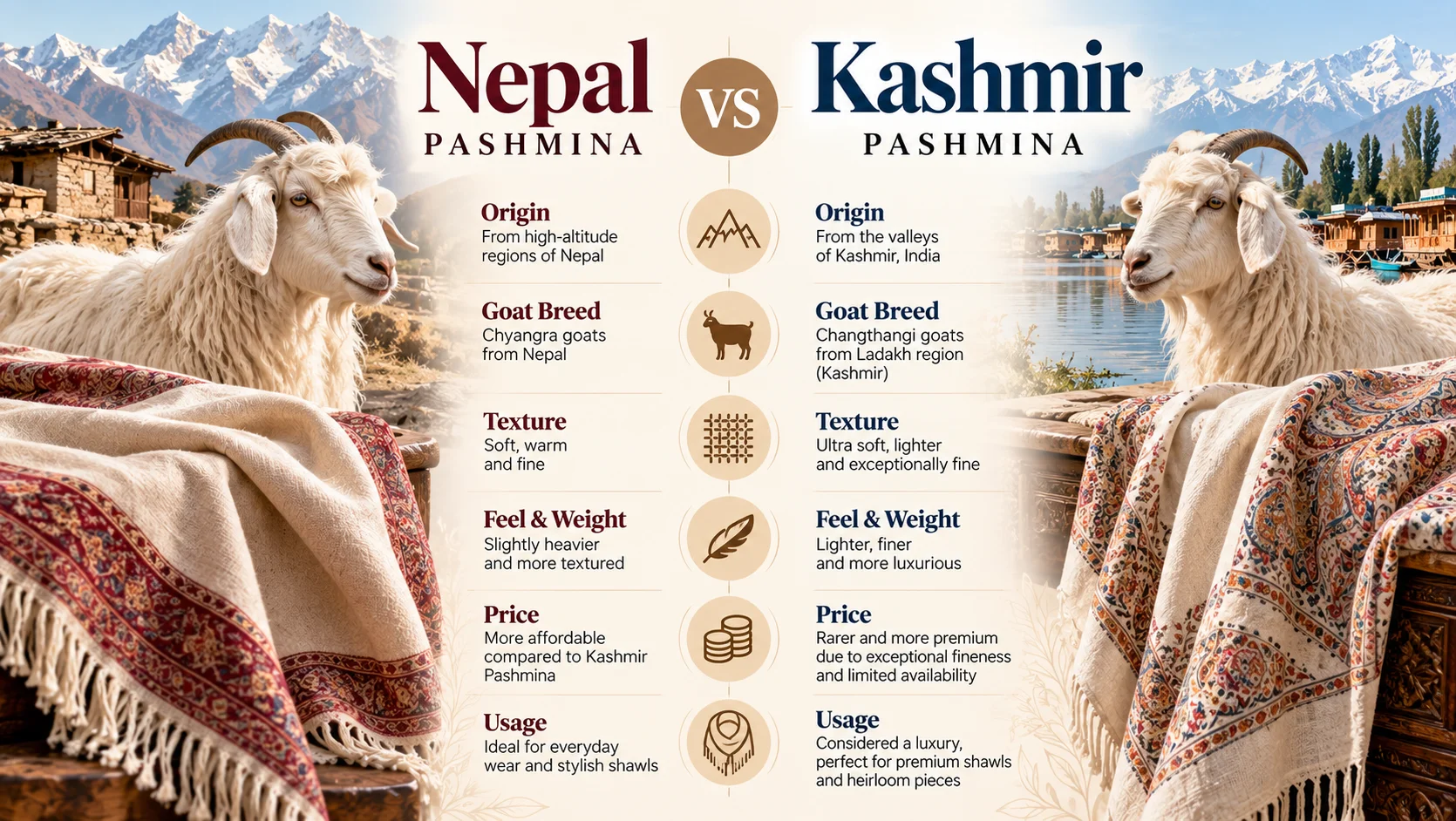
| 6214.20 | Wool or fine animal hair (including pashmina and cashmere) | About 6.7% |
| 6214.30 | Synthetic fibres (such as acrylic and polyester) | About 5.3% |
| 6214.40 | Artificial fibres (such as viscose and modal) | About 5.3% |
| 6214.90 | Other textile materials (such as cotton and linen) | About 11.3% |
Three points to get right:
- Woven or knitted decides the heading first. A knitted scarf belongs in 6117, and the rates differ.
- Fibre content decides the subheading. Blends are classified by the fibre that is highest by weight, with special rules for silk and wool content. Our handwoven vs machine made pashmina guide explains why material claims matter so much.
- Size matters. A woven square with sides of 60 cm or less may be classified as a handkerchief rather than a scarf. Check the finished dimensions with your broker.
The ten-digit statistical suffix and the exact rate should always be confirmed on the official US Harmonized Tariff Schedule or by your customs broker.
US customs duty on scarves from India: what you pay today
The duty on a shipment is built in layers.
Layer 1: the general (MFN) rate
This is the rate in the table above. It applies to India because there is no US free trade agreement or preference scheme covering these goods.
Layer 2: the Section 301 additional duty
Since 24 July 2026, most goods of Indian origin pay an extra 10% on top of the normal HTS rate under Section 301 of the Trade Act. The rate follows a US review of forced-labour import rules, and India was placed in the lower 10% tier. Some product categories are exempt, and India did not receive the textile tariff-rate quota exemption, so shawls and scarves should be assumed to pay it unless your broker confirms an exclusion.
Layer 3: fees
- Merchandise Processing Fee (MPF): about 0.35% of the customs value, subject to a minimum and maximum that the US adjusts each year.
- Harbor Maintenance Fee (HMF): 0.125% of value on ocean shipments only.
- Broker, bond and delivery charges: quoted separately by your service providers.
Why older articles are wrong
Earlier in 2026, tariffs on India moved from 25% to 18% under an interim trade framework, and then the US Supreme Court struck down tariffs issued under the emergency powers law in February. A temporary replacement surcharge followed, and the current Section 301 duty replaced that in July. If a page still quotes 25%, 26% or 50% on Indian shawls, it is out of date.
Landed cost of shawls from India to the USA: a worked example
Landed cost is the total you pay to get goods to your warehouse. The example below shows only duties and fees, based on a shipment with a customs value of $20,000 FOB, sent by sea. Freight, insurance, broker fees and trucking come on top.
| Cost item | Wool shawls (6.7%) | Viscose stoles (5.3%) | Cotton scarves (11.3%) |
|---|---|---|---|
| General duty | $1,340 | $1,060 | $2,260 |
| Section 301 additional duty (10%) | $2,000 | $2,000 | $2,000 |
| MPF (about 0.35%) | about $69 | about $69 | about $69 |
| HMF (0.125%, ocean) | $25 | $25 | $25 |
| Total duties and fees | about $3,434 | about $3,154 | about $4,354 |
| As a share of customs value | about 17% | about 16% | about 22% |
Then add ocean or air freight, cargo insurance, customs broker and bond fees, and delivery to your warehouse. For a retailer, the right way to price is to calculate landed cost per piece first, then work back to your margin. Our guide to MOQ negotiation with shawl suppliers helps you plan order sizes so fixed costs are spread across enough pieces.
Choosing the right Incoterm for US shipments
The Incoterm tells you who pays for what and when risk passes to you.
- FOB (Free on Board): you pay freight and insurance from the Indian port. Customs value is usually the FOB price, so this is the cleanest basis for duty.
- CIF (Cost, Insurance and Freight): the supplier pays freight and insurance to the US port, and you handle import clearance. Duty is still calculated on the value before international freight, so your invoice should show it clearly.
- DDP (Delivered Duty Paid): the seller handles duty and delivery. It looks simple, but it carries risk for the seller and cost for the buyer, so it suits only certain situations.
For small first orders, many buyers choose FOB with their own broker, or a DAP quote with the broker handling clearance, so they keep control of classification.
Paperwork and compliance checklist
Documents for customs entry
- Commercial invoice with full description, fibre content, quantity, unit price, country of origin and the manufacturer’s name and address
- Packing list
- Bill of lading or air waybill
- Customs bond (single entry or continuous bond) arranged through a broker
- Importer Security Filing for ocean cargo, filed at least 24 hours before loading
- Certificate of origin if you need to show Indian origin
Labelling for the US market
- Fibre content: the Textile Fiber Products Identification Act requires the generic fibre names and percentages on the label.
- Country of origin: “Made in India” must be on the label.
- Manufacturer or importer identity: the company name or an RN number issued by the FTC.
- Wool products: wool shawls fall under the Wool Products Labeling Act. If you plan to call a product “cashmere” or “pashmina”, the fibre must meet the US definition for cashmere, so ask your supplier for test evidence.
- Care instructions: the Care Labeling Rule requires permanent care instructions on most textile products. See our guide to care label requirements for textile exports.
Product safety and chemicals
- If you need low-chemical or certified dyeing for your customers, review our page on OEKO-TEX certified shawl suppliers.
- Never buy “shahtoosh” shawls. They are made from a protected species and are illegal to trade under CITES.
How to reduce your landed cost
- Compare fibres before you finalise a design. The general duty on a viscose stole can be less than half the duty on a cotton scarf.
- Ship fuller cartons. Good packing lowers freight cost per piece. See our notes on shawl packaging for export.
- Declare the correct value. Under-declaring causes penalties and delays that cost far more than the duty saved.
- Use a broker who knows textiles. Fibre claims and size rules are where classification errors happen.
- Plan lead times. Allow time for sampling, colour approval, production, inspection, freight and clearance before your selling season.
Frequently asked questions
What HTS code is used for shawls and scarves imported into the USA?
Woven shawls, scarves, mufflers and stoles are classified under HTS heading 6214, with the subheading chosen by fibre: silk 6214.10, wool or fine animal hair 6214.20, synthetic fibres 6214.30, artificial fibres 6214.40 and other materials 6214.90. Knitted scarves go under heading 6117.
How much is the US customs duty on scarves from India?
The general duty ranges from near zero for silk to about 11.3% for cotton and other materials, with wool about 6.7% and viscose about 5.3%. Most Indian goods also pay an additional 10% Section 301 duty from 24 July 2026, plus small customs fees.
Is there a free trade agreement between India and the USA for textiles?
No. India and the USA do not have a free trade agreement, and Indian shawls do not receive preferential duty rates. The general rate plus any additional duties applies.
Do I need a customs broker to import shawls from India to the USA?
Most importers use one. A licensed customs broker files the entry, confirms the HTS code and duty, arranges the customs bond and handles the Importer Security Filing for sea freight.
Who pays the duty on a shipment from an Indian supplier?
The importer of record in the USA pays duty and fees on FOB, CIF and similar terms. Only under DDP terms does the seller pay them, and the price will reflect that.
Is customs duty calculated on freight cost?
Duty is generally calculated on the transaction value of the goods, which for most shipments excludes international freight and insurance. Your invoice should show goods value separately from freight.
How long does it take to import shawls from India to the USA?
Production and approvals usually take several weeks. Ocean freight from India to the US typically takes around four to six weeks, and air freight takes a few days, plus customs clearance and delivery. Timing varies by port and season.
Source your next shawl order from an Indian manufacturer
If you want to import shawls from India to the USA, you need a supplier who understands US labelling, documentation and quality expectations. Savita Shawls works with international buyers as a shawl manufacturer in India, and you can see our export services for the USA, browse our wholesale shawls supplier range, or look at our scarf manufacturing capabilities. For branded ranges, ask about private label shawl manufacturing and custom shawl orders. When you are ready, request a quote or reach us through the contact page.