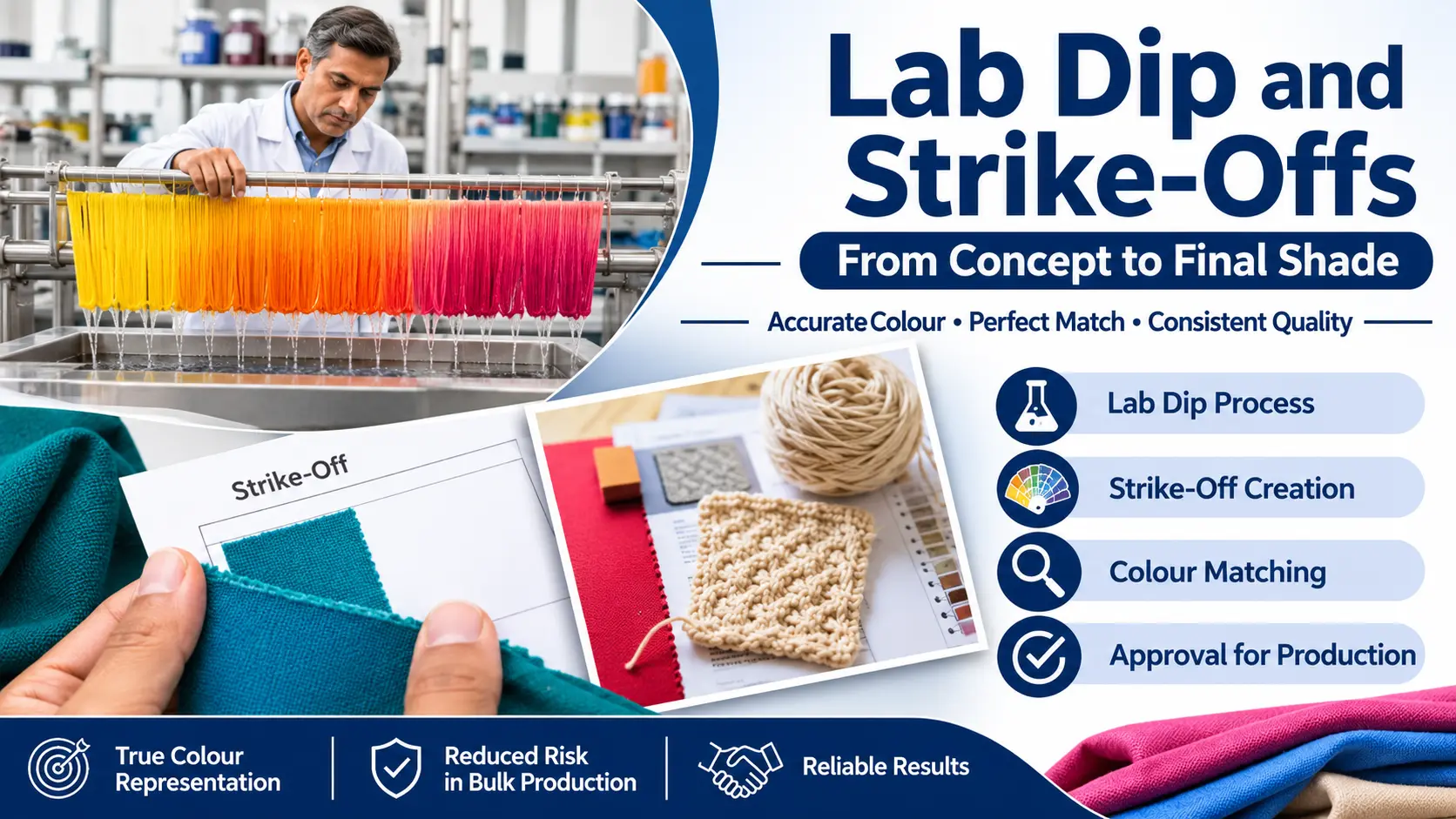
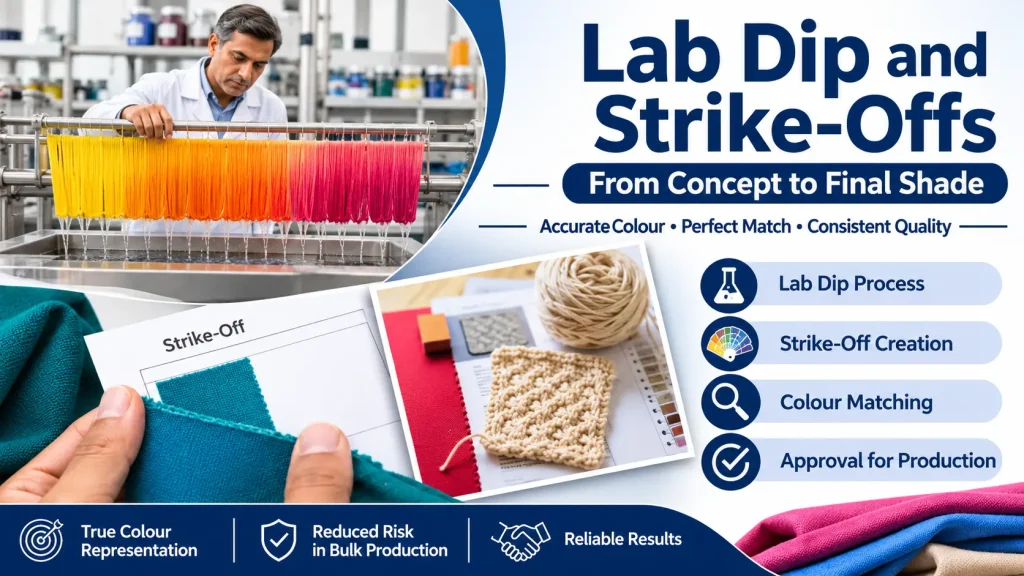
A lab dip in textile is a small dyed swatch that a factory makes to match your reference colour before any bulk dyeing starts. A strike-off is the same idea for printed designs: a sample print on the real fabric showing colour, scale and placement. You approve the lab dip or strike-off in writing, and that signed sample becomes the standard your bulk scarf order is judged against.
Colour is the most common reason scarf and shawl orders turn into disputes. A deep red that looked right on screen arrives as brick, or a navy comes out slightly green under shop lighting. The fix is a proper colour approval process before bulk production. This guide explains how a lab dip in textile works, how strike off approval differs, how Pantone colour matching fabric really behaves, and how to run a bulk colour approval process that protects your order.
Key facts at a glance
- A lab dip is a small dyed fabric or yarn swatch made to match your colour reference.
- A strike-off is a printed sample that shows design, colour and placement on the actual fabric.
- Pantone references (such as TCX codes) are the common language for colour, but they are paper or cotton standards, so a perfect match on scarf fabric is never guaranteed.
- Most factories submit several lab dip options per colour, labelled A, B and C, so you can choose the closest one.
- Approved samples should be signed, dated and referenced in the purchase order.
- The approved lab dip does not replace a bulk check: a shade band or pre-production sample before full dyeing is the safer step.
What is a lab dip in textile?
A lab dip in textile is a small swatch dyed in the factory’s dye laboratory to copy a colour you have supplied. That reference might be a Pantone code, a colour chip, a physical fabric swatch or a previous order. The dye house mixes a recipe, dyes a small piece of the real fabric (or yarn), and sends it to you for approval.
The purpose is simple: prove that the factory can hit your colour on your fabric before committing hundreds of metres of cloth or thousands of scarves to the dye vat. It costs little compared with a rejected bulk lot.
Why the fabric matters as much as the dye
The same dye recipe looks different on different materials. Pashmina, wool, viscose, cotton, silk and acrylic blends all take dye differently, and fabric weight, weave and finishing change how light reflects off the surface. That is why a lab dip must be made on your actual base fabric. A match on a cotton swatch tells you almost nothing about how it will look on a wool-blend shawl. For a view of where dyeing sits in production, read our overview of the shawl manufacturing process in India.
Lab dip vs strike-off vs shade band: what each one does
| Sample | Used for | What you are approving | When it happens |
|---|---|---|---|
| Lab dip | Solid colours, dyed fabric or yarn | Shade only | First step, before bulk dyeing |
| Strike-off | Printed scarves and stoles | Print colours, design scale, repeat and placement | After lab dips, before bulk printing |
| Yarn dip | Yarn-dyed, woven and handloom designs | Yarn shade before weaving starts | Before yarn is dyed in bulk |
| Shade band | Bulk dyed lots | Shade range across the lot, from lightest to darkest | During or just after bulk dyeing |
| Pre-production sample | Whole product | Construction, size, hand feel, trims and finishing | Before full production is released |
If you are still at the stage of requesting first samples, our guide on how to request samples from a shawl manufacturer explains what to send and what to expect back.
How Pantone colour matching fabric really works
Pantone codes are the most common way to communicate colour between a buyer and a factory. They are also widely misunderstood. A Pantone chip is a printed colour on a paper or cotton standard, not a dye recipe. Dyeing wool, viscose or silk to the same visual colour requires a different recipe on each material, and an exact match is sometimes physically impossible.
A few practical rules for Pantone colour matching fabric:
- Quote the full code and the book. For example, a TCX code from the Fashion, Home and Interiors guide. Say which edition if you can, because old chips fade.
- Send a physical reference when possible. A real swatch or chip beats a screen colour every time, since screens vary and printed catalogues do not match fabric.
- Agree how close is close enough. Many buyers use a measured colour difference, called Delta E, with a limit such as 1.0 or 1.5 under a stated formula. If you do not want to measure, agree visual approval under standard light.
- Judge colour under proper light. A light cabinet with daylight (D65) and a shop-light source such as TL84 shows if a colour changes between lighting conditions, a problem known as metamerism.
Why a match can look right in one light and wrong in another
Two dyed fabrics can look identical in daylight and different under shop lighting because their dyes reflect light differently. This is metamerism, and it is a leading cause of “it looked fine at the factory” complaints. Always check lab dips in at least two light sources before signing them.
The bulk colour approval process, step by step
Here is a bulk colour approval process that works for solid dyed scarves, stoles and shawls. Printed designs add a strike-off round in the middle.
Step 1: Send a clear colour reference
Share the Pantone code, a physical swatch and the base fabric you want. Name the end use too, whether fashion scarves, hijab stoles or bridal stoles, since dark colours on light fabrics behave differently from pastels.
Step 2: Receive lab dip options
The factory dyes small swatches in two or three variations per colour, usually labelled A, B and C. Each swatch should carry a tag with the order name, colour name, reference code, fabric and date. Allow around a week per round, though timing varies with the colour and the dye house workload.
Step 3: Check the swatches properly
Compare them against your reference in daylight and under a second light source. Look at the colour on both the surface and the back. Choose the closest option, or request a correction (“slightly lighter and less yellow”) for another round.
Step 4: Approve in writing
Mark the approved option, sign and date it, and return a copy. The factory keeps its matching copy, and you keep yours. Email approval with photos is not enough on its own; the physical swatch is the legal standard.
Step 5: Approve the strike-off for printed designs
For printed products, the factory prints a short sample on the real fabric using the approved colours. Strike off approval covers the colours, the size of the motifs, the repeat, and where the print sits on the finished scarf. Check the print on both the face and the border. Our printed stoles manufacturer page shows the kind of designs this stage covers.
Step 6: Approve a shade band or bulk sample
Bulk dyeing rarely matches a small lab dip perfectly, because large dye lots behave differently from small ones. Ask for a shade band or a cutting from the first bulk dye lot to be sent to you before the remaining fabric is cut and stitched. This is the step that catches the problems a lab dip cannot.
Step 7: Lock the standard into the order
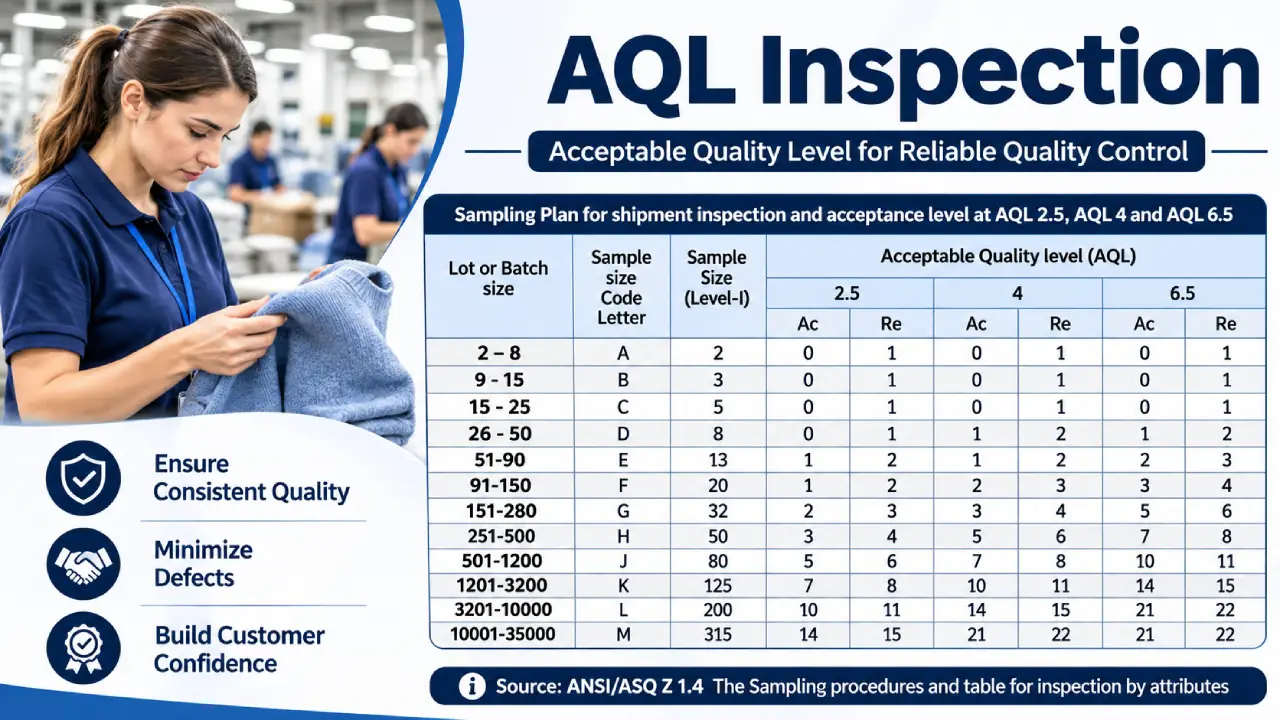
Record the approved lab dip or strike-off reference number, the allowed shade tolerance and the inspection method in the purchase order. Then your final check, described in our guide to AQL and pre-shipment inspection for bulk shawl orders, compares the finished goods against the same signed sample.
Common colour problems and how to avoid them
| Problem | Likely cause | How to prevent it |
|---|---|---|
| Bulk looks different from the lab dip | Different dye lot, larger batch behaviour, different finishing | Approve a shade band from the first bulk lot before cutting and stitching |
| Colour changes between daylight and shop light | Metamerism | Check lab dips under at least two light sources |
| Cartons contain slightly different shades | Mixed dye lots packed together | Ask for lot numbering and pack each carton from a single lot where possible |
| Colour looks flat compared with the Pantone chip | The chip is on paper, the dye is on fibre | Approve on fabric, not against the chip alone |
| Print colours bleed or crock | Poor fixation or wrong dye class for the fibre | Request colour fastness test results alongside the strike-off |
| Fringe and body look different | Different yarn lots or dyeing runs | Specify that fringe and body come from the same approved lot |
Colour fastness: approval is not just about shade
A scarf can match your colour perfectly and still fail in the wash or rub off on a customer’s coat. Ask for colour fastness reports to washing, rubbing (crocking) and light, tested to recognised methods such as the ISO 105 series, and set minimum grades on the grey scale. If you need certified low-chemical dyeing, read our page on OEKO-TEX certified shawl suppliers before you set your colour specification.
Tips for buyers placing custom colour orders
- Approve on the exact base fabric. Never accept a lab dip made on a substitute material.
- Ask how many free lab dip rounds are included. Many factories allow two or three, then charge for extra rounds.
- Keep the approved swatch safe. Store it away from light and handling, since light fades dyed samples.
- Mark any natural variation. Handloom and handwoven pieces carry slight shade movement, and your specification should say how much is acceptable.
- Plan the timeline. Colour approval can add days or weeks before bulk production starts, so build it into your order schedule.
- Order small colour runs carefully. Minimum quantities per colour affect your total order, so see our guide on MOQ negotiation with shawl suppliers.
If you are building a branded range, these steps apply to private label shawl manufacturing and custom shawl orders from first colour card to final carton.
Frequently asked questions
What is a lab dip in textile?
A lab dip in textile is a small swatch dyed in a factory’s laboratory to match a colour reference you supply. You approve it before bulk dyeing starts, so the factory can prove it can hit your colour on your fabric.
What is the difference between a lab dip and a strike-off?
A lab dip approves the shade of a solid dyed fabric. A strike-off approves a printed design, including its colours, scale, repeat and placement on the actual fabric. Printed scarves normally need both.
How long does lab dip approval take?
Each round usually takes about a week, depending on the colour, the fabric and the dye house schedule. Complex or deep colours often need two or three rounds, so plan extra time before bulk production.
Can a factory match a Pantone colour exactly?
Not always. Pantone chips are printed on paper or cotton, and dye on wool, silk or viscose reflects light differently. A good factory matches it as closely as the fibre allows, and you approve the result on the real fabric.
What is Delta E in colour approval?
Delta E is a number that measures the difference between two colours. A lower number means a closer match. Buyers often set a limit such as 1.0 or 1.5 under a named formula, or approve visually under standard lighting if they do not measure.
Why does bulk fabric look different from the approved lab dip?
Large dye lots behave differently from small laboratory batches, and finishing changes the surface of the fabric. A shade band or cutting from the first bulk lot, approved before cutting and stitching, catches this early.
Do I have to pay for lab dips?
Policies vary. Some factories include a set number of lab dip rounds in the order price and charge for additional rounds. Agree this at the quote stage so there are no surprises.
Start your custom colour order with a clear approval plan
If you want scarves, stoles or shawls in your own colours, send us your Pantone references, swatches and target quantities. We will quote against your specification and explain the approval steps for your fabric. You can also explore our range as a scarf manufacturer in India or compare designs with our export quality shawls direct from factory. When you are ready, request a quote or reach out through the contact page.