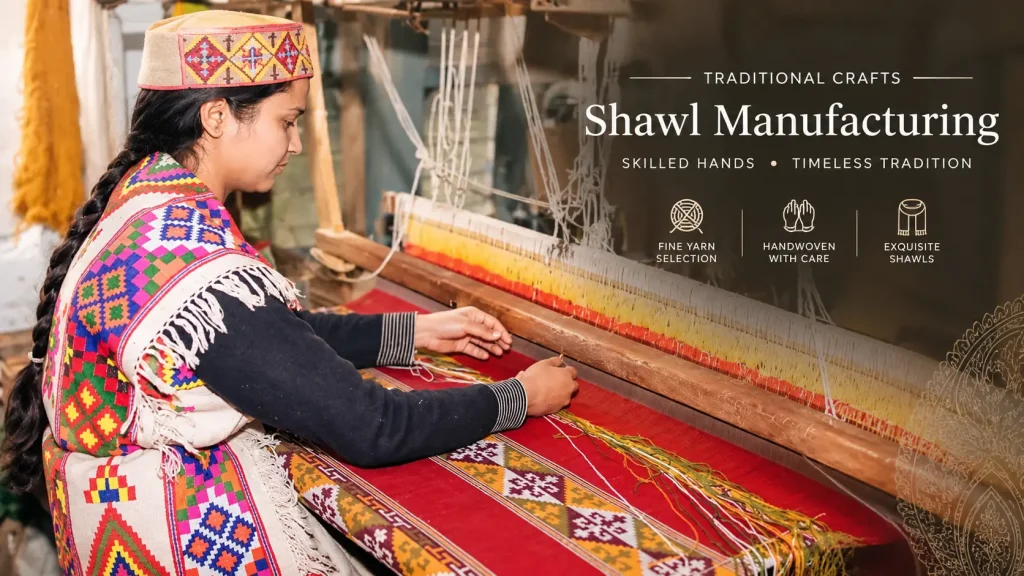
The shawl manufacturing process in India runs through six core stages: raw fibre sourcing, cleaning and scouring, spinning, dyeing, weaving or embroidery, and final finishing and quality inspection. Wholesale buyers who understand each stage can spot quality shortcuts early, negotiate more accurately on price, and audit a factory’s claims instead of relying on marketing copy alone.
Whether you’re sourcing Pashmina, wool, cotton, or viscose shawls, the production pipeline follows a similar structure. What changes between suppliers is where corners get cut, and that’s exactly where a buyer’s due diligence should focus.
Stage 1: Raw Fibre Sourcing
Everything about a shawl’s final quality traces back to the fibre. Depending on the product line, raw material sourcing includes:
- Pashmina wool, combed from Changthangi goats reared in Ladakh at high altitude
- Sheep wool, sourced regionally or imported for bulk woolen stoles
- Silk and viscose yarns, sourced from spinning mills for lighter-weight stoles and scarves
- Cotton yarn, used for breathable, summer-weight stoles
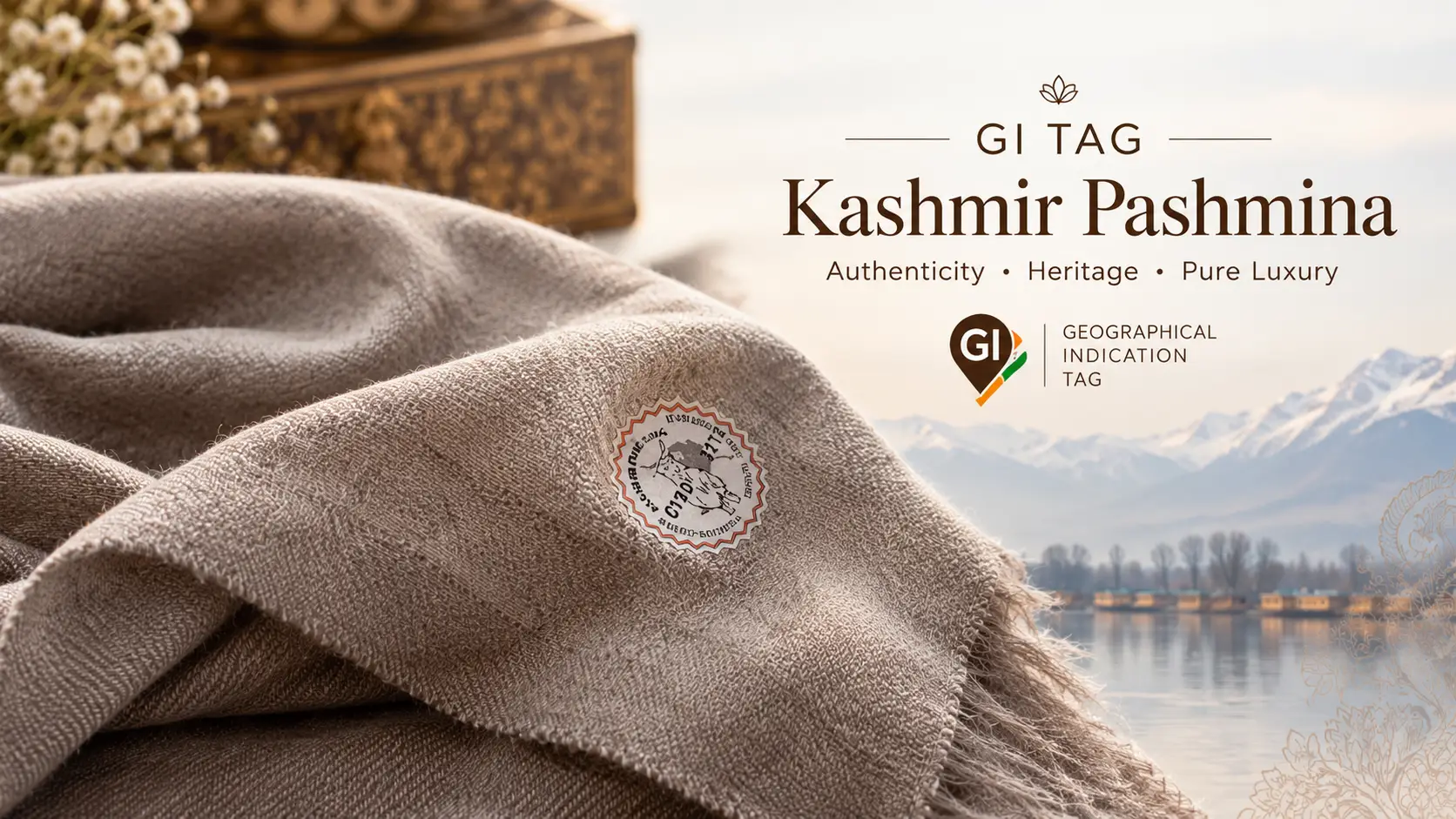
At this stage, reputable manufacturers document fibre origin and grade. If you’re specifically sourcing certified Kashmir Pashmina, this is also where GI compliance is established. See our guide on the GI tag for Kashmir Pashmina for what documentation to request at the sourcing stage itself, before production even begins.
Stage 2: Cleaning and Scouring
Raw fibre carries natural oils (lanolin), dust, and vegetable matter that must be removed before spinning. This is done through scouring, a washing process using mild detergents and controlled water temperatures.
Why it matters for buyers: Poor scouring leaves residual grease in the fibre, which affects dye uptake later and can leave shawls with an odour or a slightly stiff hand-feel. If a sample feels waxy or smells strongly of raw wool, scouring was likely rushed.
Stage 3: Spinning
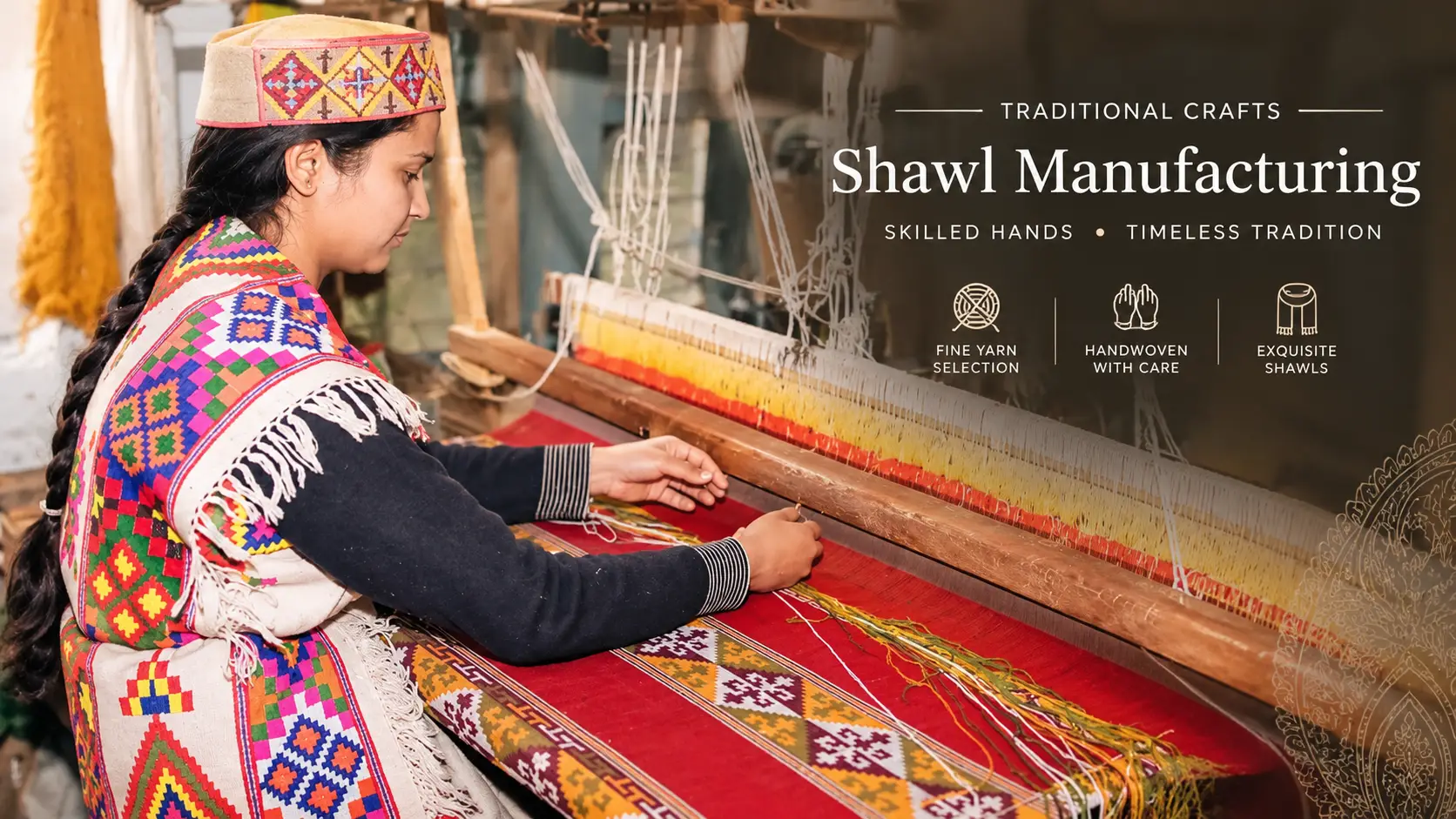
Cleaned fibre is spun into yarn, either by hand on a traditional charkha (spinning wheel) or by machine. This is one of the biggest quality differentiators in the entire process:
- Hand-spun yarn produces a slightly irregular, finer thread prized for Pashmina and premium handwoven shawls
- Machine-spun yarn is more uniform and faster to produce, suited to commercial-volume wool and cotton stoles
Buyers should ask suppliers directly whether a product line is hand-spun or machine-spun rather than assuming from the price point alone. For a closer look at how this distinction plays out in the finished product, see handwoven vs. machine-made Pashmina.
Stage 4: Dyeing
Yarn or finished fabric is dyed using either natural or synthetic dyes. Quality control at this stage covers:
- Colourfastness, meaning the dye doesn’t bleed or fade with washing or sun exposure
- Even absorption, avoiding patchy or streaked colouring across a batch
- Consistency across production runs, which matters significantly for buyers placing repeat bulk orders who need colour matching between shipments
Ask suppliers for a colourfastness test report (rub test and wash test results) for any dye lot, especially for export orders where returns due to colour bleeding are costly.
Stage 5: Weaving or Embroidery
This is where the shawl takes its final form. Techniques vary widely:
- Plain and twill weaves for everyday wool and cotton stoles
- Kani weaving, a technique using small wooden spools (kanis) instead of a shuttle, producing intricate woven patterns without embroidery
- Jamawar weaving, a complex jacquard-style weave producing dense, richly patterned shawls
- Hand embroidery, including Sozni and Aari work, added after weaving on plain-woven bases
- Digital printing, used for cost-effective patterned scarves and stoles at scale
Each technique has a different production timeline and cost structure. A Kani shawl, for instance, can take weeks to months to weave by hand, which is reflected in wholesale pricing. Learn more about how these techniques differ in Kashmiri weaving techniques and follow the full production arc in the journey of a Pashmina shawl.
Stage 6: Finishing and Quality Inspection
The final stage covers:
- Trimming loose threads and finishing edges (hemming, fringing, or tasseling)
- Steam pressing to set the shawl’s drape and remove wrinkles from handling
- Final inspection, checking for weaving defects, dye inconsistencies, and dimensional accuracy against the buyer’s specification sheet
- Packing, typically in poly bags or branded packaging for bulk shipment
This is the stage where a manufacturer’s internal QC process either catches defects or lets them through to the buyer. Ask suppliers what percentage of a batch is inspected: full inspection, spot-check sampling, or none at all.
A Buyer’s Quality Control Checklist
Before confirming a bulk order, run through this checklist with your supplier:
- Request pre-production samples and approve them in writing before the full run starts
- Confirm GSM (fabric weight) matches your specification, since this affects both feel and shipping cost
- Ask for a colourfastness report for any custom or repeat-order dye lot
- Clarify hand-spun vs. machine-spun and hand-woven vs. machine-woven status for the specific SKU, not the supplier’s catalogue in general
- Request in-line and final inspection reports, not just a verbal assurance of quality
- Check for ISO or other quality certifications held by the factory, which indicate documented, repeatable QC processes
- Ask about third-party inspection options (such as pre-shipment inspection) for large or first-time orders
For a deeper look at what certifications actually verify on the factory floor, see our related guide on ISO certified shawl factories and how quality standards reduce buyer risk.
Why the Supply Chain Structure Matters to Your Margins
Understanding where each stage happens also tells you where cost and lead time come from. A factory that handles fibre sourcing, spinning, weaving, and finishing in-house typically offers better quality consistency and faster turnaround than one that outsources multiple stages to subcontractors. When evaluating a new supplier, ask directly which stages are done in-house versus outsourced, since this affects both your quality risk and your ability to scale repeat orders.
How Savita Shawls Manages the Production Pipeline
Savita Shawls oversees fibre sourcing, weaving, and finishing across its Pashmina, cashmere, Kani, Jamawar, and embroidered shawl lines, with documented quality checks at each stage. You can review our approach on the how Savita Shawls ensures quality page, or explore ready-to-order stock across the Pashmina shawls manufacturer, Kani shawls manufacturer, and embroidered shawls manufacturer categories.
Frequently Asked Questions
How long does it take to manufacture a bulk shawl order?
Timelines vary by technique. Machine-woven wool or viscose stoles can be produced in a few weeks, while hand-woven Pashmina or Kani shawls with intricate patterns can take several weeks to months per piece, which affects total order lead time for large quantities.
What is the difference between hand-woven and machine-woven shawls?
Hand-woven shawls are produced on traditional looms, often by individual artisans, resulting in fine, slightly irregular textures prized in premium products. Machine-woven shawls are produced faster and more uniformly, suited to higher-volume commercial orders.
Can I request a sample before placing a bulk order?
Yes, and you should. Reputable manufacturers provide pre-production samples for approval before running a full order, which is the most reliable way to confirm fabric weight, colour, and finish before committing to volume.
What certifications should I look for in a shawl factory?
ISO certification is the most common indicator of a documented quality management system. Buyers should also ask for colourfastness test reports and, for GI-eligible Pashmina, valid GI certification documentation.
Does the manufacturing process differ between Pashmina, wool, and cotton shawls?
The overall stages (sourcing, cleaning, spinning, dyeing, weaving, finishing) are similar, but the specific techniques, timelines, and quality benchmarks differ significantly by fibre type, which is why a supplier experienced across multiple materials is valuable for buyers stocking a diverse catalogue.
How can I verify a supplier’s quality claims without visiting the factory in person?
Request detailed production and inspection reports, ask for third-party pre-shipment inspection on large orders, and start with a smaller trial order before committing to a full-scale bulk purchase.
Ready to place a sample or bulk order? Get a wholesale quote from Savita Shawls and request production and QC documentation for your selected product line.