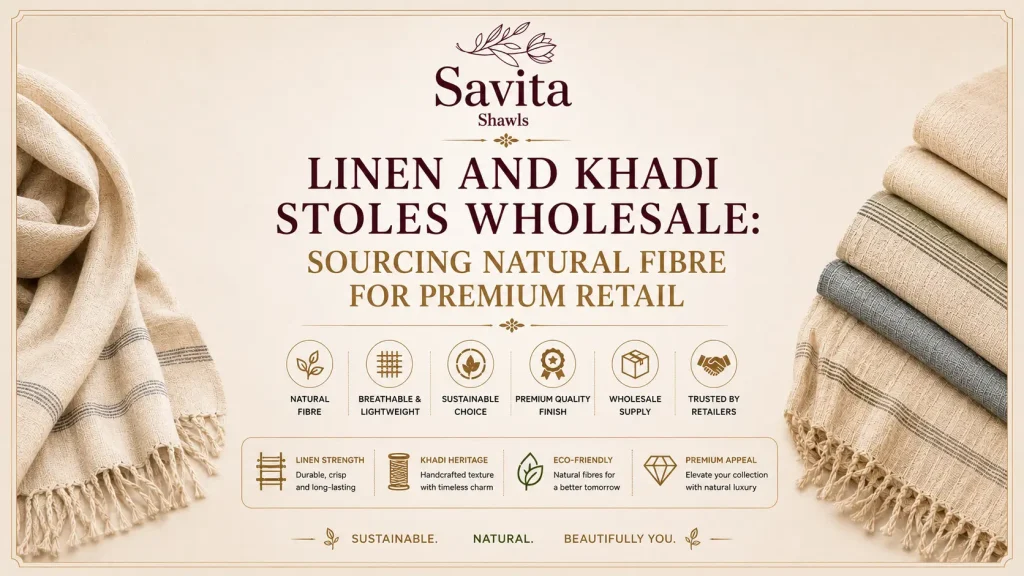
Linen sells on a story and returns on a crease. It is the fabric buyers describe as breathable, natural and premium, and the one customers complain about because it wrinkles the moment it leaves the shelf. Neither party is wrong. A linen stoles wholesale supplier India buyers can build a range with is one who explains the trade off honestly and offers the blends and finishes that soften it. This guide covers linen grades, what the specification numbers mean, and how to position the fabric so the creasing becomes a feature rather than a complaint.
What a linen stoles wholesale supplier India should specify
Linen comes from flax fibre, and the quality variables differ from cotton in ways that matter to the finished stole.
Lea count measures linen yarn fineness, working on a different scale from cotton counts. Higher lea means finer yarn and a smoother, lighter fabric. Stole weight linen commonly runs 20 to 40 lea.
Fibre length matters more in linen than in most fabrics. Long line flax produces smooth, strong yarn. Tow, the shorter fibre left after combing, produces a coarser, more textured yarn at lower cost. Both are legitimate. Only one is premium.
Wet spun linen is finer and smoother than dry spun. Dry spun produces the rustic texture some craft positioned ranges want deliberately.
Any linen stoles wholesale supplier India quoting pure linen should be able to state lea count and spinning method. Vagueness usually means the product is a blend.
Linen blends and why they exist
Pure linen creases sharply and softens only after repeated washing. Blending addresses both without abandoning the fabric’s character.
Linen cotton, commonly 55/45 or 70/30, reduces creasing noticeably and costs less than pure linen. It is the volume seller in most linen stole programmes and the safest first order for a buyer testing the category.
Linen viscose adds drape and softness at a lower price, at the cost of some of the crispness that makes linen recognisable.
Linen silk sits at the premium end, combining linen texture with silk sheen for occasion and gifting retail.
Whatever the blend, insist on the percentage split in writing. Fibre content claims on linen are less reliable in the trade than on most fabrics, partly because the visual and tactile difference between 100 percent linen and a 70/30 linen cotton is genuinely subtle.
Handling the creasing question honestly
Linen creases because flax fibre has low elasticity. Nothing removes this entirely, and any linen stoles wholesale supplier India claiming a crease free pure linen is selling a blend or a heavy resin finish.
What genuinely helps: blending with cotton or viscose, softening treatments including enzyme washing and stone washing, and a slightly heavier GSM which holds its shape better than very light linen.
What helps commercially: describing it accurately in your listings. Retailers who position linen creasing as evidence of natural fibre see far fewer returns than those who photograph a pressed sample and say nothing. The customer who knows what they are buying does not complain about receiving it.
Softening treatments are worth specifying. Enzyme washed linen arrives noticeably softer than untreated, which shortens the break in period buyers otherwise experience over several washes.
Pricing from a linen stoles wholesale supplier India
Linen costs more than cotton at comparable quality, because flax processing is more labour intensive and yields less usable fibre per plant.
Lea count and spinning method set the baseline. Fine wet spun linen at 40 lea costs substantially more than coarse dry spun at 20 lea.
Blend ratio moves the number predictably. Every percentage point of cotton or viscose brings the price down and takes some of the linen character with it.
Finishing adds cost. Enzyme washing, stone washing and pre shrinking each add a small amount per piece and each is worth having on a product customers will wash.
Yarn dyeing costs more than piece dyeing and enables the woven stripes and checks that suit linen particularly well.
Quantity behaves as it does across the category. The step from 100 to 500 pieces per design is meaningful. Beyond 2,000 the curve flattens.
MOQ, sampling and lead times
Minimum order quantity from a linen stoles wholesale supplier India generally sits at 100 pieces per design for stock styles and 200 for custom work.
Sample and wash before committing. Linen shrinks, typically three to five percent on first wash unless pre shrunk, and it softens considerably, which means the sample in your hand is not the fabric your customer will own after a month. Wash one, keep one unwashed, and compare.
Check the sample for slubs, meaning the small thickenings characteristic of linen yarn. Slubs are a feature of the fabric rather than a defect, but the density of them varies by grade and you should know what you are buying.
Lead times run 10 to 15 working days for stock styles with your own label, 20 to 25 working days for custom printed work and 30 to 40 for embroidered pieces.
Where linen fits in a seasonal range
Linen carries spring and summer retail, and it holds a higher price point than cotton in the same season, which makes it useful for lifting the average selling price of a warm weather range.
Order by February for a spring launch once you account for production and freight. Linen has a shorter selling window than cotton in most markets, which makes the calendar less forgiving.
Linen sits alongside two neighbours in a well built summer offer. Cotton stole sourcing covers the volume end of the same season at lower cost, and kantha stitched stoles apply hand running stitch to cotton and silk bases for craft positioned retail. The full seasonal picture is covered in the guide to summer stole collections, and the summer scarf and stole range shows the formats available.
Certification and the sustainability angle
Linen carries a genuine environmental argument. Flax needs less water and fewer pesticides than cotton and grows in climates where irrigation is rarely required. For retailers with a sustainability position, this is a real claim rather than a marketing one.
Making the claim on a product page invites scrutiny, so support it with documentation. Oeko-Tex certification covers chemical safety in the finished textile and is the certification most commonly requested by European buyers. The detail on what certification proves is covered in the guide to Oeko-Tex certified sourcing.
European Flax and Masters of Linen are origin certifications covering European grown flax specifically. Indian manufactured linen typically uses imported flax fibre, so confirm what any certification actually covers before repeating the claim in your own listings.
Savita Shawls as a linen stoles wholesale supplier India
Savita Fashions LLP, trading as Savita Shawls, has manufactured stoles, shawls and scarves from Gurgaon, Haryana since 1984 and supplies buyers in more than 20 countries including the UK, USA, UAE, Germany, France, Australia and Japan. GST registration is 06AFPFS3876N1Z0 and IEC is AFPFS3876N, verifiable on the GST portal. The company is registered with FIEO and AEPC.
As a linen stoles wholesale supplier India terms are 100 pieces per stock design and 200 pieces per custom or OEM design, with corporate gifting from 50 pieces with branding. Samples dispatch within 5 to 7 business days with the cost credited against the bulk order. Production runs 10 to 15 working days for stock styles with your label, 20 to 25 for custom printed work and 30 to 40 for embroidery.
Linen sits within a fabric range covering cotton, modal, viscose, silk, fine wool, pashmina and cashmere, so a single purchase order can cover a full seasonal range across price tiers. Private label covers woven inner labels, care labels in your destination language, hangtags and branded packaging, with Pantone matching and lab dip approval before bulk dyeing. Buyers new to sourcing from India should start with the guide to choosing a stole manufacturer.
Frequently asked questions
What lea count should a linen stoles wholesale supplier India offer?
Stole weight linen commonly runs 20 to 40 lea, with higher numbers indicating finer yarn and a smoother, lighter fabric. Around 30 lea suits most retail. Below 20 lea the fabric becomes noticeably coarse, which suits deliberately rustic craft positioning. Ask for lea count and spinning method together, since both affect the finished hand.
Do linen stoles crease badly?
Yes, and no finish removes it entirely from pure linen, because flax fibre has low natural elasticity. Blending with cotton or viscose reduces it noticeably. Enzyme washing softens the fabric and shortens the break in period. The commercially effective approach is describing creasing accurately in your listings so customers expect it.
What is the difference between pure linen and linen cotton blend?
Pure linen has the crispest hand, the strongest texture and the most pronounced creasing, at the highest price. Linen cotton, commonly 55/45 or 70/30, creases noticeably less and costs less while keeping much of the linen character. The visual difference is subtle, which is why written fibre percentages matter on every order.
How much do linen stoles shrink?
Untreated linen typically shrinks three to five percent on first wash. Pre shrunk fabric reduces this considerably. Linen also softens substantially over the first several washes, which means the sample you approve is firmer than the product your customer owns after a month. Wash one sample and keep one unwashed for comparison.
What is the minimum order from a linen stoles wholesale supplier India?
Most Indian suppliers set minimums at 100 pieces per design for stock styles and 200 pieces for custom or OEM work. Savita Shawls works to these figures, with corporate gifting programmes accepted from 50 pieces with branding applied. Custom colours can carry higher minimums where yarn dyeing requires a viable lot size.
Are slubs in linen a defect?
No. Slubs are the small thickenings characteristic of linen yarn and are a feature of the fabric rather than a fault. Density varies by grade and spinning method, with dry spun linen showing more pronounced slubbing than wet spun. Inspect the sample so you know what density you are buying before bulk production.
Is linen more sustainable than cotton?
Flax generally requires less water and fewer pesticides than cotton and grows in climates where irrigation is rarely needed, so the environmental argument is real rather than purely promotional. Support the claim with documentation. Oeko-Tex certification covers chemical safety in the finished textile and is the certification European buyers most commonly request.
When should I order linen stoles for a summer range?
Place orders by February for a spring launch, allowing for production of 10 to 25 working days plus freight of 3 to 10 days by air or 15 to 35 days by sea. Linen has a shorter selling window than cotton in most markets, which makes the ordering calendar less forgiving of delay.
Ready to order
Send your requirement with composition, lea count, GSM, dimensions and quantity per design, and Savita Shawls will return pricing, confirmed lead times and sample availability. Samples ship within 5 to 7 business days with the cost credited against your bulk order, so evaluating a new linen stoles wholesale supplier India costs very little. Start with a linen stole quote request, email sales@savitashawls.com or call +91 7696677766.