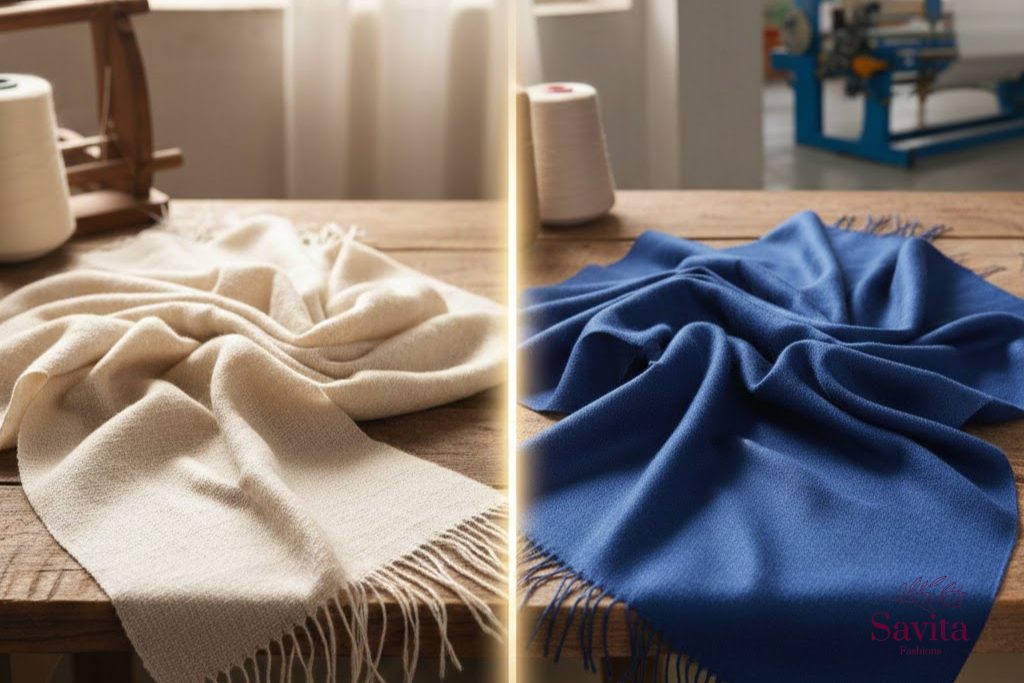
Pick up two pashmina shawls that look almost identical, and ask the seller which one took three weeks to make and which one took three hours. Most customers won’t be able to tell just by looking. But the difference between handwoven and machine-made pashmina isn’t just about time on a loom, it’s about price, durability, authenticity, and what you’re actually promising your customers when you put that label in your store.
If you’re a retailer, boutique owner, or fashion brand sourcing pashmina for your collection, understanding handwoven and machine-made pashmina isn’t optional anymore. Buyers are getting smarter, asking sharper questions, and expecting suppliers to know the answers. This guide breaks down everything you need to know about handwoven and machine-made pashmina, so you can source confidently, price correctly, and explain the value to your own customers without fumbling.
By the end of this article, you’ll understand exactly how handwoven and machine-made pashmina differ in production, feel, cost, and market positioning, and why choosing the right manufacturing partner for either category matters enormously for your business.
Why This Comparison Matters for B2B Buyers
Here’s the thing nobody tells new buyers in this industry: not all pashmina is created equal, even when it’s labeled the same way on a price tag. The handwoven and machine-made pashmina conversation isn’t academic, it directly affects your margins, your positioning, and your customer trust.
A boutique selling luxury bridal wear needs a different product than a retailer stocking mid-range winter accessories for mass footfall. Knowing where handwoven and machine-made pashmina each fit into that spectrum helps you avoid two costly mistakes: overpaying for machine-made pieces marketed as handcrafted, or underpricing genuine handwoven work because you didn’t understand its true value.
What Is Handwoven Pashmina?
Handwoven pashmina is exactly what it sounds like, shawls woven entirely by hand on traditional looms, usually by artisans in Kashmir or Ladakh who’ve inherited the craft through generations.
The process involves:
- Hand-combing soft undercoat fiber from Changthangi goats
- Hand-spinning the fiber into fine yarn using a traditional spinning wheel called a “charkha”
- Hand-weaving on a wooden loom, thread by thread, sometimes taking 10 to 20 days for a single piece
- Hand-finishing details like fringes, borders, or embroidery
This is slow, deliberate work. A skilled weaver might produce only a handful of pieces in a month. That scarcity is exactly why handwoven pashmina carries premium pricing and why it photographs and feels noticeably different from its machine-made counterpart.
What Is Machine-Made Pashmina?
Machine-made pashmina uses mechanized looms to replicate similar weave patterns at significantly higher speed and volume. The fiber may still be genuine pashmina wool, or a blend, but the weaving process is automated.
The process typically includes:
- Sourcing pashmina or pashmina-blend yarn, sometimes mixed with silk or wool for strength
- Feeding yarn into power looms that weave dozens of pieces per day
- Machine-based finishing, dyeing, and printing
- Quality checks at scale rather than individual artisan inspection
This is where handwoven and machine-made pashmina start diverging sharply. Machine production allows manufacturers to meet bulk orders quickly, maintain consistent patterns across hundreds of pieces, and offer significantly lower price points.
Handwoven and Machine-Made Pashmina: Key Differences at a Glance
Let’s break this down practically, because this is the information your sales team and your customers actually need.
Texture and Feel
Handwoven pashmina has a slightly irregular, organic texture, soft variations that experts call “the hand of the fabric.” Machine-made pashmina feels more uniform and smooth, sometimes almost too perfect.
Weight and Drape
Genuine handwoven pieces tend to be lighter and drape more fluidly around the body. Machine-made versions, especially blends, can feel slightly heavier or stiffer depending on the yarn composition.
Production Time
A handwoven shawl can take two to three weeks. A machine-made shawl can be completed in a single day. This single factor explains most of the price gap between handwoven and machine-made pashmina.
Price Point
Handwoven pashmina commands premium pricing, often three to five times higher than machine-made equivalents, due to labor intensity and skill involved.
Pattern Consistency
Machine-made pashmina offers near-perfect pattern repetition across an entire bulk order, ideal for retailers needing uniformity across hundreds of pieces. Handwoven pieces carry subtle variations, which many luxury buyers actually prefer as a mark of authenticity.
Scalability
If you need 500 identical pieces for a retail rollout, machine-made pashmina is the practical choice. If you’re building a limited, premium bridal collection, handwoven pashmina tells a much stronger story.
Materials That Influence Both Categories
Whether you’re sourcing handwoven and machine-made pashmina, understanding the underlying fiber matters just as much as the weaving method.
Pashmina fiber itself comes from the fine undercoat of Changthangi goats found in high-altitude regions of Ladakh and parts of Kashmir, prized globally for its exceptional softness and warmth-to-weight ratio.
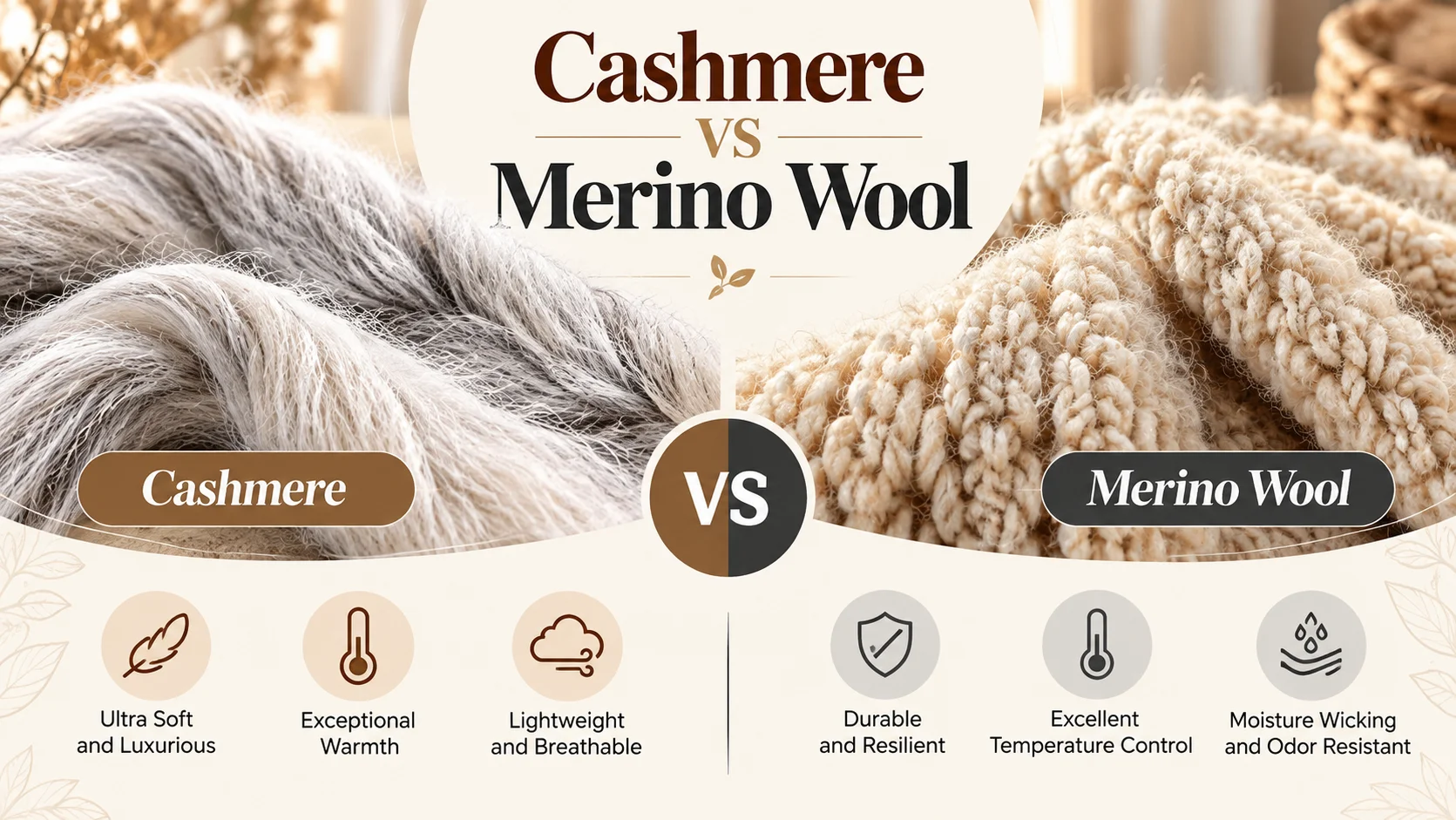
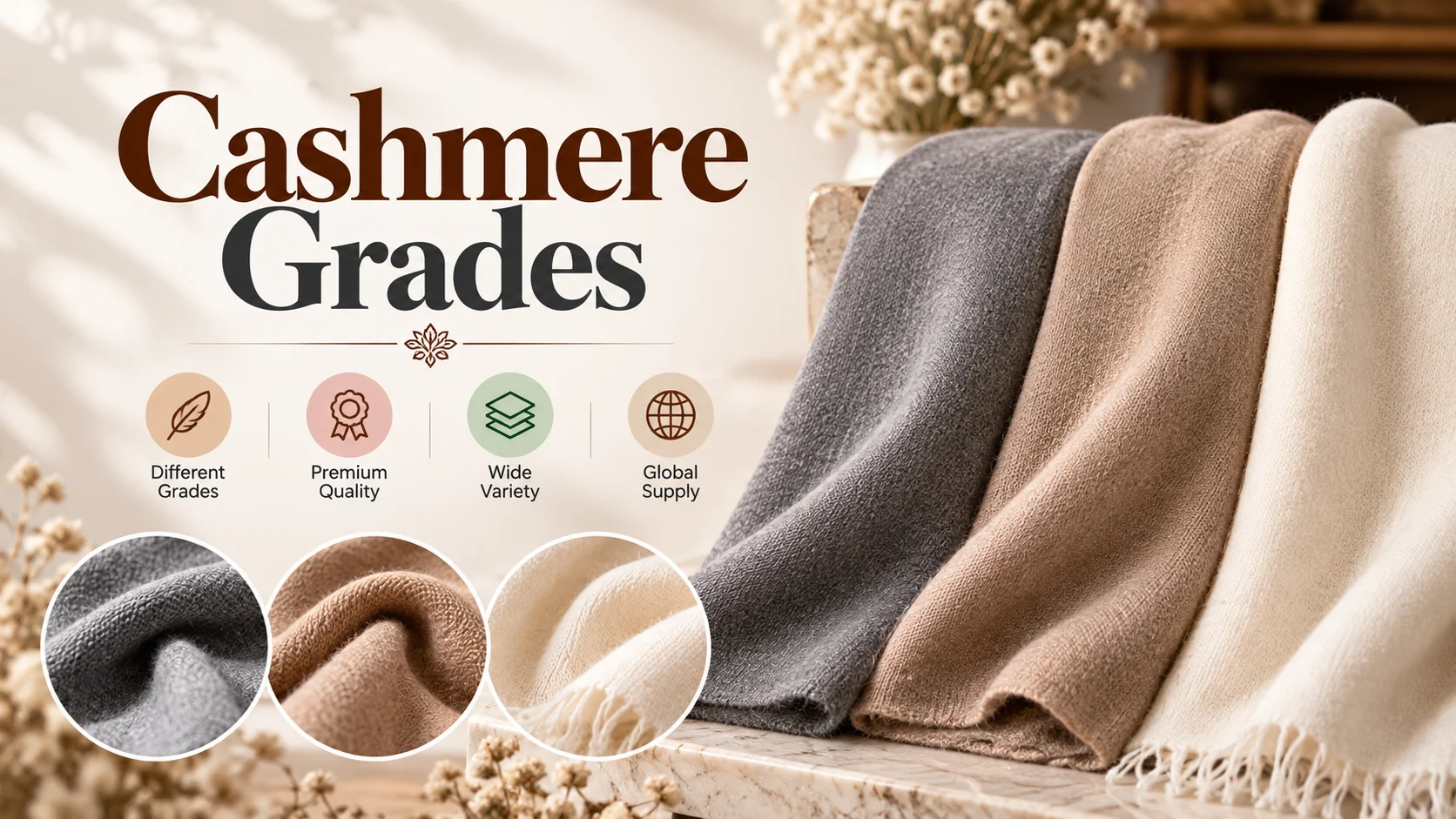
Cashmere Shawls is a broader umbrella term that includes pashmina but also covers wool from other goat breeds, often used in blended machine-made production for cost efficiency.
Silk blends are common in machine-made pashmina to add sheen and reduce overall cost while maintaining a luxurious appearance.
Wool blends, including merino, are sometimes mixed into machine-made pieces to improve durability for everyday wear.
If you want to understand more about the global recognition and traditional roots of this fiber, the Wikipedia page on Pashmina offers solid background on its origin and historical significance in the textile world.
Manufacturing Insights: What Happens Behind the Scenes
Most buyers never see the actual production floor, but understanding it changes how you negotiate, price, and market your products.
In handwoven pashmina manufacturing, quality control happens almost continuously, the weaver inspects every thread as they work. Defects are rare because the human eye catches irregularities in real time.
In machine-made pashmina manufacturing, quality control happens in batches, often through a three-stage inspection process: raw material checks before production, in-line inspection during weaving and dyeing, and a final pre-shipment inspection.
A trustworthy shawl manufacturer India will be transparent about which production method applies to which product line, and should be able to provide material composition certificates for either category when requested for export or retail compliance purposes.
Styling Considerations: Does It Matter to the End Customer?
Here’s an honest answer: most end customers can’t visually distinguish handwoven and machine-made pashmina at first glance. But they feel the difference, and increasingly, they ask about it.
- For bridal and gifting collections, handwoven pashmina justifies premium pricing and storytelling around craftsmanship.
- For everyday winter wear and fashion-forward retail, machine-made pashmina offers better margins and faster restocking.
- For corporate gifting, machine-made consistency ensures every recipient gets an identical, polished product.
- For heritage or boutique branding, emphasizing handwoven origins adds emotional and cultural value that customers are willing to pay for.
Knowing your customer segment helps you decide which category, or which blend of both, belongs in your collection.
Why Choosing a Reliable Manufacturer Matters More Than the Method
Here’s something the industry doesn’t talk about enough: the handwoven versus machine-made debate matters less than who you’re sourcing from. A poorly managed handloom operation can produce inconsistent, low-quality shawls. A well-run machine production facility can deliver excellent, durable pieces at scale.
What actually protects your business is partnering with a manufacturer who:
- Clearly labels and certifies handwoven versus machine-made pashmina products
- Maintains consistent quality control across both production methods
- Offers private label and OEM manufacturing so you can build your own brand identity around either category
- Provides export documentation, IEC registration, and GST compliance for smooth international trade
- Has decades of hands-on experience working with both artisan weavers and modern production facilities
This is exactly why working with an established custom scarf manufacturer who understands both traditions gives you flexibility most single-method suppliers simply can’t offer.
Benefits of Buying in Bulk Across Both Categories
Smart retailers and brands often don’t choose one over the other, they blend both into their inventory strategy.
- Machine-made pashmina covers volume needs, seasonal collections, and price-sensitive markets efficiently.
- Handwoven pashmina anchors premium collections, bridal lines, and limited-edition drops that build brand prestige.
- Sourcing both from a single bulk shawls supplier simplifies logistics, reduces vendor management headaches, and often improves negotiating power on pricing.
- A diversified pashmina shawls collection lets you serve multiple customer segments without juggling multiple suppliers across continents.
This dual-sourcing approach is increasingly common among successful boutiques and fashion brands who’ve realized that handwoven and machine-made pashmina aren’t competitors, they’re complementary tools for different parts of the business.
Current Trends Shaping Handwoven and Machine-Made Pashmina Demand
The market around handwoven and machine-made pashmina is shifting in interesting ways worth watching.
- Transparency labeling — More buyers are demanding clear disclosure of production method, not just fiber content.
- Hybrid techniques — Some manufacturers now use machine pre-processing followed by hand-finishing, blending efficiency with craftsmanship.
- Sustainability certifications — OEKO-TEX and similar certifications are becoming relevant for both handwoven and machine-made categories.
- Storytelling-driven marketing — Brands increasingly market the artisan story behind handwoven pieces as a differentiator in saturated markets.
- Customization at scale — Machine production is getting better at offering customization options that previously only handwoven pieces could provide.
Staying ahead of these shifts means working with a manufacturer who’s investing in both traditional craftsmanship and modern production capability, not one stuck in only one lane.
Conclusion: Making the Right Choice Between Handwoven and Machine-Made Pashmina
There’s no universally “better” option between handwoven and machine-made pashmina, only the right option for your specific business goals, customer base, and price positioning. Handwoven pashmina offers unmatched heritage, texture, and storytelling value. Machine-made pashmina offers consistency, scalability, and accessible pricing for broader markets.
The real advantage comes from working with a manufacturer who genuinely understands the nuances of handwoven and machine-made pashmina and can guide you toward the right blend for your collection, rather than pushing whatever’s easiest to produce.
If you’re ready to explore both options for your next collection, browse our pashmina shawls collection to see the range firsthand, or reach out to discuss bulk sourcing as a trusted bulk shawls supplier. Looking to build something entirely your own? Our team works as a dedicated custom scarf manufacturer, helping you decide exactly where handwoven and machine-made pashmina fit into your brand story, then bringing that vision to life with precision and care.
Handwoven and machine-made pashmina differ primarily in production method, handwoven pieces are made entirely by hand over weeks, while machine-made pashmina is produced rapidly on power looms.
Not necessarily, handwoven and machine-made pashmina serve different purposes; handwoven suits premium, heritage-driven collections, while machine-made works well for scalable, price-sensitive retail lines.
Handwoven pieces often show subtle texture variations and take longer to produce, while machine-made pashmina has more uniform patterns, a reliable manufacturer can certify which category applies.
The price gap between handwoven and machine-made pashmina comes down to labor intensity, a handwoven shawl can take weeks of skilled artisan work compared to a single day for machine production.
Yes, many established manufacturers offer both handwoven and machine-made pashmina, allowing retailers to diversify their collection while simplifying sourcing logistics.
Both work well for private label, machine-made pashmina suits high-volume branded collections, while handwoven pashmina adds premium storytelling value to limited-edition private label lines.
Often yes, many machine-made pashmina products use genuine or blended pashmina fiber, though buyers should always request material composition certificates to confirm authenticity.